
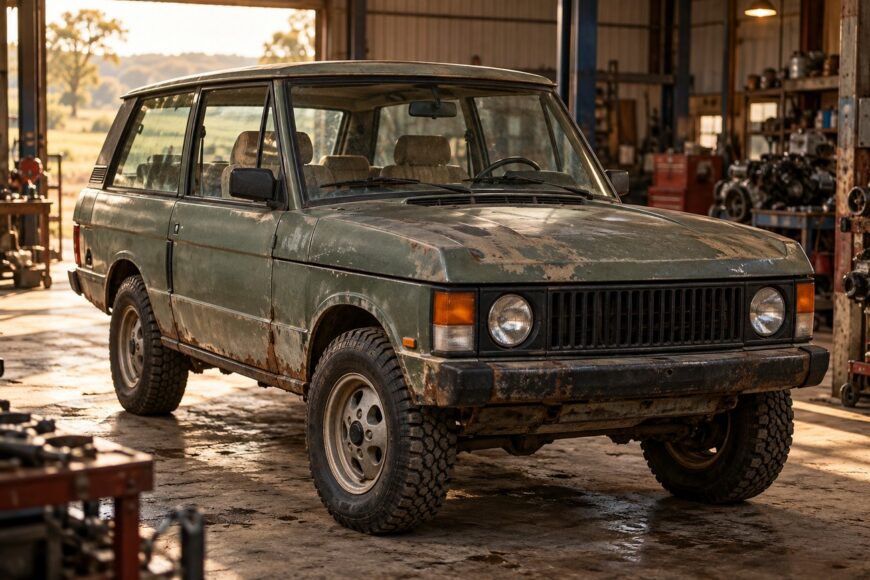
The two-door Range Rover Classic established a lasting idea: a vehicle capable of crossing rough ground without making its occupants accept a bare utility cabin. Its appeal still rests on that combination of visibility, supple suspension, V8 character, and simple-looking design. Yet “luxury” needs a period-correct reading. Rust, electrical faults, noise, and the cost of proper restoration can overwhelm the pleasure of driving one.
A sound, documented two-door can be a usable old 4×4; a freshly painted example with hidden corrosion can become an expensive shell repair. The gap between those cars is too wide for a single market price to be useful. A sensible purchase starts with structure, repair history, and parts availability, rather than the shine of the paint.
- Why the Two-Door Classic Still Feels Different
- V8 Power, Permanent 4×4, and Real Off-Road Character
- The Ownership Reality: Rust, Lucas Electrics, and Running Costs
- How to Buy or Restore a Two-Door Without Losing Money
- Frequently asked questions
- How much does a Range Rover Classic two-door cost?
- What should I document before taking a Classic apart?
- How much does a Range Rover Classic cost?
Why the Two-Door Classic Still Feels Different
The two-door Classic ran from 1970 to 1994 in various markets. A four-door version did not arrive until 1981, so the early vehicle’s long front doors and spare, upright cabin define the original Range Rover shape. It offered more comfort than a conventional working off-roader of its era while retaining genuine low-speed, rough-ground ability.
One construction detail matters when assessing repairs: the Classic uses a load-bearing steel box-section monocoque with separately attached suspension subframes, rather than a conventional separate steel ladder chassis. Many aluminum outer panels are fitted to this structure. A tidy-looking outer panel therefore says little about the steel beneath it or the condition of the load-bearing structure.
Both axles are live, with trailing links and coil springs rather than independent suspension. Off-road users report roughly 200–230 mm of suspension travel, although the useful movement of any surviving car depends on its springs, dampers, bushes, and modifications. The layout helps keep the tires in contact with uneven ground and gives the Classic much of its composed, deliberate feel at low speed.
That compliance does not turn it into a modern luxury SUV. Steering responses, body movement, and braking expectations belong to an older design, and rear-seat access through the long front doors is less graceful than the exterior suggests. Its distinction is that it remains pleasant enough on the road to reach the trail under its own power.
V8 Power, Permanent 4×4, and Real Off-Road Character
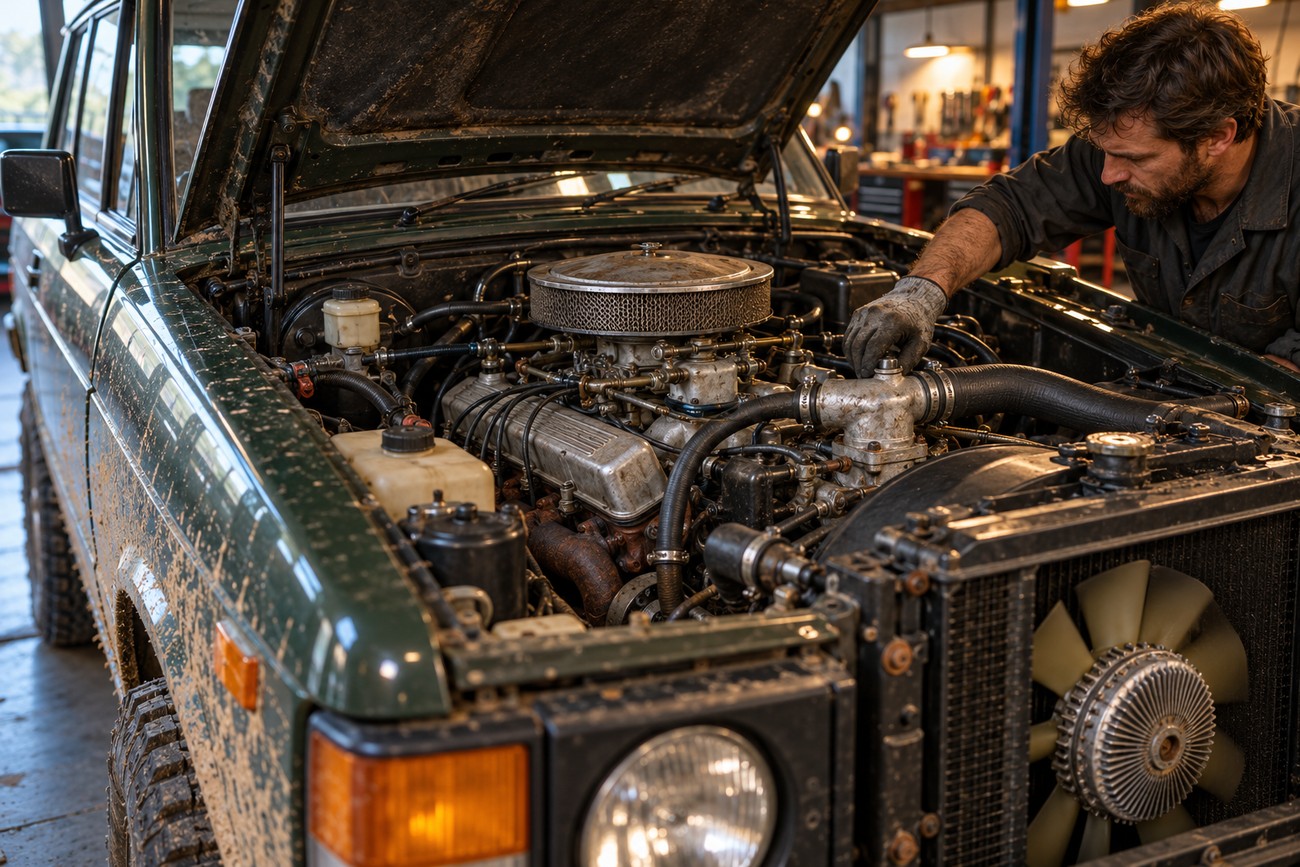
Early gasoline cars used a carbureted 3.5-liter V8, generally quoted at approximately 135–155 hp depending on specification. It rewards correct tuning and a healthy cooling system more than ambitious power modifications. Check the radiator, thermostat, viscous fan, and evidence of overheating before treating a rough-running engine as a minor carburetor job.
Later Classics gained fuel-injected V8s, including 3.9- and 4.2-liter versions across the wider range; the 4.2 is chiefly associated with long-wheelbase, four-door models rather than a typical factory two-door. VM and TD diesels also exist. Owner and mechanic reports commonly find these early diesels less pleasant and more troublesome than a maintained gasoline V8, so lower fuel use alone is a weak reason to choose one.
Permanent four-wheel drive, low gearing, and a lockable center differential underpin the Classic’s off-road ability. The LT230 transfer case provides permanent four-wheel drive through a center differential with a differential lock. Identify what is actually fitted before ordering parts or accepting a seller’s description of “the standard transfer box.”
An LT230 can serve well, but its reputation is no substitute for checking its oil level and lubricant condition. The same applies to axle housings and differentials: leaks and neglected servicing turn durable components into costly repairs. A large lift or oversize tires without attention to geometry and driveshaft angles can add vibration, wear, and worse road manners while reducing the value of an otherwise capable standard vehicle.
The Ownership Reality: Rust, Lucas Electrics, and Running Costs
Corrosion is the first ownership test. Inspect the sills, lower door sections, rear body or tailgate frame, and the floor beneath the spare wheel. Extend that inspection to the load-bearing steel body structure and suspension subframes, including previous repairs. Aluminum outer panels can remain presentable while adjacent steel deteriorates, which is why photographs of a restoration are more valuable than a polished finish alone.
Lucas-era wiring, connectors, and grounds are recurring sources of intermittent instrument, lighting, and accessory faults. The claim that “about 80%” of Classic problems are electrical is owner shorthand, not a measured failure rate. Still, a car with several small faults may need systematic work on connectors and grounds rather than a succession of replacement switches.
Structural rust and neglected electrics differ from straightforward mechanical age. A worn bushing or leaking seal usually has a defined repair; corrosion hidden inside a load-bearing section can expand the job once trim and panels come off. On injected cars, aging wiring and control components add another diagnostic layer, so a specialist who understands the particular model year is worth seeking before purchase.
Real-world reports commonly put urban gasoline consumption at approximately 18–25 L/100 km. Budget for that alongside fluids, tires, and the small repairs an old vehicle accumulates. A cheap purchase that cannot be driven reliably is seldom a cheaper way into ownership.
Cabin expectations deserve the same honesty. Drivetrain hum, wind noise through aged seals, vibration, and interior rattles are part of a stock Classic by modern luxury-SUV standards. Renewing seals and repairing loose trim can help, but extensive sound insulation changes the scope and cost of a restoration; it cannot make an old design behave like a current one.
How to Buy or Restore a Two-Door Without Losing Money
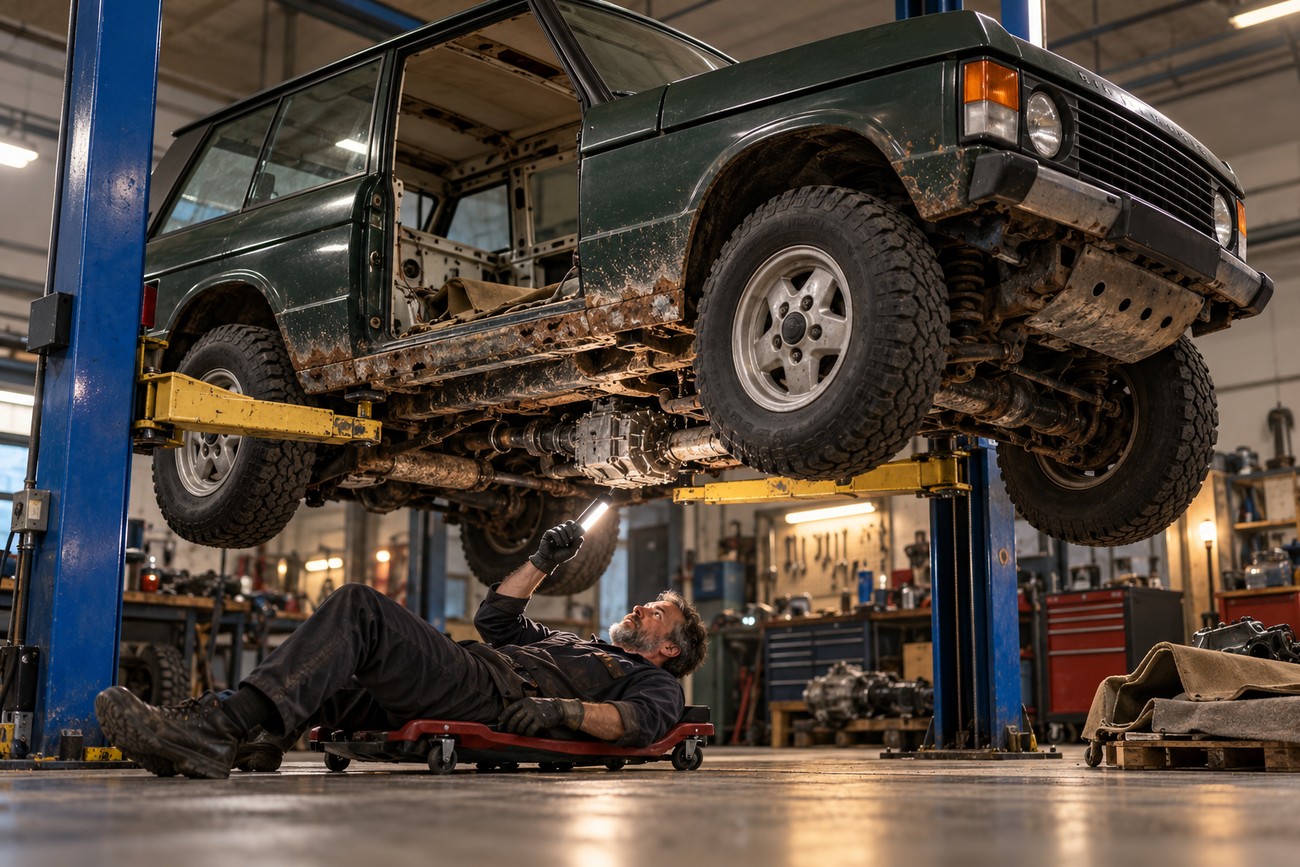
Start a viewing beneath the car and behind removable trim, rather than at the paintwork. Fresh paint can hide poor welding in sills, structural members, and the rear body frame. Ask for repair photographs, parts invoices, and a coherent service history; then compare them with the metal in front of you. An inspection by someone familiar with Classic body and drivetrain details can expose inconsistencies a general garage may miss.
Check the LT230 transfer case, look for leaks, and ask when its oil and the axle lubricants were last checked. Examine suspension changes with equal care: unusually tall springs and large tires call for evidence that steering geometry and driveshaft angles were addressed. A short drive over ordinary roads can reveal vibrations that a static inspection will not.
Approve paint and mechanical upgrades only after the shell and its structural geometry have been measured and the repair plan understood. Incorrect previous welding can leave a glossy vehicle with doors that fit poorly and structural work that must be cut out again.
Original two-door body panels are scarce new, so repairs may rely on reproduction or hand-made pieces. Early interior materials can also fade or crumble, and matching trim may take longer to find than a mechanical service part. Before dismantling a project, photograph each area, label connectors and fasteners, and cross-reference parts-catalog illustrations. Owners’ clubs can help identify year-specific pieces and locate them before the vehicle is left in boxes.
Early Suffix two-doors tend to attract stronger collector interest when their originality and documentation hold up. That makes irreversible modifications a considered choice, rather than an automatic improvement. Some good examples have reportedly risen two- to threefold over five to ten years, but an undocumented, heavily corroded project can remain cheap to buy and costly to finish. Assess the likely repair work, not an assumed future sale price.
Frequently asked questions
Price questions need a defined vehicle and a defined purpose. The answers below separate purchase value from the money required to preserve or use a Classic.
How much does a Range Rover Classic two-door cost?
There is no representative price for every two-door. Treat restoration projects, usable documented cars, and collector-grade originals as separate markets, then compare vehicles within the same condition group.
A project’s asking price reveals little about its eventual cost: hidden structural repairs, scarce two-door trim, and incomplete parts can exceed the work suggested by the advertisement.
What should I document before taking a Classic apart?
Photograph each assembly before removal, then take closer images of connector positions, cable routing, brackets, and trim fixings. Label both sides of every disconnected plug; bag fasteners by location and record any missing or non-original pieces.
Match parts to catalog illustrations before ordering replacements, and keep removed trim until the new piece has been test-fitted.
How much does a Range Rover Classic cost?
For the Classic range as a whole, purchase prices vary by body style, specification, condition, and location, so a two-door asking price is a poor guide to a four-door car. For ownership, calculate a separate reserve for immediate safety work, overdue fluid changes, and faults found during inspection.
A documented car with those jobs already done may cost more upfront yet require less spending before regular use.







