

If you put diesel in a gasoline Honda CR-V, the safest distinction is simple: if the engine has not been started, leave it off and arrange fuel removal. If it is already running, stop as soon as it is safe to do so. Driving after the mistake can circulate contaminated fuel through the tank, lines, rail, injectors, and combustion system.
Smoke, rough running, an unusual odor, loss of power, towing, and an expensive repair estimate can make the situation feel worse than it is. A gasoline CR-V is designed for gasoline rated at 87+ AKI, and diesel is not approved. The conservative response is to stop and drain the fuel; some mechanics discuss dilution only for very small amounts of contamination, so there is no universal shortcut that is safe for every vehicle.
- Did You Put Diesel in a Gasoline Honda CR-V? Stop First
- What Diesel Does to a Gasoline CR-V
- How Much Diesel Is Too Much for a Gasoline CR-V?
- The Correct Response Before the Engine Is Started
- What If the CR-V Was Started or Driven?
- Draining, Flushing, and Checking for Damage
- Common Myths, Service Traps, and Prevention
- Frequently Asked Questions
- What information should I give the repair shop after misfueling?
- How can I challenge a repair estimate that says every fuel-system part must be replaced?
- What happens if I accidentally put diesel fuel in my car?
- How much diesel would ruin a gasoline engine?
- How do you flush diesel out of a gasoline engine?
Did You Put Diesel in a Gasoline Honda CR-V? Stop First
Do not start the engine, turn the key to test the vehicle, or press the start button. Manufacturer and dealer guidance generally recommends having the contaminated fuel removed professionally. If the vehicle is blocking a pump lane, move it only by pushing it safely with help, or ask the station for assistance; do not use the engine to relocate it.
Call roadside assistance or a towing service and explain that diesel entered a gasoline vehicle. Keep the fuel receipt, note the pump number if possible, and record the approximate amounts of diesel and gasoline in the tank. Tell the technician whether the engine was started, how long it ran, and whether the vehicle was driven.
Starting the engine circulates diesel beyond the tank. It can reach the fuel lines, rail, injectors, spark plugs, and combustion system, increasing the cleaning and diagnostic work. A professional can determine whether the incident requires only fuel removal or a broader inspection.
What Diesel Does to a Gasoline CR-V
Diesel has higher viscosity and a higher autoignition temperature than gasoline. A gasoline engine depends on the correct fuel spray and spark-ignition behavior, so diesel does not atomize or burn correctly in that system. The result is incomplete or unstable combustion rather than normal power production.
If the engine runs, common symptoms include misfires, rough running, gray or black smoke, an unusual exhaust odor, hard starting, and reduced power. Knock-like combustion may also be reported. Diesel can foul spark plugs and affect injectors, while unburned fuel passing through the exhaust can place stress on the catalytic converter.
Modern direct-injection CR-V engines may have tighter fuel-quality tolerances than older, simpler gasoline engines. That does not mean every mistake causes major damage, but it does make continued operation a poor gamble. Engine controls may limit power or alter fueling, yet electronic intervention does not make contaminated fuel safe to keep using.
How Much Diesel Is Too Much for a Gasoline CR-V?

Honda does not publish a universal safe percentage or volume threshold for diesel contamination in a gasoline CR-V. The practical discussion sometimes treats 1–2 liters of diesel in an almost full gasoline tank as a possible dilution scenario, but that approach is unofficial and disputed. Manufacturer-oriented guidance favors draining rather than relying on dilution and continued driving.
A substantial diesel fill presents a clearer reason to stop, tow, and drain the system. The amount in the tank is only one part of the assessment. Whether the engine was started, how far the vehicle was driven, how much gasoline was already present, and what symptoms developed can matter more than a simple number.
Even a small diesel fraction can change combustion behavior, foul plugs, and stress the catalytic converter. A vehicle may run normally for a short time if the contaminated fuel has not reached the injectors in a consistent concentration, then develop symptoms as the mixture changes. That delayed response is one reason continued driving is difficult to judge safely at the roadside.
The Correct Response Before the Engine Is Started
Stop fueling and leave the engine off. Do not turn the ignition on unnecessarily, because some vehicles may run the fuel pump with the key in an active position. Arrange a tow or mobile fuel-removal service equipped to handle the vehicle safely.
Professional service may include draining the tank, clearing contaminated fuel from accessible lines and the fuel rail, and checking or replacing the fuel filter where applicable. The exact procedure depends on the CR-V’s design and the amount of diesel involved. A simple tank drain may leave contaminated fuel in passages that feed the injectors.
Avoid siphoning through the filler neck unless a qualified technician specifically directs the procedure and has the correct equipment. Modern filler systems can include rollover protection, narrow passages, and components that make improvised siphoning unreliable. Do not add a gasoline additive as a supposed neutralizer; no standard additive converts diesel into approved gasoline.
What If the CR-V Was Started or Driven?

If the engine started briefly, switch it off as soon as safely possible and arrange a tow. Brief operation does not prove that expensive parts have failed, but it does mean contaminated fuel may have moved through the fuel system. The vehicle should be assessed before another start.
If you were already driving, stop when rough running, smoke, an unusual exhaust smell, or power loss appears. Continuing to limp home can increase misfires and send more unburned fuel into the exhaust. Towing is safer than trying to use the vehicle until the tank is empty.
The workshop should document the fuel contamination, scan for misfire and fuel-trim faults, inspect the fuel quality and spark plugs, and evaluate oxygen-sensor data and catalytic-converter operation. Those findings help separate a cleanup problem from confirmed component damage.
Engine controls may reduce power or alter fueling while the contaminated mixture is present. That protection is limited, and it does not justify continued use. A pump, injector, oxygen sensor, or catalytic converter should not be replaced solely because diesel was present; each replacement should be supported by scan data or physical inspection.
Draining, Flushing, and Checking for Damage
An unstated CR-V usually needs the least invasive response: professional fuel removal, appropriate cleaning, and confirmation that the correct gasoline is in the system. When a substantial amount of diesel entered the tank, dealer recommendations often include draining and flushing the tank, fuel lines, and rail. The service scope should reflect the contamination and the vehicle’s actual condition.
Diesel can leave an oily film in the tank and fuel passages, so draining alone may be insufficient. After the engine has run, the technician may need to inspect or service the spark plugs, verify injector operation, and check for remaining fuel contamination. A fuel-filter replacement may be appropriate where the vehicle uses a serviceable filter and inspection supports it.
Confirmed catalyst or injector damage should be separated from temporary contamination symptoms. Scan data, plug condition, fuel quality, and physical inspection provide a better basis for parts decisions than a blanket rule that every fuel-system component must be replaced.
After repair, the shop should check for hard starting, hesitation, misfire codes, fuel-trim abnormalities, catalyst-efficiency faults, and abnormal oxygen-sensor behavior. A rough start or mild hesitation for a short period can occur while residual contamination clears, but persistent symptoms require further diagnosis.
Full replacement of the fuel system is not automatically required. The necessary repair depends on the amount of diesel, whether the engine operated, and measured damage. Ask for the diagnostic findings before approving high-cost parts.
Common Myths, Service Traps, and Prevention
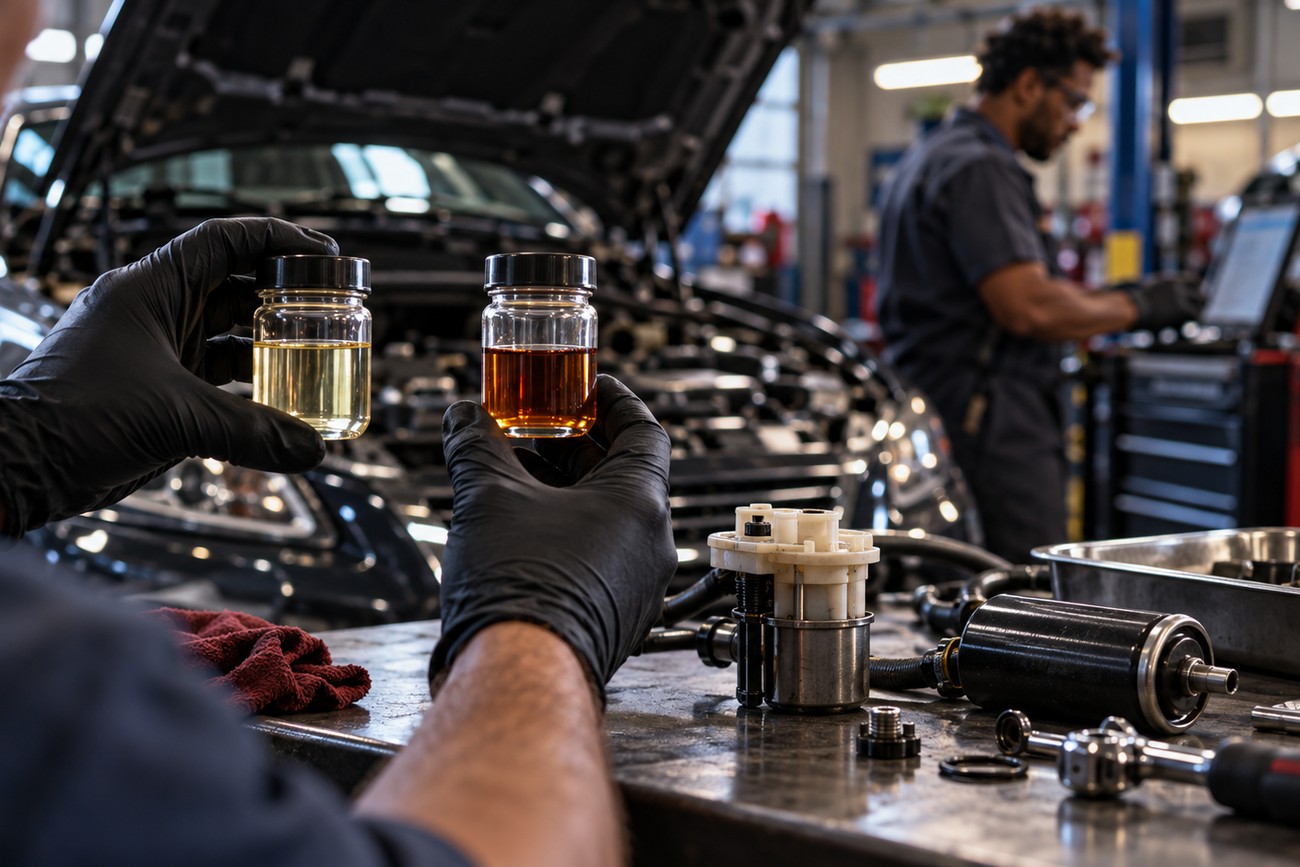
A gasoline engine is not automatically destroyed by diesel contamination. Early shutdown commonly limits the outcome to draining, cleaning, and diagnosis, while continued operation can create more serious problems. The opposite assumption is also unsafe: a small amount of diesel cannot always be ignored or corrected with an additive.
Request an itemized estimate if a shop recommends replacing the pump, injectors, sensors, plugs, and catalytic converter together. Ask which component failed a measured test, which fault codes are present, and which work involves cleaning rather than replacement. A second opinion is reasonable when the estimate relies on “this always requires replacement” without supporting results.
Prevention depends on the label, not the nozzle color. Read the pump label and the instructions inside the fuel door, especially when using an unfamiliar station or vehicle. Keep the receipt because it can help identify the fuel supplied and support a later discussion with the station, roadside provider, or insurer.
Frequently Asked Questions
Clear information helps the repair shop assess the incident and helps you challenge unsupported repair recommendations. The following details are especially useful when handing the vehicle over.
What information should I give the repair shop after misfueling?
Provide the fuel type, approximate amount of diesel, estimated gasoline level before and after fueling, whether the engine started, how far the vehicle was driven, the symptoms, and the time of the incident. Give the shop the receipt, pump information, and any warning lights or fault messages you observed.
Do not describe the fuel simply as “bad gas.” Stating that diesel entered a gasoline CR-V helps the technician choose the correct inspection and prevents unnecessary delays.
How can I challenge a repair estimate that says every fuel-system part must be replaced?
Request an itemized estimate and the test result for each proposed replacement. Ask which parts failed a measured check, which fault codes support the recommendation, and whether the proposed work involves fuel removal, cleaning, inspection, or replacement.
If the explanation remains general, obtain a second opinion from a qualified independent shop. Separate proven component failure from precautionary work; contamination alone does not establish that the pump, injectors, sensors, or catalytic converter are damaged.
What happens if I accidentally put diesel fuel in my car?
The outcome depends mainly on whether the engine ran and how much diesel entered the tank. With the engine off, professional removal and cleaning may resolve the incident before symptoms develop. If the engine ran, misfires, smoke, hard starting, reduced power, fouled plugs, and exhaust-system stress are possible.
Stop driving, preserve the receipt, and have the vehicle towed for fuel removal and diagnosis. Insurance may treat misfueling as an operating mistake rather than a covered accident, although policies and optional roadside or misfueling benefits vary.
How much diesel would ruin a gasoline engine?
There is no manufacturer-published amount that guarantees engine damage. Even 1–2 liters in an almost full gasoline tank can alter combustion, although some mechanics discuss dilution in that narrow situation; it remains unofficial and less conservative than draining.
A substantial amount or continued driving raises the risk of misfires, fouled plugs, fuel-system contamination, and catalytic-converter stress. The tank level, engine operation, distance driven, and measured findings are more useful than a single volume threshold.
How do you flush diesel out of a gasoline engine?
Use a qualified service provider to drain the tank and remove contaminated fuel from accessible lines and the rail. Depending on the amount and whether the engine ran, service may also include flushing, filter service, spark-plug inspection, and checks of the injectors and fuel quality.
Do not rely on an additive or an improvised filler-neck siphon. After cleaning, the shop should verify fuel trims, misfire data, oxygen-sensor behavior, catalyst efficiency, and starting quality before returning the CR-V to normal use.







