
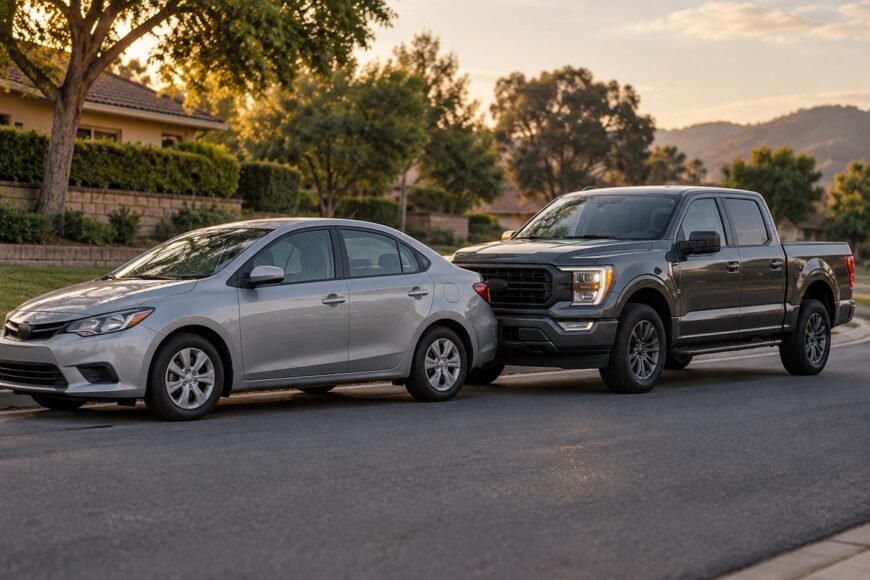
An F-150 may look capable of moving almost anything, but its front bumper is primarily for protection and accessory mounting, not a factory-rated push platform. There is generally no direct manufacturer push-load figure in the owner documentation, so towing capacity, vehicle weight, or “heavy-duty” marketing cannot establish a safe bumper-pushing limit.
A light car that rolls freely on level pavement may move with gentle contact, while locked brakes, an engaged transmission, poor alignment, wet ground, or a small curb edge can make the same attempt fail abruptly. Bumper contact can also damage cameras, radar, parking sensors, grille parts, and mounting brackets before the main bumper looks badly bent. A verified recovery strap, winch, dolly, or proper tow arrangement is generally safer.
- Can the F-150 Bumper Actually Push a Dead Car?
- What Determines the Real Force the Truck Can Apply?
- Make the Dead Vehicle Rollable Before Any Contact
- Why Bumper Contact Causes More Damage Than Expected
- If Moving It Is Unavoidable, Avoid the Push-and-Ram Mistake
- Recovery Points and Towing Gear Are Usually the Better Choice
- Heavy-Duty Myths and the Damage Check Afterward
- Frequently Asked Questions
- How much weight can an F-150 bumper pull?
- How do you put a Ford F-150 in neutral when the battery is dead?
- How do you open an F-150 hood with a dead battery and no key?
Can the F-150 Bumper Actually Push a Dead Car?
The front bumper is primarily for protection and accessory mounting, not repeated vehicle-to-vehicle pushing. It may tolerate ordinary contact protection, but that does not make it a structural tool for applying sustained force to another vehicle. A bumper cover, grille opening, or lower plastic section is especially unsuitable as a contact point.
A light, freely rolling car on level pavement may shift under smooth pressure from an F-150. That outcome depends on the car’s rolling resistance, wheel position, brakes, transmission, and the available tire grip. It is a situational possibility rather than a guaranteed capability or approved operating method.
The result changes sharply if the dead vehicle has seized brakes, locked wheels, a transmission that is not in neutral, or steering that cannot move. The truck may spin its tires while the bumper, mounts, suspension, or the other vehicle absorb rising loads. A vehicle that seems to move slightly can also stop suddenly when a tire reaches a surface joint or small obstacle.
Forum accounts describing successful pushes should be treated as individual examples, not specifications. They usually involve a particular truck, surface, vehicle, and set of conditions. There is generally no direct manufacturer push-load figure in the owner documentation, so those anecdotes cannot establish a safe weight limit.
What Determines the Real Force the Truck Can Apply?
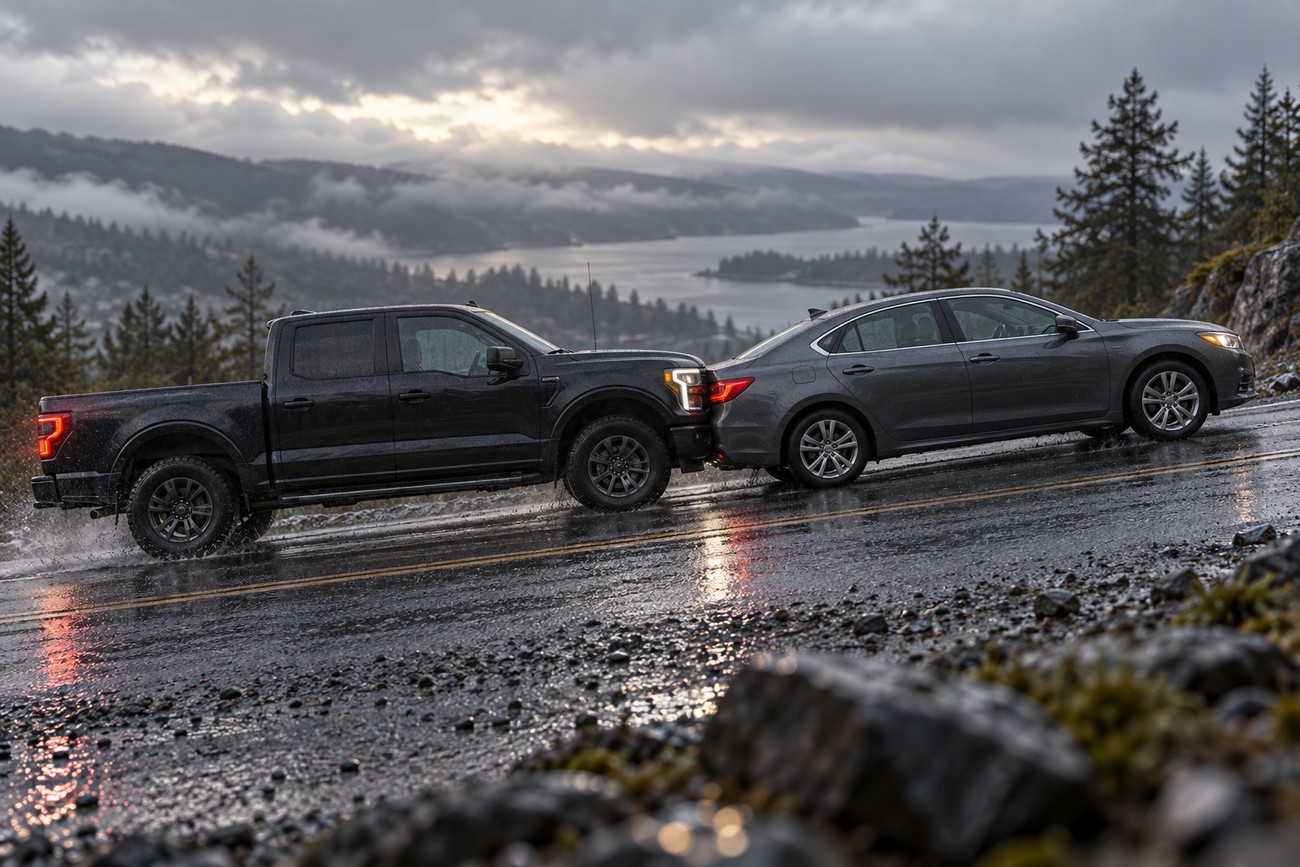
Usable pushing force depends mainly on tire traction, surface, slope, dead-vehicle mass, and rolling resistance. The F-150’s engine output and curb weight matter less than the point where its tires begin to slip. Once traction is exceeded, adding throttle produces wheelspin rather than useful movement.
Wet pavement, loose gravel, mud, or a polished surface can sharply reduce available grip. An uphill slope increases the force needed to move the dead vehicle, while a downhill slope can make speed difficult to control. A curb edge, drainage channel, or small change in pavement height may create more resistance than the car’s weight initially suggests.
The dead vehicle’s wheels should be straight because turned tires scrub sideways across the pavement. That increases rolling resistance and can steer the car toward the F-150’s fender, lamp, or grille. It also makes the load unpredictable if the steering suddenly straightens or the vehicle’s tires reach different surfaces.
A large pickup can therefore struggle with a relatively light car when the ground is slippery or the car is partly immobilized. The common mistake is to interpret a loss of movement as a need for more throttle. In practice, that often increases wheelspin, contact force, and the chance of an uncontrolled lurch.
Make the Dead Vehicle Rollable Before Any Contact
Before any movement, confirm that the dead vehicle is in neutral, its parking brake is released, its steering is unlocked, and its wheels can roll freely. Check tire condition and look for obvious signs of a seized brake, damaged wheel, or tire trapped against an obstruction. The wheels should be as straight as possible, and the path should be clear.
An automatic transmission left in Park can keep the parking lock engaged, while a manual transmission left in gear can create strong resistance. A released parking brake does not prove that every brake is free; a seized caliper, drum, or wheel bearing can still prevent movement. Forcing such a vehicle can damage the transmission, parking lock, brakes, hubs, or suspension.
Electronic parking brakes and neutral-access procedures vary by model year, transmission, trim, and battery condition. Some vehicles require a specific manual override or power-restoration procedure before the selector can be moved. Use the dead vehicle’s owner manual or qualified roadside assistance rather than guessing at a release method.
Battery failure can also affect steering locks, electronic shifters, and other systems needed for controlled movement. If the steering remains locked, a wheel is not rotating, or the vehicle cannot be confirmed in neutral, bumper contact is an unsuitable workaround. A dolly, winch, or professional recovery method is more appropriate.
Why Bumper Contact Causes More Damage Than Expected
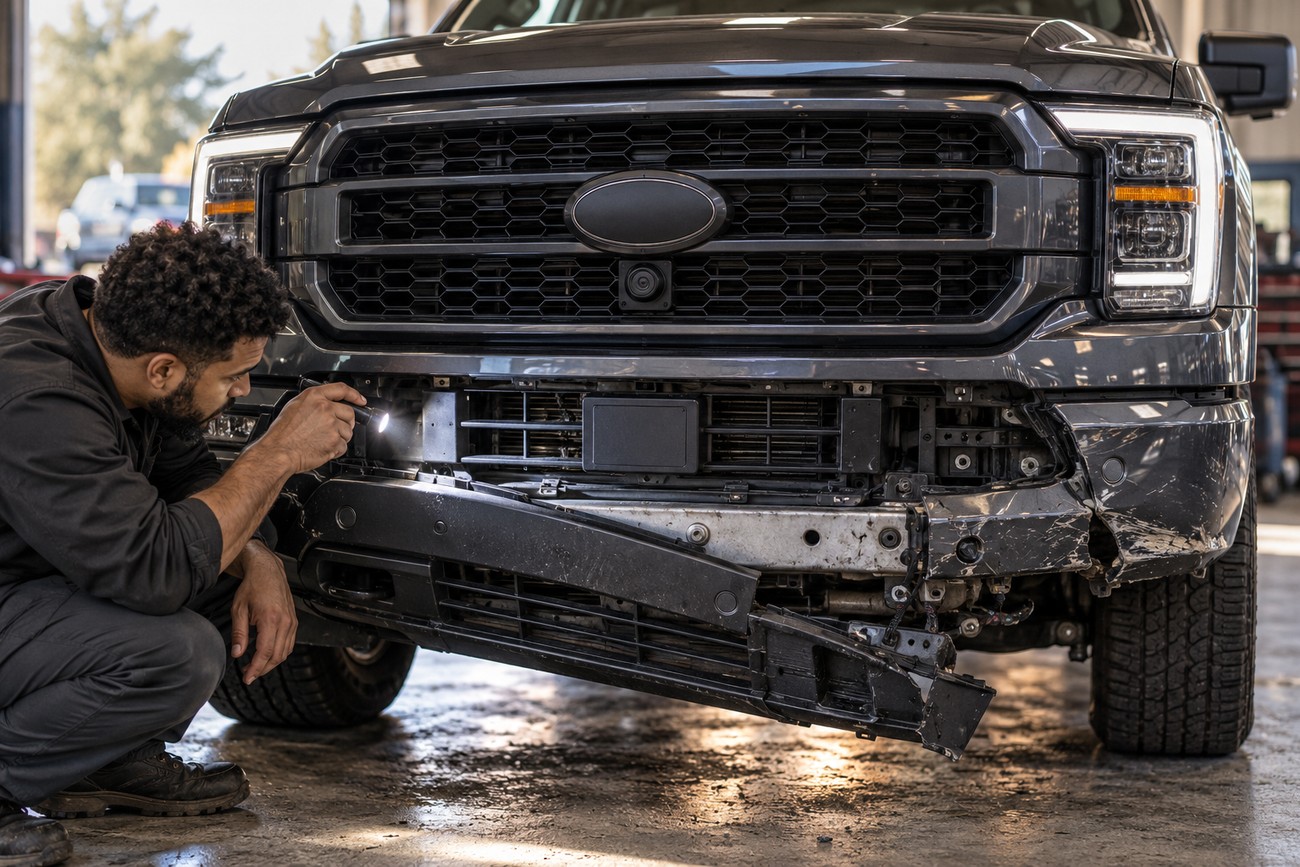
Modern F-150 front ends may contain cameras, radar, parking sensors, grille components, license-plate brackets, and other active or delicate parts. These items can be damaged by low-speed contact that leaves the main bumper apparently intact. A cracked bracket or displaced sensor may only become obvious when warning lights or driver-assistance faults appear later.
Plastic trim and lower grille sections can fail before the metal bumper beam shows significant deformation. Contact at the wrong height may push into the radiator area, lower air-management components, or lamp assemblies. The bumper cover is therefore a poor guide to the total severity of the event.
Loads can also pass through bumper mounts into body or frame attachment points. A bumper may look acceptable while its brackets are bent or stressed. Misalignment between the two vehicles adds a sideways component that can move the other car into a fender, headlamp, grille corner, or wheel.
High-clearance tires, a lift kit, or a different front-end configuration can change the first contact point and the angle of force. The F-150 may then press against a low structural part of the other vehicle or against a sensor-rich section of its own front end. Visual inspection alone may not identify every consequence.
If Moving It Is Unavoidable, Avoid the Push-and-Ram Mistake
Use this only as a cautious emergency measure after confirming that the dead vehicle can roll. Establish a clear path, keep both vehicles aligned, and use a spotter who can see the contact area and low obstacles. The driver’s forward view may not show a bumper corner, tire, curb, or grille component about to make contact.
Begin with smooth, gradual force and no impact. Keep the wheels straight, maintain a walking pace, and leave room to stop immediately. Do not use the bumper against plastic trim, a grille opening, a low bumper cover, or an unverified structural point.
Unexpected resistance is a stop signal, not an invitation to add throttle. A locked wheel, parking brake, or transmission can turn a gentle move into a damaging load before the driver sees what has changed.
Stop at once for wheel lock, clunks, vibration, steering deviation, sudden resistance, or warning lights. Adding throttle to overcome resistance increases the risk of tire slip, a sudden release, bumper damage, and loss of control. Reassess the vehicle condition and change to a proper recovery method instead.
Recovery Points and Towing Gear Are Usually the Better Choice
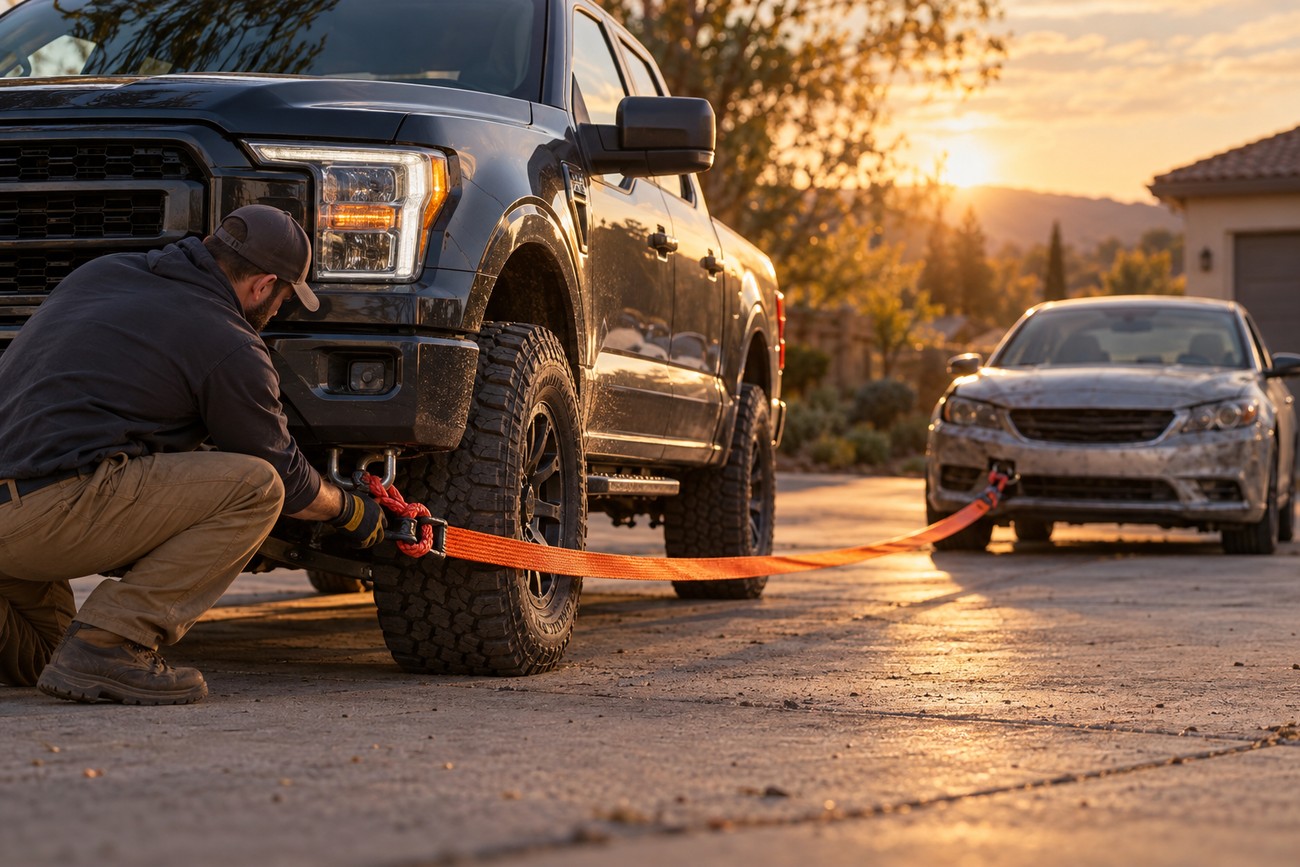
A verified recovery strap, winch, dolly, or proper tow arrangement generally controls force more safely than bumper-to-body contact. These methods can apply load through an approved attachment point and keep the vehicles from pressing directly into fragile exterior parts. The correct choice depends on whether the disabled vehicle can roll, steer, and brake.
Recovery points are configuration-dependent on the F-150. A bumper cover, decorative opening, tow-hook-looking feature, or unverified frame opening is not automatically a recovery point. Some trucks have dedicated points only with particular configurations or packages, so the exact model information matters.
Check the F-150 owner documentation and the disabled vehicle’s approved recovery instructions before connecting anything. Verify the strap, winch, shackle, or tow equipment for the intended recovery use, and keep people clear of tensioned equipment. Improvised attachment to suspension, steering, or thin body panels can cause a sudden release or additional damage.
If the dead vehicle has locked wheels, an unknown transmission state, or steering problems, a dolly or professional recovery vehicle may be safer than pulling it on its own tires. A roadside provider can also identify model-specific neutral, parking-brake, and battery-access procedures before movement begins.
Heavy-Duty Myths and the Damage Check Afterward
A heavy pickup cannot push any passenger car simply because it is larger or heavier. The F-150’s mass does not overcome tire-traction limits, and its weight does not make bumper contact damage-free. Towing or recovery capability is also different from an approved bumper push-impact rating.
Heavy-duty marketing and towing capability do not equal approval for bumper push impacts. Tow ratings concern a vehicle’s towing system and operating conditions, while hitch ratings and recovery-point ratings apply to their specific components and uses. None of these figures can be substituted for an unapproved bumper-pushing load.
After any contact, check bumper alignment, grille and lower trim, license-plate brackets, lamps, and visible sensor or camera mounts. Look for warning lights, parking-assistance faults, unusual steering feel, suspension noises, vibration, fluid leaks, or a change in the vehicle’s tracking. These signs justify stopping further use until the cause is known.
A professional inspection is sensible if the bumper shifted, a mount was loaded, sensors or cameras were contacted, or the truck developed vibration or steering deviation. Driver-assistance cameras and radar may require inspection or calibration after their mounts move, even when the exterior damage appears minor.
Frequently Asked Questions
There is no universal F-150 bumper push-load rating, and model-specific recovery procedures vary. The owner’s manual should control neutral access, parking-brake release, battery access, and approved attachment points. If those instructions are unavailable or the vehicle is damaged, qualified roadside assistance is the safer source of guidance.
How much weight can an F-150 bumper pull?
An F-150 bumper does not have a universal manufacturer-rated vehicle-pulling capacity for bumper-to-body contact. A tow rating applies to the truck’s approved towing system, a hitch rating applies to the hitch and its installation, and a recovery-point rating applies only to a verified recovery attachment. An unapproved bumper-pushing load is a separate condition and cannot be calculated by borrowing any of those figures.
The usable force still depends on tire traction, surface, slope, rolling resistance, and whether the disabled vehicle can roll freely. Check the exact F-150 configuration and use a proper tow or recovery arrangement instead of treating the bumper as a pulling device.
How do you put a Ford F-150 in neutral when the battery is dead?
The procedure depends on model year, transmission, trim, shifter design, and battery condition. Electronic shifters and parking locks may require a manual override, external power, or a specific neutral-access sequence described in the owner’s manual. Do not assume that moving a selector or disconnecting the battery will release the parking lock.
Follow the exact manual instructions for that truck, or use qualified roadside assistance if the procedure cannot be confirmed. The same care applies to the disabled vehicle being moved: its transmission must be in the correct state, its parking brake released, and its wheels free before any recovery attempt.
How do you open an F-150 hood with a dead battery and no key?
First distinguish vehicle entry from hood-latch release. If the remote does not work, the physical key blade may unlock the door on vehicles equipped with that mechanism, but the interior hood latch still normally has to be operated from inside the cab. A dead battery can also affect electronic locks and access systems.
Exact key-blade storage, lock access, and roadside hood-opening instructions vary by model year and trim. Use the owner’s manual for the truck’s specific configuration rather than forcing the grille or reaching through the bumper. If the physical key is unavailable or the locks are damaged, a qualified roadside provider can gain access without damaging sensors, trim, or latch components.







