
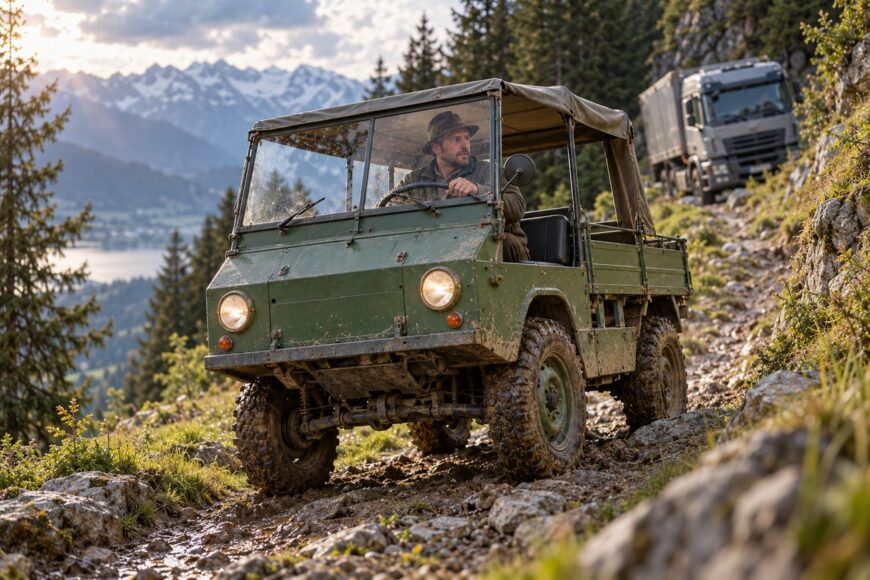
The Puch Haflinger is tiny enough to look like a farm implement, yet capable of reaching mountain ground that defeats much larger 4x4s. Its narrow body, low weight, portal axles, and compact turning circle were designed for tracks, slopes, and rough access roads rather than suburban errands.
That ability comes with a clear ownership bargain. You gain exceptional access to narrow terrain but accept modest speed, heavy noise, corrosion risk, scarce parts, and repairs that often require specialist knowledge. The Haflinger’s reputation for toughness is deserved only when the individual vehicle has been maintained correctly; condition matters more than the badge or military history.
- What the Puch Haflinger Was Built to Do
- The Engineering Behind Its Mountain-Goat Reputation
- How It Drives: Brilliant Off-Road, Demanding on Asphalt
- The Ownership Problems Enthusiasts Underestimate
- Buying and Restoring a Haflinger Without Buying a Problem
- Who Should Own One—and Who Should Walk Away
- Frequently asked questions
- What tools and manuals should a new Haflinger owner obtain first?
- How should a Haflinger be stored between trips?
What the Puch Haflinger Was Built to Do
Steyr-Daimler-Puch built the Haflinger in Austria from 1959 to 1974. Approximately 16,000–18,000 vehicles were produced, making it unusual rather than genuinely common today. The design came from a practical military and utility requirement: carry people and equipment over alpine tracks where a conventional truck was too wide, heavy, or cumbersome.
At approximately 1.3 m wide and 3.1 m long, the Haflinger can fit through forest lanes and mountain paths that force larger vehicles to turn around. Its frame-based compact 4×4 layout also keeps the mechanical components accessible and gives the body a useful working shape. The approximately 600–650 kg curb weight helps it cross soft ground without sinking as quickly as a full-size utility vehicle.
Payload is approximately 500 kg, a useful figure for tools, supplies, or a small working crew, although the limited body volume becomes restrictive for serious farm work. Alpine farmers, foresters, and municipal services valued access more than comfort. The Austrian and Swiss militarizes used the same basic strengths for transport, communications, and field duties.
Special body styles included ambulances, radio vehicles, pickups, and vans. These versions show how broad the Haflinger’s original mission was, but none turns it into a family SUV. It is best understood as a lightweight mountain work vehicle that can be road-registered, rather than a small recreational 4×4 designed around highway travel.
The Engineering Behind Its Mountain-Goat Reputation
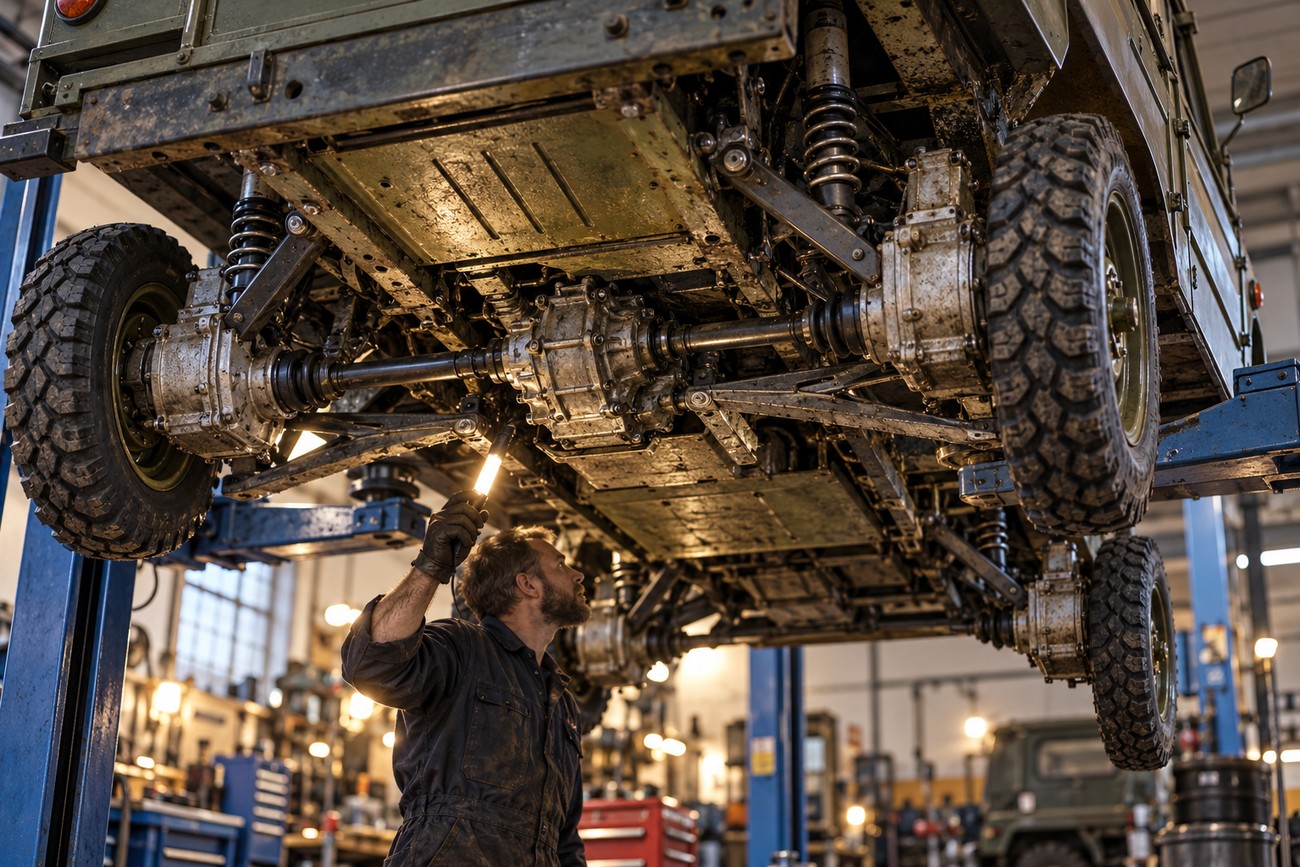
The chassis explains most of the Haflinger’s ability. Independent suspension is used at all four wheels, allowing each wheel to follow uneven ground while the frame stays relatively composed. Portal axles raise the wheel centers above the axle housings, providing valuable ground clearance without requiring enormous tires.
A four-speed manual gearbox is paired with a low range, and the transfer case includes a disconnectable front axle. Low gearing gives the engine a slow, controllable pace on steep climbs and technical ground. It also reduces the temptation to attack obstacles with speed, which is helpful because momentum can quickly damage old driveline components.
Interaxle and wheel differential locks were fitted to most military versions. Used properly, they help maintain drive when a wheel unloads or loses grip. Equipment varies between vehicles, especially among civilian examples, so a seller’s description should be checked against the actual levers, linkages, and service records.
Power comes from a 0.643-litre air-cooled flat-twin petrol engine producing approximately 24–27 hp at about 4,000 rpm. That output sounds modest because it is modest, but the gearing and low mass allow the Haflinger to work effectively at walking speed. The engine is mechanically simple; the surrounding systems, including portal reducers, locks, cooling details, and aged controls, are not automatically simple to repair.
The result is a machine that rewards smooth inputs. Steady engine revs, the correct low gear, and careful load management protect the drivetrain better than heroic throttle use. A mechanically sympathetic driver can make impressive progress without treating every climb as a test of strength.
How It Drives: Brilliant Off-Road, Demanding on Asphalt
Off-road, the Haflinger feels larger than its dimensions suggest. Its narrow track reaches confined paths, its low mass limits damage to soft ground, and its portal axles provide clearance where an ordinary compact vehicle would drag its differentials. The low range makes steep terrain controllable, provided the surface offers enough grip and the vehicle is in sound mechanical condition.
Road use exposes a different character. Typical cruising speed is about 60–70 km/h, with a maximum of up to about 80 km/h. At those speeds, the engine is busy, the cabin is loud, and wind and mechanical noise dominate conversation. Long highway journeys are possible in the right circumstances, but they are tiring and leave little reserve for fast traffic or sudden maneuvers.
Real-world fuel consumption is commonly about 10–12 L/100 km and can be higher off-road. The small engine does not guarantee motorcycle-like economy because the gearing is aimed at traction and the vehicle often works hard. A buyer expecting cheap daily transport may be surprised by both fuel use and the cost of keeping uncommon mechanical parts serviceable.
Handling on asphalt also depends heavily on wear. Old brakes, tired suspension, steering play, and portal-axle geometry can make the vehicle feel nervous at speed. It is excellent at going slowly in difficult places, not at blending comfortably into modern highway traffic. Nor is it unstoppable: deep mud, poor grip, steep angles, limited power, weak brakes, and worn components remain real limits.
The Ownership Problems Enthusiasts Underestimate
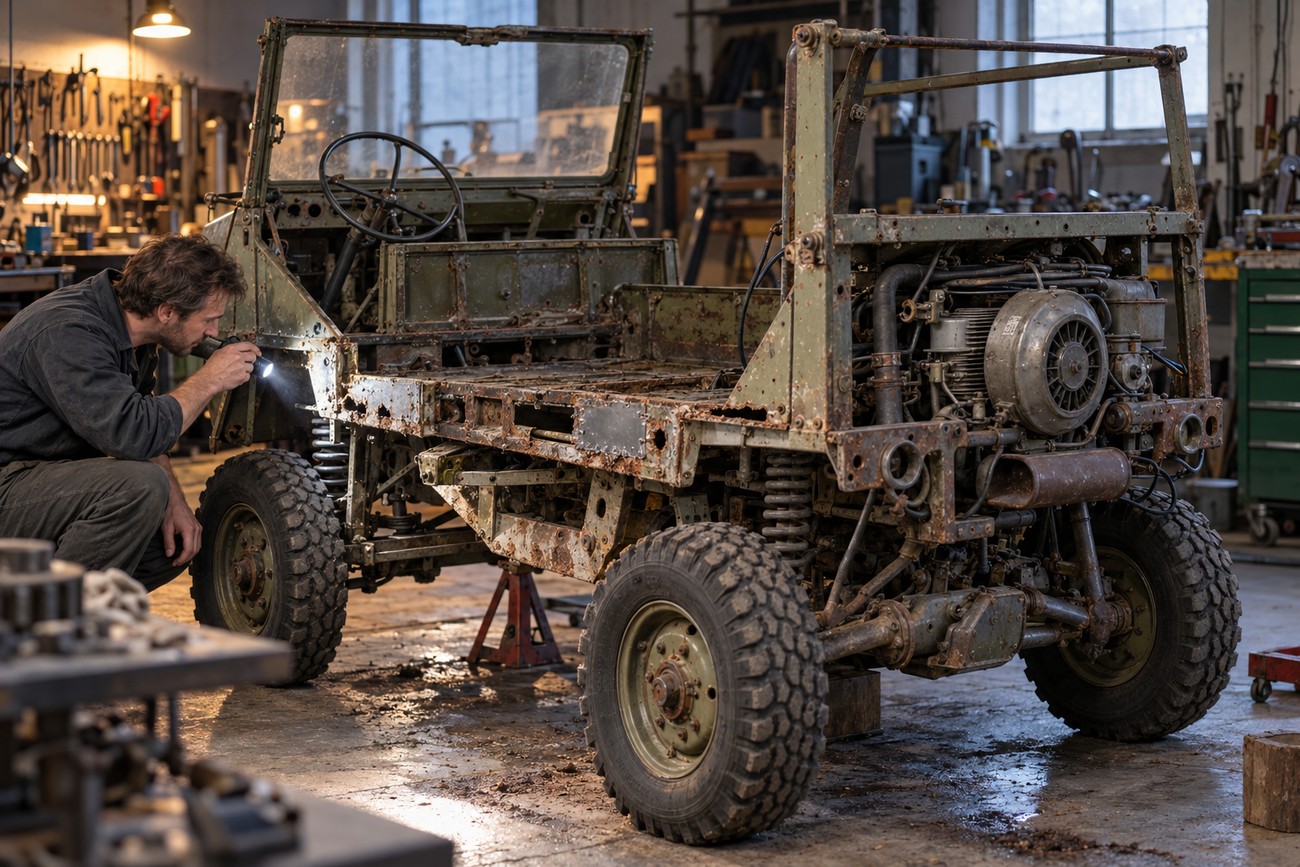
Corrosion is the first major threat. Former military vehicles may have spent years outdoors, and water can remain in body cavities, frame areas, and other poorly drained spaces. A shiny exterior can conceal repairs, thin metal, or fatigue around structural points, so paint quality tells little about the vehicle’s real condition.
The air-cooled engine needs clean cooling passages and sensible operating conditions. Hot weather and prolonged heavy climbs can cause overheating if cooling is neglected or the engine is held under excessive load for too long. The correct response is usually better maintenance and driving technique, rather than simply adding power and asking the original system to cope with more heat.
Brakes may feel weak and require frequent adjustment, especially on former military vehicles. Noise, vibration, and limited sound insulation make the cabin physically demanding over distance. These are fundamental traits of the design, not small faults that a minor refresh will remove.
Parts can be rare and expensive, often requiring orders from Austria or Switzerland. A general repair shop may understand basic mechanical work yet lack experience with the Haflinger’s portal reducers, differential locks, or unusual service procedures. That gap can turn a straightforward fault into a long, expensive repair.
Calling the Haflinger almost indestructible is therefore misleading. Its simple architecture can be durable, but reliability varies substantially with the condition of the individual vehicle, cooling, lubrication, correct gearing, and maintenance. A neglected example is still a neglected old vehicle, regardless of its military reputation.
Buying and Restoring a Haflinger Without Buying a Problem
Start with the frame and body, not the paint or accessories. Inspect for fatigue, concealed cracks, poor welding, and severe rust, particularly in areas where water can collect. Former military service is not an automatic warning of failure, but it is a reason to demand a careful inspection rather than assuming that official use guaranteed gentle treatment.
Check the brakes, steering, suspension, cooling system, and portal reducers before calculating a restoration budget. Reducer condition is especially important because specialist tools and relevant experience may be needed for proper service. A test drive should include low-range operation, changes between drive modes where fitted, braking from different speeds, and listening for unusual noises under load.
Cooling-system condition and portal-reducer health deserve attention before cosmetic restoration. A sound donor Haflinger can also be more valuable than months spent chasing rare individual parts.
A cheap military example can cost substantially more to make dependable than a sound survivor. Previous welding, hidden corrosion, missing documentation, and worn driveline parts quickly consume the apparent saving. The sensible comparison is the cost of a usable vehicle, not the purchase price of a project.
High-power engine tuning is another common mistake. More output increases thermal and mechanical demands, while the original vehicle was designed around a modest engine and carefully chosen gearing. Cheap suspension or brake parts can create rapid wear and poorer control, so component quality matters more than saving money on the first order.
Owners sometimes keep a second Haflinger as a donor because specific parts are difficult to source. Club networks also exchange drawings and locally made brackets or body components. Some owners add oil or air cooling and improved cooling shrouds for heavy-duty use, but such changes should support a sound system rather than disguise an unresolved fault. Outdoor storage without proper weather protection accelerates corrosion and is a poor long-term strategy.
Who Should Own One—and Who Should Walk Away
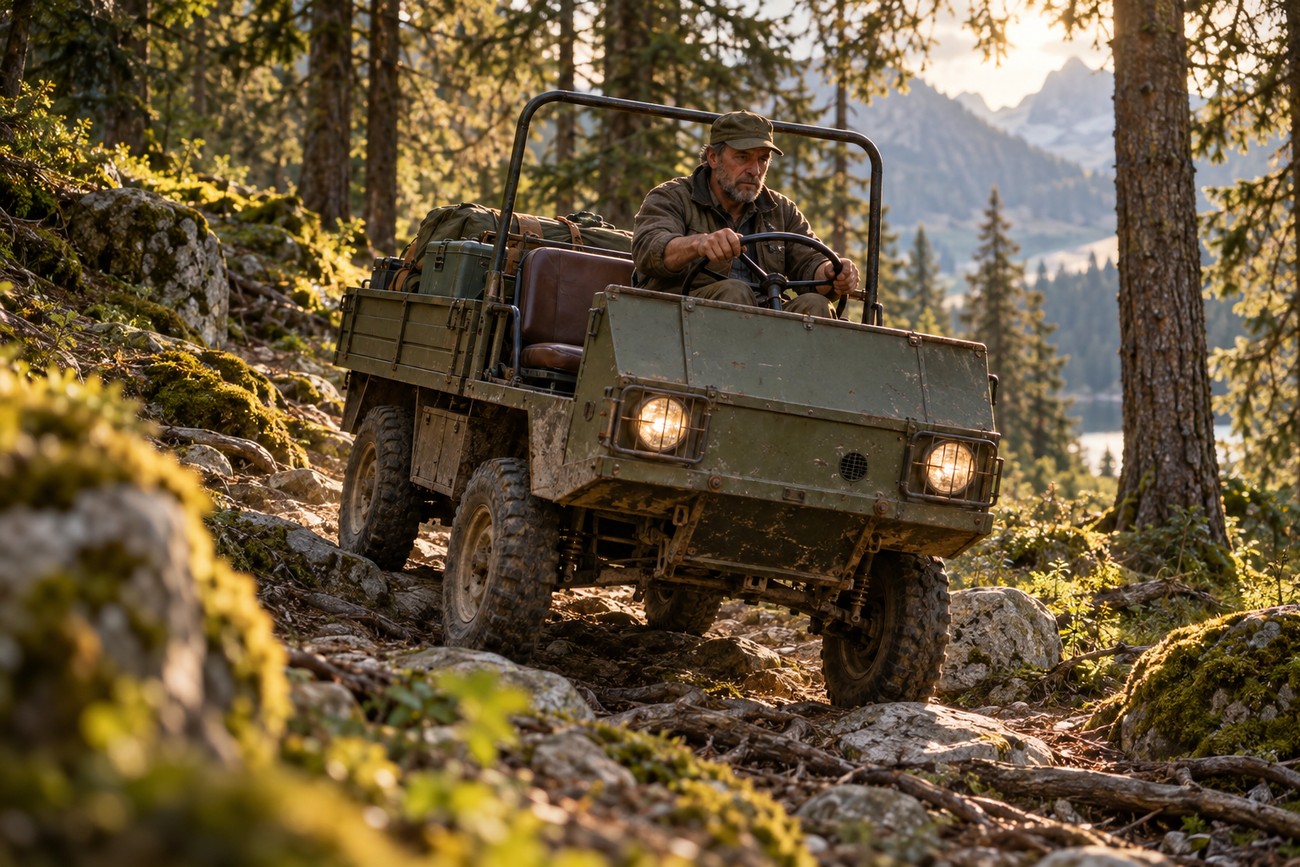
The right owner enjoys slow technical driving, narrow trails, mechanical involvement, and the process of keeping an unusual vehicle useful. Club support, original documentation, and access to a specialist can make ownership far easier. The Haflinger is rewarding when its limitations are part of the appeal rather than an inconvenience to be endured.
It is a poor choice for someone needing quiet highway travel, generous cargo space, easy servicing, or dependable daily commuting. Limited cargo volume and payload can become a serious constraint on a farm or utility job, even though the vehicle reaches places larger equipment cannot. Its useful working area is defined by access, not by how much it can carry.
Registration deserves attention before money changes hands. Many European examples may qualify as historic vehicles, while US examples may be registered as antique or collector vehicles, but local rules vary. Insurance, inspection requirements, and permitted use can change with that classification.
Former military vehicles may also have missing VIN plates, incomplete service histories, or document gaps that complicate registration. Confirming identity and paperwork early is less exciting than inspecting the engine, but it can determine whether the finished vehicle is legally usable. The Haflinger makes sense as a specialized classic and trail tool; it makes much less sense as an impulse purchase based only on its legend.
Frequently asked questions
Practical ownership depends on preparation as much as mechanical enthusiasm. Two simple routines—having the right information and protecting the vehicle between trips—prevent many avoidable delays.
What tools and manuals should a new Haflinger owner obtain first?
Obtain the original workshop and operating documentation before undertaking major repairs. The manual explains service procedures, adjustment points, lubrication requirements, and the correct use of the transmission and locks. It is particularly valuable because a generic 4×4 manual will not cover the Haflinger’s portal reducers and control systems.
A new owner should also identify the specialist tools required for drivetrain and portal-reducer work, then establish contact with a knowledgeable club or parts network. That preparation helps distinguish a repair that can be handled at home from one requiring proper fixtures and measurement. Keeping a record of part numbers, previous modifications, and service dates is equally useful when the vehicle changes hands again.
How should a Haflinger be stored between trips?
Store it under cover in a dry, ventilated space rather than leaving it outdoors under a trapping cover. Clean mud from the frame, wheel areas, and body cavities, then inspect places where water can remain after washing. Moisture left in those areas accelerates corrosion, especially on vehicles that already have repaired or weakened metal.
Before storage, keep cooling passages and engine shrouds free of debris, check fluid levels, and maintain the battery with suitable care. Open or drain areas that are designed to shed water, and inspect again before the next trip. A short storage routine costs little compared with repairing corrosion hidden in the frame or body.







