
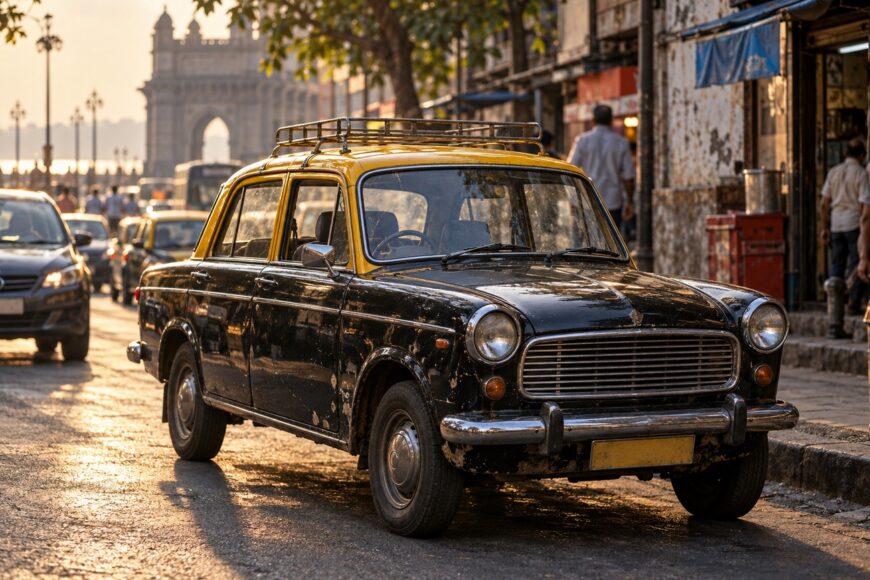
In Mumbai, the black-and-yellow taxi became part of the city’s visual grammar. For decades, many of those Kaali Peeli cars were Premier Padminis: compact sedans with upright bodies, modest engines, and a working life far harsher than their neat proportions suggested. They carried commuters, luggage, wedding parties, and generations of city memories.
The Padmini was an underpowered, outdated, and often battered car by modern standards. Its lasting value comes from a different source: the urban history attached to it, the taxi miles recorded in its worn interior, and the individuality of surviving cars. Assessing one today requires more than repeating a catalog power figure or calling it an Indian Fiat.
- From Fiat 1100 to Premier Padmini
- Why the Padmini became Mumbai’s taxi
- Premier Padmini specifications: what the numbers really mean
- The compromises owners notice today
- Buying one: inspect the shell before the story
- Myths, version differences, and the car’s lasting appeal
- Frequently asked questions
- What happened to the Premier Padmini?
- What is the price of a Premier Padmini in India?
- Who owned or produced the Premier Padmini?
- What is the price of a Fiat 1100 in India?
From Fiat 1100 to Premier Padmini
Premier Padmini was produced in India by Premier Automobiles Limited as a licensed Fiat 1100 derivative. That relationship explains the car’s basic architecture, yet it does not make every Indian example an untouched Italian Fiat 1100. Local production brought changes in specification, equipment, materials, and detail design over a long manufacturing history.
The dates themselves require caution. Sources cite production starting in 1964 or 1968 and ending in 2000 or 2001. The disagreement reflects different ways of counting the introduction of related models, local production, and the final run. A buyer should therefore verify the individual car through its documents, identification plates, engine details, and period equipment rather than treating one database date as definitive.
Older records and advertisements may use several names, including Fiat 1100 Delight, Premier President, and Premier Padmini. These labels are useful search terms when tracing a car’s past, especially because sellers sometimes apply the most familiar name to a vehicle assembled from parts of different years.
The Indian-market evolution matters mechanically and historically. A Padmini should be judged as a locally produced, locally used automobile with its own production story. Its Fiat ancestry adds context; it does not guarantee Italian specification, identical performance, or interchangeable details across all years.
Why the Padmini became Mumbai’s taxi
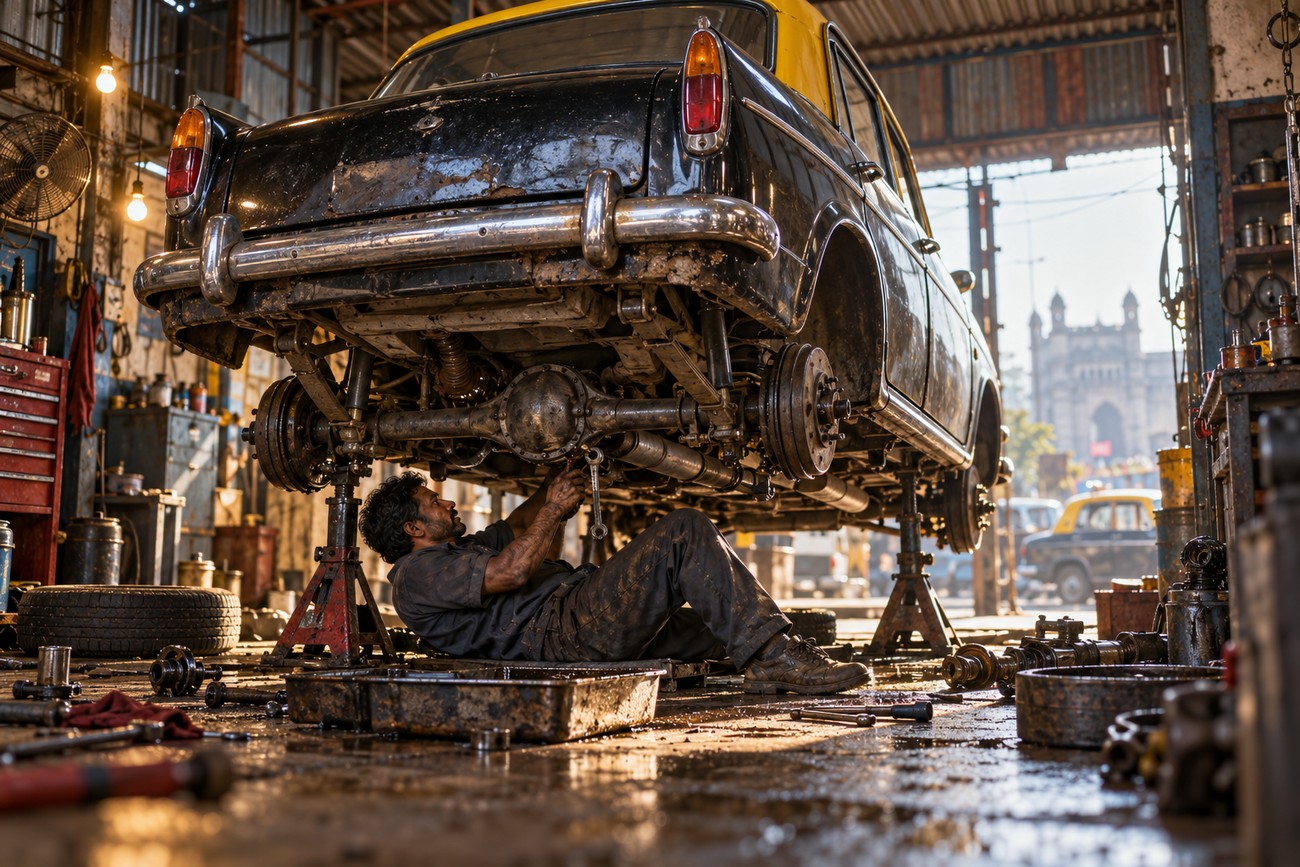
The Padmini became strongly associated with Mumbai’s Kaali Peeli taxis because its compact dimensions suited crowded streets, while its simple mechanical layout was familiar to local repairers. Rear-wheel drive, a four-speed manual gearbox, and a small petrol engine offered a workable platform for commercial service. These were practical advantages, even if the car’s reputation later became wrapped in nostalgia.
Taxi operators valued a vehicle that could be kept moving through routine maintenance and repeated repairs. A known design could be serviced by workshops accustomed to its faults, and a relatively small body was easier to place in dense traffic. The car’s long service life therefore reflected operating familiarity as much as engineering brilliance.
Mumbai gave the Padmini its strongest cultural identity, but the model was sold beyond that city and was not exclusively a taxi. Private owners used it as well, so two cars with the same badge can have entirely different histories. One may have spent decades as a lightly used family sedan; another may have endured continuous commercial work.
That distinction is important in the collector market. Long taxi service often leaves high mileage, repeated body repairs, mixed parts, worn trim, and modifications made for daily survival. A taxi connection can increase historical interest while simultaneously reducing the mechanical and structural value of the particular car.
Premier Padmini specifications: what the numbers really mean
The following figures describe the commonly documented specification, with ranges included where references disagree. They are a starting point for identifying a car, not a substitute for checking its actual engine, gearbox, and production details.
| Item | Commonly cited specification |
|---|---|
| Engine | 1.1-litre, 1089 cm³ inline-four petrol engine |
| Published power | References range from 40 to 53 hp; 42 and 47 hp are also commonly cited |
| Published torque | Approximately 69–71 Nm |
| Transmission | Four-speed manual; early versions may lack synchronization on first gear |
| Drivetrain | Rear-wheel drive |
| Seating | Four-seat sedan or saloon |
| Wheelbase | Approximately 2339–2340 mm |
| Length and width | Approximately 3920–3930 mm long and 1460–1461 mm wide |
| Reference kerb weight | Approximately 895 kg |
The wide power range is a warning against quoting one “correct” number. References list 40, 42, 47, and 53 hp, reflecting different specifications, carburetor settings, model years, markets, and measurement methods. Some engines may also have been tuned for economy or altered during their working lives.
Torque figures show the same need for restraint, although the published range is narrower at approximately 69–71 Nm. A light body helps the car feel usable around town, yet the figures still describe a modest performer. Early gearboxes may lack synchronization on first gear, requiring deliberate shifts and making worn linkage or clutch components especially noticeable.
The compromises owners notice today
Slow performance is the first complaint from drivers accustomed to modern traffic. The Padmini can manage ordinary urban duties when healthy, but acceleration is limited by its small engine and period gearing. Joining faster traffic demands planning, and a tired engine, dragging brakes, or an overloaded cabin can make the car feel slower still.
The cabin is basic by contemporary standards. Seating, ventilation, controls, and storage reflect an older economy sedan rather than a modern commuter car. Ergonomics can feel unfamiliar, and the narrow body limits shoulder and luggage space. Its four-seat layout is useful for authenticity and short trips, though it offers little reason to expect modern passenger comfort.
Noise, vibration, and rough running are common complaints on old or heavily used examples. Some of that character belongs to the design; much of it comes from worn engine mounts, tired suspension, poor carburetor adjustment, loose trim, or years of improvised repairs. A well-maintained car can feel coherent and mechanical, while a neglected taxi may feel harsh in every control.
Safety also needs a realistic appraisal. The design comes from an era when passive-safety expectations were far below current norms, and it lacks the protective systems buyers now take for granted. Braking performance, tires, lighting, and structural condition deserve close attention, but careful maintenance cannot turn an old Padmini into a modern safety car.
Taxi use magnifies each weakness. Commercial cars accumulate wear in doors, seats, pedals, steering components, and suspension, then receive repairs according to urgency and cost. A late, heavily used taxi can differ greatly from a maintained private car even when both retain the same badge and general appearance.
Buying one: inspect the shell before the story
Start with the body shell, floors, sills, structural members, and suspension mounting areas. Inspect corrosion from below, look for welded patches, and check whether doors, hood, and trunk align without excessive force. Fresh paint can hide fatigued metal, accident repair, and moisture trapped around repairs.
Taxi history deserves documentation rather than automatic admiration. It may establish a genuine link to Mumbai’s transport culture, yet it also suggests high mileage, repeated repairs, and non-original replacement parts. Examine the engine, gearbox, axle, steering, and brakes as separate systems instead of assuming that a convincing black-and-yellow finish means the mechanical package is complete.
Restorers verify floors, sills, and structural mounting points before ordering trim or chasing a matching engine number. On a former taxi, hidden shell repairs can destroy more value than a tired engine, which is usually easier to rebuild or replace.
Parts consistency is another diagnostic tool. Compare the VIN or identification details with badges, engine numbers, gearbox features, dashboard fittings, and period documents. A car assembled from several Padminis may still be enjoyable, but its identity and restoration budget should be described honestly.
Sound body panels and correct parts can be difficult to source for some examples. Cosmetic work should follow structural assessment, not precede it. A polished exterior, fresh upholstery, and a sympathetic story cannot compensate for serious corrosion or poorly repaired mounting points.
Myths, version differences, and the car’s lasting appeal
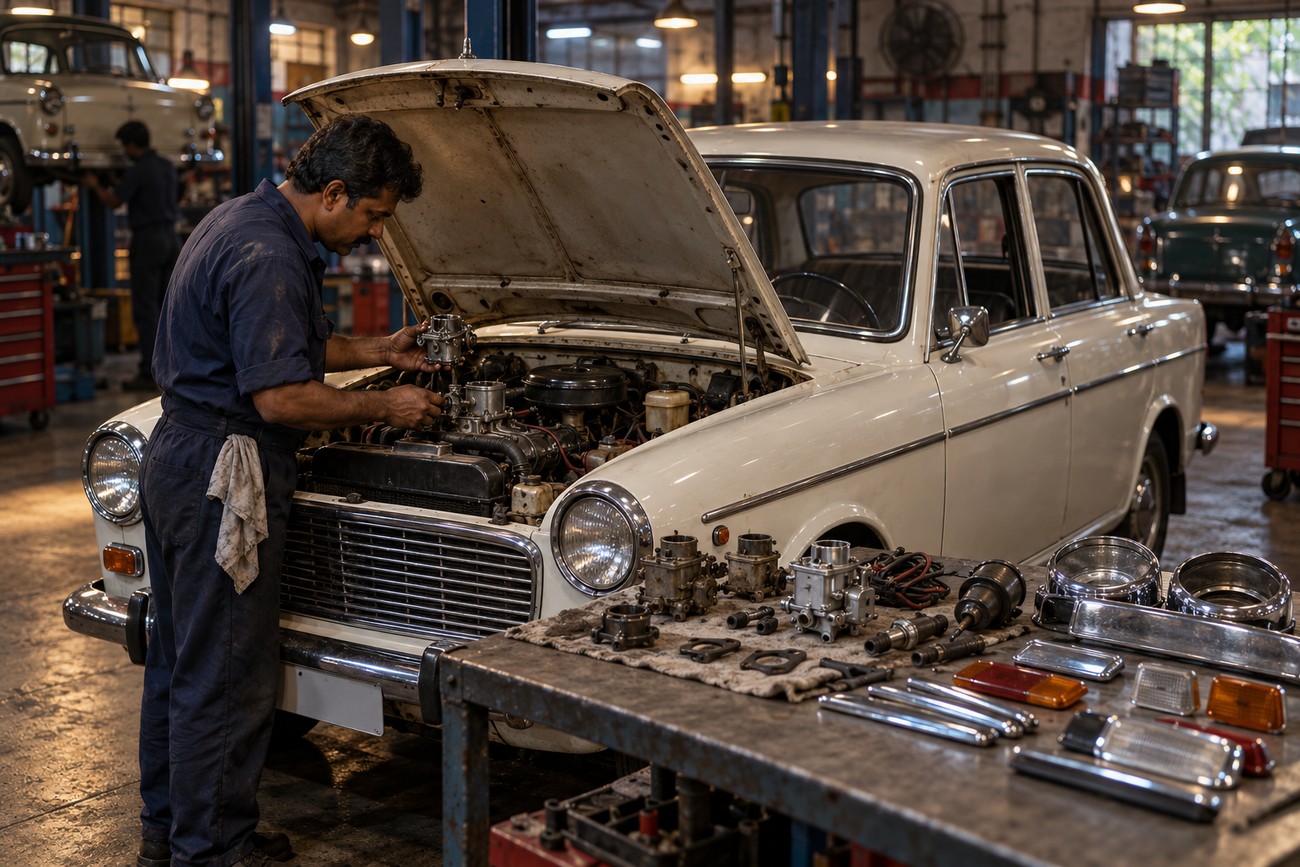
The first myth is that every Padmini is simply the same Fiat 1100. The licensed connection is real, yet the Indian version changed through local production, and early and late cars may differ in engines, equipment, badges, and small mechanical details. Identification by year alone is unreliable when documents and parts disagree.
The second myth is that 42 hp is the only correct output. Published figures range from 40 to 53 hp, with 42 and 47 hp commonly cited. The sensible conclusion is that power depends on the specific version and measurement method; an inspection of the actual engine and carburetion is more useful than arguing over a single catalog figure.
The third myth treats every Padmini as a Mumbai taxi. Mumbai made the model a major Kaali Peeli icon, but it was sold more widely and also served private owners. A non-taxi example may have less cultural drama and considerably better originality or condition.
That tension explains the car’s appeal. Collectors often value an individual Padmini’s provenance, original details, and connection to city life more than outright performance. The best purchase is therefore rarely the car with the loudest restoration story; it is the example whose structure, identity, and history can be checked.
Frequently asked questions
What happened to the Premier Padmini?
Production ended around the turn of the century, with sources citing 2000 or 2001. As newer cars offered stronger performance, greater comfort, and more modern safety expectations, older taxis gradually left daily service. Surviving Padminis then moved into the collector, heritage, and enthusiast market.
The transition changed the meaning of the car. A former taxi is now preserved as evidence of Mumbai’s transport culture, while a private example may be valued for originality and condition. Both can be historically important, but their restoration needs are usually very different.
What is the price of a Premier Padmini in India?
There is no reliable single market price for every Premier Padmini. Value depends on structural condition, restoration quality, documentation, originality, working mechanical systems, and provenance. A genuine taxi history may add cultural interest, while severe corrosion, missing papers, or a heavily mixed set of parts can substantially reduce practical value.
Compare cars by inspection rather than paint quality alone. A solid, documented project may be a sounder purchase than a glossy car requiring hidden shell repairs, unavailable trim, and major mechanical work.
Who owned or produced the Premier Padmini?
Premier Automobiles Limited was the Indian company historically associated with production. Fiat supplied the original design and licensing connection, while Premier built the Indian-market derivative and developed its own production history.
This corporate distinction matters when researching parts, documents, and identity. An Indian Premier Padmini should be assessed according to its specific local specification, rather than assumed to match an imported Fiat 1100.
What is the price of a Fiat 1100 in India?
The value of a Fiat 1100 in India depends on what the car actually is: an original imported Fiat, a restored example, or a locally produced model related to the Fiat 1100. Those categories cannot be priced as one group.
Condition, provenance, originality, restoration quality, and documentation remain decisive. A Premier Padmini may share design ancestry with a Fiat 1100 while carrying a different market identity and a different parts and ownership history.







