
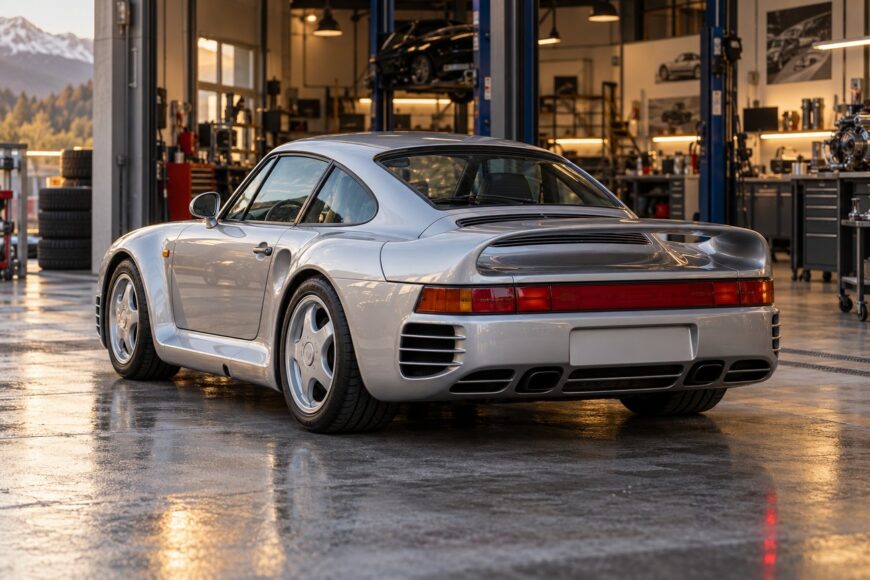
The Porsche 959 was conceived for a racing rulebook, yet became one of the most technically ambitious road cars of the 1980s. Group B rally regulations called for a production version, giving Porsche a reason to put an unusually sophisticated engine, all-wheel drive, and chassis package into a car customers could drive on public roads. Its speed made the headlines; the engineering brief explains why the car exists.
That distinction still matters. A 959 can be road legal, rare, and valuable while remaining difficult to register in a particular country or keep in reliable driving condition. Certification history, specialist maintenance, original components, and decades of aging all shape the experience. Treating it as a faster old 911 misses both its achievement and the obligations that come with owning one.
- Why Porsche Built the 959 for Group B
- The Technology That Made the 959 Different
- Performance, Versions, and the Limits of the Numbers
- Why Making the Porsche 959 Road Legal Was So Difficult
- Owning a 959: The Cost of Keeping the Technology Alive
- Buying a 959 Without Confusing Rarity With Value
- Frequently asked questions
- How much is a Porsche 959 worth today?
- How many Porsche 959s are left?
- What is the holy grail of Porsches?
Why Porsche Built the 959 for Group B
The 959 began as a Group B homologation project with a required road-going production version. Homologation links a competition design to cars built for public use: the manufacturer cannot simply present a one-off rally machine and call it a production model. That requirement gave Porsche a framework for developing hardware intended to work under demanding conditions while still belonging to a recognizable road car.
Group B’s influence is clearest in the priorities Porsche chose. Traction, controllable power delivery, low weight, and aerodynamic stability mattered alongside outright engine output. The road car therefore became a place to combine systems that a conventional performance update to the 911 would not have required. Its familiar silhouette can obscure how much development took place underneath it.
A homologation purpose should not be confused with a guarantee that every road-car feature was ideal for daily use. Competition-driven projects often accept complexity because it serves a technical objective. On the 959, that complexity helped make the production car remarkable, while leaving later owners responsible for maintaining equipment built in tiny numbers.
The project’s lasting significance also reaches beyond its original rallying framework. The 959 demonstrated how an electronically managed full-time all-wheel-drive system could form part of a high-performance Porsche road car, rather than serving only as a traction aid for poor weather. In that sense, it connected a Group B engineering exercise with the later development of all-wheel-drive Porsche sports cars. Its place in that history is more informative than any claim based solely on top speed.
The Technology That Made the 959 Different
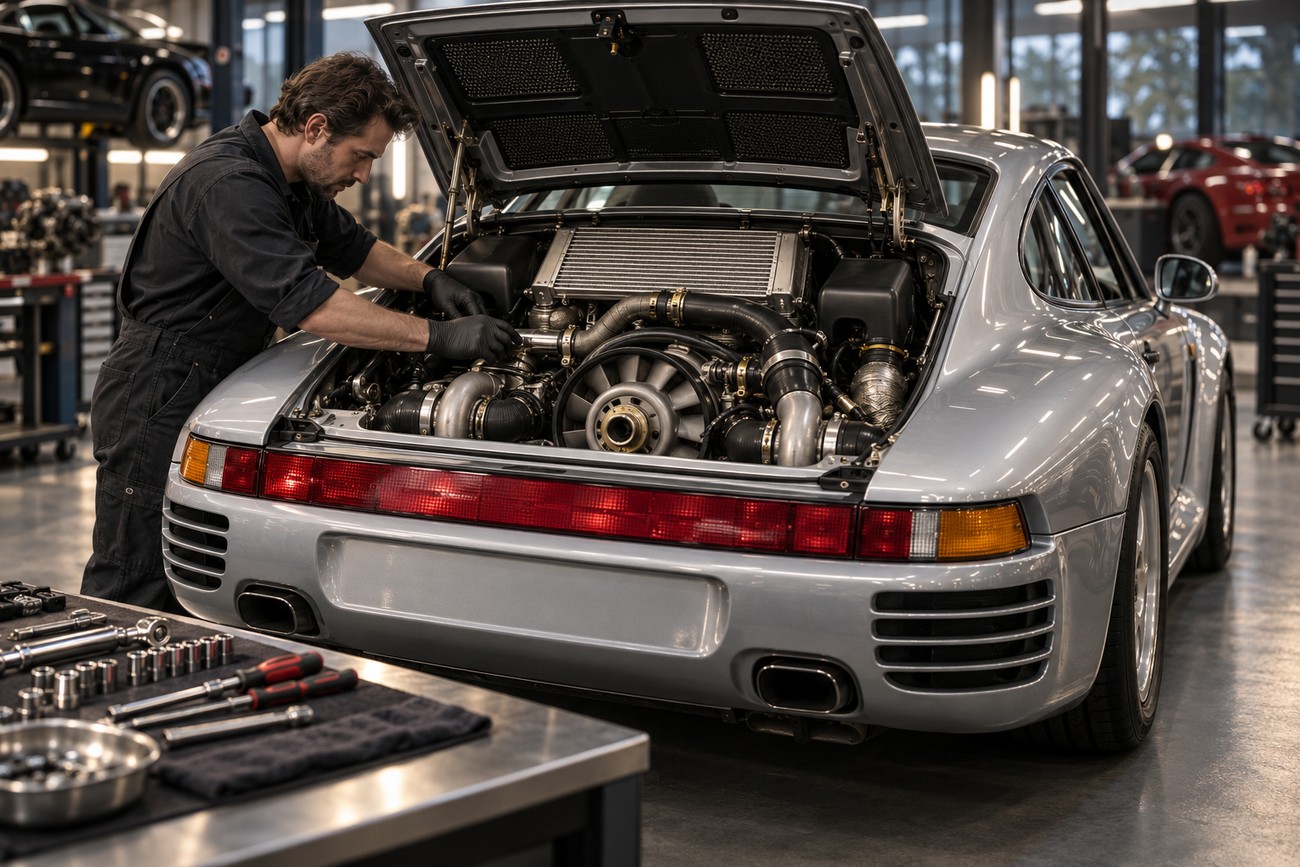
At the rear sat a 2.85-liter horizontally opposed six-cylinder engine with two turbochargers, commonly rated at approximately 450 hp in road form. Turbocharging supplied the power needed for exceptional speed from a relatively compact engine. Making that output usable was the harder part: the engine had to operate as one element of a coordinated drivetrain, rather than overwhelm the tires whenever boost arrived.
Its cooling arrangement reveals the project’s engineering ambition. The cylinder heads were liquid-cooled, while the cylinders were air-cooled, combining approaches within the same engine. The distinction matters because heat management around a powerful turbocharged engine is central to durability and consistent performance. It also means a present-day technician needs knowledge of the 959’s actual layout, rather than assumptions carried over from another flat-six Porsche.
Power passed through a six-speed manual transmission and an electronically managed full-time all-wheel-drive system with torque-distribution logic. For its era, the ability to manage how drive was apportioned was a substantial step beyond treating four driven wheels as a purely mechanical, fixed-ratio solution. The benefit was usable traction under changing conditions; the ownership consequence is a control system whose sensors, wiring, and associated components must still work together decades later.
Lightweight materials and carefully developed aerodynamics helped the chassis make use of that power. A body that remains stable at high speed serves a different purpose from styling that merely suggests speed, while mass saved in the structure affects acceleration, braking, and response. These choices made the 959 substantially more than a conventional 911 derivative. They also make damage assessment and authentic repair more demanding than a glance at its familiar shape might suggest.
The 959 was one of the most technically advanced road cars of its era. Calling it definitively the most advanced turns a defensible assessment into a marketing contest with no clear measure. Its more useful achievement was integration: the engine, drivetrain, structure, and aerodynamics were developed to make extraordinary performance accessible through a road car. Owners now have to preserve that integration, since changing one element can alter how the others behave.
Performance, Versions, and the Limits of the Numbers
Typical reference figures put the 959 at approximately 3.7 seconds from 0–100 km/h and approximately 317 km/h at the top end. Those numbers explain why it drew attention in the 1980s, but they do not explain the engineering behind them. A car capable of accelerating hard is one thing; making that performance controllable, repeatable, and suitable for road use was the broader task.
Approximately 292 cars were produced across the Komfort and Sport specifications. They should not be treated as interchangeable entries under a single model name: equipment and intended character differ, and individual cars may also vary by market, subsequent work, and ownership history. A buyer comparing two examples needs to establish what each car was when built and what has changed since, before drawing conclusions from a specification label.
Published performance figures also assume that the relevant systems are in suitable condition. Tires of the wrong specification, deteriorated controls, or an engine and drivetrain that have not been maintained correctly can make a car feel unlike the one described in a period test. The headline numbers are historical reference points, not a promise about an individual 959 offered for sale today.
Describing the 959 simply as the fastest Porsche of the 1980s narrows its significance to a contest of figures. Its contribution was systems engineering on a road-going production car: turbocharged power, managed all-wheel drive, aerodynamics, and an unusual engine design developed together. That is why the distinction between a sound, correctly specified example and a superficially impressive one matters so much.
Why Making the Porsche 959 Road Legal Was So Difficult
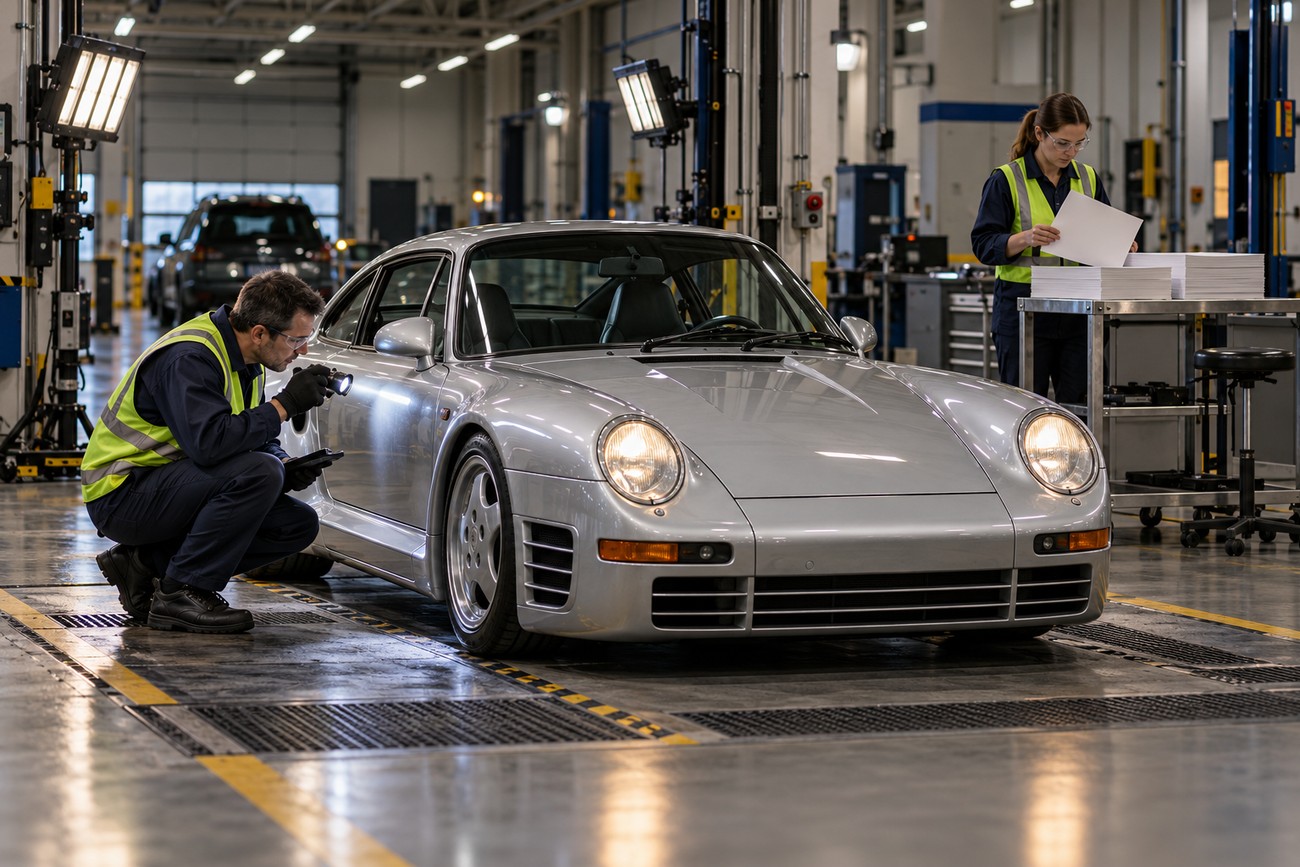
Building a car for the road under a homologation program did not automatically make it eligible for registration in every country. National authorities apply their own certification procedures, and a vehicle’s engineering merit does not substitute for evidence that it meets them. The 959’s road-car status and its legal status in a particular market are therefore separate questions.
The United States illustrates the problem. Certification and crash-test requirements presented a substantial barrier, compounded by the lack of suitable examples to submit for testing. For a car built in such small numbers, supplying cars for a conventional approval process was a serious practical obstacle. The issue cannot be reduced to an importer overlooking a form.
Later exceptional import mechanisms made it possible for certain rare collector vehicles to enter the United States. Such routes are conditional, however, and permission to import should not be read as a blanket statement that every car may be driven without restriction or registered wherever its owner chooses. Import status, applicable use conditions, and registration are distinct matters that depend on the individual vehicle and jurisdiction.
This is a less glamorous part of the 959 story, but it has direct financial consequences. A car can look complete, run well, and have a convincing ownership narrative while still requiring a careful review of its original market, import documents, and subsequent registrations. A later modification or change in status may also make an old account of its legality unreliable.
Before committing to a purchase, ask for the complete paper trail and have it checked by someone familiar with the rules where the car will be kept and used. Verify the vehicle’s identity against its documents, rather than relying on the seller’s summary that it is “road legal.” The strongest conclusion is one supported by records for that specific 959, not by the fact that other examples have been admitted through exceptional routes.
Owning a 959: The Cost of Keeping the Technology Alive
A 959 needs expertise specific to the model. General experience with older Porsche cars is valuable, but it does not automatically cover the interactions among this car’s engine, electronically managed all-wheel drive, and chassis controls. A fault may require patient diagnosis before anyone can identify which component has failed. That specialist time is part of the cost of ownership, even when the eventual replacement part is small.
Parts availability adds another layer of uncertainty. Some components are scarce and expensive; others may need to be found through specialist channels abroad or remanufactured. A modern substitute is not always a simple solution, because fit, system behavior, and originality all matter. Repair decisions can therefore affect both how the car drives and how a future buyer assesses it.
Long periods of inactivity deserve particular scrutiny. Seals and other rubber components can age without road mileage, while tires can become unsuitable despite retaining visible tread. Electrical connections and control systems also need checking after storage. A low odometer reading describes distance traveled; it does not establish that the car has been exercised, maintained, or stored correctly.
Road behavior depends on the condition of the whole package. Correctly specified tires, sound electronics, functioning all-wheel-drive and suspension controls, and the car’s intended weight distribution all contribute to how it responds. A 959 with impressive engine figures but neglected supporting systems may deliver a compromised driving experience. Preventive maintenance and appropriate storage can matter more than preserving an exceptionally low mileage figure.
The practical ownership question is therefore broader than whether you can afford a purchase or an annual service. You need access to a specialist who can diagnose the car, a credible route to parts, and a plan for using and storing it. Delaying a small investigation until a fault becomes unmistakable may make an already difficult repair harder to define and more expensive to complete.
Buying a 959 Without Confusing Rarity With Value
Rarity creates interest, but it cannot settle the value of an individual 959. Originality, documentation, completeness, condition, specification, and legal history all deserve close attention. A well-presented car missing difficult-to-replace original components may be a less secure collector purchase than a less polished example with a coherent history and a clear path to correction.
Start with the car’s identity and paper trail, then compare them with its present specification. Records should help explain ownership, maintenance, significant repairs, modifications, and any import or registration steps. Gaps do not automatically prove a problem, but they increase the work required to establish what you are buying. For a low-production car, that uncertainty can follow you into eventual resale.
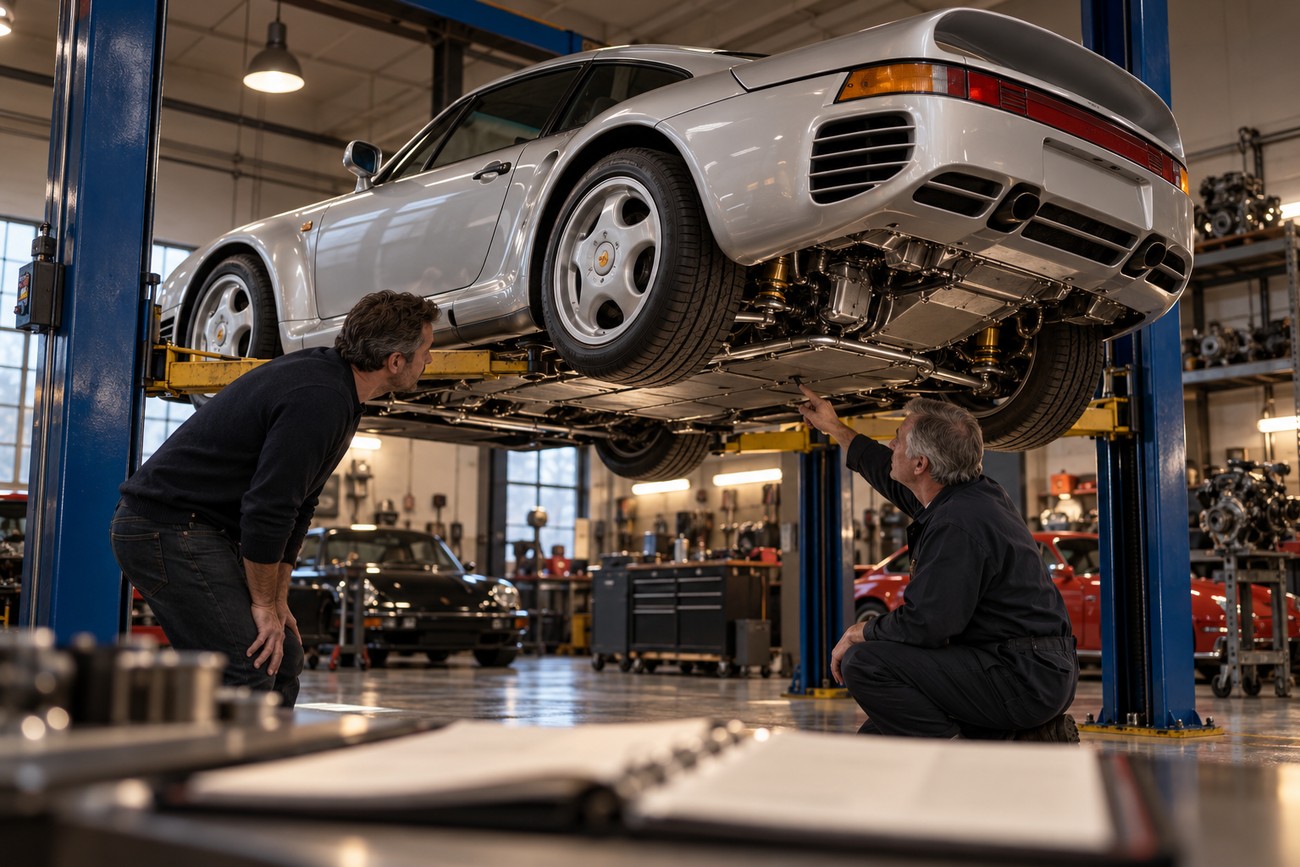
A pre-purchase inspection should involve someone who knows the 959 specifically and has enough time to assess its systems rather than perform a routine visual check. The legal documentation deserves its own review. An ordinary Porsche service history, however extensive, does not by itself demonstrate that model-specific faults were identified or that the car meets the requirements of its current market.
Modifications marketed as improvements need the same scrutiny as visible defects. An alteration may make a car more agreeable to one owner while reducing its authenticity or complicating future diagnosis. Where original parts are included, verify that they belong to the car and are usable. A 959’s rare status does not guarantee effortless resale, and the purchase price does not mark the end of its costs.
Frequently asked questions
The 959’s small production run attracts collectors, but questions about value and survival need individual evidence rather than a single headline number. The distinction between collector significance and practical usability is equally important.
How much is a Porsche 959 worth today?
There is no single fixed market value for a Porsche 959, and a dependable current price range cannot be established from production numbers alone. Specification, originality, provenance, documentation, condition, completeness, and legal status can all change what a buyer is willing to pay. If you are assessing a particular car, compare it with genuinely comparable documented examples and account for any specialist work still required.
How many Porsche 959s are left?
Approximately 292 Komfort and Sport cars were produced in total, but that is a production figure, not a verified count of survivors. No authoritative worldwide surviving-car count is established here. Cars may be stored privately, moved between countries, altered, or absent from public records, so an exact figure should be treated cautiously unless its method and scope are clear.
What is the holy grail of Porsches?
There is no official “holy grail” designation; the phrase reflects a collector’s priorities. The 959 is a strong candidate for someone who prizes Group B origins and integrated 1980s technology, while another collector may value a different part of Porsche history more highly. Its historical importance does not make it the easiest Porsche to drive regularly: specialist support, parts availability, and legal status still matter to an owner.







