
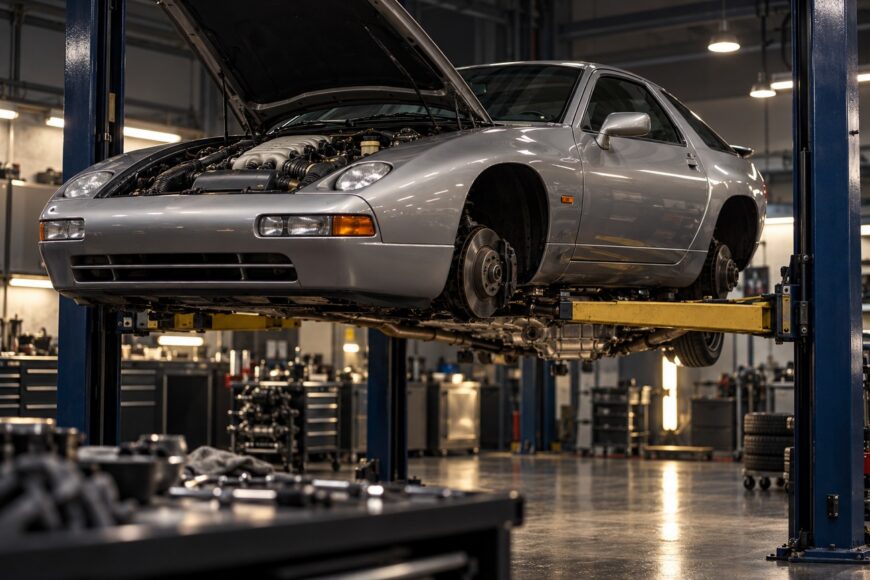
The Porsche 928 GTS has the ingredients of a formidable performance car: a naturally aspirated V8, rear transaxle, near-ideal mass distribution, and the status of the final evolution of Porsche’s long-running front-engine grand tourer. It also has the liabilities of a complex Porsche that is now approximately 31–34 years old. A clean body and a strong first drive can conceal deteriorated lines, tired mounts, leaking hydraulics, and electrical faults that become expensive once diagnosis and access are included.
The GTS matters because it followed a different engineering path from the rear-engine Porsche many enthusiasts expect. Its front-mounted V8 and rear-mounted transaxle give it a distinctive balance, a long-distance character, and a sense of mechanical occasion that still separates it from ordinary used performance cars. That appeal makes the car an underdog, especially when compared with more familiar Porsche models, though it also makes careless buying particularly costly.
The central buying rule is simple: condition, maintenance quality, and inspection history outweigh low mileage or the badge alone. A documented car that has been driven and maintained can be a stronger purchase than a supposedly low-mileage example that spent years in storage. The GTS deserves enthusiasm, but it also demands evidence.
- Why the Porsche 928 GTS Still Matters
- The Final 928: V8, Transaxle, and GTS Specification
- What Age Has Done to the 928 GTS
- Buying a 928 GTS: Inspection Before Emotion
- Ownership Reality: Running an Underdog Porsche
- Myths, Numbers, and the Case for the GTS
- Frequently asked questions
- What is the most desirable Porsche 928?
- What is the holy grail of Porsches?
- Which Porsche has a front engine?
Why the Porsche 928 GTS Still Matters
The 928 GTS was produced for the 1992–1995 model years and represents the final evolution of the 928 family. That position gives it significance beyond a larger engine or a more aggressive appearance. It is the last expression of Porsche’s original front-engine V8 grand-touring idea, refined through years of development before the model disappeared from production.
Its character begins with the layout. The engine sits at the front, while the transmission is mounted at the rear in a transaxle arrangement. This separates the 928 from the rear-engine 911 tradition and gives the car a different response to throttle, steering, and road-surface changes. The result is a fast, composed grand tourer with a mechanical identity that does not depend on imitating a 911.
The GTS is therefore easy to misunderstand. It can look like an expensive old Porsche that has lost the contest against more fashionable models, yet that judgment misses the point of the car. Its appeal comes from the way the V8, long-wheelbase grand-touring brief, substantial cabin, and balanced driveline work together. It is less about a single dramatic feature than about the unusual completeness of the package.
That completeness is also why the GTS attracts owners who value engineering over fashion. The car offers speed, comfort, and a sense of occasion in one large coupe, while retaining enough mechanical individuality to reward an informed enthusiast. The underdog label is appropriate because the 928 has never fitted neatly into the usual Porsche hierarchy, even though the GTS is the most mature version of its concept.
The Final 928: V8, Transaxle, and GTS Specification
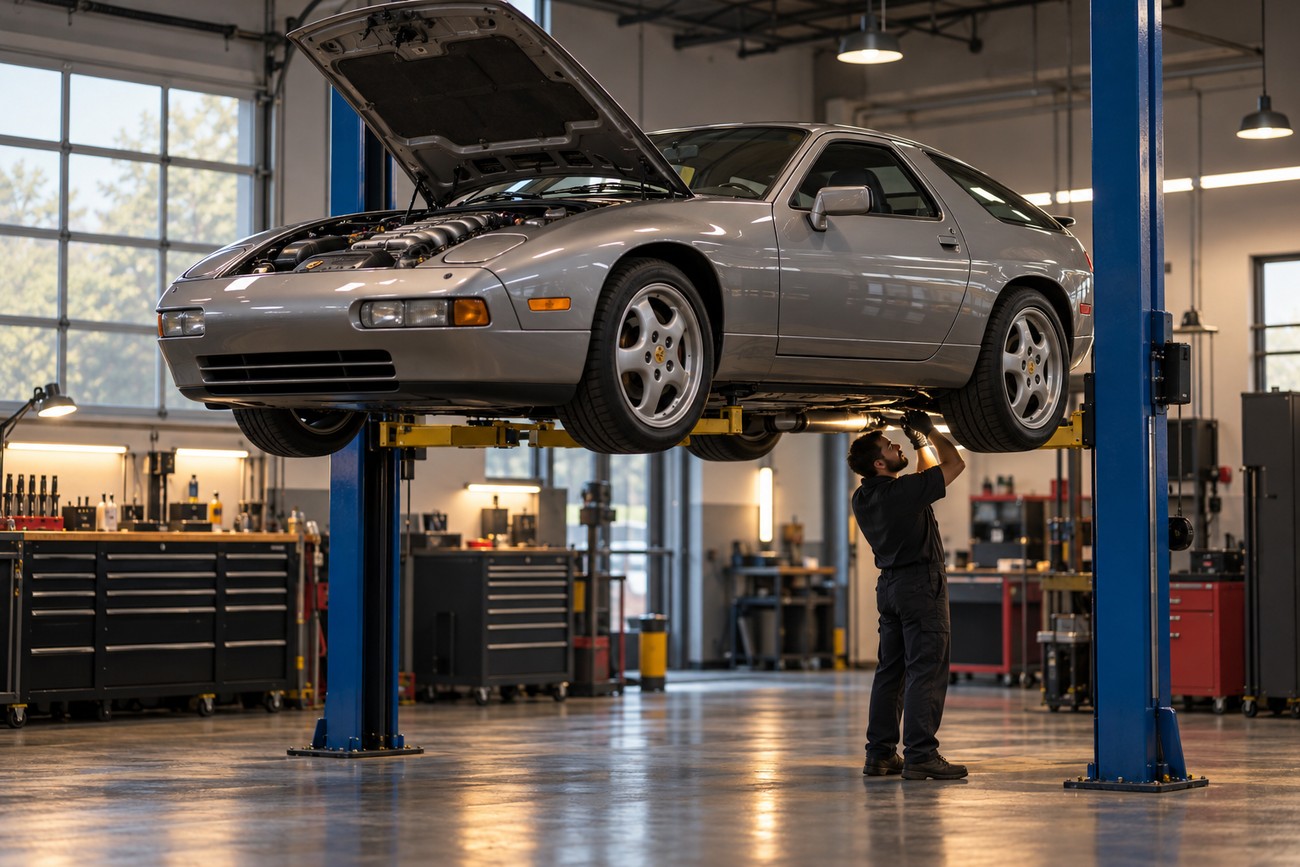
The GTS uses a naturally aspirated 5.4-liter V8. Porsche’s official power rating is 350 PS, approximately 345 hp under the US horsepower convention; 350 PS and 350 hp are not identical. That distinction matters when comparing specifications across markets, advertisements, road tests, and registration documents, where the figures are often simplified or converted without explanation.
The rear transaxle contributes to near-ideal mass distribution by placing the transmission away from the front-mounted engine. In practical terms, the arrangement helps the car feel settled through corners and gives the chassis a balance that suits both rapid touring and demanding roads. The same architecture adds length, components, and access challenges to the driveline, so its engineering advantage does not make inspection or repair simple.
Factory GTS cues include widened rear fenders, a red rear light panel, a body-color spoiler, Cup mirrors, and 17-inch wheels. These details help identify the model and can support a claimed specification, especially when the car’s documentation is incomplete. They should still be treated as clues rather than proof that the car is mechanically correct or that every visible component remains original.
Originality has a limited meaning on a three-decade-old performance car. A replacement part may be the result of careful maintenance, while an untouched component may now be unsafe or worn out. The useful question is whether repairs were carried out correctly and recorded clearly, rather than whether every part has survived unchanged since the car left the factory.
What Age Has Done to the 928 GTS
A typical 928 GTS is approximately 31–34 years old, depending on model year and reference date. At that age, deterioration is often more important than the car’s original specification. Rubber, seals, wiring, hydraulic components, tires, and protective coatings age according to time, heat, moisture, and storage conditions, rather than according to the number shown on the odometer.
Brake and fuel lines can corrode, particularly on cars that have seen little use. Corrosion may be difficult to identify from above and can remain hidden until the underside is inspected closely or components are removed. A car that drives normally still deserves a careful examination of these systems because subjective road impressions cannot certify the condition of lines carrying fuel or hydraulic pressure.
Other recurring age-related faults include sagging engine mounts, old tires, worn brakes, power-steering pump leaks, and electrical faults. Sagging mounts can change how the engine and driveline sit, while old tires may provide less predictable grip even when their tread appears acceptable. A leaking power-steering pump can turn a manageable repair into a wider cleaning and component-inspection job if fluid has traveled through the surrounding area.
The electrical system can be troublesome in a less dramatic way. Instruments, window regulators, comfort equipment, and other small functions may fail intermittently, creating a long list of faults rather than one obvious breakdown. Rich equipment improves the car’s grand-touring character, yet every additional motor, switch, module, and connection creates another possible source of diagnostic work.
Long storage is especially deceptive. A car can emerge from a dry garage with clean paint and a tidy engine bay while seals, lines, tires, and electrical components have deteriorated during inactivity. Problems may become clearer after the car warms up, so a cold start and a short drive provide only part of the evidence. The best assessment includes several operating conditions and enough time for temperature-related faults to appear.
Buying a 928 GTS: Inspection Before Emotion
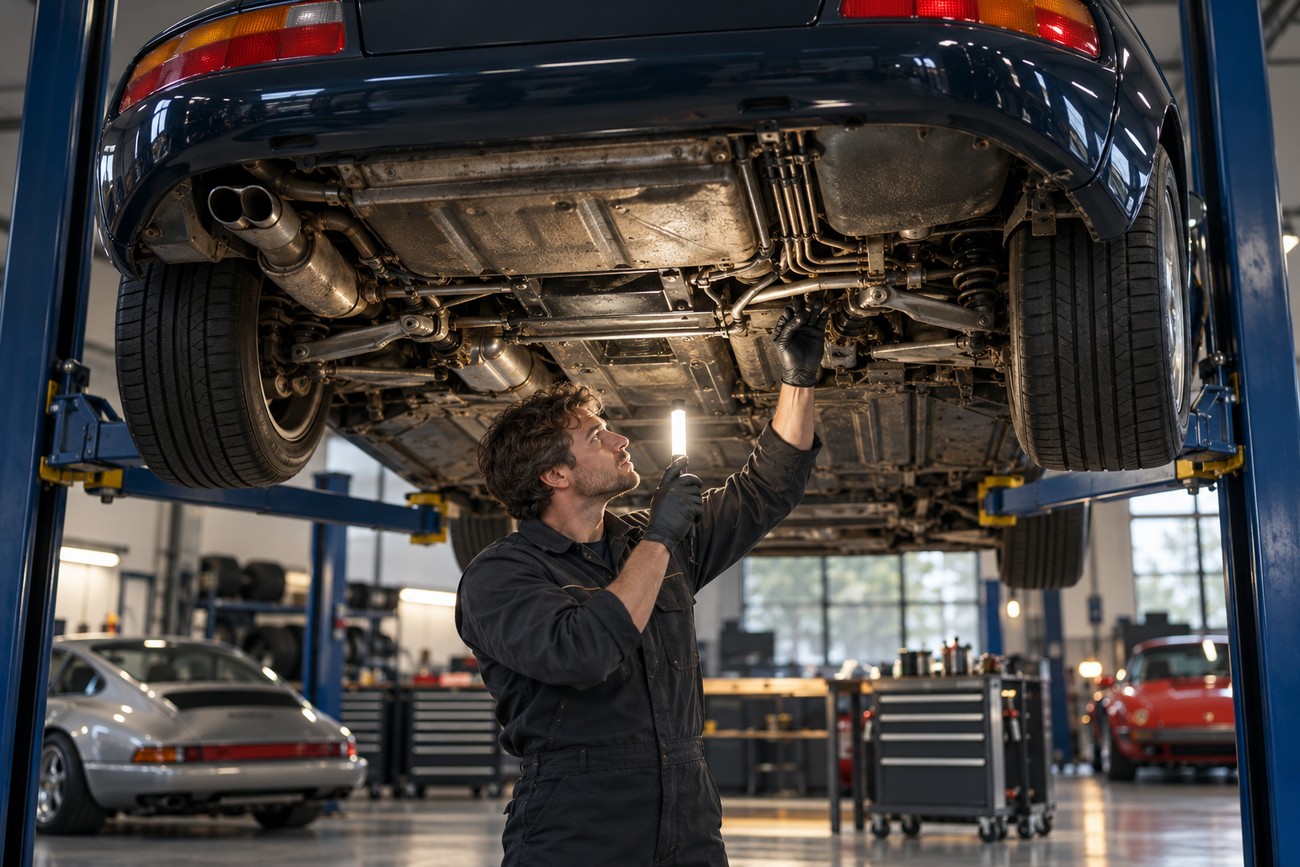
Porsche Club GB recommends an independent pre-purchase inspection, especially for buyers unfamiliar with the 928. That advice is practical rather than ceremonial. A specialist familiar with the platform can recognize poor repairs, abnormal component movement, and warning signs that a general inspection may overlook, while also distinguishing an honestly maintained car from a cosmetically prepared one.
The inspection should begin with the underside and proceed through the systems that determine safety and drivability. Brake and fuel lines deserve direct attention, along with the brake hardware, steering system, suspension-related mounting points, engine mounts, and signs of fluid leakage. The engine and paintwork matter, though they cannot compensate for neglected structural, hydraulic, or driveline components.
A smooth idle and a clean engine bay are weak evidence on their own. The car should be assessed cold, driven until fully warm, inspected underneath, and evaluated again while the transmission and steering are operating at temperature.
Automatic transmission behavior deserves particular attention. Slow, harsh, or jerky shifting can indicate a pressure-related problem and requires diagnosis, even if the gearbox is widely regarded as reliable. A relaxed test drive that avoids full temperature or repeated shifts can conceal the very behavior a buyer needs to understand.
Low mileage is useful information, yet it is not a condition certificate. Extended storage accelerates deterioration in seals, tires, lines, and electrical components, and a car with more miles may have received more regular use and maintenance. Service invoices, dates, parts quality, and the logic of previous repairs provide better evidence than a low odometer reading by itself.
The same principle applies to the GTS specification. Widened rear fenders, the red rear light panel, Cup mirrors, the body-color spoiler, and 17-inch wheels should be checked against the car’s history, while mixed original and restored components should be assessed for workmanship. Buying the cheapest example without a diagnostic budget is a false economy; the purchase price says little about the cost of making an old, complex Porsche trustworthy.
Ownership Reality: Running an Underdog Porsche
Once sorted, the GTS has the qualities expected of a serious grand tourer. Its V8 delivery, stable chassis, and substantial equipment make long-distance travel appealing, and the front-engine layout gives the car a character that feels separate from Porsche’s more familiar rear-engine products. That usability should not be confused with low operating complexity.
Access to components can be difficult, turning routine work into expensive labor. A repair may involve more surrounding parts, more disassembly, or more careful reassembly than the owner expects from a conventional car. The limited pool of technicians who understand the 928 can complicate diagnosis, especially when an apparently small fault depends on several aging systems interacting with one another.
Electrical faults illustrate the ownership burden well. One failed window regulator is an isolated repair; several intermittent instruments, switches, and comfort functions can consume repeated testing time before the underlying pattern becomes clear. The car’s equipment adds to its appeal, but it also means that a buyer should value a complete maintenance record and a functioning cabin rather than treating cosmetic presentation as the main measure of quality.
The automatic gearbox deserves the same condition-based approach. Its reputation does not eliminate the need to observe actual shift quality, behavior when cold and warm, and any hesitation or harshness under different loads. A gearbox that seems acceptable during a gentle demonstration may still need professional diagnosis if its responses are slow, abrupt, or inconsistent.
Myths, Numbers, and the Case for the GTS
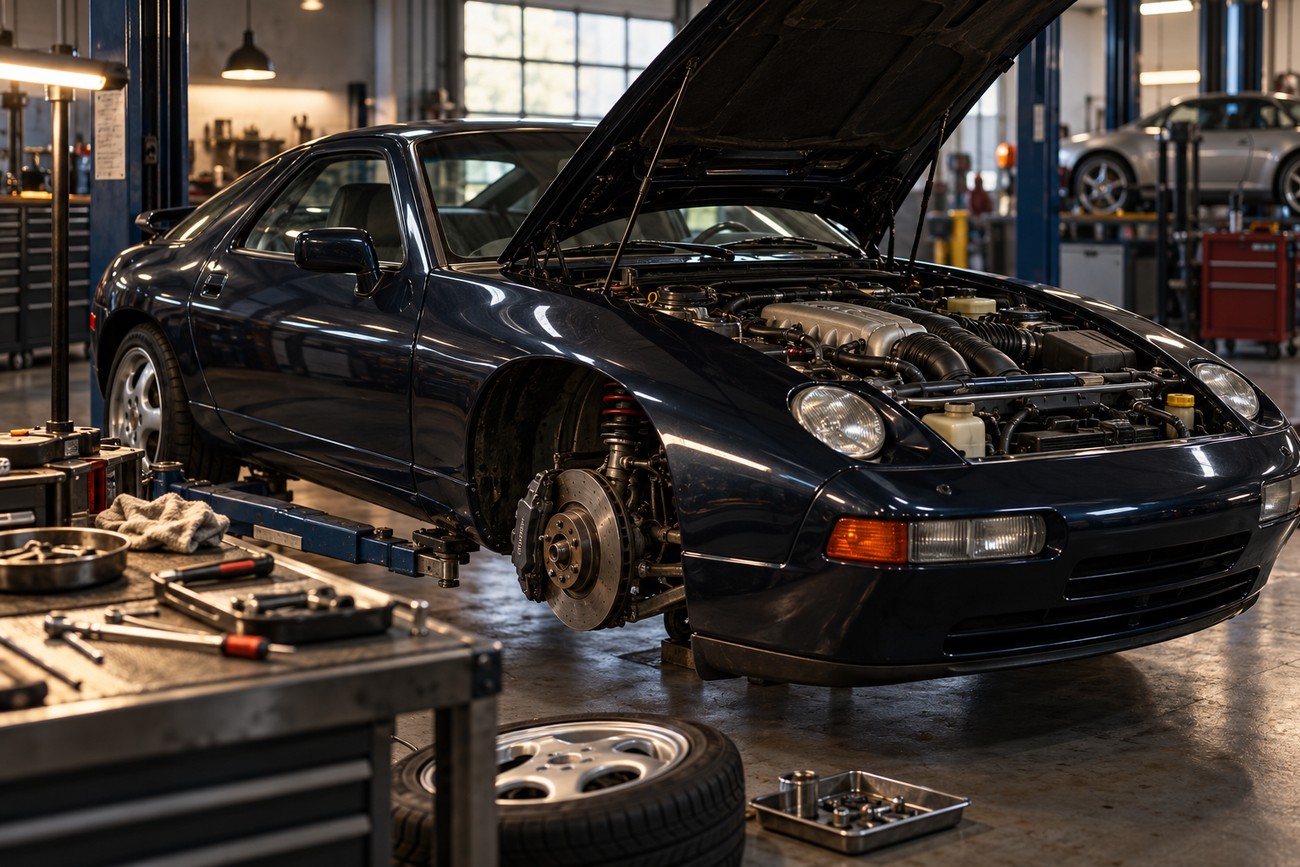
The idea of a 928 GTS as an inexpensive supercar substitute is incomplete. The car may deliver serious performance and a sophisticated driving experience, yet age-related brake, fuel, electrical, steering, and drivetrain faults can materially increase ownership costs. The financial risk lies less in one dramatic specification than in the number of systems that must remain healthy at the same time.
The power figure also needs precision. Porsche’s official figure is 350 PS rather than universally 350 hp, and 350 PS is approximately 345 hp under the US horsepower convention. This does not diminish the engine; it simply prevents inaccurate comparisons and avoids treating marketplace shorthand as a factory specification.
A reliable automatic transmission still requires testing because reputation describes a design, not the condition of a particular unit. Likewise, low mileage does not automatically mean a better car when storage has accelerated deterioration in tires, seals, lines, and electrical components. The age of the car makes evidence of use and maintenance more valuable than an attractive number in an advertisement.
The strongest purchase is the best-documented, properly inspected, and mechanically honest example. It may have repaired or replaced components, mixed original and restored details, or a mileage figure that is no longer unusually low. Those facts are acceptable when the work is known, correctly carried out, and supported by evidence; an apparently untouched car with hidden deterioration is the more dangerous proposition.
Frequently asked questions
What is the most desirable Porsche 928?
The 928 GTS is commonly viewed as the most desirable regular-production 928 because it represents the final evolution of the family for the 1992–1995 model years. Its naturally aspirated 5.4-liter V8, factory GTS exterior cues, and mature development give it strong appeal among enthusiasts who want the definitive version of the front-engine V8 concept.
Desirability does not make every GTS the best purchase. A documented, mechanically sound earlier car can be a better choice than a neglected GTS with poor repairs, incomplete history, or long periods of storage. Specification matters, though condition and maintenance quality decide whether the car is enjoyable or financially demanding.
What is the holy grail of Porsches?
There is no universally agreed single holy grail across Porsche history. Different collectors value racing provenance, rarity, engineering importance, design, or driving character, so the answer changes with the kind of Porsche being discussed.
The 928 GTS can reasonably be described as a specialist high point: it is the final evolution of an ambitious front-engine V8 grand-tourer and the most developed regular-production version of that idea. It should not automatically be assigned the marque’s top status, but its importance is clear to buyers who value balance, refinement, and a distinctive alternative to the 911.
Which Porsche has a front engine?
The 928 is Porsche’s best-known front-engine V8 grand tourer. Its naturally aspirated V8 is mounted at the front, while the transmission sits at the rear in a transaxle layout, helping create near-ideal mass distribution.
This differs from the rear-engine 911 arrangement and gives the 928 a different balance, cabin character, and touring role. The layout is a major part of the car’s appeal, although it also adds mechanical complexity that should be assessed carefully before purchase.







