
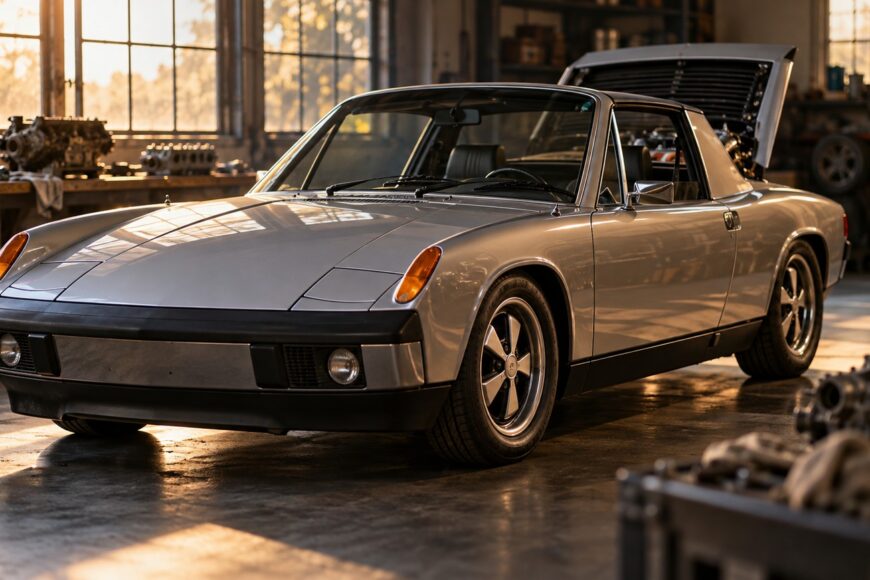
The Porsche 914/6 is a genuine Porsche-developed mid-engine sports car, yet many cars advertised as 914/6s are later conversions. That distinction matters more than a flat-six soundtrack or a set of five-lug wheels. Factory identity, structural condition, and a coherent specification determine whether you are buying a rare production Porsche or an ordinary 914 with expensive modifications.
Built from 1970 to 1972, the 914/6 combined a 2.0-liter horizontally opposed six-cylinder engine derived from the Porsche 911 T with a compact, mid-engine chassis. Its appeal is substantial, though its risks are equally practical: corrosion can hide inside the shell, replacement trim is scarce, and an apparently convincing conversion may lack the identity and engineering consistency of the original. A serious inspection therefore starts with the body and documentation, then moves to the mechanical details.
- Why the 914/6 Is More Than a VW-Porsche Curiosity
- The Factory Formula: Chassis, Controls, and Hardware
- Factory 914/6, Conversion, or 914/6 GT?
- Where the Ownership Risk Really Sits
- How to Inspect One Before Buying
- Performance Claims, Weight Myths, and the Cost of Precision
- Frequently asked questions
- What is a Porsche 914/6 worth?
- Which car is called the “poor man’s Porsche”?
- What does the 1,871-pound 914/6 figure actually describe?
Why the 914/6 Is More Than a VW-Porsche Curiosity
The factory 914/6 was produced from 1970 to 1972 with a 2.0-liter horizontally opposed six-cylinder engine derived from the Porsche 911 T. Factory output was 110 PS. The engine sits behind the passenger compartment and ahead of the rear axle, giving the car a mid-engine, rear-wheel-drive layout that defines its handling character.
This arrangement makes the 914/6 more than a Volkswagen body carrying a transplanted 911 engine. Porsche developed the six-cylinder installation as a production model, with its own drivetrain, hubs, controls, and identification details. The cars were assembled at Porsche’s Stuttgart-Zuffenhausen plant, rather than on Volkswagen’s main production line.
The distinction is important in the current market because a later engine swap can reproduce the basic idea without reproducing the factory car. A conversion may be enjoyable and technically well executed, but its value, service history, and collectibility follow different rules. Treating every flat-six 914 as a factory 914/6 creates an expensive mistake before the inspection even begins.
The Factory Formula: Chassis, Controls, and Hardware
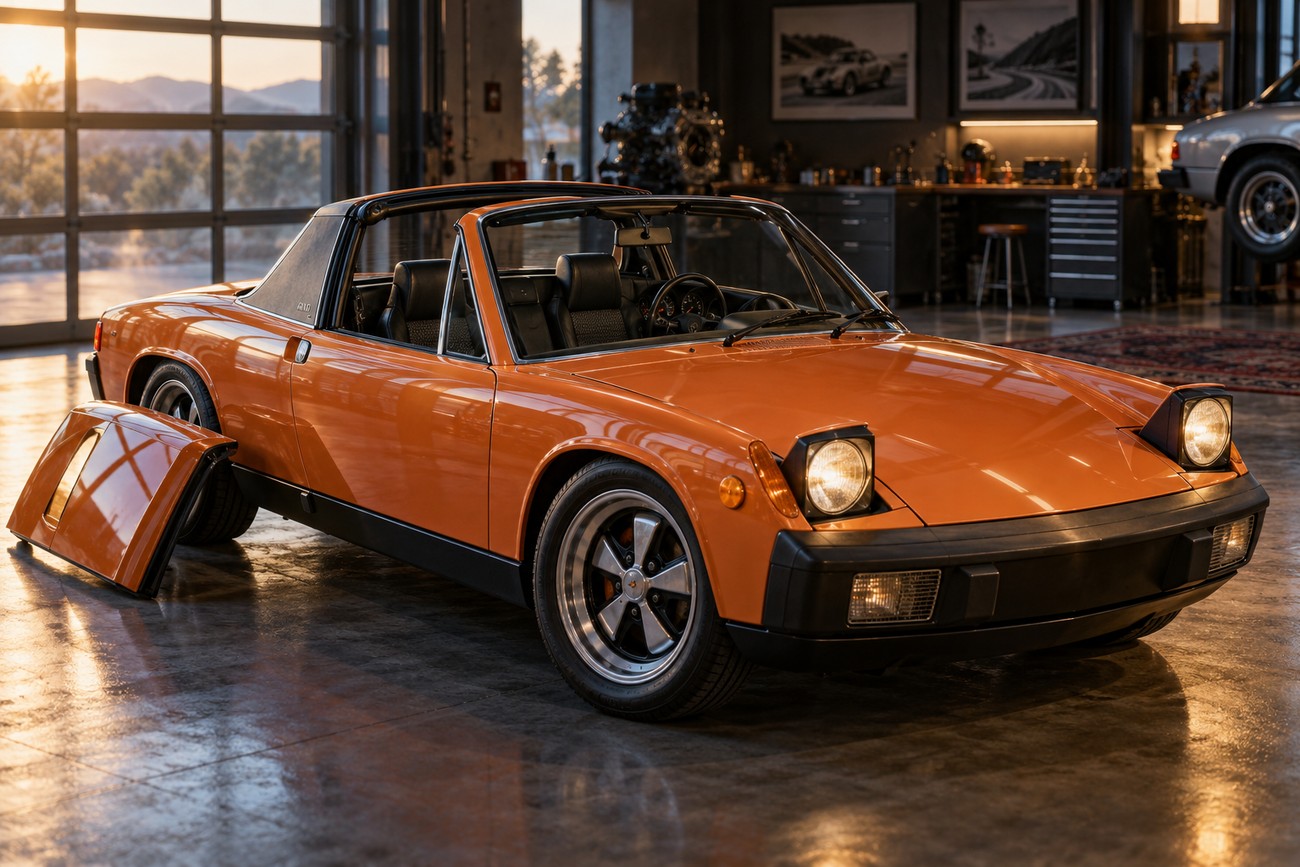
The factory drivetrain used a Porsche five-speed manual gearbox, rear-wheel drive, and a mid-mounted engine. Factory 914/6 cars also used five-lug hubs and Porsche wheels, a significant difference from the four-cylinder versions. Those parts affect braking, wheel choice, and the car’s mechanical identity.
Details around the driver and body are equally useful. The roof is a removable fiberglass panel, and the headlights retract into the front bodywork. The ignition switch is positioned to the left of the steering column, a characteristic factory clue that can support an identification assessment.
Flared wheel arches were available as an option on the road-going 914/6. Their presence therefore does not automatically identify a 914/6 GT, and their absence does not disqualify an otherwise documented road car. Cosmetic specification should be read alongside the chassis, mechanical components, and identification records.
Five-lug wheels deserve particular caution. They are important evidence when the hubs, brakes, and surrounding details are consistent, yet five-lug conversions were installed on four-cylinder cars. The same principle applies to the left-side ignition: it is useful supporting evidence, never conclusive proof on its own.
Factory 914/6, Conversion, or 914/6 GT?
The market contains factory cars, carefully built conversions, replicas, and unfinished projects described with the same short name. Separating them requires several independent clues and documentation that agrees with the physical car. A single Porsche component cannot establish factory identity.
A Porsche flat-six does not turn a four-cylinder 914 into a factory 914/6. The same applies to five-lug hubs, Porsche wheels, flared arches, or a relocated ignition switch. A credible factory car should show a consistent combination of identification, body details, drivetrain components, and period-correct installation work.
The 914/6 GT was a separate competition specification. It used wider body panels, larger brakes, and engine preparation intended for racing. Those features should not be treated as standard equipment on every road-going 914/6, and a wide-bodied car still requires proof of what it originally was.
Racing preparation can also obscure the car’s history. A competition shell may have been modified, repaired, or reconfigured several times, while a road-car conversion may carry expensive racing hardware without factory provenance. For a buyer, the correct description matters: a documented factory 914/6, a conversion, and a 914/6 GT-style build are different assets.
Where the Ownership Risk Really Sits
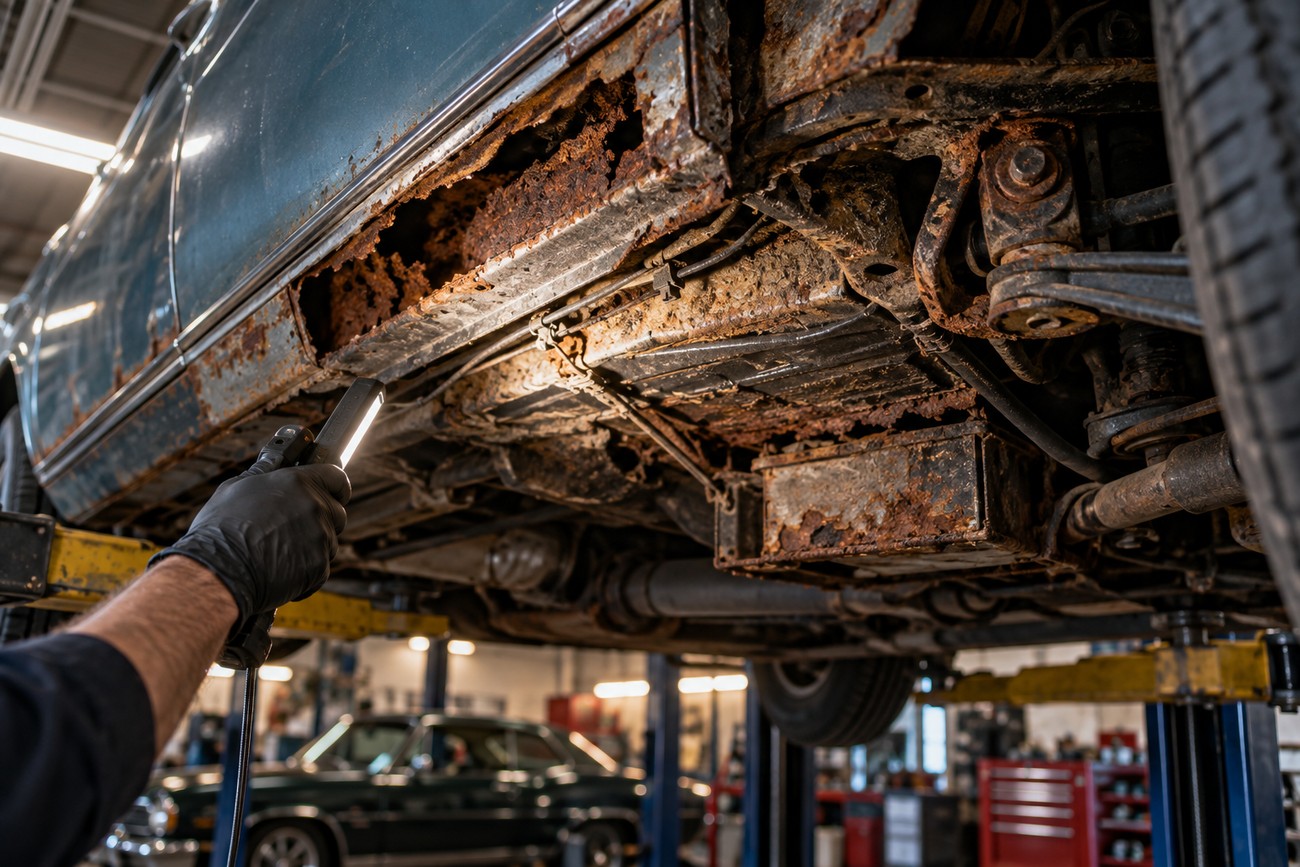
The main economic risk is usually the structure, not the cost of adding a more powerful engine. Rust can develop inside the longitudinal structural members, where rocker-panel covers and other trim conceal the damage. Corrosion around the rear suspension mounting areas is especially serious because it affects the shell that carries the car’s suspension loads.
The battery tray area deserves close examination, as do the floor sections beneath the seats. Floor rust may be missed during a quick visual inspection, especially if carpeting, underseal, or replacement panels hide previous repairs. A clean paint finish says little about the condition of enclosed metal.
Parts availability adds a second layer of risk. Original trim, lighting components, and small fittings can be difficult and expensive to source, and incomplete cars often consume more time than their engine specifications suggest. The six-cylinder version is also more complex and costly to service than the mass-market four-cylinder 914.
Universal repair totals are unreliable here. The condition of the shell, the quality of earlier work, and the completeness of the car determine the real bill. A structurally sound conversion with clear records may be a better ownership proposition than a supposedly original car with hidden corrosion and missing factory hardware.
How to Inspect One Before Buying
Begin with the car lifted and the underside exposed. Inspect the longitudinal structural members, rear suspension mounting zones, battery area, and floor sections beneath the seats before spending time on paint quality or a cold-start demonstration. Remove or open rocker-panel covers where appropriate, because corrosion can remain invisible behind them.
Next, examine the shell’s geometry. Uneven door gaps, damaged hinges, doors that fail to close cleanly, or inconsistent panel alignment may indicate collision repair or a sagging body. These clues are more valuable than a recent respray, since a polished exterior can conceal a structurally compromised car.
Lift the car and expose hidden structural areas before diagnosing the engine or judging the paint. A running flat-six cannot compensate for a shell that requires major reconstruction.
Only after the structure passes a first assessment should you evaluate engine operation and installation quality. Verify the engine, carburetor, and fuel-system numbers and components instead of accepting the seller’s description. Confirm that the cooling, electrical, braking, and hub arrangements make sense as a complete system.
Five-lug wheels alone prove very little. Documentation should connect the identification numbers with the car’s history, while the physical specification should support that record. Specialist parts orders can also arrive incorrectly configured, causing delays and additional shipping, so a restoration plan needs allowance for verification before every purchase.
Performance Claims, Weight Myths, and the Cost of Precision
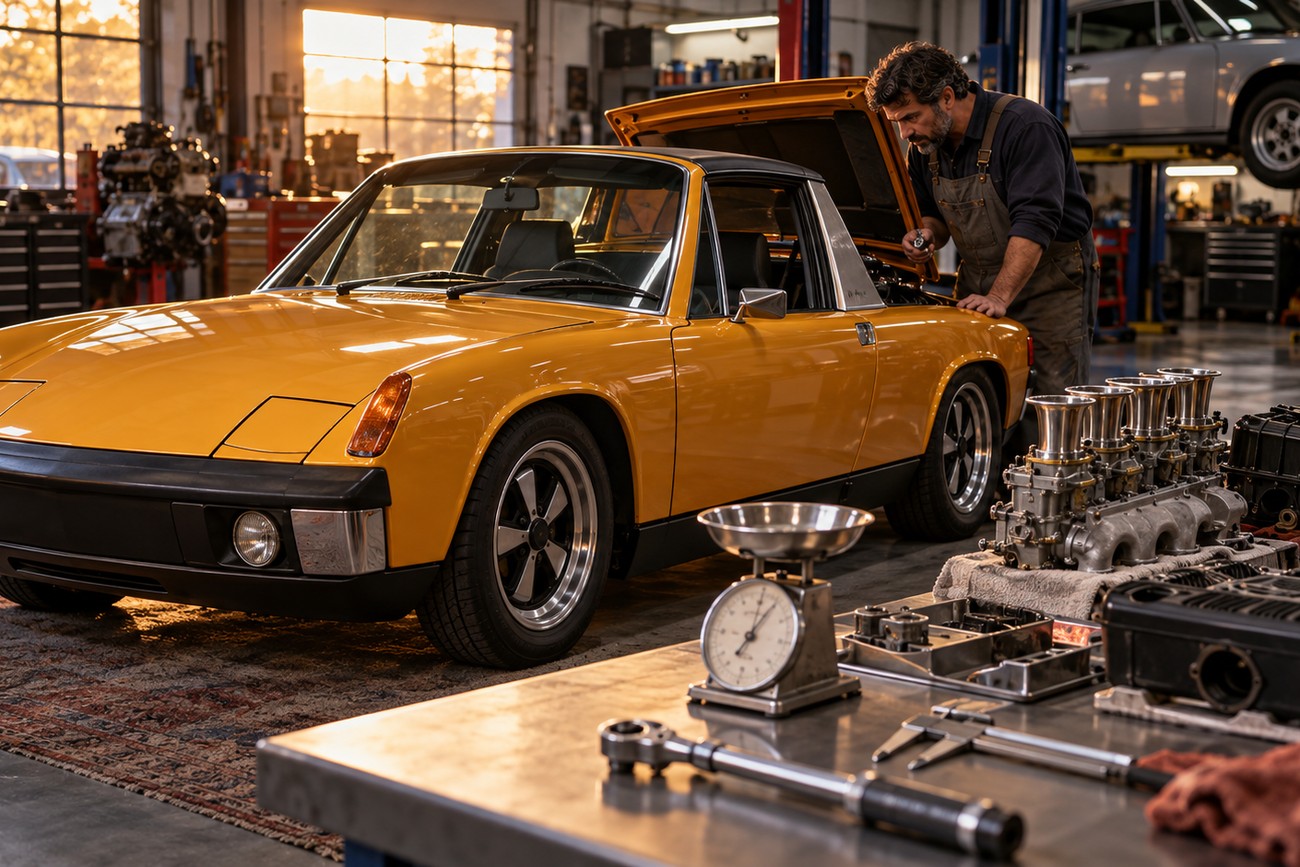
The factory power figure is 110 PS. English-language advertisements often round this to 110 hp, although PS and hp are not formally identical. The distinction is small in casual conversation, yet accurate listings should preserve the factory figure and identify any later engine work.
The frequently quoted 1,871-pound figure describes a 2.0-liter racing configuration cited by SVRA. It is not a universal road-car weight and should not be presented as the standard curb weight for every 914/6. Competition specifications can include different equipment, preparation, and regulatory assumptions.
The same discipline applies to brakes, wheels, body panels, engine capacity, and interior equipment. A racing 914/6 GT and a road-going 914/6 belong to related histories, but their specifications are not interchangeable. Precision in the description protects the buyer from paying for an imagined factory specification.
Ultimately, the car’s appeal rests on verified provenance, structural health, completeness, and documentation. A conversion may offer excellent driving enjoyment, while a factory example earns its position through identity as well as performance. Those categories should be valued and described separately.
Frequently asked questions
Questions about value, identity, and weight often arise when assessing a 914/6. The answers depend on separating factory specification from later conversion work. The car’s condition and documentation remain central to every assessment.
What is a Porsche 914/6 worth?
There is no responsible universal price range without examining the individual car. Start with verified factory provenance, then assess structural rust, completeness, originality, and documentation. A documented factory 914/6 with a sound shell belongs in a different valuation category from a flat-six conversion, even when both drive well.
Missing trim, incorrect mechanical components, poor repairs, and uncertain identity should reduce the assessment more heavily than ordinary cosmetic wear. A specialist inspection and a review of identification records are therefore part of valuation, not optional extras.
Which car is called the “poor man’s Porsche”?
The nickname is most commonly associated with the four-cylinder Porsche 914. It reflects the model’s historical market position and should not be applied casually to a documented 914/6, which was a rarer factory version with a Porsche-derived six-cylinder engine and distinct hardware.
Descriptions using the nickname can blur the difference between a standard 914, a conversion, and a factory 914/6. Buyers should use the car’s actual specification and provenance rather than a broad market label.
What does the 1,871-pound 914/6 figure actually describe?
The 1,871-pound figure refers to a 2.0-liter racing configuration cited by SVRA. It describes that competition setup under its relevant conditions and does not establish the curb weight of every road-going 914/6.
Road cars may differ in equipment, preparation, and specification. Weight claims should therefore identify whether they refer to a racing configuration or a production road car.







