
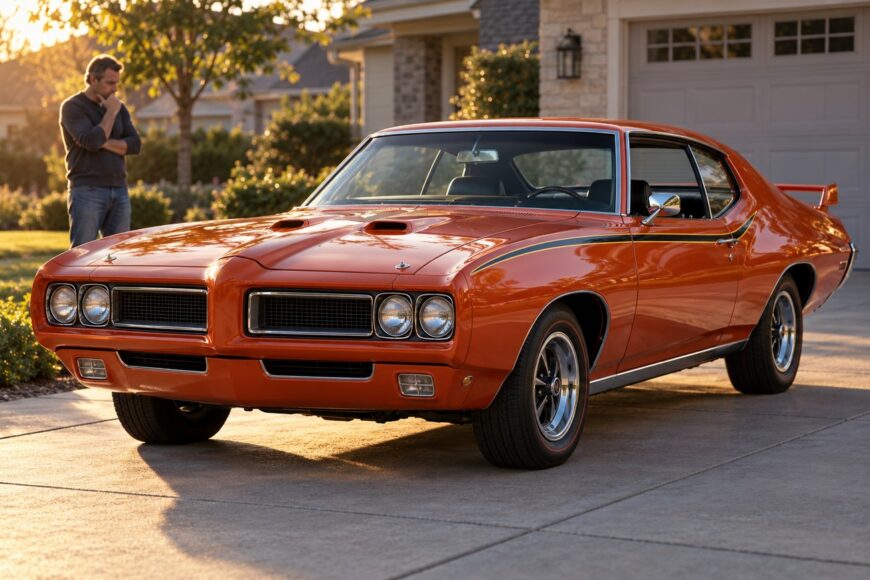
The Pontiac GTO Judge has one of the strangest names in serious performance-car history. It sounds like a television gag, yet the car carried a potent Pontiac V8, a loud visual identity, and collector values that can make a harmless joke feel financially hazardous.
The comedy is in the branding. The risk is in the paperwork. A Judge may be a genuine high-performance GTO, a largely cosmetic package, or a convincing clone assembled from desirable-looking parts. Stripes and decals attract attention; documentation, drivetrain specification, and real-world condition determine whether that attention is deserved.
- The Joke Behind the Name—and the Serious Car Underneath
- 1969, 1970, and 1971: Three Years, Three Different Collector Stories
- What the Judge Package Actually Added
- Ram Air III vs. Ram Air IV: Where the Real Rarity Lives
- The Versions Collectors Actually Have to Separate
- Why Authenticity Is Harder Than It Looks
- The Collector-Market Trap: What Makes One Judge Worth More
- Owning One: The Comedy Name Does Not Mean Cheap Fun
- Five Mistakes That Turn a Funny Name Into an Expensive Lesson
- Frequently asked questions
- What nickname did enthusiasts give the Pontiac GTO?
- Why do published Pontiac GTO Judge production totals vary?
- What does “matching numbers” fail to prove on a GTO Judge?
The Joke Behind the Name—and the Serious Car Underneath
The Judge debuted for 1969 as a performance package for the Pontiac GTO. It was an option package and version of the GTO, rather than a separate model line or chassis platform. That distinction matters because a car can wear Judge-style equipment without having been built as a factory Judge.
The name came from a television comedy catchphrase. It had no origin in racing terminology, engineering language, or motorsport authority. Pontiac used the joke to give the GTO a memorable personality, then backed that personality with aggressive styling and serious V8 hardware.
That combination was clever marketing. The spoiler, stripes, and decals made the car easy to identify from a distance, while the available performance specifications gave the package credibility beyond its cartoonist name. The result was a GTO that could appeal to buyers who wanted both visual theater and substantial mechanical capability.
For collectors, the name creates an authentication trap. “Judge” describes a factory package within the GTO range, so the badge alone cannot establish what left the assembly line. The car’s identity must be supported by records, codes, component details, and a coherent ownership history.
1969, 1970, and 1971: Three Years, Three Different Collector Stories
1969 carries the greatest historical importance because it was the Judge’s debut year. Early cars have the appeal of first editions, and their production history is discussed extensively by collectors. Exact production counts vary by source and documentation practice, so a precise total should be treated as a research question rather than a magic authentication number.
1970 Judges are generally regarded as the most popular and recognizable year among collectors. The facelift gave the car a more aggressive visual presence, helping it become the image many people associate with the name. That popularity can improve demand, although it also gives sellers more incentive to apply Judge styling to an ordinary GTO.
By 1971, Pontiac dropped the Judge option. Insurance costs, tightening emissions requirements, and broader market pressure around muscle-car output had changed the commercial environment. The decision closed a short production story and made the surviving cars easier to place within a defined collector timeline.
The three years therefore offer different kinds of appeal. A 1969 emphasizes debut significance, a 1970 emphasizes recognition and visual impact, and the 1971 absence gives the earlier cars a clear endpoint. None of those qualities replaces proof of factory specification.
What the Judge Package Actually Added
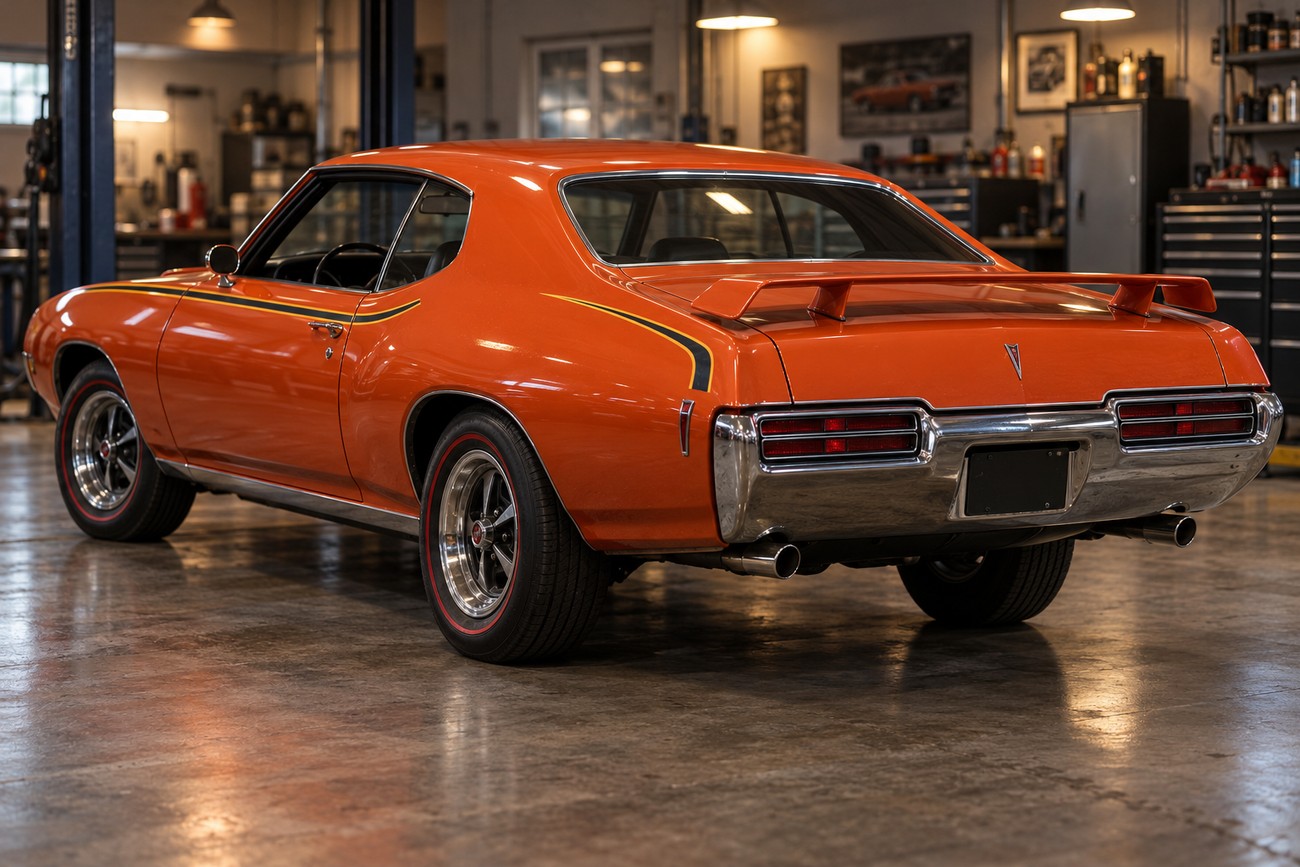
The original Judge package added cosmetic and marketing equipment, including a spoiler, stripes, and “The Judge” decals. These details transformed the GTO’s visual identity and helped Pontiac sell a distinct personality within an existing performance-car range.
The package did not create a separate chassis platform. The underlying GTO architecture remained the foundation, while the Judge equipment established a recognizable appearance and a specific place in Pontiac’s option hierarchy. Mechanical choices still mattered greatly within that package.
A correct-looking spoiler or a fresh set of decals cannot prove that a car carried Ram Air III or Ram Air IV from the factory. The same warning applies to stripes, trim, wheels, and bright paint. Those parts may be original, restored, reproduced, or simply borrowed from another car.
Small details still matter to serious buyers. Decal fonts, placement, trim finishes, and hardware can expose a rushed restoration, while incorrect parts can affect both authenticity and cost. Visual inspection is useful as a screening tool; it is weak as a final verdict.
Ram Air III vs. Ram Air IV: Where the Real Rarity Lives
The 1969 GTO Judge used Pontiac’s 400 cu in (6.6 L) V8. Ram Air III cars were commonly rated at 366 hp SAE gross, a period rating measured under conditions that differ from modern net-horsepower figures. That number should be read as historical factory data, not as a direct prediction of present-day road performance.
Ram Air IV cars were commonly rated at 370 hp SAE gross. The small rating difference hides a more important distinction: Ram Air IV used round-port heads and a hotter cam, giving it a more specialized and high-strung specification than Ram Air III.
Ram Air IV was rarer and more expensive than Ram Air III when new, and original Ram Air IV cars command a premium over base Judge builds in the collector market. Their appeal rests on rarity, specification, and documented identity rather than on the headline horsepower figure alone.
The added specification brings ownership consequences. Rare Ram Air IV parts can be expensive to source, and the engine’s demanding tuning makes correct setup more important. Hot starting, uneven idle, and temperature-management problems can turn a celebrated drivetrain into a costly troubleshooting project.
A buyer should therefore inspect the engine as a complete system. Heads, camshaft-related details, intake and exhaust components, carburetion, stampings, and documentation need to tell the same story. A correct-looking engine bay can conceal an incorrect combination or a later replacement.
The Versions Collectors Actually Have to Separate
“Judge” represents a hierarchy of cars and specifications rather than one uniform build. The practical differences below show why year, engine, transmission, provenance, and documentation carry more weight than exterior drama.
| Version or tier | Year | Role and visual identity | Mechanical significance | Collector risk |
|---|---|---|---|---|
| 1969 Judge | 1969 | Launch-year GTO package with Judge spoiler, stripes, and decals | 400 cu in (6.6 L) Pontiac V8 platform with several drivetrain choices | Clones can imitate the first-year appearance; production counts vary by source |
| 1970 Judge | 1970 | Facelifted, highly recognizable Judge appearance | GTO-based performance package with specification determined by engine and options | Popularity encourages visual conversions and inflated claims |
| Base Judge build | 1969–1970 | Judge equipment without the rarest mechanical specification | Mechanical value depends on the documented engine, transmission, axle, and option combination | “Judge” may be used loosely even when the drivetrain is ordinary or changed |
| Ram Air III Judge | 1969–1970 | Judge appearance combined with the more commonly encountered high-performance specification | 400 cu in (6.6 L) V8, commonly rated at 366 hp SAE gross for 1969 | Engine claims require stampings, component checks, and supporting records |
| Ram Air IV Judge | 1969–1970 | Rare top-tier Judge specification | 400 cu in (6.6 L) V8 with round-port heads and a hotter cam; commonly rated at 370 hp SAE gross for 1969 | Rare parts, demanding tuning, and falsified or mixed components can create major financial risk |
The table’s central lesson is simple: the word “Judge” identifies the package, while the drivetrain and records determine where a particular car sits within the collector hierarchy. Two cars with similar stripes can have radically different histories and values.
Why Authenticity Is Harder Than It Looks
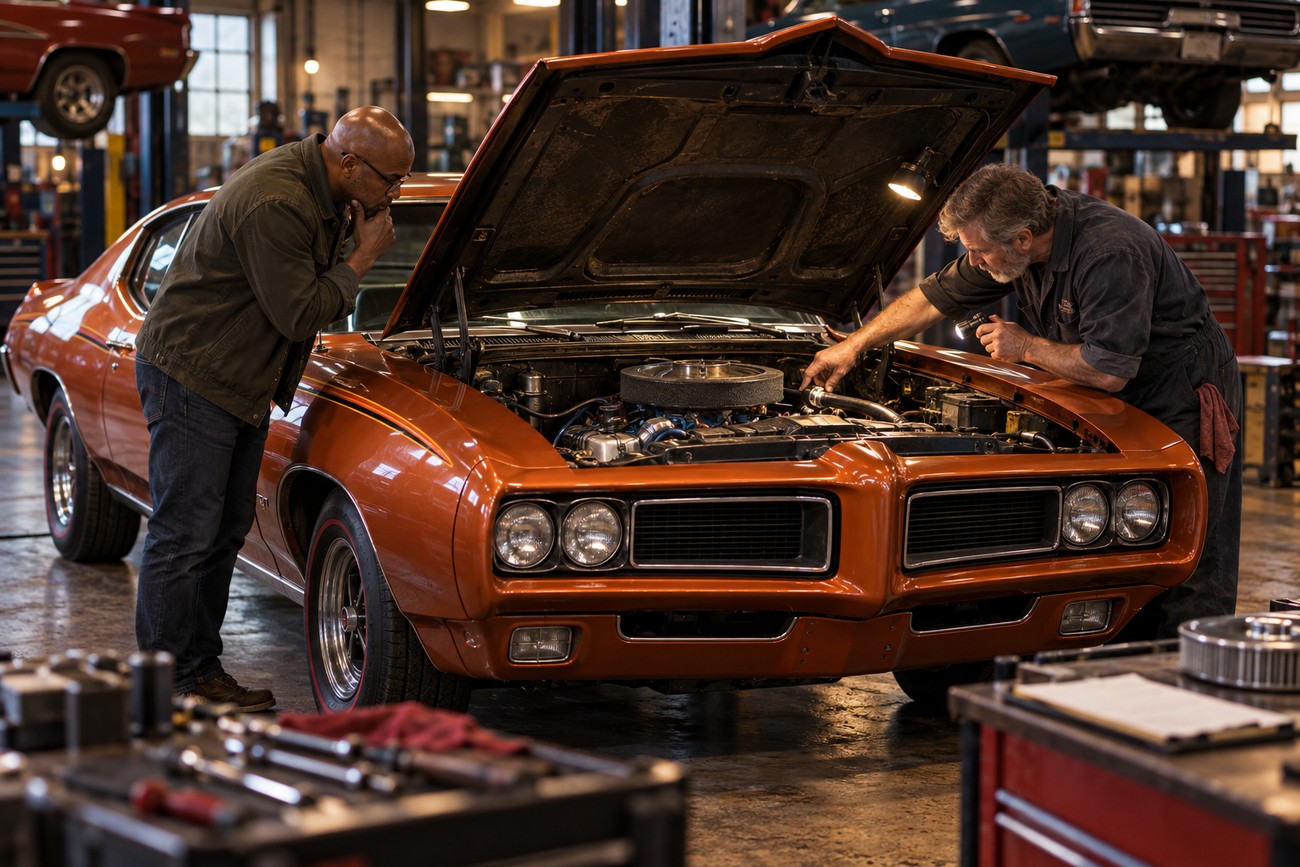
Judge originality is easy to imitate visually. Reproduction decals, spoilers, trim, and paint can make an ordinary GTO look persuasive in photographs, especially when the seller presents only the finished exterior. A close inspection must move past the surfaces and test whether the car’s identity is internally consistent.
PHS records, build sheets, VIN information, component stampings, option codes, and provenance should be evaluated together. The engine, transmission, axle, and related components need to fit the claimed year and specification. One attractive detail rarely proves anything by itself.
Verify the option package and component dates before accepting a matching-numbers claim. A correct engine can still be installed in a non-Judge or reconstructed car.
“Matching numbers” is therefore a limited statement. It may support the identity of major components, yet it does not alone prove factory Judge status, complete provenance, or an untouched original configuration.
Higher values also create room for deliberate deception. Falsified codes, mixed VIN-related components, reconstructed histories, and assembled cars are genuine market risks. If a seller resists independent inspection or treats missing documentation as irrelevant, the gap should be reflected in both confidence and price.
The Collector-Market Trap: What Makes One Judge Worth More
Judge values can swing dramatically according to engine, transmission, provenance, documentation, year, original color, option combination, and originality. Those factors interact, so a documented car with a less exotic drivetrain may be more desirable than a more powerful car with uncertain history.
Original Ram Air IV cars command a premium over base Judge builds because the specification is rarer and mechanically distinctive. That premium depends on authenticity. A Ram Air IV claim supported only by paint, decals, or an engine-bay appearance deserves caution.
Correct combinations often matter more than headline horsepower. A buyer may care about the relationship between the build records, factory colors, transmission, option codes, and surviving components because that combination defines the car’s historical identity.
Modifications can reduce collector value even when they improve drivability. Modern wheels, changed interiors, and engine swaps may suit personal use, yet they move the car away from its documented configuration. Reversible work is easier to live with than permanent changes to rare or original parts.
Owning One: The Comedy Name Does Not Mean Cheap Fun
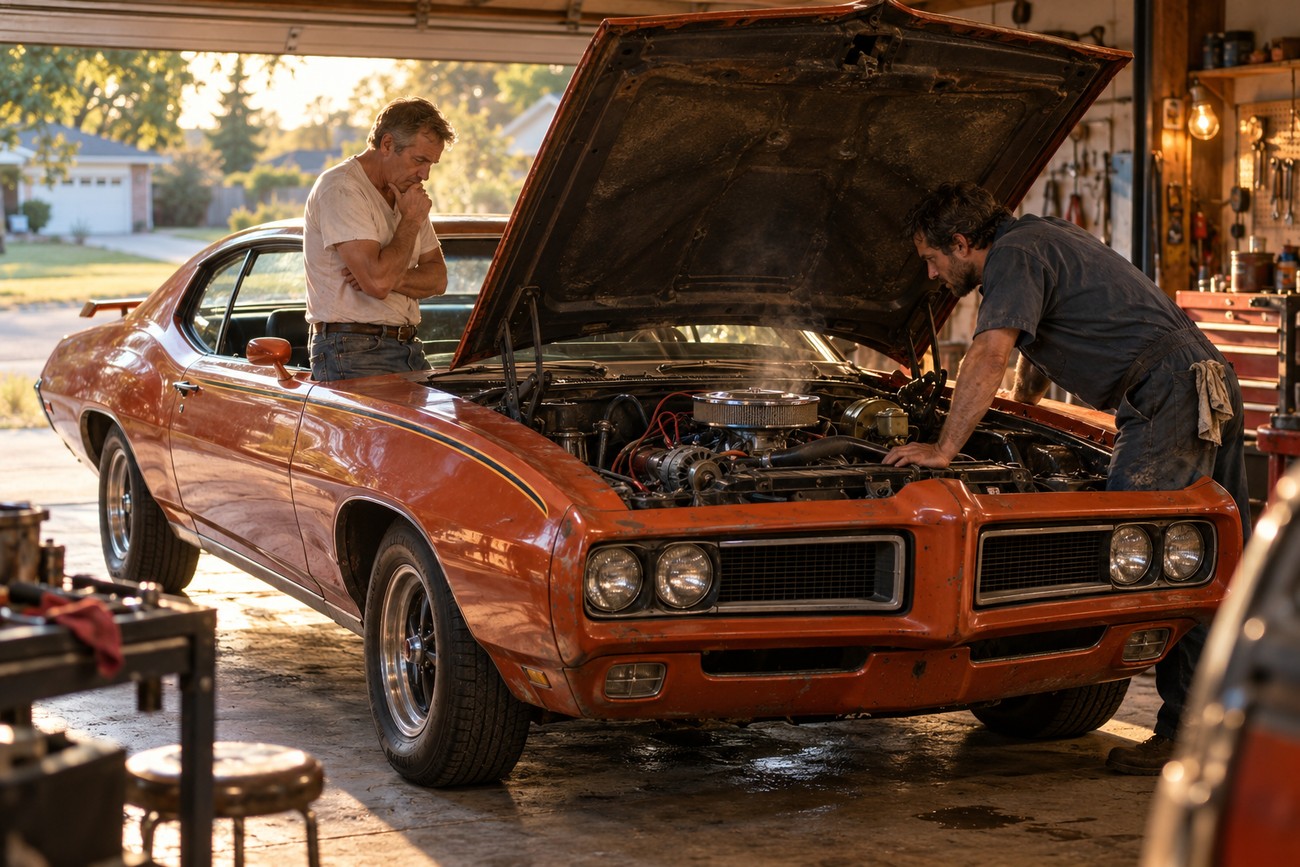
A Judge can be demanding in ordinary city use. Highly tuned factory engines may suffer hot starting, overheating, uneven idle, and high fuel consumption when cooling, ignition, carburetion, or tuning is less than ideal. Noise and vibration are part of the experience, though excessive versions may indicate mechanical problems.
Authenticity does not guarantee modern refinement. Period build-quality compromises can include imperfect panel gaps, electrical faults, leaks, and vibration. A collector should distinguish those era-related traits from restoration defects that require immediate repair.
Judge-specific parts can become surprisingly expensive. Decals, spoilers, trim, chrome, and small pieces of hardware may be difficult to source in correct form, and a partial restoration can spend heavily on details that were cheap or ordinary when the car was new.
Storage and maintenance costs can also outweigh the playful appearance. A car that looks like a colorful joke still needs careful climate protection, regular mechanical attention, and a budget for rare components. It is best treated as a characterful collector car first and an effortless daily cruiser only after a thorough mechanical assessment.
Five Mistakes That Turn a Funny Name Into an Expensive Lesson
The most expensive errors usually happen before the buyer examines the mechanical details. Five habits deserve particular suspicion:
- Buying without PHS records, build documentation, and verified stamping can reveal too late that the car was never an original Judge.
- Confusing the GTO, the Judge package, and Ram Air versions leads buyers to pay for a specification the car does not possess.
- Trusting appearance allows stripes, decals, spoilers, and fresh paint to substitute for proof of the engine, transmission, axle, and option codes.
- Underpricing restoration details leaves the buyer facing expensive Judge-specific decals, trim, chrome, spoiler parts, and small hardware.
- Treating the car as an ordinary cruiser ignores fuel appetite, heat, noise, vibration, electrical issues, and the maintenance needs of a high-performance drivetrain.
A careful inspection should include the body, undercarriage, drivetrain, paperwork, and seller’s claims. The absence of one document may have an explanation, while a pattern of missing records, inconsistent codes, and vague ownership history deserves a much wider margin of caution.
Verify the car’s identity before judging its price or performance. That rule protects buyers from both the polished clone and the genuine car whose condition has been mistaken for originality.
Frequently asked questions
These answers address points that often get lost when the Judge’s styling and performance dominate the conversation.
What nickname did enthusiasts give the Pontiac GTO?
Enthusiasts commonly called the Pontiac GTO “The Goat.” That nickname belongs to the GTO itself and is separate from the Judge name.
The Judge name came from a television comedy catchphrase, while “The Goat” became informal enthusiast shorthand for the broader GTO. Keeping those origins separate helps avoid treating the Judge as an independent model line.
Why do published Pontiac GTO Judge production totals vary?
Published totals vary because sources use different records and counting practices. Some may rely on surviving documentation, while others count factory or model-year information differently.
The disagreement does not establish a single universally correct number. A buyer should use production figures as historical context and rely on the individual car’s records, option evidence, and provenance for authentication.
What does “matching numbers” fail to prove on a GTO Judge?
“Matching numbers” does not by itself prove that the car left the factory as a Judge. It may show that major components correspond to one another, while leaving the option package, body history, and factory configuration unresolved.
It also does not prove complete provenance or an untouched original car. PHS records, build sheets, VIN and component stampings, option codes, and ownership history need to support the claim as a whole.







