
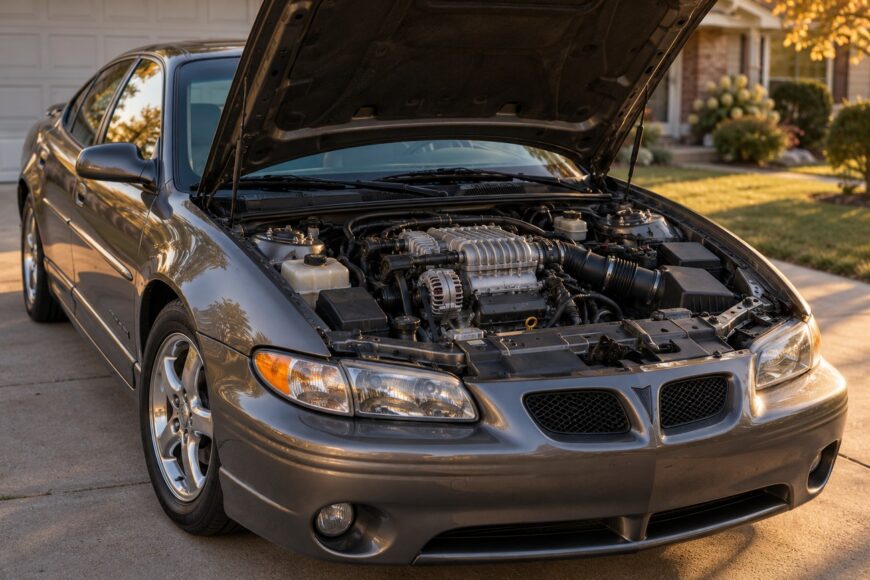
The Pontiac Grand Prix GTP is an unusual bargain: a family-sized, front-wheel-drive sedan with a supercharged V6 and credible straight-line pace. Its 3.8 L GM 3800 Series II/III L67 produces 240 hp and approximately 280 lb-ft (380 N·m), giving the car performance that still feels substantial in ordinary traffic.
The low purchase price can hide expensive weaknesses. Traction is limited by front-wheel drive, the stock brakes are easy to overwork, and the 4T65-E HD automatic can become costly when abused. Cooling neglect, rust, electrical faults, and difficult engine access also matter more than the badge or a clean idle.
The central buying decision is therefore condition and maintenance history versus purchase price. A documented, structurally sound GTP can deliver inexpensive supercharged performance; a cheap project with an untested transmission may consume its entire value in repairs.
- What Makes the Grand Prix GTP Different
- Factory Specs Versus Real-World Performance
- The Front-Drive Performance Compromise
- The Problems That Can Turn a Cheap GTP Into an Expensive One
- Fuel, Cooling, and Transmission Maintenance That Matters
- Buying Inspection: Rust, Interior, and Evidence of Abuse
- Modifications That Help—and Those That Backfire
- Safety and Everyday Usability
- Should You Buy a Pontiac Grand Prix GTP Today?
- Frequently Asked Questions
- How much horsepower does a supercharged Grand Prix GTP have?
- What year Grand Prix should you stay away from?
- What is a 1998 Pontiac Grand Prix GTP supercharged worth?
- Which Pontiac Grand Prix is supercharged?
What Makes the Grand Prix GTP Different
The GTP was the performance-oriented version of the Pontiac Grand Prix range, built around a 3.8 L GM 3800 Series II/III L67 supercharged V6. The Eaton M90 mechanical supercharger supplies boost without waiting for exhaust flow, giving the engine strong low- and mid-range torque. Factory output was 240 hp and approximately 280 lb-ft (380 N·m).
Every supercharged GTP used a 4T65-E HD four-speed automatic and front-wheel drive. There was no manual transmission to help drivers manage the engine’s torque, and the automatic’s condition is central to the car’s value. The usual final drive is 3.29, which supports responsive acceleration but does not transform the sedan into a track-focused machine.
Its appeal comes from the mismatch between ordinary sedan packaging and performance intent. You get useful cabin and trunk space, a conventional seating position, and familiar GM service parts, yet the engine delivers the urgent shove associated with more specialized cars. That combination remains attractive for buyers who want an entertaining daily driver without paying for a dedicated sports car.
The GTP should still be viewed as a quick family sedan rather than a modern sports sedan. Its front-heavy layout, four-speed transmission, brake limitations, and aging chassis become obvious when the road turns technical or repeated hard stops are required.
Factory Specs Versus Real-World Performance
The figures below separate factory specifications from approximate owner-reported results. Acceleration varies with tire condition, maintenance, temperature, and traction, so straight-line speed should not be confused with cornering ability.
| Item | Factory or design specification | Real-world context |
|---|---|---|
| Engine | 3.8 L GM 3800 Series II/III L67 supercharged V6 | Strong torque delivery from the Eaton M90 |
| Power | 240 hp | Modified cars may produce more, subject to fueling, knock control, cooling, and transmission condition |
| Torque | Approximately 280 lb-ft (380 N·m) | High front-tire and transmission load during hard launches |
| Transmission | 4T65-E HD four-speed automatic | Condition varies widely with fluid service and driving history |
| Drivetrain | Front-wheel drive | Traction limitations and significant torque steer under acceleration |
| Usual final drive | 3.29 | Supports brisk acceleration with the four-speed automatic |
| 0–60 mph | Not a factory performance specification | Approximately 6.5–7.0 seconds in real-world owner testing for a stock car |
| Quarter mile | Not a factory performance specification | Approximately 14.5–15.0 seconds at 93–97 mph in real-world owner testing |
| Fuel economy | Varies with condition and driving style | Approximately 14–18 mpg city and 24–29 mpg highway in owner reports |
| Mass distribution | Approximately 60/40 front/rear | Heavy front axle contributes to understeer and torque steer |
| Front suspension | MacPherson struts | Simple layout, but mounts and related steering parts wear with age |
| Rear suspension | Twist-beam rear suspension | Adequate for normal roads, less sophisticated than modern performance layouts |
| Ground clearance | Approximately 145–150 mm | Suitable for normal roads, not serious off-road use |
The Front-Drive Performance Compromise
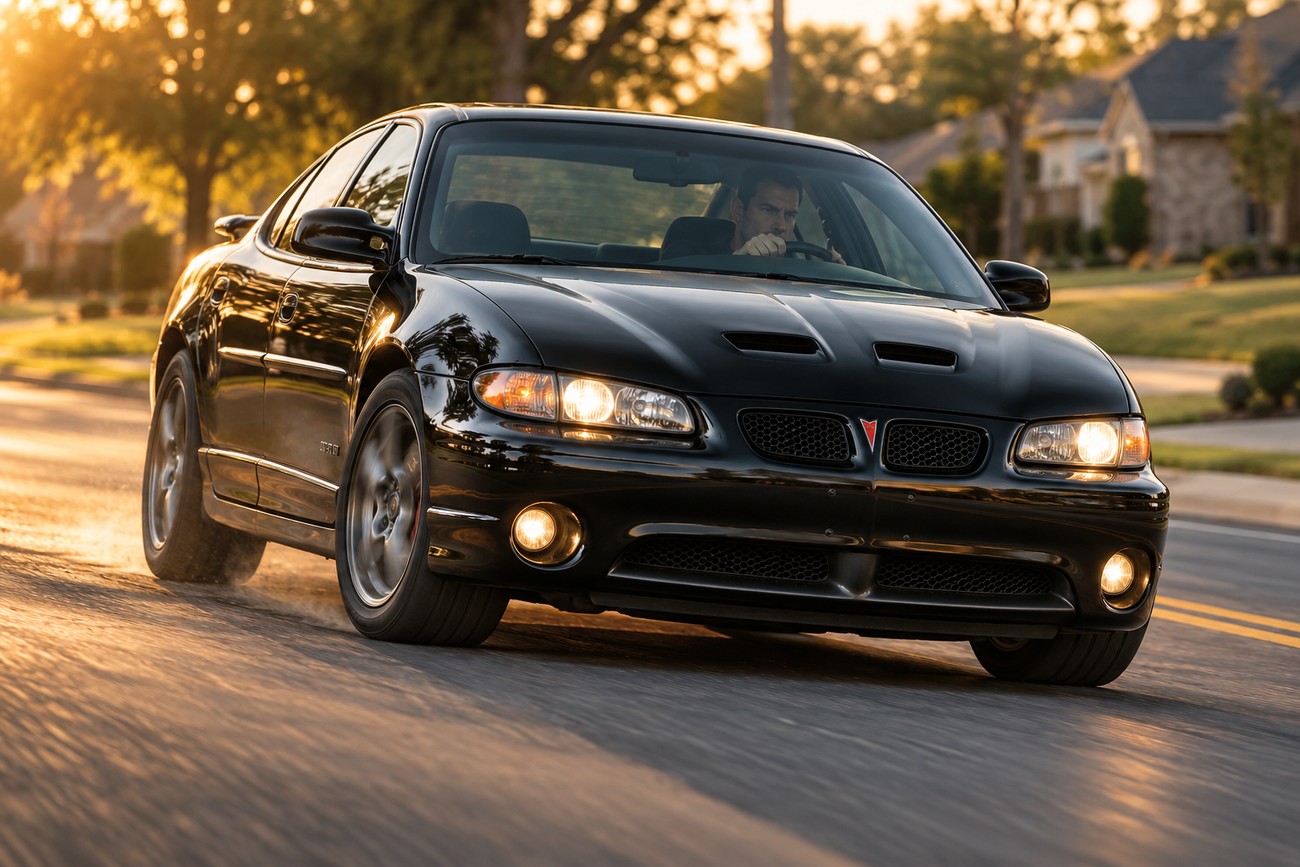
Front-wheel drive makes the GTP easy to use in ordinary weather, but it also puts the driven wheels under heavy demands. With approximately 60/40 front/rear mass distribution and a supercharged V6 mounted over the front axle, hard acceleration can produce significant torque steer. The steering wheel may pull or tug as the tires struggle to share the engine’s torque.
The MacPherson-strut front suspension and twist-beam rear suspension are practical and inexpensive layouts. They work adequately on normal roads when the bushings, strut mounts, and steering components are sound. They offer less control and adjustment than the suspension systems used in newer performance sedans, especially when the car is driven aggressively.
Understeer is the dominant handling characteristic. The front tires carry steering, braking, and engine-drive duties, so entering a corner too quickly usually produces a gradual push toward the outside rather than a neutral, agile response. The GTP can feel quick in a straight line while remaining only moderately capable through a sequence of corners.
Stock brakes are another limitation. Aggressive use can cause overheating, vibration, and rotor judder, reducing confidence even when the engine remains strong. Better tires and brake hardware can improve the experience, but they cannot remove the basic front-heavy character or turn the chassis into a modern sports sedan.
The Problems That Can Turn a Cheap GTP Into an Expensive One
The 4T65-E HD automatic deserves the most scrutiny. Delayed engagement, harsh shifts, shift flare, and slipping—especially between second and third gears—can indicate a transmission that is already worn. The HD designation does not make the 4T65-E HD immune to high-load driving, tuning, or neglected fluid service.
Leaks are common aging-car concerns. Inspect the valve covers, rear main seal, EGR heat exchanger, water-pump seals, and radiator seals. A small leak may be manageable, while a leak combined with low coolant or oil level can create a much larger engine repair.
A hot-and-cold transmission road test matters more than a clean idle. Marginal 4T65-E HD units may engage normally when cold, then reveal delayed engagement or shift flare after temperature and load rise.
Cooling-system condition deserves equal attention. An aging or neglected system can overheat in traffic or hot climates, and severe overheating may cause cylinder-head cracks or head-gasket failure. Early plastic or composite intake-manifold gaskets are also a known weak point and are often replaced with upgraded parts.
Electrical faults can be intermittent and time-consuming to trace. BCM failures, instrument-cluster glitches, corroded wiring, and MAF, O2, or CKP sensor problems may produce warning lights, unstable idle, or misleading symptoms. Access to the rear bank of spark plugs, the starter, and several gaskets is difficult, so labor can exceed what the engine’s simple architecture initially suggests.
Suspension wear is especially visible on poor roads. Sway-bar bushings, strut mounts, and tie rods can wear quickly, creating knocks, vague steering, or uneven tire wear. A car that needs transmission work, cooling repairs, electrical diagnosis, and front-end parts at the same time is rarely a sensible low-cost purchase.
Fuel, Cooling, and Transmission Maintenance That Matters
The factory permits regular 87-octane fuel, but many owners and tuners prefer 91–93 octane, especially in hot weather, under heavy load, or during active driving. Higher octane does not repair a faulty fuel system or poor calibration, yet it gives the engine more detonation margin. Cheap 87-octane fuel under high load can increase detonation risk and contribute to piston or supercharger-system damage.
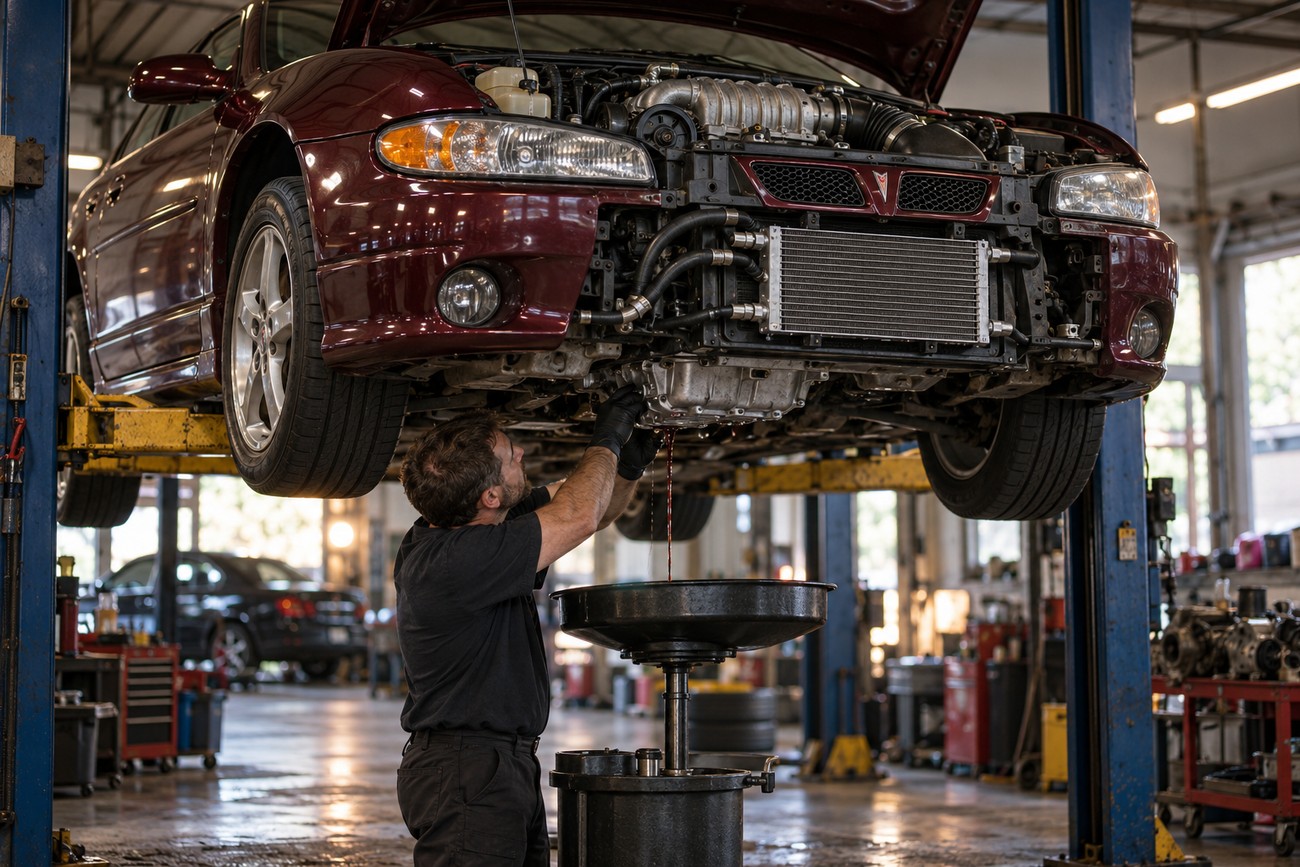
Transmission fluid service is more important than the HD label suggests. Regular ATF replacement helps control contamination and heat, while an auxiliary transmission cooler can reduce thermal stress. These measures cannot rescue a transmission that already slips, but they can support longer service life in a healthy unit.
Keep the cooling system, thermostat, radiator, water pump, and hoses in known condition. A temperature gauge that appears normal during a short drive does not prove that the system will cope with traffic on a hot day. Overheating should be treated as a fault to diagnose immediately, not as a harmless characteristic of an old car.
The Eaton M90 can provide long service with proper rotor oil and belt maintenance. A smaller supercharger pulley or chip tune changes the risk profile, however. Knock monitoring, fueling, spark control, intake temperature, and cooling condition should be checked before adding boost, and the transmission must be considered part of the tuning package.
Buying Inspection: Rust, Interior, and Evidence of Abuse
Start with the transmission, both cold and hot. Check for delayed engagement, harsh engagement, slipping, and a flare between second and third gears. Scan the car for fault codes even if no warning light is illuminated, and compare scan data with the seller’s description of how the vehicle behaves.
Inspect the cooling system after a complete warm-up and, where possible, during slow traffic conditions. Look for leaks around the valve covers, rear main seal, EGR heat exchanger, water-pump seals, and radiator seals. Check for signs of overheating, poor maintenance, or repeated coolant loss rather than accepting a fresh wash or recently changed fluids as proof of health.
Rust commonly affects rocker panels, rear wheel arches, trunk-lid edges, and lower door sections, particularly on snow-belt cars. Structural corrosion matters more than surface bubbling because it can make suspension mounting areas and the body expensive or unsafe to repair. The approximately 145–150 mm of ground clearance is intended for normal roads, so damage underneath may also indicate careless lowering or rough use.
Inside, inspect peeling soft-touch plastic, cracked seat covering, broken seat controls, damaged cupholders, and dashboard squeaks. Check the brakes, tire wear, strut mounts, sway-bar bushings, and tie rods. A stock, maintained car is generally safer than a modified example with an unknown pulley, tune, or fueling history; buying a project without transmission diagnosis is a frequent mistake because repair cost can approach the vehicle’s purchase value.
Modifications That Help—and Those That Backfire
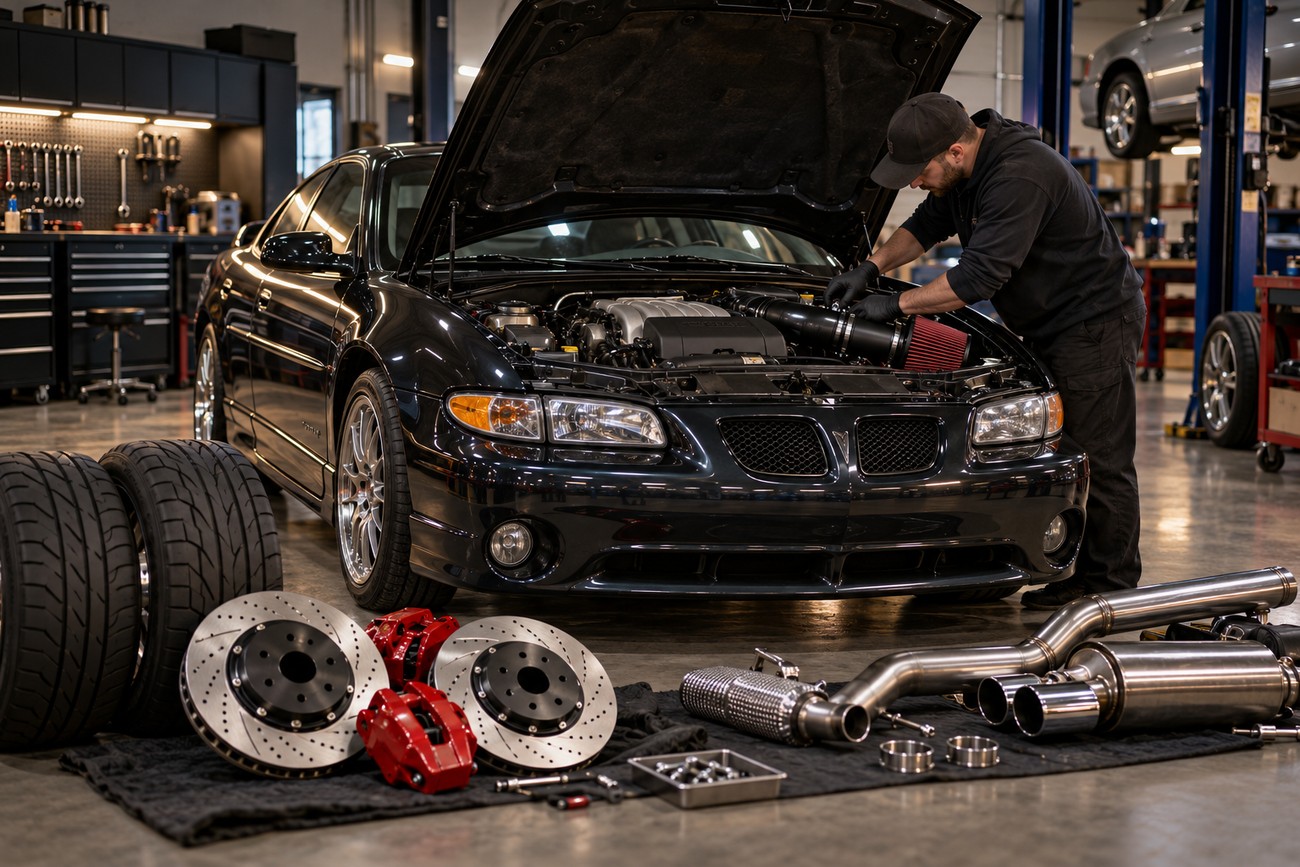
The stock exhaust and air filter restrict the engine, so well-matched intake and exhaust upgrades can provide useful gains without immediately increasing mechanical risk. The important words are “well-matched” and “maintained.” A freer-flowing system does little for a car with a weak transmission, poor cooling, or unresolved sensor faults.
Transmission cooling and improved brake hardware are sensible upgrades for a car used hard. Better tires also address the point where the GTP loses much of its launch performance: the front tires must handle steering and supercharged torque at the same time. Many suspension and brake parts interchange with other GM applications, which can keep repair and upgrade costs reasonable.
A smaller supercharger pulley increases cylinder pressure, heat, and detonation risk. It should not be treated as an isolated bolt-on modification. Fuel delivery, knock control, cooling, belt condition, calibration, and transmission health all need to support the change.
Stiff springs or lowering without supporting steering and suspension upgrades can worsen handling and accelerate component wear. Excessive lowering also reduces the already modest ground clearance. Maintenance-first tuning is usually the better order: make the engine, transmission, cooling system, brakes, and tires healthy before chasing additional boost.
Safety and Everyday Usability
The GTP remains practical as a sedan. It offers family-sized packaging, front-wheel drive, and straightforward GM parts support. Front-wheel drive can help everyday traction, but it does not eliminate torque steer under hard acceleration, particularly with worn tires or uneven road surfaces.
Fuel economy is highly sensitive to driving style and sensor condition. Owner reports commonly place consumption at approximately 14–18 mpg city and 24–29 mpg highway in a properly functioning car. A rich-running engine, faulty MAF or O2 sensor, dragging brakes, or repeated boost use can move results well outside those expectations.
Ride height is adequate for normal roads, with approximately 145–150 mm of ground clearance. It is not intended for serious off-road use, and poorly chosen lowering parts can reduce usability further. Brake condition is equally important for daily confidence because overheated rotors and vibration become more than a performance inconvenience in emergency stops.
IIHS and NHTSA crash-test results are generally average rather than class-leading. Side-impact and rollover protection lag behind modern sedans, whose structures, restraint systems, and driver-assistance features have advanced substantially. The GTP can be usable transportation, but its age should be treated as a safety factor rather than ignored because the engine feels quick.
Should You Buy a Pontiac Grand Prix GTP Today?
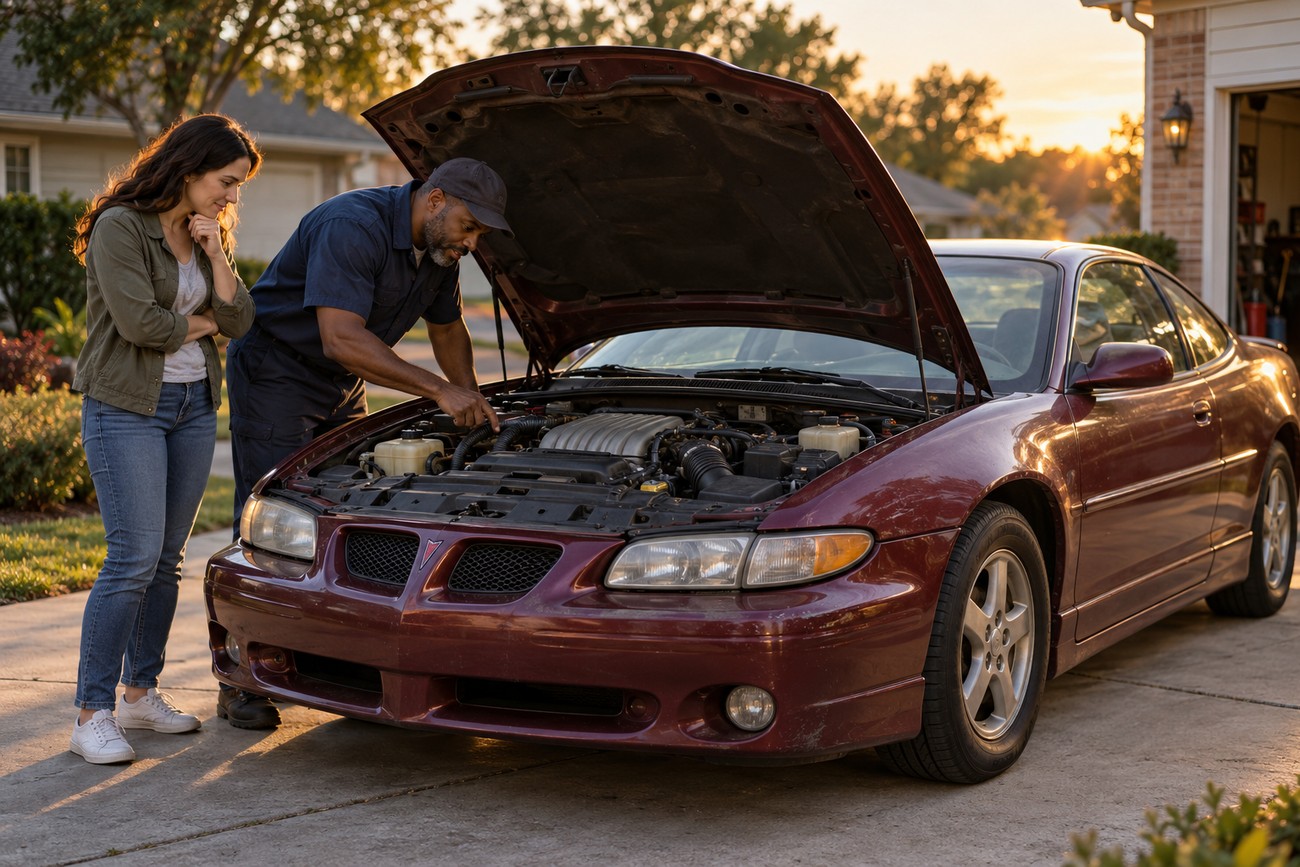
The right buyer wants inexpensive supercharged performance, a practical sedan body, and access to widely shared GM parts. That buyer must be comfortable inspecting an old automatic transmission, correcting cooling-system problems, and accepting front-drive handling. A maintained GTP can be entertaining precisely because its powertrain delivers more drama than its ordinary sedan packaging suggests.
The wrong buyer needs modern safety, sharp handling, low fuel use, or predictable transmission reliability. The GTP’s significant torque steer, understeer, weak stock brakes, and aging electrical systems conflict with those priorities. A modified car with unclear pulley or calibration history deserves additional caution.
Parts interchangeability can reduce the cost of suspension, brake, and routine repairs, but it does not erase labor or structural corrosion. Transmission condition, cooling history, rust, and documentation should be assessed before cosmetic condition or asking price.
The practical rule is simple: buy the best-maintained, structurally sound example you can verify, and pay for diagnosis before purchase. Low price is useful only when the car’s condition and service history justify it.
Frequently Asked Questions
The GTP’s reputation depends on separating factory specifications from modified-car claims and separating an inexpensive purchase from inexpensive ownership. These answers address the details that most often distort a buying decision.
How much horsepower does a supercharged Grand Prix GTP have?
The factory rating is 240 hp from the 3.8 L GM 3800 Series II/III L67 supercharged V6. Modified cars may produce more, but a smaller pulley does not automatically create reliable usable power.
More boost increases heat and detonation risk, while the 4T65-E HD automatic remains exposed to the extra load. Reliable gains require appropriate fueling, knock control, cooling, belt condition, and transmission health rather than a pulley change alone.
What year Grand Prix should you stay away from?
There is no universal year-based blacklist that replaces inspection. A car with serious rust, poor transmission behavior, overheating history, unresolved intake-gasket concerns, or missing maintenance records can be a worse purchase than an older example with sound structure and documented repairs.
Judge the individual car by a hot-and-cold road test, scan results, cooling-system behavior, corrosion, and service documentation. Early plastic or composite intake-manifold gaskets deserve particular attention, but their replacement history is more useful than a simple model-year rule.
What is a 1998 Pontiac Grand Prix GTP supercharged worth?
Its value must be assessed from condition rather than a fixed figure. Structural rust, transmission health, originality, cooling-system repairs, interior condition, and service records can move the practical value substantially in either direction.
A documented car with a healthy transmission and sound body is worth more consideration than a cheaper example needing major drivetrain work. For a 1998 car, purchase price should be compared with the cost of immediate repairs, especially transmission diagnosis and corrosion repair.
Which Pontiac Grand Prix is supercharged?
The supercharged version is identified by the GTP trim and uses the L67 engine with an Eaton M90 mechanical supercharger. An ordinary 3.8-liter Grand Prix is not automatically supercharged, so verify the engine and trim rather than relying on badges or seller descriptions.
Look for the L67-equipped powertrain, the supercharger hardware, and the 4T65-E HD automatic. Confirming the car’s actual equipment matters because the performance, maintenance needs, and transmission load differ from those of a naturally aspirated Grand Prix.







