
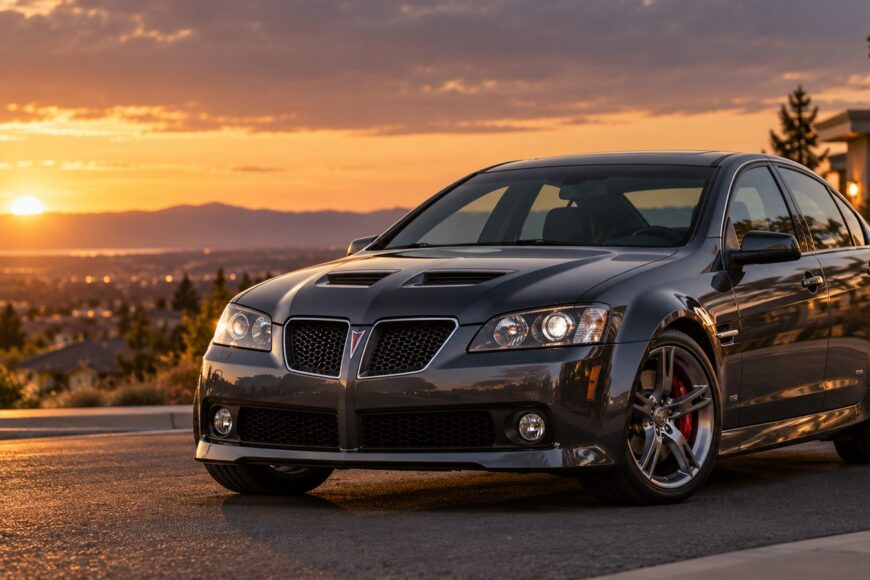
The Pontiac G8 GXP was a remarkable final Pontiac: a large, rear-wheel-drive sedan with a 6.2L LS3 V8, a manual option, and the attitude of a car built before restraint became the default. Limited sales in the United States and Canada, followed by Pontiac’s closure, gave it an instant cultural afterlife.
That history also makes the G8 easy to overvalue. Age, fuel use, scarce trim, tired driveline parts, and questionable modifications can turn a celebrated sedan into an expensive project. The badge matters, but condition, documentation, and mechanical integrity matter more.
- Why the G8 GXP Still Matters
- What Makes the GXP Different from a Regular G8
- Performance: Fast, Balanced, and Not Quite a Muscle Car
- The Ownership Reality: Fuel, Ride, and Aging GM Hardware
- How to Buy a Genuine, Healthy G8 GXP
- Rarity, Value, and the Case for the Last Great Pontiac
- Frequently asked questions
- How much is a Pontiac G8 GXP worth?
- What is the 0 to 60 time of a Pontiac G8 GXP?
Why the G8 GXP Still Matters
The Pontiac G8 GXP was produced for the 2009 model year as the top-performance version of the G8 sedan. It used GM’s Zeta platform, a rear-wheel-drive architecture shared with important Australian-market GM cars. That foundation gave the G8 a sense of scale and structural purpose that many contemporary front-wheel-drive sedans lacked.
Pontiac was closed soon after the G8 GXP era, which changed the car’s meaning. A powerful sedan was already unusual, yet the timing made the GXP feel like a final statement from a brand that had spent decades associating itself with performance. The phrase “last great Pontiac” is culturally persuasive because the car arrived at the end of the brand’s story.
It remains a cultural and marketing description rather than a formal technical designation. The GXP was not automatically superior because Pontiac disappeared, and rarity alone does not prove engineering excellence. Its appeal comes from the combination of an LS3 V8, rear-wheel drive, a serious chassis, and a manual transmission option.
That distinction matters during a purchase. A rare car with neglected cooling, worn suspension, accident repairs, or improvised tuning is still a poor car. The best GXP is valuable because it preserves a particular driving experience, not because the closing of Pontiac erased its weaknesses.
What Makes the GXP Different from a Regular G8
The GXP’s defining hardware is the 6.2L LS3 V8, rated at 415 hp and 415 lb-ft under SAE ratings for the U. S. market. Buyers could choose a Tremec TR-6060 six-speed manual or a GM 6L80 six-speed automatic. That combination separates the GXP from ordinary G8 versions more decisively than exterior trim does.
Braking and chassis hardware were also upgraded. GXP models use four-piston Brembo front calipers and a sport-oriented chassis calibration, giving the sedan greater resistance to repeated hard stops and more controlled body movement. The result is a car designed to use its power on a road, rather than simply display a larger engine under the hood.
Identification requires discipline because badges, wheels, bumpers, and engine swaps can make a regular G8 resemble a GXP. A clean-looking car may have been converted, modified, or repaired after a collision. Documentation, vehicle identification details, underbody inspection, and confirmation of the powertrain are more reliable than a convincing set of emblems.
The manual transmission also changes the car’s character and its place in the market. It adds involvement, yet it creates another inspection point: clutch take-up, hydraulic operation, gear selection, and signs of abuse deserve attention. With either transmission, the GXP specification should be verified before a buyer pays for the legend.
Performance: Fast, Balanced, and Not Quite a Muscle Car
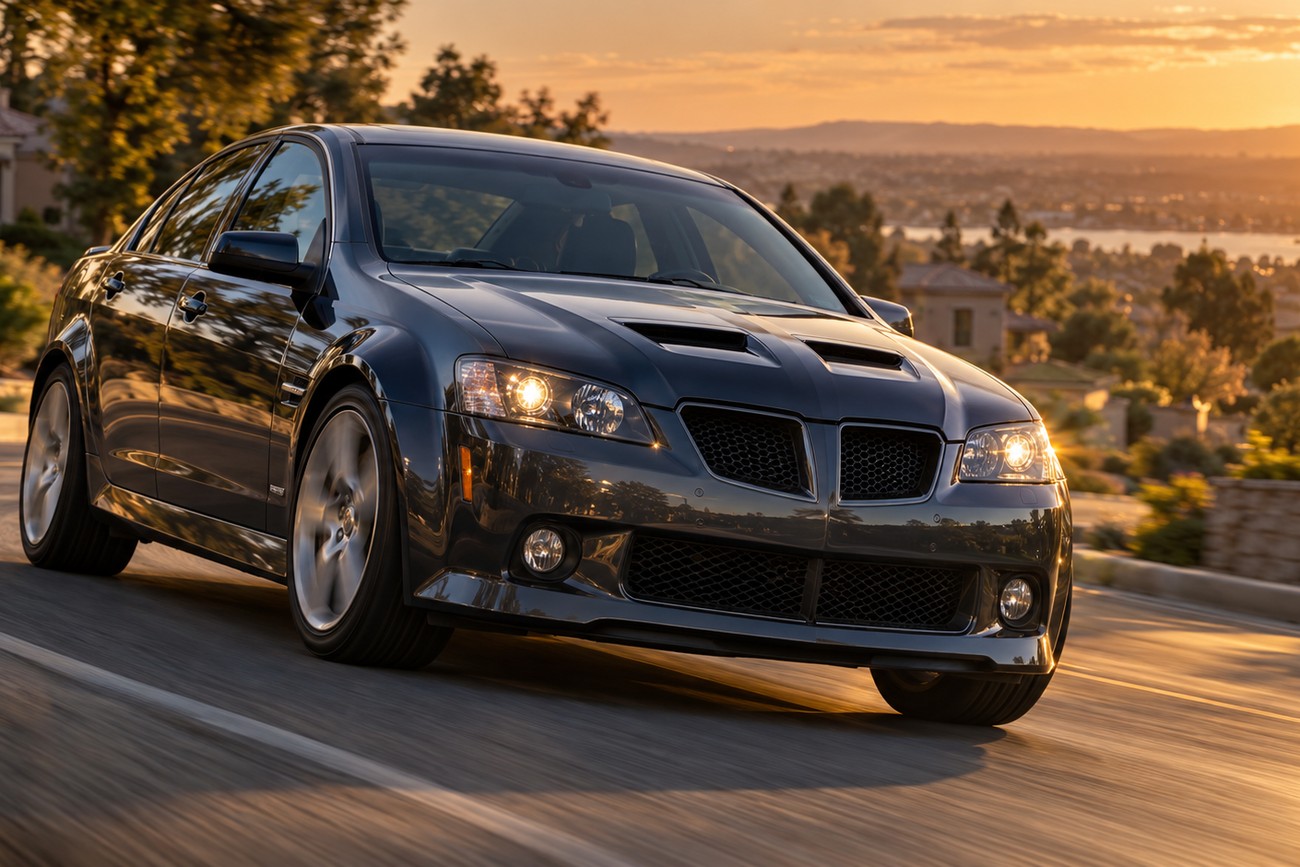
Professional tests commonly place 0–60 mph performance at approximately 4.5–4.7 seconds. The spread is meaningful because launch technique, transmission, traction, surface, tires, and vehicle condition all affect the result. A worn automatic, aged tire, or poorly maintained engine can make a healthy specification feel surprisingly ordinary.
The LS3 supplies the expected V8 character: immediate torque, a broad power band, and a strong response to throttle inputs. Yet the GXP’s appeal is larger than straight-line acceleration. Its rear-wheel-drive sports-sedan chassis, steering clarity, and balance give the driver information through a corner, especially when the tires and alignment are in good condition.
That makes the GXP better understood as a heavy sports sedan than as a muscle car in sedan clothing. It has muscle-car pace and an expressive V8, but its purpose includes carrying passengers, covering distance, and changing direction with composure. The dimensions remain noticeable, and the car never feels like a lightweight coupe.
Tires can radically alter the verdict. A GXP on old, mismatched, or poor-quality rubber may feel nervous over ruts and vague at the steering wheel, leading an owner to blame the chassis. Fresh, appropriate tires and a properly checked suspension often reveal that the underlying platform is more capable than a neglected example suggests.
The Ownership Reality: Fuel, Ride, and Aging GM Hardware
The LS3 has noticeably high fuel consumption in city use, and the large sedan’s footprint can be awkward in tight urban spaces. Parking requires more awareness than a modern midsize sedan, while the long body and substantial front end make the car feel larger from the driver’s seat. These traits are manageable, though they become tiring if the GXP is expected to function as an effortless commuter.
Sport-oriented suspension tuning also has a cost. Poor roads, sharp edges, and ruts can produce firm reactions through the cabin, particularly when suspension bushings or tires have aged. Some owners criticize the stock 6L80 shift logic during relaxed driving, where the automatic may feel less decisive than its hardware suggests. A transmission service and proper diagnosis should come before assuming that every shift complaint requires a rebuild.
Age is now a larger concern than the original specification. Cooling-system behavior, suspension rubber, seals, electrical connectors, interior plastics, and leather all deserve close inspection. Squeaks and worn trim may be cosmetic, yet they can also signal years of hard use, poor repairs, or a car that has spent too much time exposed to heat and neglect.
The driveline deserves equal attention. Brakes, driveshafts, rear differential components, and related bushings must handle a powerful engine in a heavy sedan, and neglected parts can become expensive together. Rare body and trim pieces may also be harder to source than mass-market GM components, making a minor collision more inconvenient than its repair estimate first suggests.
These are ownership risks rather than guaranteed failures. A maintained GXP can be dependable, while a low-mileage example with poor storage or aggressive modifications can need more work than expected. The sensible budget includes inspection, deferred maintenance, and quality replacement parts before any performance upgrades are considered.
How to Buy a Genuine, Healthy G8 GXP
Start with identity and history. Confirm that the car is a genuine GXP rather than a regular G8 wearing GXP badges or body parts, then review service records, title history, collision repairs, and evidence of long-term ownership. A detailed inspection underneath the car can reveal rushed structural work that photographs and polished paint conceal.
Mechanical checks should include compression, cooling-system behavior, oil leaks, and signs of overheating. Evaluate the manual clutch and gearbox, or test the 6L80 for delayed engagement, abnormal noise, and inconsistent shifts. Inspect the brakes, rear differential, driveshafts, suspension, wheel bearings, and tires as a connected system rather than treating the LS3 as the only component that matters.
Cooling behavior, driveline noise, tire condition, and modification quality deserve attention before a clean body or loud exhaust earns any credit. Those checks reveal how the car was used and whether its expensive systems have been protected.
Modification quality is especially important. A professionally documented enthusiast-owned car may be healthier than a superficially stock example that received poor maintenance, because careful owners often preserve records and replace weak points early. Aggressive tuning, repeated launches, forced-induction experiments, or low-quality wiring can reduce the service life of the LS3, gearbox, and rear driveline.
Inspect the cabin and electronics with the same care as the engine. Test every switch, gauge, screen, light, and climate-control function, then look for cracked plastics, worn leather, water intrusion, and damaged connectors. Original or high-quality replacement parts can cost more because of the model’s rarity, so a bargain purchase may lose its appeal once missing trim and deferred repairs are priced properly.
Rarity, Value, and the Case for the Last Great Pontiac
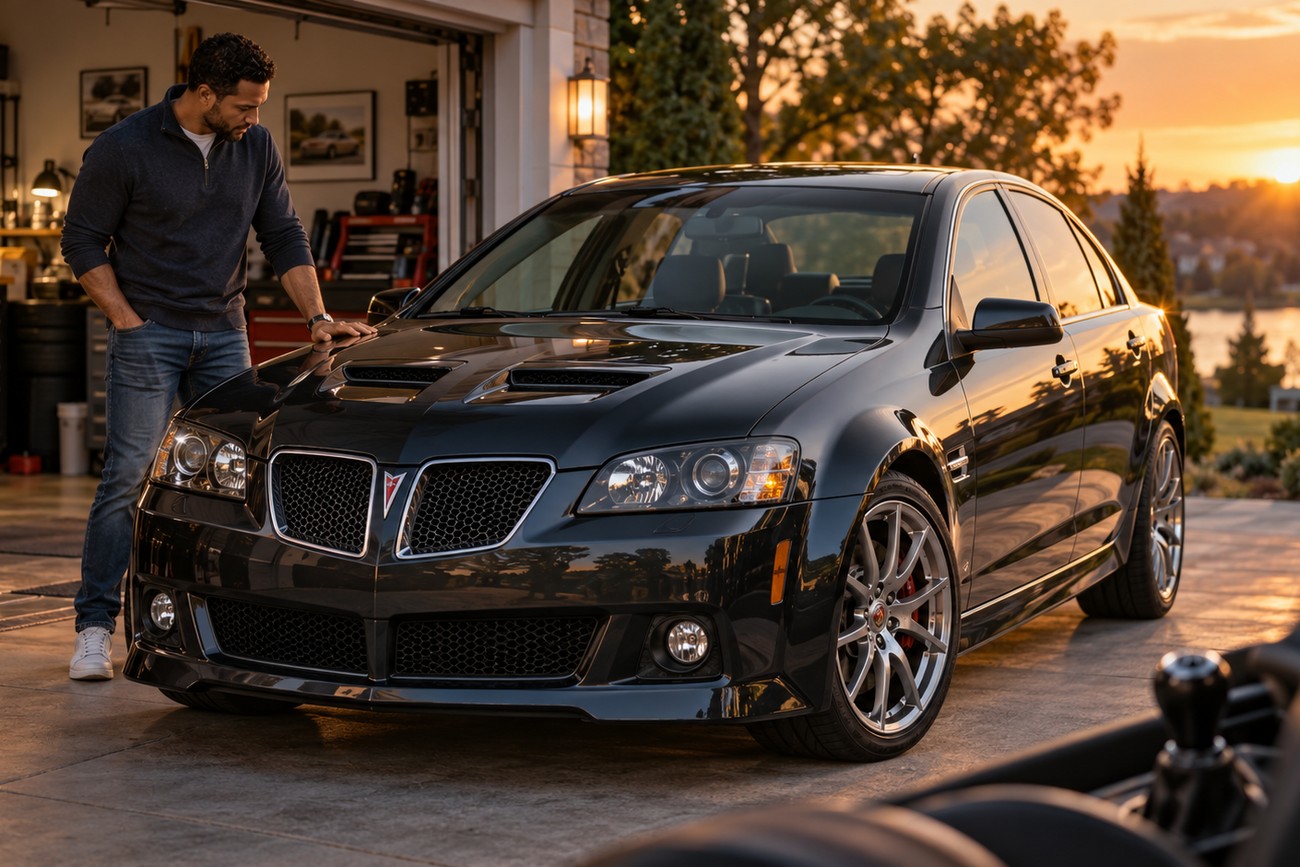
The G8 GXP was sold in limited numbers in the United States and Canada, and Pontiac’s closure soon afterward reinforced its collector appeal. Manual-transmission cars are generally more desirable to collectors than automatic cars, provided they are genuine, documented, and mechanically sound. Transmission choice affects demand, yet it does not rescue a car with accident damage or neglected maintenance.
A well-preserved example can command a premium connected to the model’s cult status. That premium should be judged against originality, service records, accident history, tire quality, and modification work. A lower-priced car needing cooling repairs, suspension components, brakes, and rare interior pieces may cost more to own than a better example bought at a higher initial figure.
The GXP earns its reputation through a rare combination: LS3 power, rear-wheel drive, chassis balance, a manual option, and exceptional timing in Pontiac’s history. It is one of the last GM V8 sports sedans from an era before many performance cars adopted more filtered, less expressive responses.
A regular G8 can be the more rational choice when price, serviceability, and daily use matter more than top specification. The GXP is the special one, but its best qualities only emerge when the car is healthy. For buyers who can fund careful inspection and ongoing maintenance, it remains a compelling final chapter; for everyone else, the badge can become an expensive substitute for judgment.
Frequently asked questions
The G8 GXP’s market position depends heavily on condition and provenance. Its published performance figures are useful reference points, while ownership decisions require a closer look at the individual car.
How much is a Pontiac G8 GXP worth?
There is no single reliable value without considering condition, service records, originality, transmission, accident history, and modification quality. A documented manual car with strong mechanical inspection results will generally attract more interest than an automatic example with uncertain history, even when both appear similar in photographs.
Judge the asking price against the work already completed and the parts that may be difficult to source. A clean body does not offset a damaged rear driveline, weak cooling system, worn brakes, or improvised tuning. Independent inspection is often more useful than a generic average price.
What is the 0 to 60 time of a Pontiac G8 GXP?
Professional testing commonly records approximately 4.5–4.7 seconds from 0 to 60 mph. Results vary with launch technique, tires, surface, transmission, traction, and mechanical condition, so two cars with the same factory specification can produce different times.
That figure also says little about a neglected car’s real-world performance. Tire age, clutch condition, automatic shift behavior, and engine health influence how confidently the GXP accelerates. The chassis and steering remain central to its appeal even when outright testing is not the priority.







