
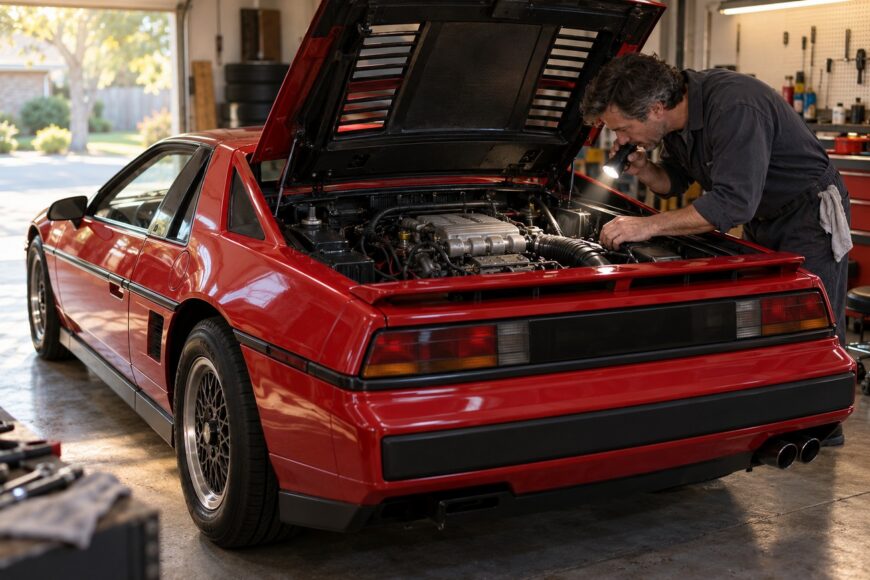
The Pontiac Fiero’s fire reputation is real enough to deserve a serious inspection, yet it is often applied too broadly. The notorious early fire problem centered on 1984 four-cylinder Fieros, and the 1984 car was not a GT. The GT arrived in 1985 with a 2.8-liter V6, so a buyer should separate the documented historical defect from the condition of the individual car in front of them.
A present-day Fiero GT can still be hazardous if oil or fuel systems, wiring, cooling components, or previous modifications have been neglected. A completed recall repair would not renew a forty-year-old hose, correct a poor exhaust installation, or explain an unexplained oil leak. The useful question is therefore less “Do all Fieros catch fire?” and more “Has this GT been inspected and maintained to a standard that makes its remaining risks understandable?”
- Are the Fiero GT fire stories overblown?
- What investigators found—and what the recalls can prove
- 1984 Fiero versus Fiero GT: which fire story applies?
- Why an old GT can still develop an engine-bay fire risk
- How to inspect a Fiero GT before buying
- The ownership costs the fire headlines obscure
- Frequently asked questions
- How many Pontiac Fieros caught fire?
- Why was the Pontiac Fiero discontinued?
- Why was the Pontiac Fiero a flop?
- What type of cars catch fire the most?
- Which year of a Pontiac Fiero is considered the best?
Are the Fiero GT fire stories overblown?
They are overblown when the early Fiero story is treated as proof that every GT was designed to ignite. The most prominent early fire issue concerned 1984 four-cylinder Fieros, not the GT. Pontiac introduced the GT in 1985 with a 2.8-liter V6, which places the model in a different part of the Fiero’s production history and engine range.
The underlying concern was not fictional. NHTSA investigated Fiero engine-compartment fires, and oil reaching hot components is a documented fire mechanism. That evidence supports careful attention to leaks, engine-bay heat, and repair history; it does not by itself establish a universal fire rate for every Fiero GT.
Recall activity also matters, but it must be connected to the specific vehicle. Fiero recall work took place, but exact campaign coverage, applicability to a given GT, and completion of repairs require primary records. A seller’s statement that “the recall was done” is useful only when supported by documentation or a credible inspection trail.
Some owners argue that repaired Fieros are no more fire-prone than comparable older cars. That may reflect genuine long-term experience, but the evidence presented here provides no comparative rate that proves the claim. A careful buyer should reject both extremes: the GT is not automatically a fire trap, and its age does not justify blanket assurances.
What investigators found—and what the recalls can prove
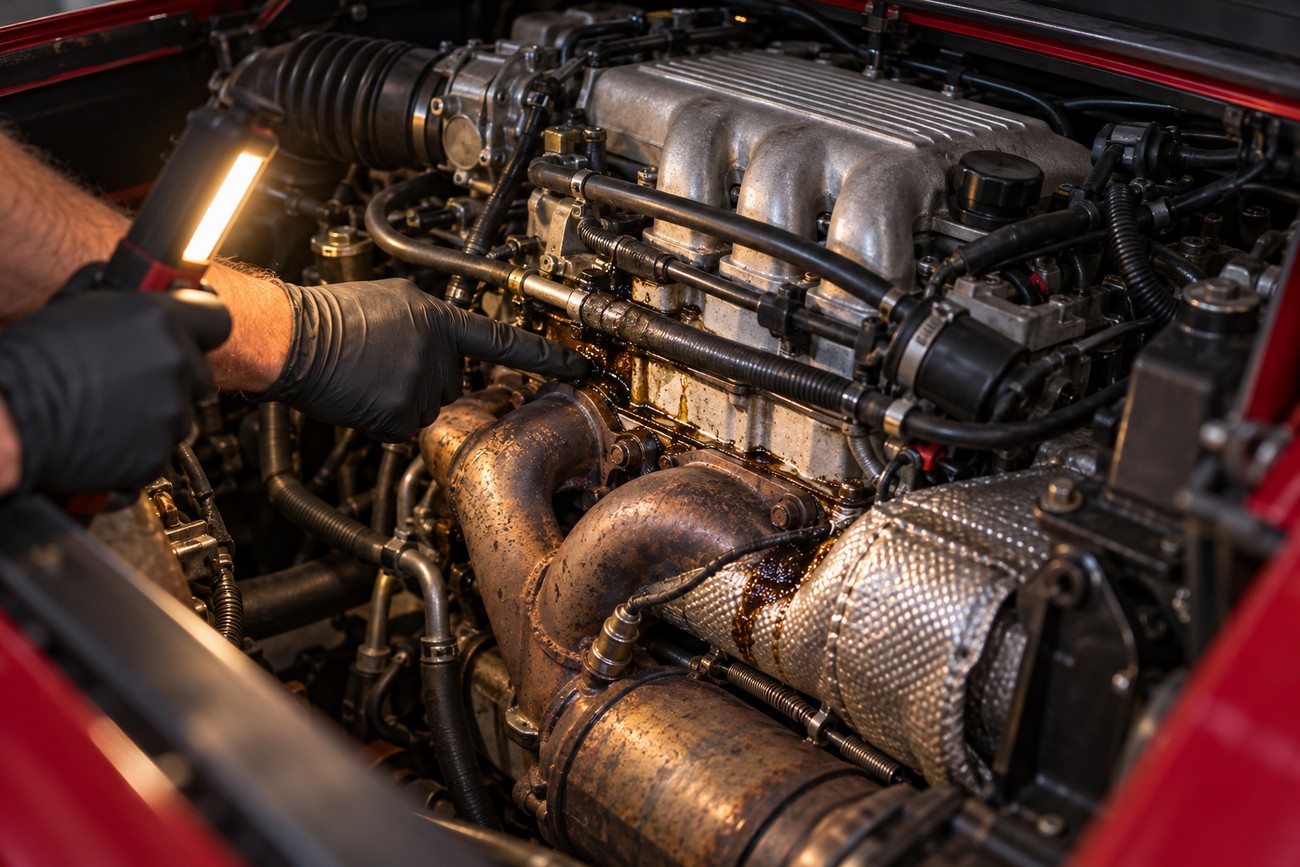
NHTSA’s investigation identified a credible engine-compartment fire mechanism: oil could reach hot components. Once oil escapes in the wrong place, the risk depends on the amount of leakage, the temperature of nearby parts, airflow, and how quickly the problem is detected. That mechanism is more useful to an inspector than the simplified label “Fiero fires.”
The investigation and subsequent recall activity show that the manufacturer and regulators treated the problem as a technical safety issue. They do not prove that every Fiero had the same defect, that every GT had identical exposure, or that every affected car received the same work. Those conclusions require the vehicle identification number, campaign records, service invoices, and, where possible, confirmation from primary recall information.
The early four-cylinder issue should also be kept distinct from later Fiero ownership concerns. A 1985–1988 GT has the 2.8-liter V6, yet it remains an old mid-engine car with aging seals, hoses, wiring, and cooling parts. Recall work may address a defined historical defect while leaving decades of subsequent deterioration untouched.
Reports of individual fires, owner recollections, and auction descriptions can help identify patterns, but they are not a verified fleet-wide fire total. The evidence presented here provides no verified Fiero GT fire-fatality total either. Claims about deaths or comparative fire rates therefore need a source and a clearly defined scope before they can support a firm conclusion.
For a buyer, the practical lesson is narrow and important: treat the recall as evidence to verify, not as a certificate of present-day safety. The most persuasive car has a traceable identity, documented work, a dry engine bay, sound wiring, a properly maintained cooling system, and no unexplained heat damage.
1984 Fiero versus Fiero GT: which fire story applies?
The two cars are often grouped together in online discussions, although their engine specifications and place in the fire story differ. Recall eligibility and completed work should still be checked against the records for the individual vehicle.
| Vehicle | Engine | Relationship to the early fire story | What a buyer should verify |
|---|---|---|---|
| 1984 Fiero | Four-cylinder | The most prominent early fire issue concerned this model year and engine type. It was not a GT. | Vehicle identity, applicable recall records, completed repairs, current oil and fuel leaks, wiring condition, and cooling-system service. |
| 1985–1988 Fiero GT | 2.8-liter V6 | The GT arrived in 1985 and should not be automatically treated as identical to the 1984 four-cylinder fire case. | VIN-specific recall coverage, proof of completed work, V6 oil leaks, heat damage, fuel hoses, wiring, cooling faults, and modifications. |
Why an old GT can still develop an engine-bay fire risk
The historical recall issue is only one part of the risk calculation now. Oil and fuel hoses age, electrical insulation becomes brittle, connectors corrode, and previous repairs can leave wiring close to heat sources. A GT that has spent years outdoors or has been modified repeatedly deserves closer scrutiny than its paint and trim suggest.
Cooling faults deserve special attention because the Fiero’s mid-engine layout makes heat management and access more demanding. Air in the cooling system, old hoses, restricted flow, a weak radiator, or a defective fan can lead to overheating. Overheating does not automatically cause a fire, but it can damage gaskets, wiring, seals, and nearby components, creating problems that may later include leaks.
Exhaust changes and other modifications can add localized heat when they are installed without suitable shielding or adequate clearance. The same is true of improvised wiring, nonstandard fuel-system parts, and repairs that place rubber or plastic components near hot surfaces. Owner reports that upgraded radiators, hoses, fans, and heat management substantially improve reliability are useful practical evidence, but no measured safety benefit is established here.
Maintenance history is therefore more informative than the car’s reputation. A dry, orderly engine bay with documented cooling work is a different prospect from one with oil residue, unknown wiring, old hoses, and an exhaust system assembled without clear thermal protection.
How to inspect a Fiero GT before buying
Begin by confirming that the car is actually a GT and that its documentation matches the claimed model year. The GT arrived in 1985 with a 2.8-liter V6, so the VIN, engine, body components, and title history should agree. Ask for recall records and invoices rather than relying on a seller’s general statement that the car was “sorted.”
Next, inspect the engine bay with the car cold and, where appropriate, after a controlled road test. Look for fresh or baked-on oil, fuel odor, damp fittings, residue around gaskets, heat-discolored metal, melted insulation, and repaired areas that do not match the surrounding wiring. A clean-looking bay can simply have been degreased before sale, so look for active seepage and evidence of heat damage rather than presentation quality.
Check the fuel and electrical systems in detail. Old fuel hoses, damaged connectors, loose grounds, poorly routed harnesses, added alarms, stereo wiring, and amateur engine swaps can complicate diagnosis and raise repair costs. Inspectors should also look beneath the car for corrosion, damaged lines, and signs that previous work has altered the routing or protection of critical components.
Evaluate the cooling system as a separate inspection task. Check the condition of hoses, the radiator, fan operation, coolant quality, evidence of leaks, and signs of past overheating such as staining, damaged plastics, or repeated gasket work. A test drive should be followed by another inspection, because some leaks and temperature problems appear only after the system reaches operating conditions.
A model-aware professional inspection is worth seeking where possible, especially because many general repair shops have limited experience with the Fiero’s mid-engine layout. A completed recall does not eliminate age-related hazards, and the absence of a previous fire does not prove that the car is safe. The inspection should produce a list of known defects, uncertain areas, and work required before regular use.
The ownership costs the fire headlines obscure
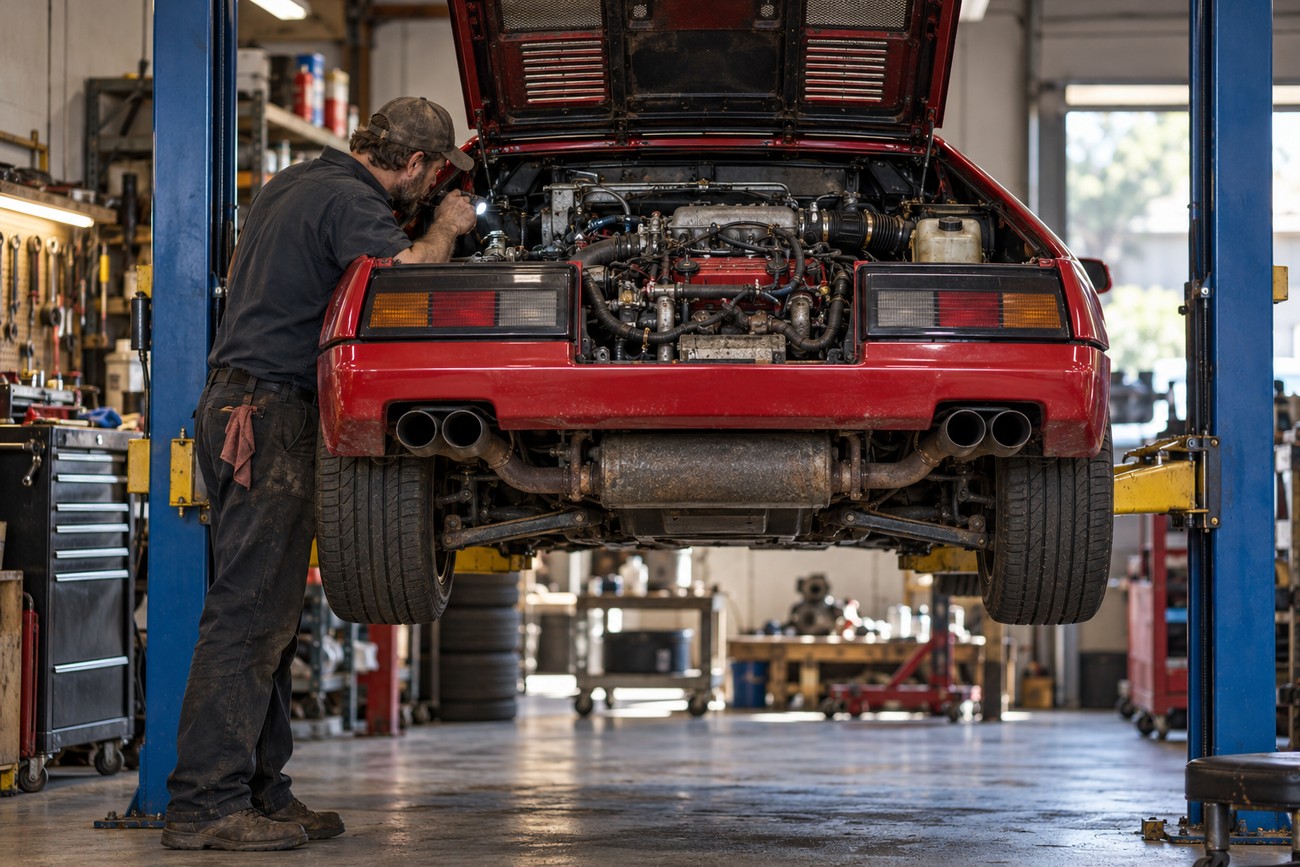
The hardest part of buying a Fiero GT is often finding a sound example rather than identifying the famous defect. Many cars have accumulated deferred maintenance, improvised repairs, corrosion, tired plastics, electrical faults, leaks, and cooling problems. A car that looks attractive in photographs may require substantial work before it is dependable enough for regular driving.
Access can also make ordinary repairs more involved. The mid-engine layout places important components in a compact and less familiar working environment, while poor previous repairs can hide the original fault. Correcting someone else’s wiring, cooling modifications, or exhaust installation may take more time than repairing a clearly worn but original system.
GT-specific trim, body, lighting, and suspension-related parts can be difficult to source, and original pieces may command strong prices on specialist marketplaces. Service availability is another concern, particularly outside the United States, where a shop may understand general GM systems but have little experience with this model’s packaging and known failure points.
The final judgment should remain conditional. A documented, thoroughly inspected GT with orderly maintenance is a different proposition from an attractive but neglected car, although neither comes with a zero-risk guarantee. The evidence presented here does not establish a comparative fire rate for repaired GTs; the buyer’s strongest evidence remains the condition and history of the individual vehicle.
Frequently asked questions
The early fire investigation, the GT’s later production history, and the condition of surviving cars are separate questions. Counts and comparisons need clearly defined sources, while recall status must be checked for the individual vehicle. The answers below keep those distinctions in view.
How many Pontiac Fieros caught fire?
No verified fleet-wide total is established in the evidence presented here, so a single number would risk combining unlike categories. Reported incidents, cases investigated by NHTSA, vehicles described in owner accounts, and cars listed after fire damage do not automatically represent the same population or the same period.
The defensible conclusion is narrower: Fiero engine-compartment fires were investigated, and oil reaching hot components was a documented mechanism. A verified total for Fiero GT fires, or a verified Fiero GT fire-fatality total, would require a source that defines the vehicles, dates, and reporting method.
Why was the Pontiac Fiero discontinued?
Fiero production began in 1983 for the 1984 model year and ended in 1988. The end of production should not be presented as the proven result of fires alone. Commercial performance, product positioning, development priorities, and the model’s place within Pontiac’s lineup also belong in the explanation, while the evidence presented here does not assign one definitive cause.
The fire investigation and recall history affected the car’s reputation, but reputation is not the same as a documented sole reason for discontinuation. A buyer should keep the commercial history separate from the technical question of whether a particular GT was properly repaired and maintained.
Why was the Pontiac Fiero a flop?
Calling the Fiero a flop oversimplifies a mixed commercial and engineering history. It was an unusual two-seat, mid-engine coupe built from 1983 through 1988, which limited its audience and gave it a different ownership profile from ordinary commuter cars. Quality complaints, recalls, changing expectations, and an uneven reputation also made the model harder to sell as a mainstream success.
That history does not make every surviving GT a poor purchase. It does mean that parts supply, specialist knowledge, comfort, and maintenance requirements should be considered alongside styling and driving appeal.
What type of cars catch fire the most?
No single body style can be identified from the evidence presented here as the universal leader. Fire risk is influenced by fuel and oil leaks, electrical faults, crash damage, overheating, recalls, age, and maintenance, so the condition and failure mode of a particular vehicle matter more than whether it is a coupe, sedan, truck, or sports car.
For an old Fiero GT, that means inspecting the systems that can create heat or carry flammable material. General fire statistics may describe broad vehicle populations, but they cannot substitute for checking one car’s hoses, wiring, leaks, cooling system, and modifications.
Which year of a Pontiac Fiero is considered the best?
There is no single best year established by the evidence presented here. The GT became available in 1985 with the 2.8-liter V6, while the 1984 fire story primarily concerns a non-GT four-cylinder car. Later model year preference may matter to an enthusiast, but condition, documentation, rust, cooling-system work, and the quality of previous repairs usually matter more to a buyer.
A well-documented GT with a sound engine bay can be a stronger purchase than a supposedly desirable year with unknown modifications. Year helps identify the car; inspection determines whether it is a sensible example.







