
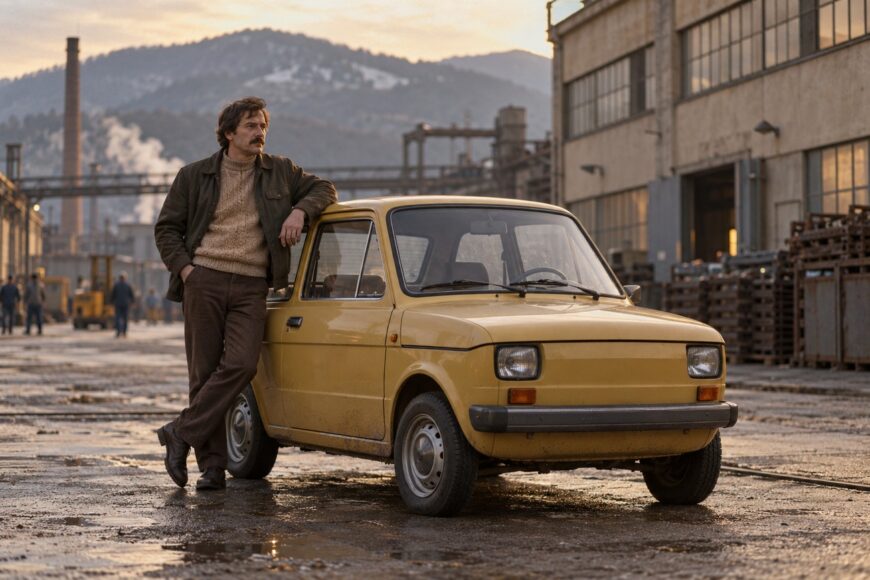
For many Polish families, the Polski Fiat 126p belongs to memories of first holidays, crowded streets, and the hard-won independence of owning a car. The same people who remember it warmly also remember the cramped cabin, slow acceleration, heat from the rear, and the effort required to make a long journey. The Maluch occupies both sides of that memory because its cultural importance was much larger than its physical size.
Poland did not design the Fiat 126 from scratch. It built a licensed, locally produced version of an Italian small car and turned it into a national symbol through scale and longevity. From 1973 to 2000, Polish factories produced 3,318,674 cars. That production run gave the 126p a place in ordinary life, while its modest engineering imposed compromises that still matter to anyone preserving one today.
- How a licensed Fiat became Poland’s Maluch
- The engineering behind the small footprint
- 594, 652, and BIS: what actually changed
- What everyday mobility cost its occupants
- The expensive mistake behind a cheap surviving car
- Why its legacy is larger than its size
- Frequently asked questions
- What is the average price of a Fiat 126p?
- What does an air-cooled 126p need checked regularly?
- What should I ask a seller before traveling to see a 126p?
How a licensed Fiat became Poland’s Maluch
The story began with the Italian Fiat 126, whose production in Italy ran from 1972 to 1980. Poland adopted the design under license, and the Polski Fiat 126p entered production in 1973. Its manufacture in Poland, associated especially with Bielsko-Biała, made the car part of the country’s industrial and social history rather than a simple imported product.
“Maluch” was an unofficial nickname, meaning “little one,” rather than the factory model name. The official identity remained Polski Fiat 126p, with the final letter distinguishing the Polish-built version from the Italian Fiat 126. In everyday speech, however, Maluch became the name that expressed the car’s small dimensions and its unusually large role in family life.
Polish production continued until 2000 and totaled 3,318,674 cars. That volume explains why the 126p became associated with mass motorization: it put private transport within reach of many households that had previously depended on public transit, shared vehicles, or limited access to cars. Ownership could still involve compromises, waiting, and maintenance, yet the car represented a meaningful increase in personal mobility.
The Polish 126p should therefore be understood as a localized licensed version with its own history. It was neither an entirely Polish invention nor an indistinguishable Italian copy. The long local production run, changing specifications, and place in Polish society gave it a distinct identity that survives beyond the factory badge.
The engineering behind the small footprint
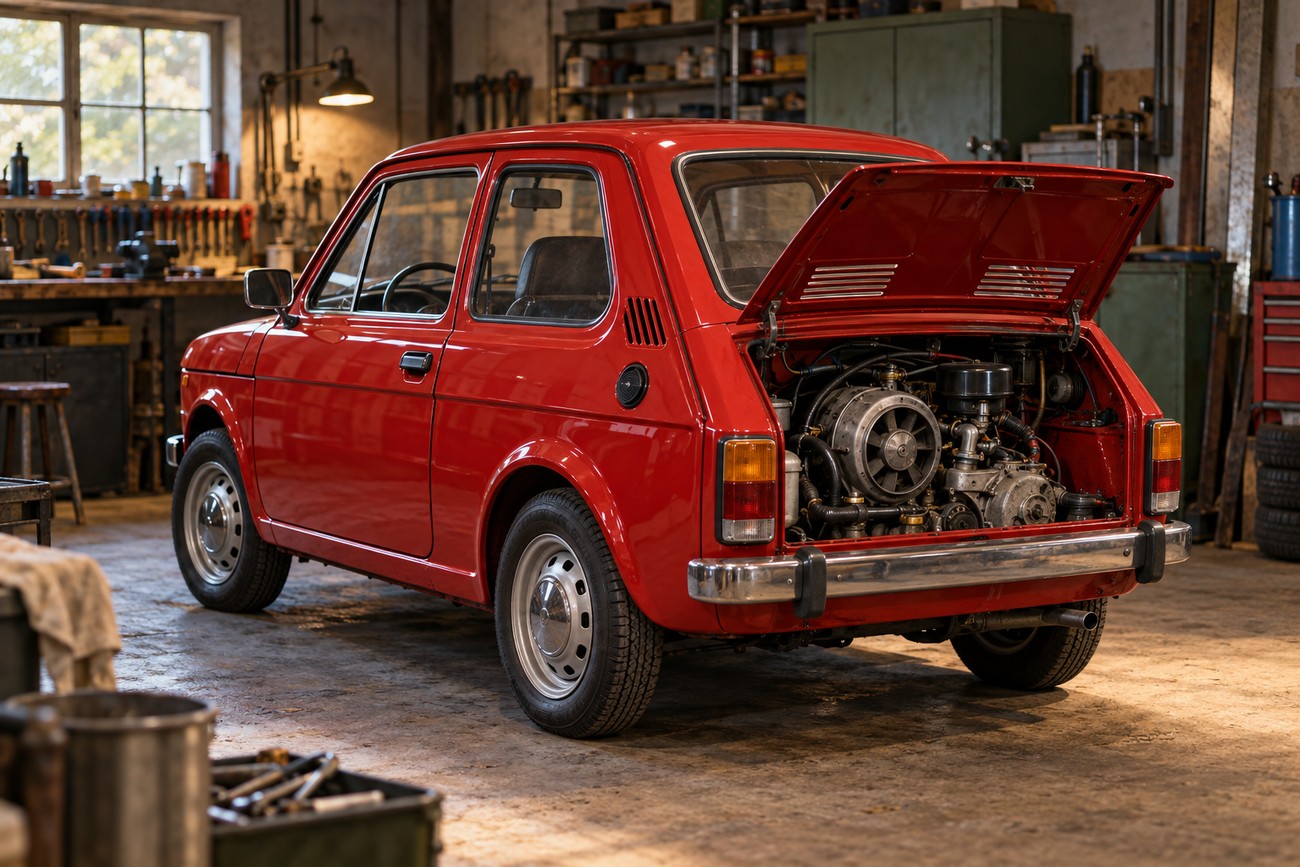
The basic layout was deliberately compact: a rear-mounted engine, rear-wheel drive, and a four-speed manual gearbox. Putting the engine behind the passenger compartment helped keep the front end short and made the car easy to package in a small footprint. It also shaped the driving experience, because the engine, cooling system, luggage space, and cabin were all arranged around that decision.
The original engine was a 594 cm³, two-cylinder, air-cooled gasoline unit producing 23 hp (17 kW). That output was sufficient for the car’s low mass, especially in the slower traffic of its era, but it left little reserve for steep roads, heavy loads, or modern traffic. Acceleration could feel painfully slow, and the driver had to plan overtaking and hill climbs rather than rely on spare power.
Typical dimensions were approximately 3,050–3,054 mm in length, 1,377–1,380 mm in width, and 1,330–1,337 mm in height. The 1,840 mm wheelbase helped keep the car short, while the reported weight of 580–600 kg made the small engine viable. In practical terms, the compact body was easy to place in narrow urban spaces, though the cabin and luggage capacity were limited by the same packaging.
Top speed is generally reported at approximately 105–110 km/h. That figure describes the car’s capability under suitable conditions, rather than a comfortable cruising speed in modern traffic. Noise from the rear-mounted air-cooled engine, heat around the back of the cabin, and limited room for passengers were structural features of the design. Restoration can improve condition, but it cannot turn the 126p into a modern family hatchback.
594, 652, and BIS: what actually changed
The engine badge or displacement matters when identifying a 126p. The 652 cm³ version retained the same stated power as the original engine while gaining torque, and the late BIS introduced a different water-cooled configuration.
| Configuration | Displacement | Cooling | Stated output | Practical distinction |
|---|---|---|---|---|
| Original engine | 594 cm³ | Air-cooled | 23 hp (17 kW), 39 N·m | The early basic configuration and the reference point for the original 126p specification. |
| Later engine | 652 cm³ | Air-cooled | 23 hp, 43 N·m | Power remained unchanged; the higher torque gave the engine a little more pulling ability. |
| BIS | 704 cm³ | Water-cooled | Power and torque figures not specified here | A late variant with a different cooling system and engine configuration. |
The 652 cm³ engine is often misunderstood because the larger displacement sounds as if it should have brought a clear horsepower increase. The supplied figures show otherwise: power remained at 23 hp, while torque rose from 39 N·m to 43 N·m. That distinction matters most when assessing the car’s response under load and when comparing parts or engine assemblies.
The BIS deserves separate attention. Its 704 cm³ engine was water-cooled, so it should not be treated as a routine variation of the air-cooled 594 or 652 cm³ cars. A seller’s description, engine identification, cooling hardware, and documentation should agree before a buyer assumes that parts, maintenance procedures, or originality are the same.
What everyday mobility cost its occupants
The 126p offered genuine freedom to families who gained access to a private car, but that freedom came with a narrow operating envelope. With 23 hp in both the original 594 cm³ and later 652 cm³ configurations, the car had little power in reserve. A full load, a long incline, or a strong headwind could alter its pace noticeably.
Its compact cabin was useful for short journeys and smaller occupants. Longer trips exposed the limited legroom, restricted luggage space, and the compromises required by the rear-mounted engine. The car could carry people and belongings, yet loading it for a family journey involved careful packing rather than casual use of a large cargo area.
Noise and heat were part of the ownership experience. The air-cooled engine needed airflow rather than a liquid cooling circuit, and its position behind the cabin made its mechanical presence difficult to ignore. A well-maintained car can be pleasant within its intended limits, although quietness and thermal comfort remain far removed from modern standards.
Reports of nervous high-speed behavior and weak braking appear in owner discussions, but these concerns depend heavily on the condition of the suspension, tires, brakes, and steering components. A worn example can feel unsettled, especially near its approximately 105–110 km/h top speed. Engine condition is equally important: low compression, incorrect ignition adjustment, or general wear consumes a share of an already small power reserve.
The expensive mistake behind a cheap surviving car
The body should be inspected before the engine persuades you that a car is worth buying. Rust in structural areas, sills, floor sections, and other repaired zones can determine whether restoration remains practical. A 126p that starts and moves under its own power may still require extensive bodywork, and the cost and quality of that work are often harder to judge than a noisy engine.
Structural corrosion should be assessed before mechanical pricing. A running engine can distract from the repairs that determine whether restoration is viable.
After the body, examine the braking system, tires, suspension, and steering-related components. These systems affect whether the car can be used safely and predictably, while old tires and neglected brakes can undermine an otherwise convincing appearance. Wiring deserves equal attention because age, previous repairs, and improvised modifications can create a chain of small failures.
Engine identification comes next. Confirm whether the car has the 594 cm³ or 652 cm³ air-cooled unit, or the 704 cm³ water-cooled BIS configuration. Cooling hardware, ignition settings, compression, leaks, and starting behavior all tell more than a short description such as “runs well.” The four-speed manual gearbox and rear-wheel-drive layout are simple in principle, yet their condition still depends on decades of maintenance.
Parts availability can be uneven, and restoration quality varies widely. Some replacement components may be available while others are non-original, poorly matched, or already used. A low asking price can conceal a large list of deferred work, so compare the car’s body, documentation, mechanical condition, and originality together rather than treating a running engine as proof of value.
Why its legacy is larger than its size
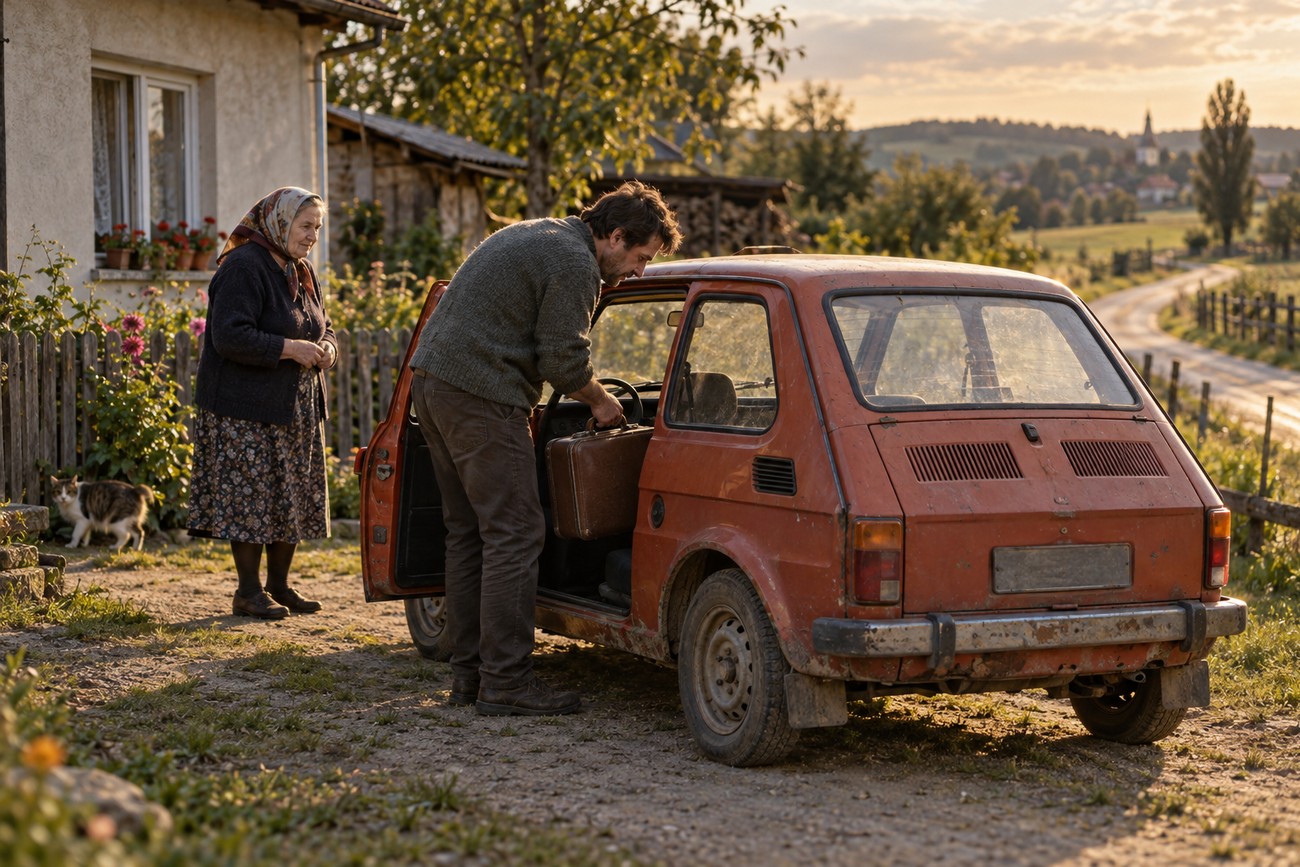
Polish production of the 126p ran from 1973 to 2000 and totaled 3,318,674 cars. The Italian Fiat 126 was produced from 1972 to 1980, with 1,352,912 cars built in Italy. Worldwide production exceeded 4.6 million, correcting the idea that the model existed only in Poland.
The 126p still has a distinctly Polish story because its importance came from local production and local use. It became familiar across generations, carrying families through ordinary errands and trips at a time when private car ownership had a strong social meaning. The unofficial name Maluch reflects that familiarity more clearly than a technical model code could.
For historians and collectors, production year and configuration can matter more than a casual inspection suggests. Early and late cars may differ in details that affect originality, while the 594 cm³, 652 cm³, and 704 cm³ versions belong to different points in the model’s evolution. Preserving those distinctions helps retain the history of the car rather than reducing every example to a generic small Fiat.
The Maluch’s appeal rests on a productive contradiction. It symbolizes mobility, independence, and Polish industrial life, yet it delivered those benefits through a cramped cabin, modest speed, considerable noise, and demanding maintenance. Its historical value does not require pretending that those shortcomings were minor. They are part of what the car was, and part of why a sound surviving example deserves careful preservation.
Frequently asked questions
What is the average price of a Fiat 126p?
No substantiated average price can be given from the available facts, and a single figure would mislead buyers across different countries and markets. Asking prices should be compared by body condition, documented repairs, engine variant, originality, and the local market in which the car is offered.
A car with a sound body and credible restoration records may represent a different proposition from a cheaper example that only runs. Check whether the price reflects structural corrosion, brake and tire work, electrical repairs, missing original parts, and the distinction between a 594 cm³, 652 cm³, or 704 cm³ BIS configuration.
What does an air-cooled 126p need checked regularly?
An air-cooled 126p needs clear cooling shrouds, unobstructed airflow, correct ignition condition, and proper adjustment. Dirt, damaged covers, blocked air paths, or incorrect settings can reduce cooling effectiveness and make the small engine run poorly.
Regular checks should also include starting behavior, unusual noises, oil leaks, and changes in performance. Air cooling does not remove the need for maintenance; it makes the condition of the airflow system and engine adjustments especially important.
What should I ask a seller before traveling to see a 126p?
Ask for clear photographs of the underside, sills, floor areas, wheel arches, and previous body repairs. Request the engine displacement and cooling type, along with records or recent evidence covering brakes, tires, suspension, wiring, and engine work.
Photographs can reveal corrosion and poor repairs, but they cannot prove mechanical condition. Before traveling, ask whether the car starts from cold, whether the seller can show the engine and cooling hardware, and whether the documentation supports the claimed production year and variant.







