
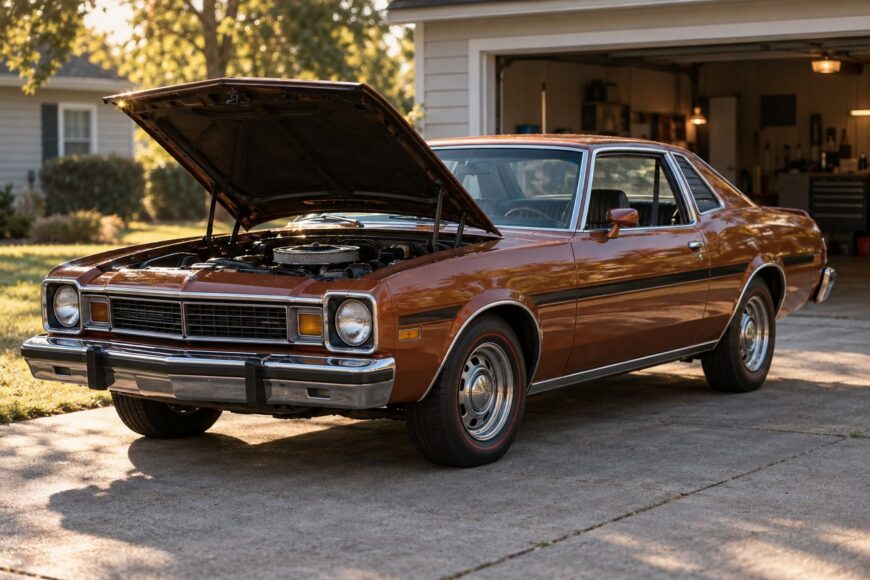
The Plymouth Volare Road Runner carries a difficult name. The 1968–1970 cars established the badge as an affordable muscle car with serious V8 power, while the Volare-based version arrived during a period shaped by emissions rules, fuel-economy concerns, and cost pressures. It belongs to the Malaise Era rather than the classic big-block formula.
Produced from 1976 through 1979, the Volare Road Runner offered the familiar identity in a more restrained package. Its reported 5.2 L V8 output ranges from 145 hp to 170 hp in published listings, and surviving cars often have uncertain originality. A purchase based on enthusiasm alone can become expensive once corrosion, missing documentation, incorrect trim, and scarce Mopar parts enter the calculation.
- What the Plymouth Volare Road Runner Actually Was
- Plymouth Volare Road Runner Specifications
- Why It Does Not Feel Like a Classic Road Runner
- Power Ratings, Catalog Errors, and Package Authenticity
- The Real Ownership Risks: Rust, Modifications, and Parts
- Value: Why Early Road Runner Prices Mislead Volare Buyers
- Frequently asked questions
- Why do some catalogs list the Volare Road Runner at 145 hp and others at 170 hp?
- What ended the Malaise Era?
- What are some of the best cars from the Malaise Era?
- What is the holy grail of muscle cars?
- What was the fastest American muscle car in 1971?
What the Plymouth Volare Road Runner Actually Was
The Plymouth Volare Road Runner was a late Road Runner application built on the Volare platform from 1976 through 1979. It continued the name after the period when Road Runner buyers expected large-displacement engines and stripped-down performance equipment. The badge remained useful as a recognizable performance identity, even as the surrounding market changed.
The original Road Runner debuted in 1968 as a relatively affordable muscle car. Its appeal rested on simple equipment, strong V8 options, and a clear connection between price and acceleration. The Volare version came from a different set of engineering and commercial priorities, so its equipment and performance should be judged within its own model years.
That historical setting matters during a purchase. A Volare Road Runner is not a failed copy of an earlier car; it is a product of a period when manufacturers were balancing emissions requirements, fuel economy, production cost, and customer interest in performance styling. Its value comes from that story, its condition, and its authenticity rather than from an assumption that every Road Runner carried the same mechanical formula.
The name also creates catalog confusion. Online listings frequently combine early Road Runner specifications with Volare information, while badges and decals can be added to an ordinary Volare. The correct question is whether the individual car has a documented factory Road Runner package for its year.
Plymouth Volare Road Runner Specifications
Published specifications describe a 5.2 L V8, a three-speed automatic TorqueFlite, and a compact body with a substantial curb mass. The figures below should be treated as a verification starting point rather than a universal specification sheet.
| Specification | Reported figure |
|---|---|
| Engine | 5.2 L V8 |
| Power | 145 hp at 4,000 rpm in one listing |
| Alternative power listing | 170 hp |
| Torque | 332 Nm at 1,600 rpm |
| Transmission | Three-speed automatic TorqueFlite |
| Length | 5,118 mm |
| Width | 1,849 mm |
| Height | 1,402 mm |
| Wheelbase | 2,863 mm |
| Mass | 1,653 kg |
The 145 hp and 170 hp figures may reflect different calibrations, markets, or inconsistent catalog data. They should not be merged into one assumed rating, and neither figure should be accepted without checking the car’s year, documentation, engine specification, and market history.
Why It Does Not Feel Like a Classic Road Runner
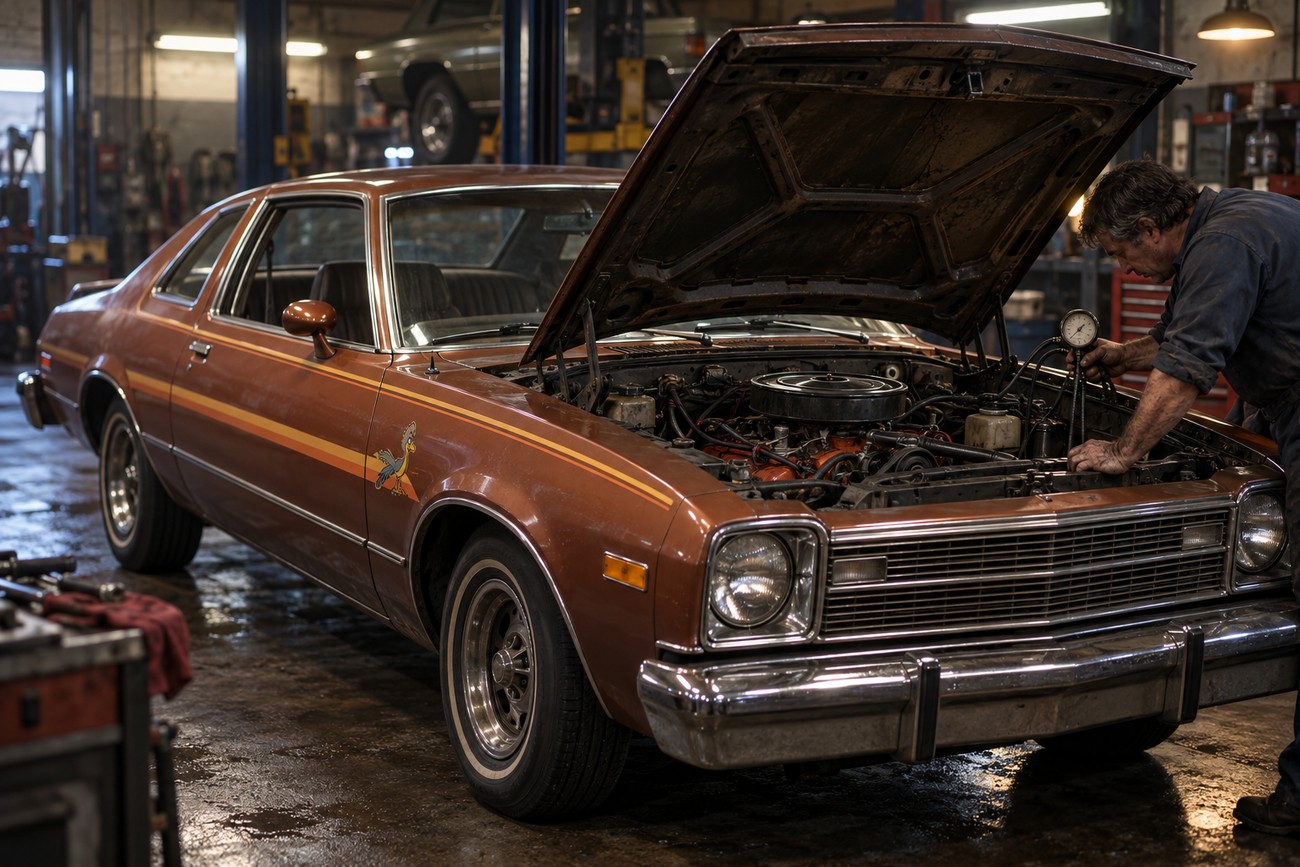
The disappointment usually begins with the badge. Early Road Runners are historically associated with a 383 Magnum rated at 335 hp, a 440 Magnum rated at 375 hp, and a 426 Hemi rated at 425 hp. Those figures belong to earlier generations and should never be presented as specifications for the 1976–1979 Volare application.
Published Volare figures of approximately 145–170 hp describe a different performance environment. The car’s 5.2 L V8 could provide useful low-speed torque, including the reported 332 Nm at 1,600 rpm, yet its output and drivetrain do not create the same acceleration experience as a big-block Road Runner. A three-speed automatic TorqueFlite reinforces the car’s period character rather than turning it into an earlier-style drag-strip machine.
The Road Runner name survived because it still had marketing value. That continuation can confuse modern buyers who read the badge as a promise of a specific power level. In the Volare years, it identified a performance-themed version within a changing product range, with expectations shaped by the Malaise Era.
A good Volare Road Runner can still be enjoyable as a period Mopar. Its appeal lies in its styling, historical position, and relative distance from the better-known early cars. Buyers who approach it as a late-1970s performance Plymouth are more likely to appreciate the car they actually own.
Power Ratings, Catalog Errors, and Package Authenticity
The conflicting 145 hp and 170 hp listings are a warning about data quality. Different calibrations, markets, or catalog data cards can produce different entries for what appears to be the same 5.2 L V8. The higher number is not automatically the correct one, and the lower number is not automatically proof of a defective engine.
Early Road Runner specifications create a second layer of error. A seller may use the famous 383, 440, or Hemi figures in a description of a Volare because the name is shared. That is a generation mix-up, and it can distort both the buyer’s expectations and the asking price.
Badges are clues, not proof. Reconcile the VIN and documents with year-specific equipment first, then check whether the engine, transmission, trim, and decals belong together.
A Volare with Road Runner decals is therefore only a candidate for further inspection. Authenticity requires the VIN, ownership documents, year-specific equipment, engine, transmission, trim, and options to support the same story. No single badge, grille, stripe, or engine color can establish a factory package by itself.
Photographs can help identify inconsistencies, especially when exterior trim comes from several model years. They cannot replace documentation and a physical inspection. A car with an attractive presentation may still contain a replacement drivetrain or a mixture of parts from an ordinary Volare and a Road Runner package.
The Real Ownership Risks: Rust, Modifications, and Parts
Corrosion deserves priority over cosmetic presentation. Mopar cars of this period can require substantial structural and panel work, and a partial restoration may conceal unfinished repairs. Inspect the body, underside, attachment points, and repaired areas before evaluating paint, stripes, or engine detailing.
Surviving examples often show modifications, incomplete restoration, or uncertain originality. An engine swap may improve performance, yet it changes the car’s documented specification and can reduce its appeal to a buyer seeking a correct example. The same applies to non-original trim, replacement interiors, and mixed-year exterior components.
Parts availability can make a seemingly inexpensive car expensive to finish. Specific original components may be difficult to source, while correct replacements and restoration work can cost more than the initial emotional purchase suggests. This is particularly important when the car is missing package-specific trim or documentation.
Condition and specification should come before performance upgrades. A sound, verifiable car with modest output is usually a stronger ownership proposition than a rusty example with ambitious engine work. Before buying, price the body repairs, missing parts, drivetrain corrections, and documentation work as separate items.
Value: Why Early Road Runner Prices Mislead Volare Buyers
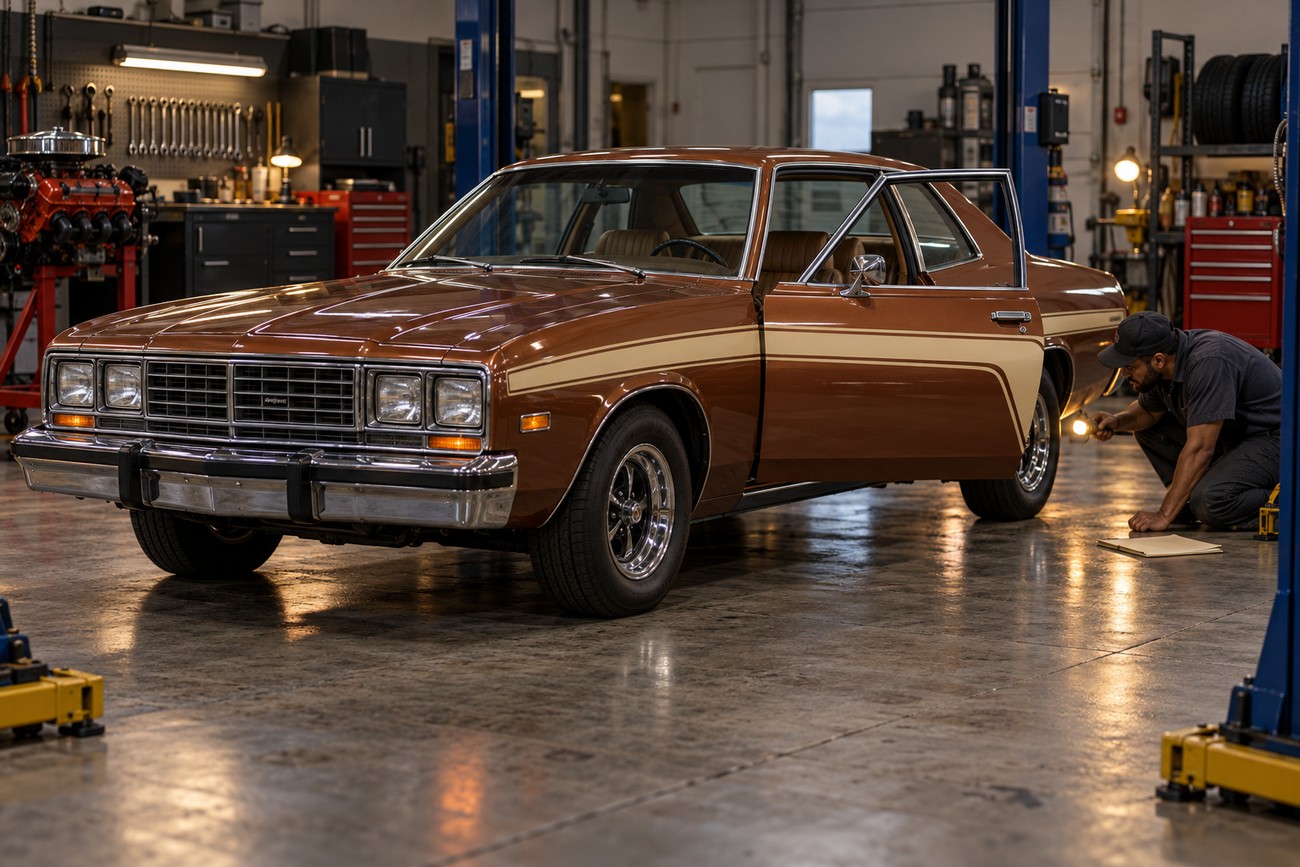
Early Road Runner prices cannot be transferred directly to a Volare Road Runner. Current listings for 1968–1970 cars include approximately €58,000–€75,900, reflecting a market focused on the original muscle-car era, desirable engines, condition, and documented authenticity. Those listings provide context for the badge’s reputation, not an automatic valuation for a late Volare.
The two groups occupy different value and demand segments. A documented 1968–1970 car with a sought-after engine can attract buyers for reasons that do not apply to a 1976–1979 5.2 L V8 car. The Volare’s value depends more heavily on its own condition, originality, equipment, and evidence of a factory Road Runner package.
Engine identity matters, yet it is only one part of the assessment. VIN and documentation, transmission, options, trim, body condition, and restoration quality can change the value substantially. A correct original car may deserve more consideration than a modified car with stronger performance, especially for a buyer seeking historical accuracy.
Price comparisons should therefore begin with comparable Volare Road Runners rather than headline sales or listings for early cars. If documentation is weak, treat the car as an uncertain Volare until evidence supports the Road Runner claim. That approach protects the budget from paying for a badge that the vehicle cannot substantiate.
Frequently asked questions
These questions address the Volare Road Runner’s conflicting specifications, historical context, and place among muscle cars. They also clarify why earlier Road Runner performance figures should not be applied to the Volare version.
Why do some catalogs list the Volare Road Runner at 145 hp and others at 170 hp?
The difference likely reflects different calibrations, markets, or inconsistent data cards for the 5.2 L V8. Catalogs often compress several specifications into one model entry, which can make a market-specific figure appear universal.
Use the conflicting numbers as a reason to verify the individual car. Check its production year, engine details, documentation, market history, and factory equipment rather than selecting the higher rating automatically.
What ended the Malaise Era?
The Malaise Era gradually receded as emissions controls became better integrated, fuel-economy demands changed, and manufacturers regained room to prioritize stronger performance. The transition was gradual rather than a single event, and later performance cars used improved engine management, induction, and drivetrain technology.
That historical shift came after the conditions that shaped the Volare Road Runner. The model’s 1976–1979 production span remains firmly within the period of compromise, even though stronger performance priorities returned later.
What are some of the best cars from the Malaise Era?
The strongest examples are cars that combine a clear factory identity with usable performance and dependable parts support. Buyers often favor well-documented V8 models with sound bodies, complete trim, and limited modification because ownership quality matters as much as the specification sheet.
A Volare Road Runner can belong on that personal shortlist when its condition and history are convincing. Its suitability depends on whether the buyer wants a late-period Mopar with historical character or the stronger acceleration associated with earlier muscle cars.
What is the holy grail of muscle cars?
There is no universal answer because the term depends on rarity, provenance, performance, and personal preference. The 426 Hemi Road Runner is a strong candidate within the Road Runner family because its historically cited output was 425 hp and its connection to the original muscle-car period is direct.
That status should not be transferred to every car wearing the Road Runner name. A late Volare Road Runner has a different place in the model’s history and should be valued on its own documentation, specification, and condition.
What was the fastest American muscle car in 1971?
The answer depends on whether “fastest” means acceleration, top speed, or a specific factory configuration. High-output 1971 cars such as the Hemi-powered Plymouth and Dodge models are commonly discussed among the quickest American muscle cars of that year.
Those comparisons have little direct bearing on a Volare Road Runner. They illustrate the performance culture associated with the earlier muscle-car period, while the Volare belongs to the later era of lower published output and tighter engineering compromises.







