

Sudden braking on a highway can turn a routine drive into a rear-end collision risk, especially when traffic is close behind. Owners may describe the Palisade as braking “by itself,” sometimes with a sharp jolt, and the fear is understandable.
An apparent phantom-braking event may involve Forward Collision-Avoidance Assist (FCA), automatic emergency braking (AEB), ABS, or another fault. Identifying the type of event matters before assigning a cause, because the same sensation can come from different systems and requires different checks.
- Was it automatic emergency braking or ABS?
- Why a Palisade may brake when the road looks clear
- What to do during and immediately after sudden braking
- Evidence and service checks that make an intermittent event diagnosable
- What owner complaints and recall searches can—and cannot—tell you
- Should you keep driving before the cause is found?
- Frequently asked questions
- How do I turn off automatic braking on a Hyundai Palisade?
- What if the dealer cannot reproduce the sudden braking?
- What is the biggest complaint about the Hyundai Palisade?
- How to turn off automatic braking on Hyundai?
- Why is my car braking on its own while driving?
Was it automatic emergency braking or ABS?
FCA/AEB uses forward-facing sensors to warn of a potential collision and assist with braking. It does not guarantee a stop or replace the driver’s actions. A brief, smooth deceleration while the lane appears clear may be associated with how the system interpreted an object, vehicle, or road geometry, although the driver’s impression alone cannot establish that FCA was responsible.
ABS activity usually feels different. A pulsing or vibrating brake pedal, changes in braking over a bump, or intervention as a wheel briefly loses contact with uneven pavement during braking may point toward ABS or a related stability-control input. Owner reports describe both apparently unprompted FCA-related braking and ABS-like activity on rough surfaces, so these events should not be treated as interchangeable.
Warning lights can provide useful clues. ABS, ESC, or FCA messages that remain on after the event deserve prompt attention, while the absence of a warning does not prove that the braking was normal. Some owners also report intervention without an expected FCA alert, but neither the presence nor absence of an alert is a conclusive test.
Why a Palisade may brake when the road looks clear
A forward-sensing system may interpret an object or road geometry differently from the driver. A crest, curve, shadow, roadside structure, vehicle movement, or an unusual visual alignment can affect what the camera or other forward sensors perceive. That possibility does not establish a known Palisade-wide cause, and the individual event still requires diagnosis.
Road surface can complicate the picture. A bump or pavement joint may change wheel contact and trigger ABS-related activity during braking while also changing the vehicle’s position relative to the forward-facing sensors. From the driver’s seat, those events can feel like one sudden automatic-braking incident even when different systems contributed.
Similar symptoms can also involve tires, alignment, wheel-speed sensors, wiring, brake components, or stability-control inputs. A damaged tire, incorrect pressure, a sensor signal that drops out, or a wiring problem may affect traction or the wheel-speed signals used by vehicle control systems. An apparently empty lane therefore does not identify which system intervened.
Public complaints sometimes describe braking with no visible obstacle, while other reports describe pedal vibration on uneven pavement. These accounts are useful starting points, rather than technical conclusions. Available fault codes, sensor data, and inspection can help connect the symptom with a specific component.
What to do during and immediately after sudden braking
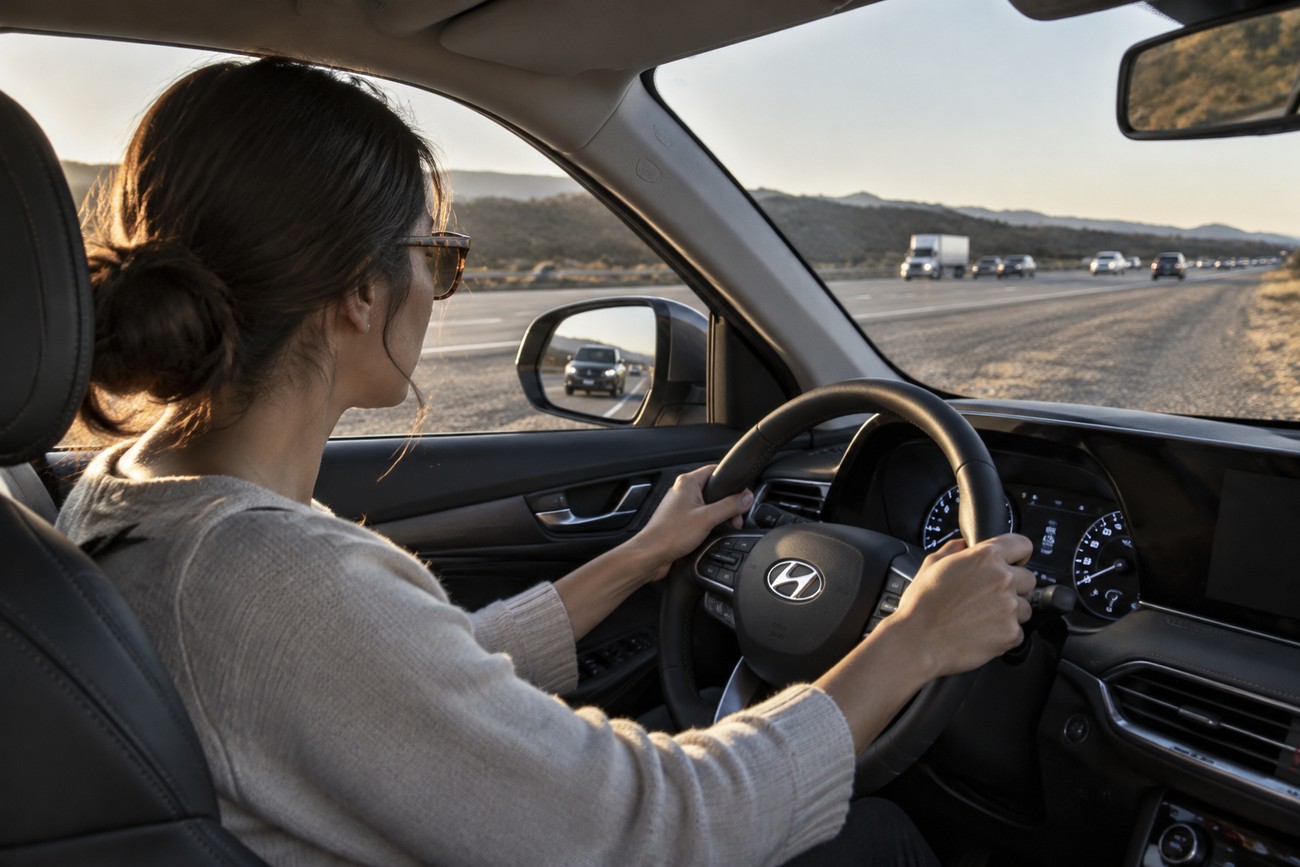
Keep both hands on the wheel, maintain the vehicle’s direction, and assess traffic around you. The driver remains responsible for braking or steering as needed; AEB is assistance, not a substitute for control. If the vehicle continues safely, move to a shoulder, turnout, or other suitable place away from moving traffic when conditions allow.
Avoid abrupt steering that could create a second hazard. Once stopped, note whether the pedal pulsed, whether the vehicle slowed smoothly, and whether traffic or a visible object was ahead. Do not deliberately provoke AEB on a highway or use live traffic to test the system.
Before switching the vehicle off, photograph or record dashboard messages and warning lights if it is safe to do so. A restart can clear part of the symptom or remove a temporary warning, making an intermittent event harder to investigate. Record the approximate speed, lane, road surface, weather, nearby traffic, and the sequence of braking and warnings.
Evidence and service checks that make an intermittent event diagnosable
Video from a dashboard camera or passenger can document the timing, traffic, road surface, and visible lane conditions. It cannot prove the internal technical cause, but it may show whether the event followed a bump, a curve, a vehicle entering the lane, or a dashboard warning. Write down whether the deceleration was smooth or abrupt and whether the pedal moved or pulsed.
Give the repair facility a precise account instead of only saying that the vehicle “braked itself.” Include the model year, trim, approximate mileage, speed, weather, tire condition, and whether the event has happened once or repeatedly. Ask for the reported symptoms and diagnostic findings to be recorded on the repair order.
Distinguish brake-pedal pulsation over a pavement joint from commanded deceleration before deciding whether wheel-speed data or forward-sensor data should lead the diagnosis.
Diagnostics should be guided by the symptoms and may include a scan for stored or history codes, inspection of forward sensors and their alignment, wheel-speed signals, tires, wiring, brakes, and stability-control systems. The technician should also review repair history and applicable software updates. Listing these checks does not mean every part is faulty.
Intermittent events are often difficult to reproduce after the vehicle has been restarted or the road conditions have changed. A safe technician road test may help when appropriate, but an owner should never recreate the incident in highway traffic. Preserving the first available evidence can be more useful than repeatedly trying to make the vehicle do it again.
What owner complaints and recall searches can—and cannot—tell you
NHTSA owner complaints include reports of sudden braking and ABS-related symptoms on Palisade vehicles. A complaint is an account from an owner, not a verified defect finding, an investigation, a recall, or a reliable measure of failure frequency. Available reports do not establish a Palisade-wide phantom-braking defect or a universal recall.
Third-party complaint aggregators have the same limitation and may mix FCA intervention, ABS activity, stability-control behavior, and mechanical braking concerns. Their counts can show that a symptom has been reported, while offering little certainty about how often it occurs or whether the reports share one cause.
Check the individual vehicle identification number (VIN) through the appropriate official recall lookup, using the exact model year. Equipment, software, service history, and applicable campaigns can differ between years and trims. A report about a 2020–2024 vehicle, for example, should not automatically be applied to another Palisade.
Ask the dealer to review the vehicle’s history and applicable technical information as well as open recalls. A vehicle can have no open recall and still require diagnosis for a stored code, sensor issue, tire problem, or intermittent brake concern. Recall status is one part of the investigation.
Should you keep driving before the cause is found?
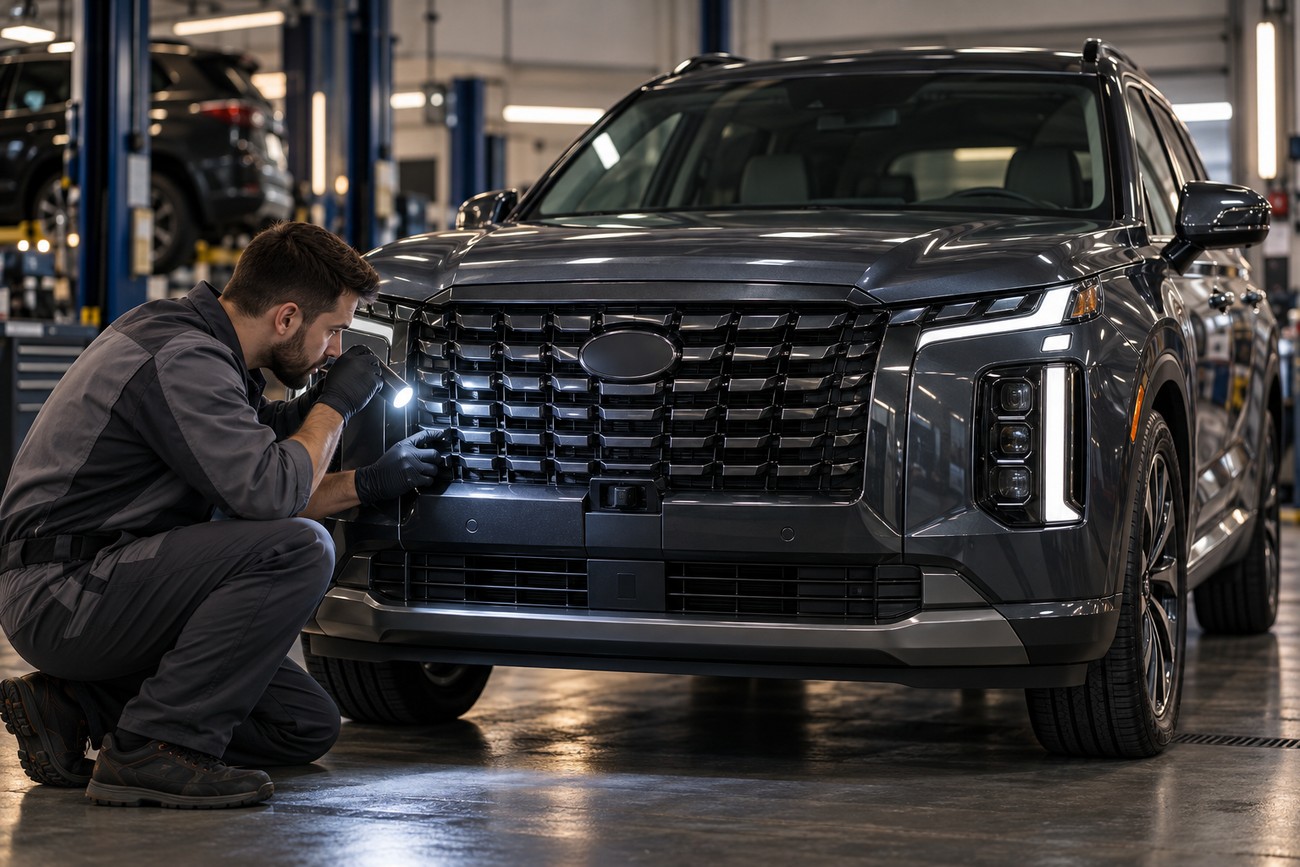
Recurring abrupt braking deserves prompt professional assessment before routine highway use. The same applies to reduced stopping performance, a vibrating pedal that appears unexpectedly, or ABS, ESC, or FCA warnings that remain illuminated. These symptoms do not prove a particular defect, but they raise the cost of assuming the next event will be harmless.
If the vehicle has a single unexplained event with no continuing symptoms, arrange an inspection and limit exposure to situations where a sudden intervention could create a serious risk. Keep greater following distance and avoid deliberate testing. A qualified technician can help decide whether the vehicle is suitable for limited driving or should be transported.
Changing or disabling an available FCA setting does not repair an ABS, ESC, wheel-speed sensor, wiring, or mechanical braking fault. Settings vary by model year and trim, and disabling assistance may remove a warning or intervention without addressing the underlying problem. Use the vehicle manual and professional advice rather than treating a setting change as a repair.
The absence of a collision or warning does not establish that an intervention was appropriate or effective. FCA may intervene briefly, late, or with partial braking, while a road or wheel-speed issue may leave no obvious message. Repeated events, worsening symptoms, or brake-system warnings should take priority over continued highway use.
Frequently asked questions
These answers cover FCA settings, difficult-to-reproduce events, owner complaints, and possible causes of unexpected braking. The correct procedure and diagnosis depend on the vehicle’s model year, trim, symptoms, and available evidence. A setting change does not replace professional inspection.
How do I turn off automatic braking on a Hyundai Palisade?
Use the vehicle manual for the exact model year and trim. Available FCA settings, their labels, and how long a change remains active can vary, so a universal menu sequence may be wrong. Changing a setting is not a repair and will not correct an ABS, ESC, sensor, wiring, tire, or mechanical braking problem.
What if the dealer cannot reproduce the sudden braking?
Ask the dealer to record the reported conditions, warning messages, diagnostic results, and any inability to reproduce the event on the repair order. Provide video and a written timeline, then ask whether a controlled technician road test is appropriate. If the event recurs, return with the new evidence rather than trying to trigger it deliberately.
What is the biggest complaint about the Hyundai Palisade?
There is no single complaint that can be treated as the definitive Palisade problem across all model years and trims. Reports relevant to this issue include unexpected FCA-related braking, ABS-like pedal pulsation on uneven pavement, and warning lights. Complaint records describe owner experiences; they do not establish a universal defect or rank failure frequency reliably.
How to turn off automatic braking on Hyundai?
The procedure depends on the vehicle, model year, trim, and available safety features. Consult the manual or an authorized service provider for the applicable setting. Do not use deactivation to avoid diagnosing repeated braking, warning lights, or reduced stopping performance.
Why is my car braking on its own while driving?
Possible explanations include FCA interpreting an object or road geometry, ABS responding to wheel-speed changes on uneven pavement during braking, or a problem involving tires, alignment, wheel-speed signals, wiring, stability control, or brake components. A clear lane does not identify the cause, and a recording documents the event without proving which system acted.







