
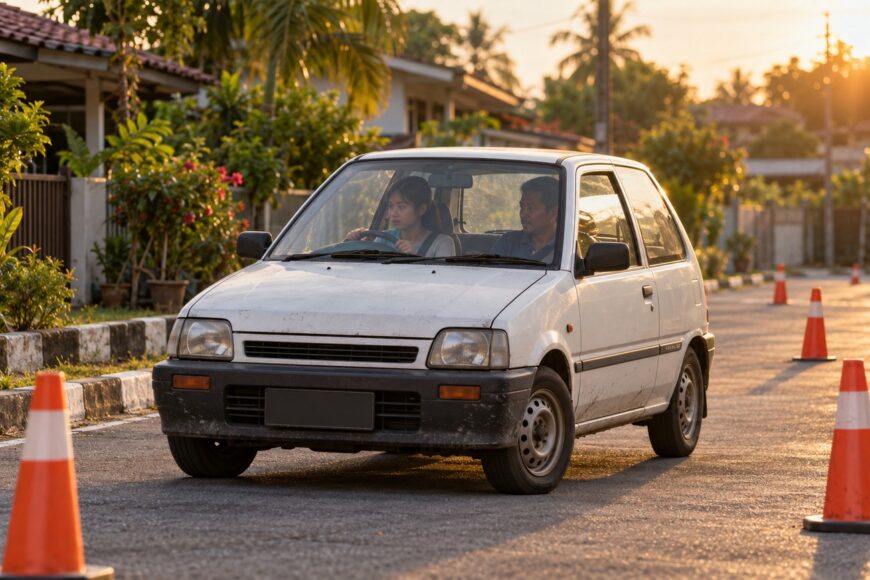
The Perodua Kancil became Malaysia’s affordable little car by keeping ownership simple, compact, and inexpensive. Produced from 1994–2009, it used straightforward three-cylinder engines and helped many Malaysians buy their first car or learn to drive in a training vehicle.
That low-cost formula has a clear trade-off today. A maintained Kancil can return about 5–6 l/100 km in city driving, yet age brings corrosion, electrical faults, noise, cramped accommodation, and scarce good-quality original parts. Its crash protection also falls well behind modern cars, so a cheap purchase price should never replace a proper inspection.
The sensible way to assess one is as an old, lightweight tool rather than a miniature modern car. Structural condition, brakes, tyres, and repair history matter more than a low odometer reading or attractive modifications.
- Why the Perodua Kancil became Malaysia’s little mouse
- What it is like to drive and live with
- The ownership faults that cheap Kancils hide
- Safety, brakes, and the limits of the bargain
- How to inspect a used Perodua Kancil before buying
- Why enthusiasts modify the Kancil—and where projects go wrong
- The Kancil myths worth rejecting
- Frequently asked questions
- How much does a Perodua Kancil cost in Malaysia?
- What is the smallest microcar in the world?
- How much do microcars cost?
- What is the price of a Perodua Kancil car in Malaysia?
Why the Perodua Kancil became Malaysia’s little mouse
Perodua produced the Kancil in Malaysia from 1994–2009 as an affordable entry point to car ownership. Its small footprint made it easy to place on crowded streets, while simple mechanical systems helped keep servicing and running costs within reach of first-time owners. For many households, the Kancil was the practical step between two-wheel transport and a full-size family car.
The car was also widely used by driving schools. Its modest dimensions, light controls, and uncomplicated layout made it less intimidating for learners. A new driver could practice parking, turning, and clutch control without the bulk of a larger sedan, although the age and safety limitations of surviving examples now deserve more attention.
Technically, the Kancil was a licensed Daihatsu Mira-based car, often associated with the L200/L500 indexes. Its proportions and engine concept were close to Japan’s kei-car idea, which explains the “little mouse” image attached to it. It was, however, certified under Malaysian rules rather than being officially a Japanese kei car.
That distinction matters mainly for classification and expectations. The Kancil’s compact dimensions were chosen for affordable local transport, not to provide the crash standards, refinement, or equipment of a modern city car. Its reputation grew from accessibility and simplicity rather than advanced engineering.
What it is like to drive and live with
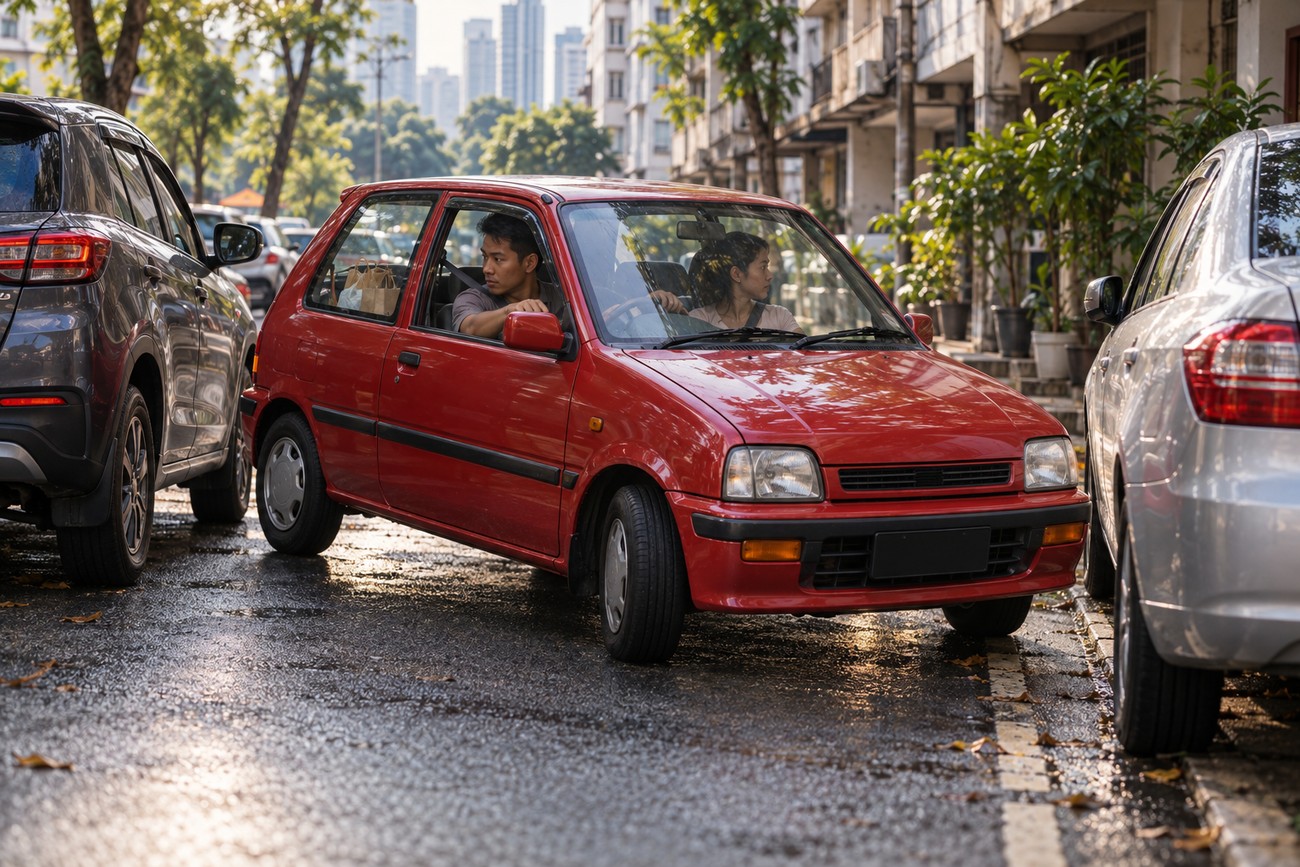
The Kancil is a three-door hatchback measuring about 3.3 m long and 1.4 m wide. Those dimensions are useful on tight urban streets and in small parking spaces, where the short body and light controls reduce effort. A healthy car can feel agile at city speeds because there is little mass for the modest engine to move.
Engine choices included 0.66-litre and 0.85-litre three-cylinder petrol units, while some export cars used 1.0-litre engines. Stock power was approximately 31–41 kW. That is adequate for local errands, although acceleration becomes limited with several occupants, air conditioning, steep roads, or fast highway traffic.
Owners commonly report about 5–6 l/100 km in city driving and 4–5 l/100 km on the highway when the car is maintained. Some promotional material suggested 3–4 l/100 km, yet that figure should not be treated as normal urban consumption. Carburetor condition, tyre pressure, traffic, driving style, and engine wear can move the real result substantially.
Cabin space is the greater daily compromise. The front seats can work for two adults, but tall drivers may find the steering wheel and knee room awkward. Rear seating is best treated as occasional accommodation for a child, while the luggage opening and cargo shape make bulky items difficult to load. Four adults can fit in a basic sense, but the journey is likely to be cramped and tiring.
The ownership faults that cheap Kancils hide
Three-cylinder vibration is part of the Kancil character, especially as engine mounts and other rubber components age. Weak sound insulation allows mechanical noise, tyre noise, and vibration into the cabin, with owners commonly finding conversation difficult above 90 km/h. A test drive should therefore include both slow urban roads and a faster section where possible.
Interior faults are usually less serious than structural rust, but they still affect ownership. Rattling trim, loose plastic, broken handles, failed seat latches, wandering electrical contacts, and faulty lights or instruments are common age-related annoyances. Each item may be inexpensive in isolation, yet a long list of small repairs quickly changes the value of a supposedly cheap car.
Humid conditions are especially hard on old Kancils because factory corrosion protection was weak. Inspect the sills, strut towers, lower door sections, suspension mounting areas, and structural rails. Surface rust can be repaired; corrosion that has weakened a mounting point or distorted the shell can make the car uneconomical to restore.
Previous crash damage adds another layer of risk. After a serious impact, the body geometry may remain permanently compromised even if the exterior has been made presentable. Uneven tyre wear, doors that do not close cleanly, inconsistent panel gaps, steering that does not self-center, and weld marks deserve a professional assessment.
Safety, brakes, and the limits of the bargain
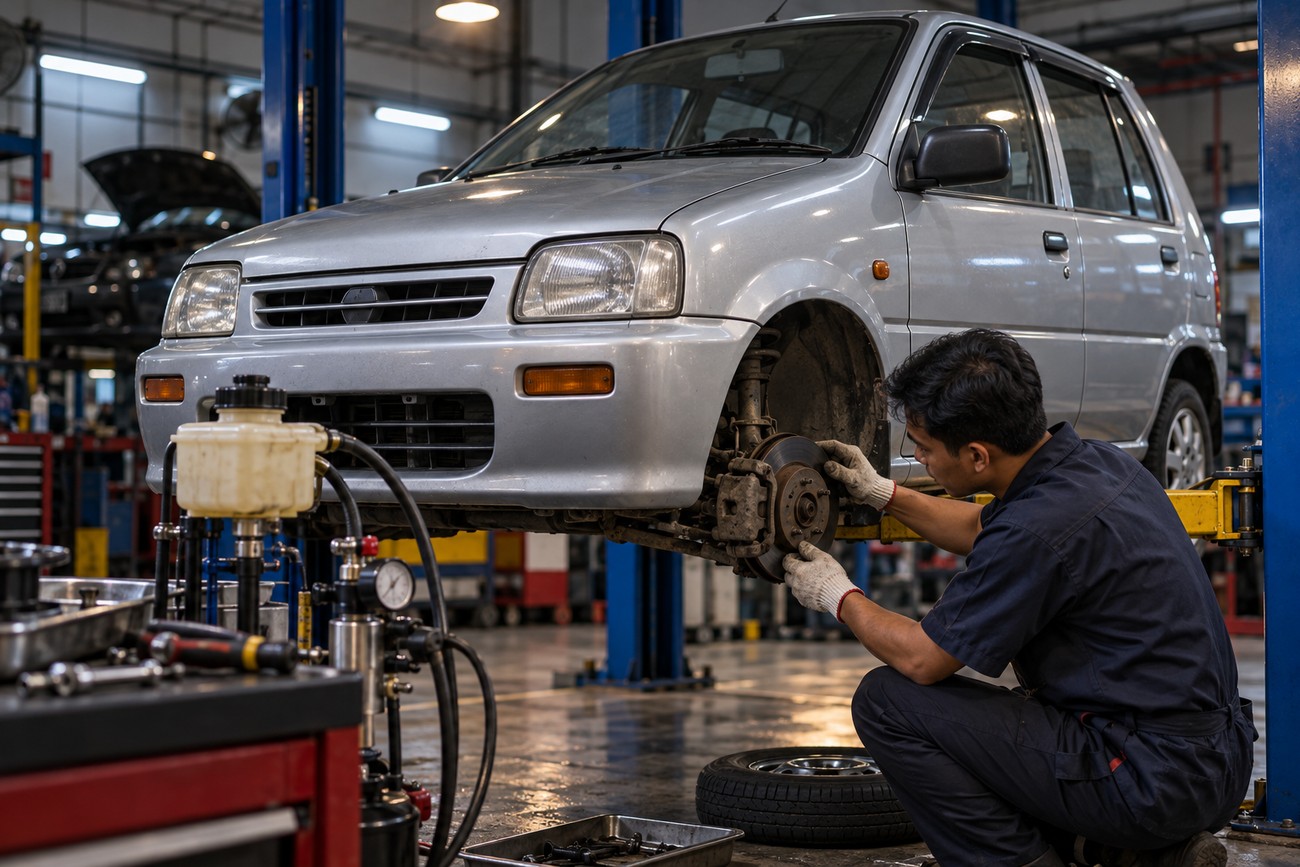
Basic Kancil versions generally lacked ABS and airbags. The thin body construction and limited deformation protection provide far less passive safety than a newer small car. A short stopping distance in a parking space does not change the forces involved in a collision, and small dimensions do not automatically make the Kancil safe in urban crashes.
Brake condition deserves particular attention. Soft or weak braking is a recurring complaint, and the risk becomes greater when an engine swap adds performance without matching upgrades. The pedal should feel consistent, the car should stop in a straight line, and there should be no pulling, vibration, fluid leakage, or excessive pedal travel.
Modern ABS, airbags, and reinforced door structures are difficult to retrofit properly. Installing an isolated component does not recreate the crash sensors, control systems, mounting points, and engineered load paths of a newer vehicle. Buyers who regularly carry passengers or travel at highway speeds should weigh that limitation heavily.
Suspension condition also affects safety rather than comfort alone. Worn dampers, loose joints, poor alignment, and old tyres can make a light car unpredictable on wet or uneven roads. A sound, standard Kancil is easier to judge than one carrying undocumented performance parts, improvised wiring, or excessively stiff springs.
How to inspect a used Perodua Kancil before buying
Begin underneath the car, before being distracted by a clean interior or a low odometer reading. Check the sills, strut towers, floor areas, structural rails, suspension mounts, and lower door sections for corrosion, fresh underseal, uneven welding, and signs of water entry. A proper inspection should include lifting carpets and looking behind trim where practical.
Next, assess accident geometry. Compare panel gaps, door operation, bonnet and hatch alignment, tyre wear, steering position, and the vehicle’s behavior under braking. A mechanically tired car with a straight shell may be repairable; a polished car with distorted structural areas can become a financial trap.
Structural rust, crash-repair geometry, and brake condition should be checked before cosmetic faults or odometer mileage. Those areas decide whether the car remains a safe, repairable base.
Test the suspension and steering over uneven roads, listening for knocks and checking whether the car tracks straight. Inspect brake components, tyres, cooling hoses, radiator condition, engine temperature, charging voltage, lights, instruments, and the operation of every switch. Electrical faults can be intermittent, so a short drive is rarely enough.
Ownership history can be more informative than mileage. A high-mileage Kancil kept by one careful owner may be a better proposition than a low-mileage example that has passed through five owners, several repairers, or multiple modifications. Original parts are less consistently available for older cars, and cheap replacement components can vary widely in quality.
Why enthusiasts modify the Kancil—and where projects go wrong
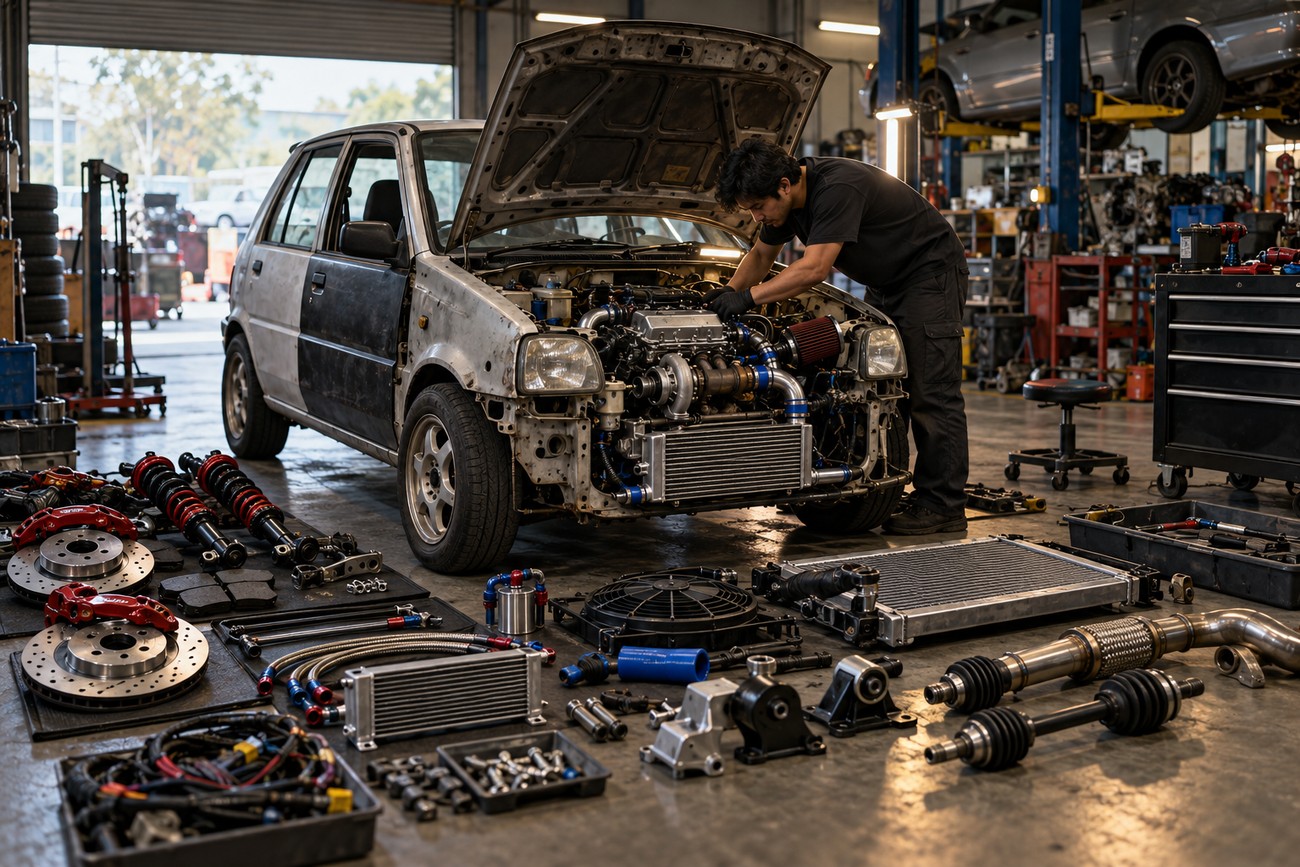
The Kancil’s low weight, simple mechanical layout, and inexpensive used shell make it a popular base for budget projects. Local enthusiasts use Daihatsu-based 1.0–1.3-litre turbo engine swaps, track-day cars, autocross builds, and closed-course low-power driving projects. With a well-maintained suspension and normal tyres, a standard car can also feel predictable and entertaining at urban speeds.
More power requires a complete supporting package. Brakes, suspension, tyres, cooling, driveshafts, engine mounts, and fuel or electrical systems must be considered together. Adding a turbo engine to an old shell while leaving the original brakes and worn suspension in place creates a mismatch that is dangerous on public roads.
Extreme suspension settings can cause their own problems. Excessively stiff springs reduce grip on broken roads, increase cabin shock, and can make the car skip across uneven surfaces. A Kancil used every day needs controlled damping and sensible tyre choice rather than a setup designed only for appearance or a smooth circuit.
Intake and exhaust changes also need correct tuning. Poorly matched modifications can produce overheating, detonation, and reduced engine life. Heavily modified cars may attract higher insurance premiums or restricted coverage, so the owner should declare the changes and confirm the policy position before using the car on the road.
The Kancil myths worth rejecting
The Kancil is often called a Japanese kei car because its proportions and small engines resemble that category. The accurate description is a kei-like car in size and engine concept, certified under Malaysian rules rather than Japanese kei-car standards. The label should not be used to assume Japanese-market equipment or safety requirements.
Fuel economy claims also need context. Promotional figures of 3–4 l/100 km are not a reliable expectation for ordinary city use in an old car. Owner-reported real-world economy is about 5–6 l/100 km in city driving and 4–5 l/100 km on the highway when maintained, with worn engines and aggressive driving increasing consumption.
Small size is not the same as crash safety. Basic versions generally lacked ABS and airbags, while the thin body construction and weak crash protection are poor by modern standards. A Kancil can be easy to maneuver around town, yet that advantage does not protect occupants in a collision.
It is also a mistake to treat the car as a comfortable four-adult family vehicle. The Kancil is more realistic for up to two adults and a child, with limited luggage capacity. It can still suit a careful buyer who needs simple urban transport, understands its limitations, and finds a straight, maintained example; anyone prioritizing modern crash protection should choose a newer car.
Frequently asked questions
The Kancil’s value depends heavily on condition, history, and intended use. A cheap example can require more work than a better-maintained car bought at a higher price.
How much does a Perodua Kancil cost in Malaysia?
There is no responsible single price for a Perodua Kancil because condition matters more than the model name. Structural rust, accident history, ownership history, originality, and modifications can change its value more than mileage alone.
Before comparing asking prices, inspect the shell, brakes, suspension, cooling system, electrical equipment, and documentation. A straight, maintained car with sensible specifications is usually a safer purchase than a cheaper modified example with unclear repairs.
What is the smallest microcar in the world?
There is no universally accepted smallest microcar. Rankings change depending on whether they use overall length, engine capacity, production status, or road-legal classification.
The Kancil sits firmly in the tiny-car category at about 3.3 m long and 1.4 m wide. Its proportions are close to kei-car territory, yet it is not officially a Japanese kei car under Malaysian rules.
How much do microcars cost?
Microcar prices vary widely because the category includes new city cars, discontinued models, collector vehicles, and heavily modified used cars. Age, road-legal status, parts availability, corrosion, and safety equipment can matter more than engine size.
For an older microcar, budget for inspection and corrective maintenance rather than judging affordability by the purchase price alone. Tyres, brakes, suspension, cooling, and rust repairs can determine the real cost of ownership.
What is the price of a Perodua Kancil car in Malaysia?
The price of a Kancil in Malaysia depends primarily on its structural condition, maintenance history, ownership record, and modification quality. Originality can help, while undocumented engine swaps, poor repairs, or severe corrosion can reduce value even when the car appears presentable.
Compare cars by condition rather than by advertised mileage. A documented, mechanically sound Kancil with a straight body is generally a better basis for ownership than a low-mileage car with multiple owners and an unclear accident history.







