
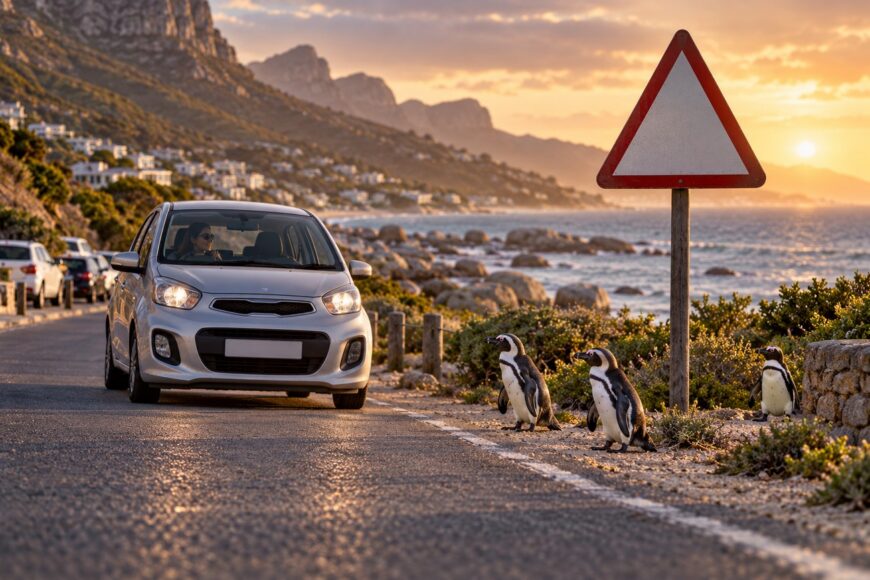
A tiny Kia Picanto and official penguin crossing signs make a memorable South African drive. Neither deserves casual treatment. Around Simon’s Town and Boulders Beach, the signs warn of animals that may reach the road, while the Picanto’s easy city manners do not make every route easy to drive.
A daylight trip through town and along the Cape Peninsula is a sensible use for a city-sized car on standard roads. A long highway journey with passengers and luggage, or a return after dark, asks more of both car and driver. South Africa drives on the left, and unfamiliar roads can include potholes, roadworks, and checks that disrupt even a short itinerary.
- Penguin Crossing Signs Are a Real Driving Warning
- Where a Kia Picanto Works—and Where It Starts to Struggle
- The South African Driving Habits You Must Reset
- Documents, Alcohol Limits and Roadblocks Before You Drive
- Why Night Driving Changes the Risk Calculation
- Kia Picanto Fit by Route and Driving Conditions
- A Safer Picanto Plan for the Cape Peninsula
- Frequently asked questions
- What should I photograph or confirm when collecting the Picanto?
- Why should I confirm the mileage allowance at pickup?
- What contract terms should I check before driving away?
Penguin Crossing Signs Are a Real Driving Warning
Official penguin warning signs are found around Simon’s Town and Boulders Beach. They are traffic warnings rather than decorations for visitor photographs. Treat one as a reason to scan the road ahead and reduce speed before you reach the busiest access points.
Penguins may appear near roads, parking areas, and access points, not only on the beach. Their movement can be hard to predict from behind the wheel, particularly where parked vehicles or roadside activity limit your view. Slow early enough to stop without a sudden maneuver.
Keep watching for people as well as penguins when approaching beach parking areas and entrances. If you want a photograph of a sign, park in a suitable place first; stopping in a traffic lane creates another hazard. Resume driving only when you can give the road your full attention.
Where a Kia Picanto Works—and Where It Starts to Struggle
The Kia Picanto is a city-sized car suited to urban driving and standard roads. Its compact size helps with parking and tight streets, which can make a daytime Cape Peninsula outing appealing. It is not automatically suited to every highway or rough route simply because it is small.
Owners commonly report noticeable cabin noise at speed and on uneven surfaces. On a longer drive, that can make conversation and navigation instructions harder to hear. A road that looks manageable on a map may also feel less comfortable when its surface deteriorates.
Power is generally adequate in town but modest on highways, hills, in headwinds, or with a full load. Allow room for that limited reserve when joining traffic or considering an overtake; never assume the car will accelerate as readily as it did on an empty city street. If much of your trip involves luggage-heavy highway driving, assess the specific rental car and route before accepting the smallest available class.
The South African Driving Habits You Must Reset
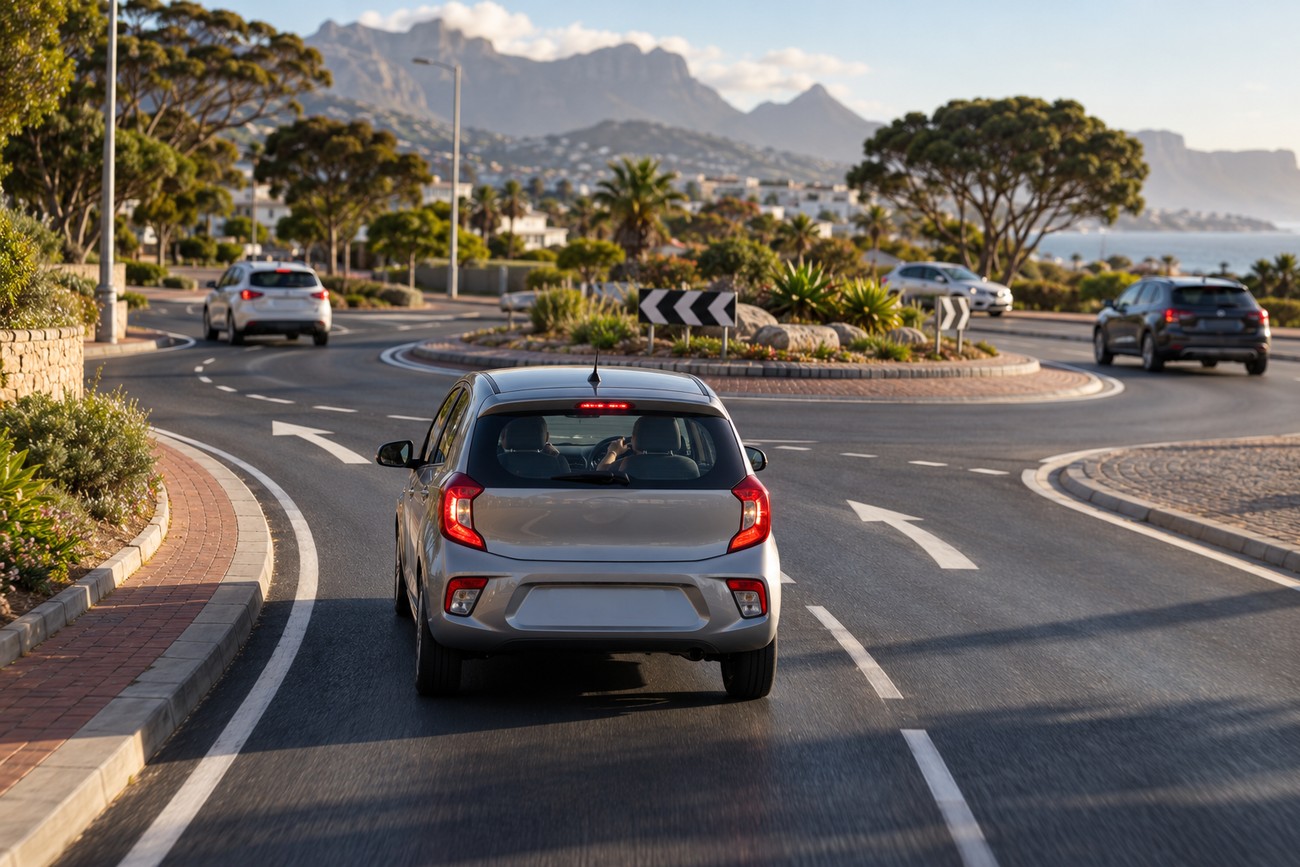
South Africa drives on the left. For visitors accustomed to right-side traffic, the first challenge is often lane position after a turn, especially when the road is quiet. Check which lane you are entering before you move, rather than following an ingrained turn pattern.
At intersections and roundabouts, slow enough to read the signs, markings, and circulating traffic. Familiar priority assumptions from home may lead you to look or yield in the wrong direction. A small car takes up less space, but its dimensions do nothing to correct a mistaken decision about right of way.
Leave space around local taxis, which may maneuver assertively or stop unexpectedly. Travelers also report occasional red-light violations, so a green signal is no substitute for checking that crossing traffic has stopped. Give yourself an undemanding first drive in daylight if you are adapting to left-side traffic.
Documents, Alcohol Limits and Roadblocks Before You Drive
The minimum driving age in South Africa is 18 years, but meeting that threshold does not guarantee a rental. Many rental companies require at least one year of driving experience and may set additional conditions. Check eligibility with the provider before paying for a booking.
English-language licenses are generally accepted; licenses in another language normally require an International Driving Permit. Carry the license itself as well as any required permit, and confirm the rental company’s document rules before departure. Finding out at the counter can derail the trip before it begins.
The permitted blood-alcohol level for drivers is 0.05 g/100 ml of blood. The simplest choice for a driving day is to avoid alcohol altogether. Roadblocks are common enough to affect journey timing and may involve document or sobriety checks; reduce speed, follow officers’ directions, and keep your documents accessible.
Why Night Driving Changes the Risk Calculation
A clear road in daylight can be difficult to read after dark. Wildlife and pedestrians without reflective clothing may become visible late, while lane markings can be faint or absent on some roads. Unfamiliar navigation adds another task at the moment you need to watch the road most closely.
Roadworks, potholes, and an approaching roadblock can also require a sudden reduction in speed. Drive with your lights on and leave enough space to respond smoothly if a night trip is unavoidable. Do not let a navigation app’s arrival estimate pressure you into maintaining daylight speeds.
Dusk and dawn near the coast can be especially demanding: light is changing while animals and pedestrians may still be near access roads. For an unfamiliar Cape Peninsula route, daylight is generally the safer choice. Plan the return with enough margin that a stop or delay does not turn it into an unintended night drive.
Kia Picanto Fit by Route and Driving Conditions
Use the route and load, rather than the advertised car class alone, to judge whether a Picanto fits your plans.
| Route or condition | Suitability | Main limitation | Sensible approach |
|---|---|---|---|
| Urban streets | Strong fit for standard city roads | Busy traffic and unexpected maneuvers still demand attention | Use its compact size for parking while leaving space around taxis and at intersections. |
| Simon’s Town and Boulders Beach area | Suitable for a careful daylight visit on standard roads | Penguins and pedestrians may appear near parking areas and access points | Slow before the busy area and stay ready to stop. |
| Longer intercity highways | Possible, but less comfortable | Noticeable noise and modest power reserve, especially with luggage or headwinds | Allow extra time and be conservative about overtaking. |
| Rough or heavily loaded trips | Assess the route and supplied car carefully | Potholes, roadworks, sudden stops, and a full load reduce the margin for error | Check road conditions and consider a vehicle better matched to the trip. |
A Safer Picanto Plan for the Cape Peninsula
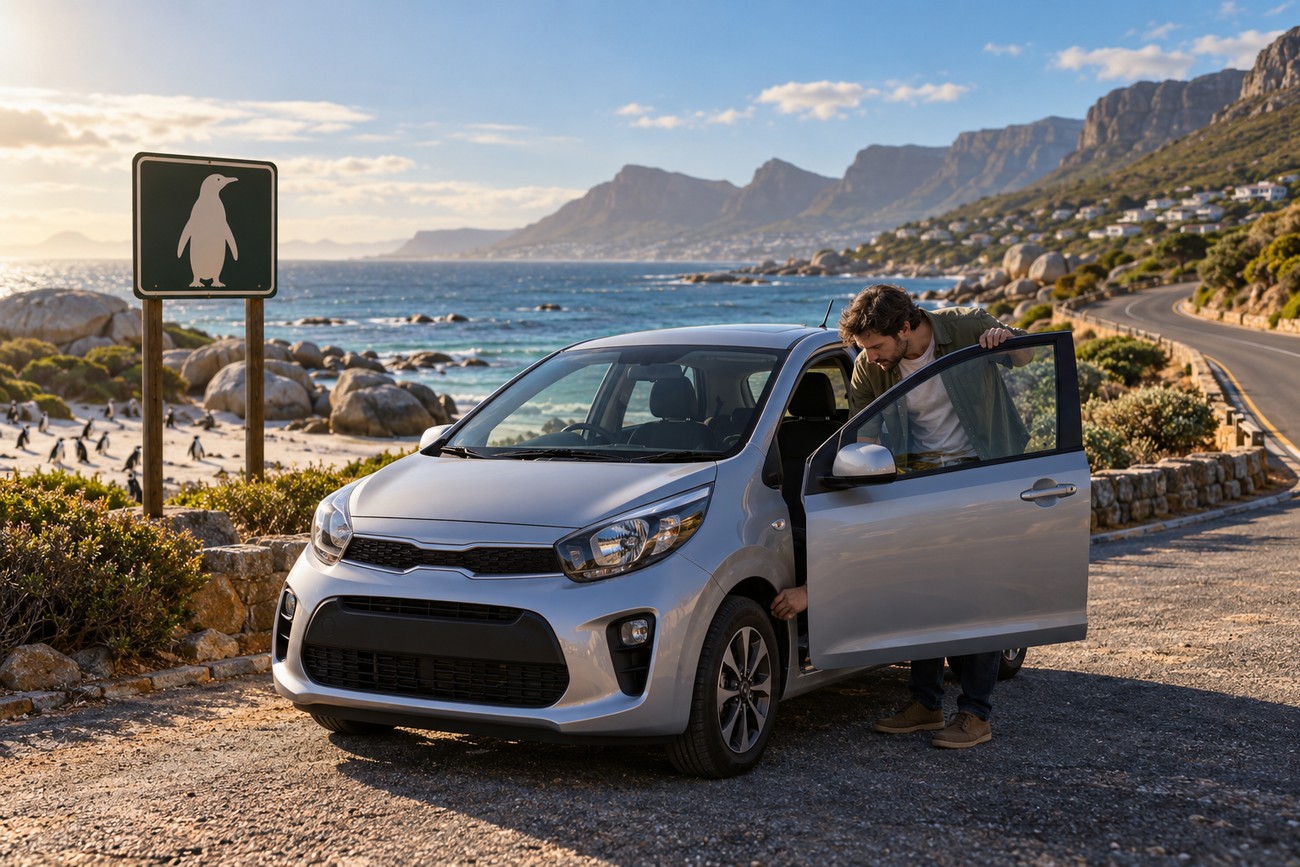
Collect and inspect the car in daylight, then get comfortable with its controls before joining busy traffic. Plan a route that lets you visit the coast and return while you can still see the road clearly. A short distance on the map does not guarantee an easy drive.
Build a daylight buffer around short coastal itineraries instead of estimating arrival from distance alone. A roadblock or a slow approach through an animal-warning area can use up the time you expected to spend on the return leg.
Reduce speed before the penguin areas around Simon’s Town and Boulders Beach, rather than waiting to see an animal on the road. Elsewhere, allow for potholes, roadworks, and official checks without trying to recover lost time by driving faster. If the schedule becomes tight, shorten the outing rather than committing to an unfamiliar route after dark.
Before booking, confirm the mileage limit, deposit requirements, and insurance terms directly with the rental provider. A generic aggregator listing may omit conditions or describe a configuration different from the car supplied. At pickup, make the decision against the actual vehicle, its condition, and your planned load.
Frequently asked questions
The rental counter is your last practical chance to resolve a mismatch between the listing and the car you receive. Check the paperwork while the vehicle is still at the depot, and keep a record of its condition. This matters even when you booked a familiar model such as a Picanto.
What should I photograph or confirm when collecting the Picanto?
Confirm that the contract states the mileage allowance, deposit, and insurance terms you agreed to, and ask the provider to clarify any difference before signing. Check that the supplied car and its equipment meet your booking needs rather than relying on a generic listing’s description.
Photograph existing exterior damage before leaving the depot, including the wheels and any marks noted on the inspection record. Make sure the rental staff record damage you find, and keep your copy of the paperwork and photographs until the rental is closed.
Why should I confirm the mileage allowance at pickup?
The mileage allowance can affect the total rental cost and whether your planned Cape Peninsula or highway trip fits the contract. Compare the allowance with the itinerary and ask about charges for exceeding it before leaving the depot.
What contract terms should I check before driving away?
Review the deposit, insurance conditions, fuel policy, and any restrictions that apply to the supplied Picanto. Resolve discrepancies with the rental provider while the vehicle and paperwork are still at the depot.







