
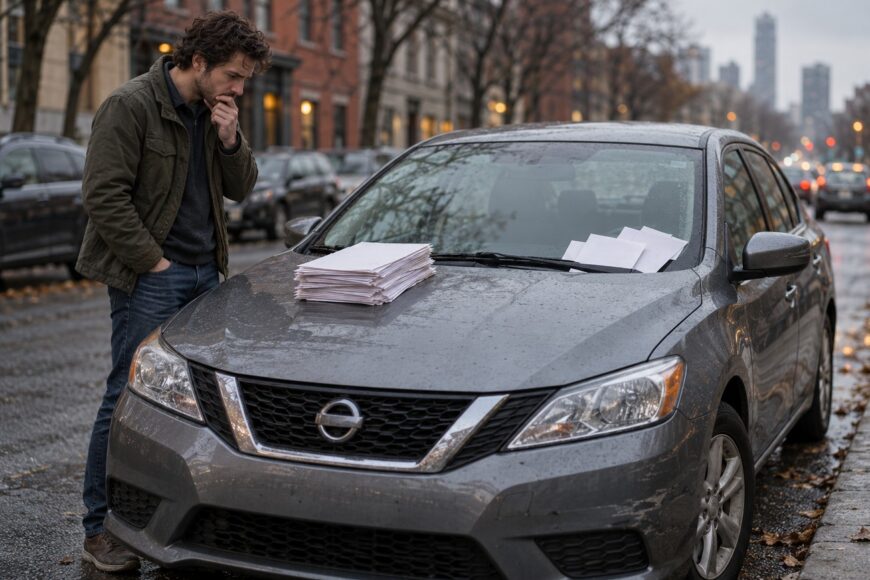
Fifty parking tickets attached to one Nissan Sentra can look like a mechanical problem, a registration mistake, or even a criminal case. Usually, the Sentra has no special defect. The real issue is accumulated municipal debt tied to the vehicle record, the registered owner, or both, depending on local law.
Parking tickets are generally issued and enforced by municipalities or states; the DMV typically administers registration rather than issuing the parking ticket. Ignoring early notices can allow penalties, collection costs, registration holds, and enforcement fees to grow. Buying or selling the car without checking the relevant records can also leave the next owner facing a practical problem, although tickets do not automatically transfer in every jurisdiction.
- What 50 Parking Tickets Really Mean
- How a Parking-Ticket Mountain Forms
- The Used-Car Trap: Buying a Nissan Sentra With Tickets
- What to Do Before the Sentra Is Booted or Towed
- How to Challenge Tickets Without Making the Case Worse
- The Hidden Costs and Myths Behind 50 Tickets
- Frequently asked questions
- How can you challenge a handicap parking ticket successfully?
- What happens if I buy a car with parking tickets on it?
- How much is a parking ticket for parking in a handicap spot?
What 50 Parking Tickets Really Mean
A parking-ticket balance is governed by the city or state that issued each notice. Deadlines, appeal procedures, late penalties, booting rules, towing powers, and registration holds can differ sharply between neighboring cities. The DMV may become involved when a municipality places a registration hold, but it is usually not the agency that created the original debt.
One vehicle can collect dozens of tickets if it remains on a public street in violation of local rules. Some cities may issue a new citation each day, or each enforcement period, while the vehicle remains illegally parked. That means an apparently abandoned Nissan Sentra can accumulate a large balance without moving, particularly if nobody receives or opens the notices.
Reddit and local-news reports describe individual vehicles with roughly 40–70+ tickets. These are reported cases, not a general statistic or a normal outcome for Nissan Sentras. Such reports may involve an old address, an ownership change that was never recorded, a vehicle left on the street, or a dispute over which person or entity was responsible.
The debt may follow the registered owner, the vehicle record, or both, depending on local law and the type of violation. A title or bill of sale therefore does not answer every enforcement question. The issuing city’s ticket ledger and registration rules matter more than the model badge on the trunk.
How a Parking-Ticket Mountain Forms
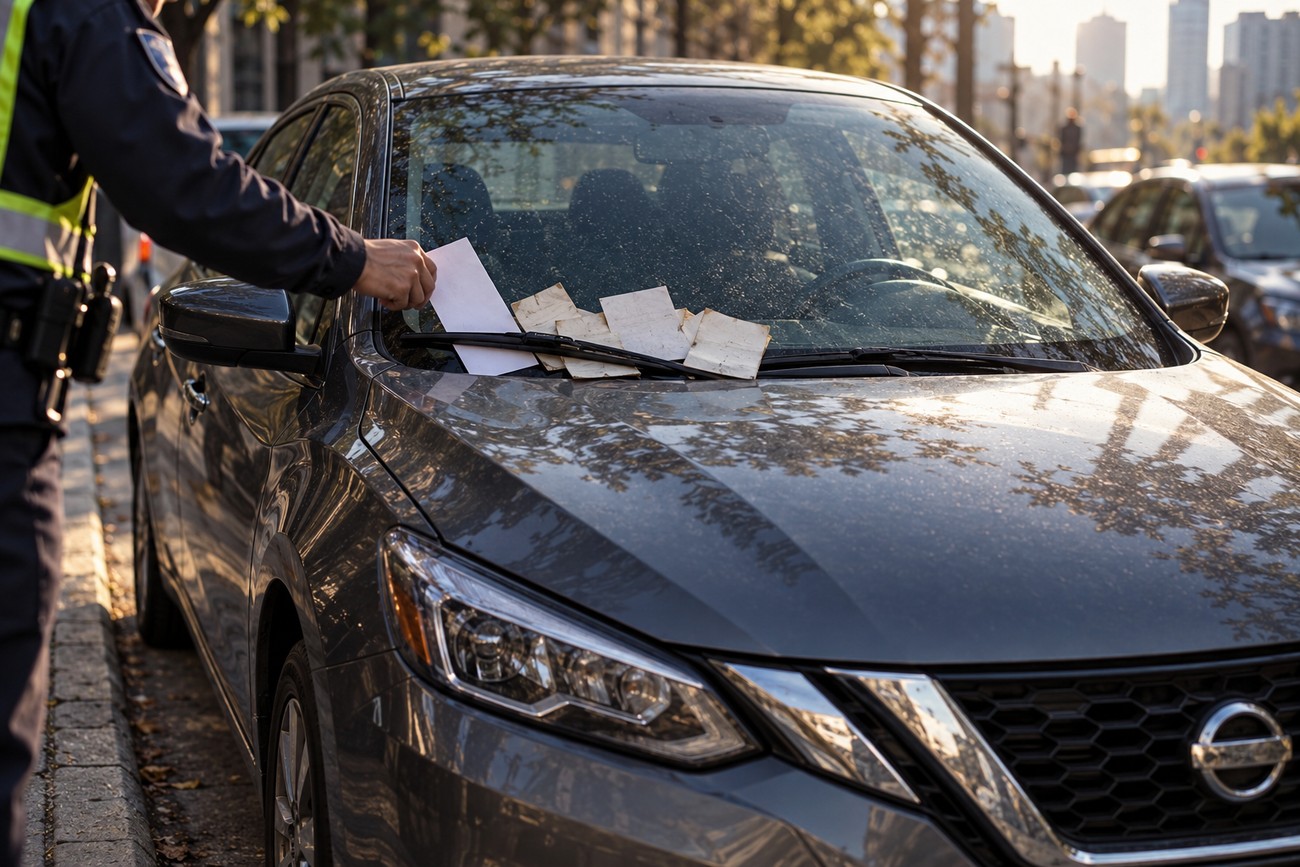
The usual pattern starts with a notice that is missed, misdirected, or deliberately ignored. In many cities, an unpaid ticket becomes more expensive after about 21–30 days, with additional penalties and collection fees possible. A basic ticket can then become a registration problem even if the original violation seemed minor.
Some jurisdictions may boot or tow after roughly 3–5 or more unpaid tickets, while others use a total-balance threshold. New York City is an example where a balance above about $350 can contribute to vehicle seizure or impoundment. The exact trigger, warning process, and release conditions must be checked with the city that issued the tickets.
An address that was never updated with the DMV can send notices to a former home, leaving the owner unaware until a renewal, police stop, boot, or tow exposes the record. A prior owner may also have left the car registered in their name after selling it. Conversely, a buyer may assume the seller resolved everything because the vehicle changed hands, while the municipality still shows an unresolved record.
Moving across state lines does not guarantee that old parking debt disappears. Municipalities may use collectors, registration holds, tax- or income-related collection mechanisms, or other civil remedies. A vehicle that was abandoned on a street can remain legally connected to its last registered owner long after the owner stopped using it.
The Used-Car Trap: Buying a Nissan Sentra With Tickets
A used-car buyer can discover old tickets during registration renewal, a police stop, a boot, a tow, or another registration transaction. A clean-looking title and a signed bill of sale may prove a transfer of ownership without clearing every municipal record. Whether a ticket remains the seller’s responsibility, affects the vehicle, or blocks the buyer’s transaction depends on the local code and the facts.
Before paying for a used Nissan Sentra, record the vehicle identification number, plate number, title details, and seller’s legal name. Ask the issuing municipality or its ticket office whether it can search outstanding parking debt connected with the plate, VIN, or registration. A DMV search may be necessary as well, because municipal ticket systems and state registration systems are not always synchronized.
Address history is a practical warning sign. If the previous owner failed to update the DMV, notices may have gone to an old address while penalties accumulated. A seller who refuses to provide ownership documents, resolve a known hold, or allow a municipal record check gives the buyer a reason to pause the transaction.
Leasing and car-share arrangements add another layer. When a vehicle is formally owned by a leasing or car-share company, that company may receive or process the ticket while identifying the actual driver, depending on local rules. A change of owner, a lease return, or an abandoned vehicle can therefore produce records that are difficult to interpret without written confirmation from the city and the relevant owner.
What to Do Before the Sentra Is Booted or Towed
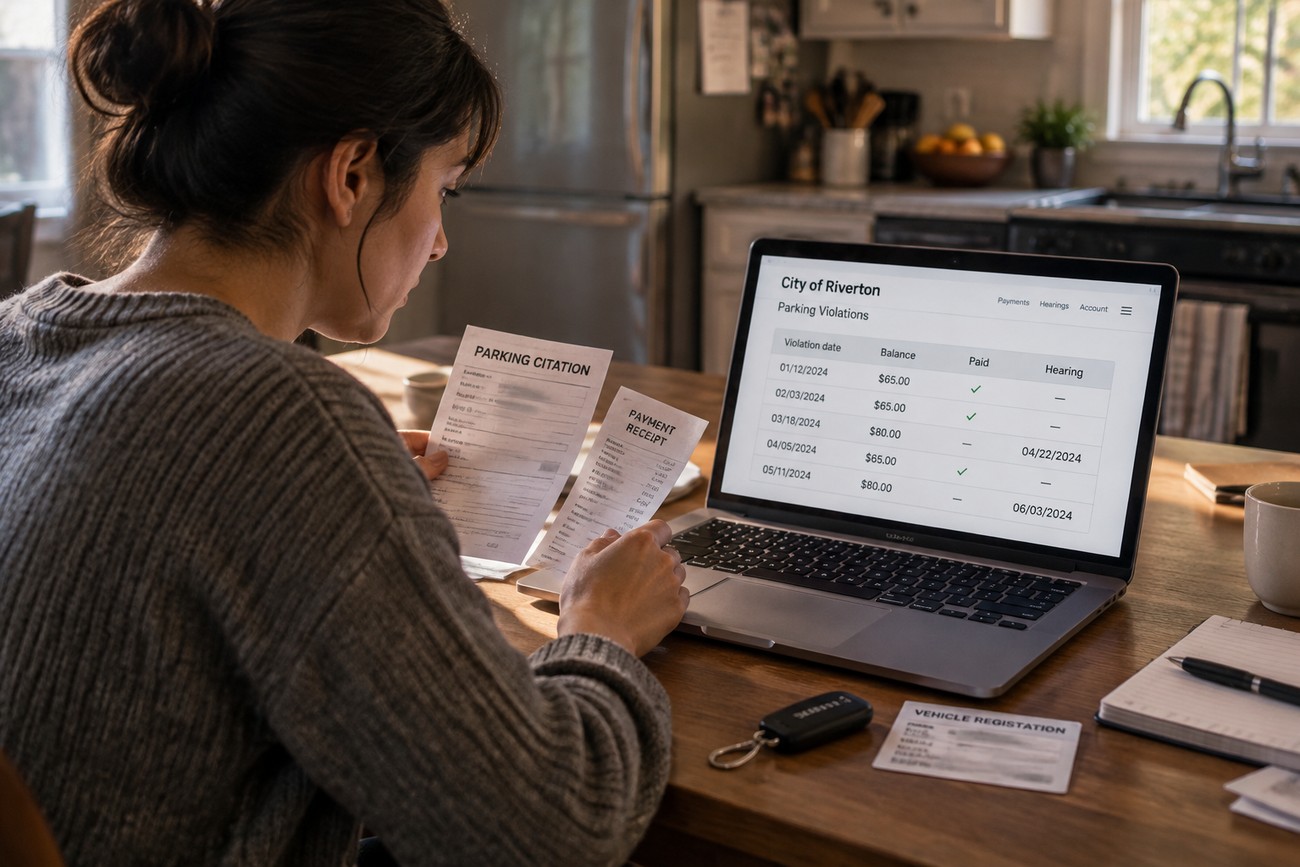
Start with the issuing authorities, especially if the tickets came from more than one city. Ask for the complete ticket ledger, including the original violation date, current balance, late penalties, collection charges, hearing status, registration holds, and any boot or tow eligibility. Do not rely on a single balance shown on a payment page if the record appears incomplete.
Next, confirm the registered owner, mailing address, plate, VIN, and ownership-change dates. Match every listed ticket against payment receipts, sale documents, repair records, theft reports, or evidence that the vehicle was elsewhere. This step can reveal a database error, a duplicate notice, or a ticket that belongs to a previous owner without assuming that every item is invalid.
Separate the response into three categories: valid tickets to pay, tickets worth disputing, and records that require correction. Ask whether a consolidated hearing is available. Some courts can combine multiple parking tickets into one hearing and may allow negotiation or partial removal of penalties, although no reduction is guaranteed.
Preserve the receipt, ticket number, plate or VIN details, and written confirmation before moving the vehicle or attempting registration. A payment record that is clear to you may still appear unresolved in a city database for some time.
Keep confirmation numbers and copies of all messages after payment. Online portals may add service fees separate from the ticket amount, and a city database may not update immediately. Boot-release, impound, storage, and administrative fees can exceed the original value of several individual tickets, so ask for the total release amount and payment deadline in writing.
How to Challenge Tickets Without Making the Case Worse
Challenge a ticket when you have a specific factual or legal basis, such as incorrect signage, a payment that was recorded incorrectly, a vehicle sold before the violation, or a location error. Useful evidence includes dated photographs, GPS or other location records, witnesses, official payment confirmations, repair or disability documentation where relevant, and proof of sale or theft.
A bare statement that the vehicle was not parked there is weaker than a dated location record or a document showing that another person had possession. For repeated tickets, compare the violation times, signs, plate information, and photographs. One defective notice may reveal a broader data error, but it does not automatically invalidate every citation in the file.
Parking or traffic court can review disputed tickets, but missing a hearing may produce a default decision and additional costs or penalties. Read the appeal deadline on each notice and confirm whether a hearing request pauses collection or registration action. If an online form fails, contact the clerk or visit the municipal ticket office with printed evidence and identification.
Contest every ticket automatically is poor advice. Successful challenges are possible, yet the claim that appeals almost always succeed is unreliable, particularly where the vehicle’s location and the violation are documented. A focused challenge supported by evidence is usually more useful than a large batch of unsupported denials.
The Hidden Costs and Myths Behind 50 Tickets
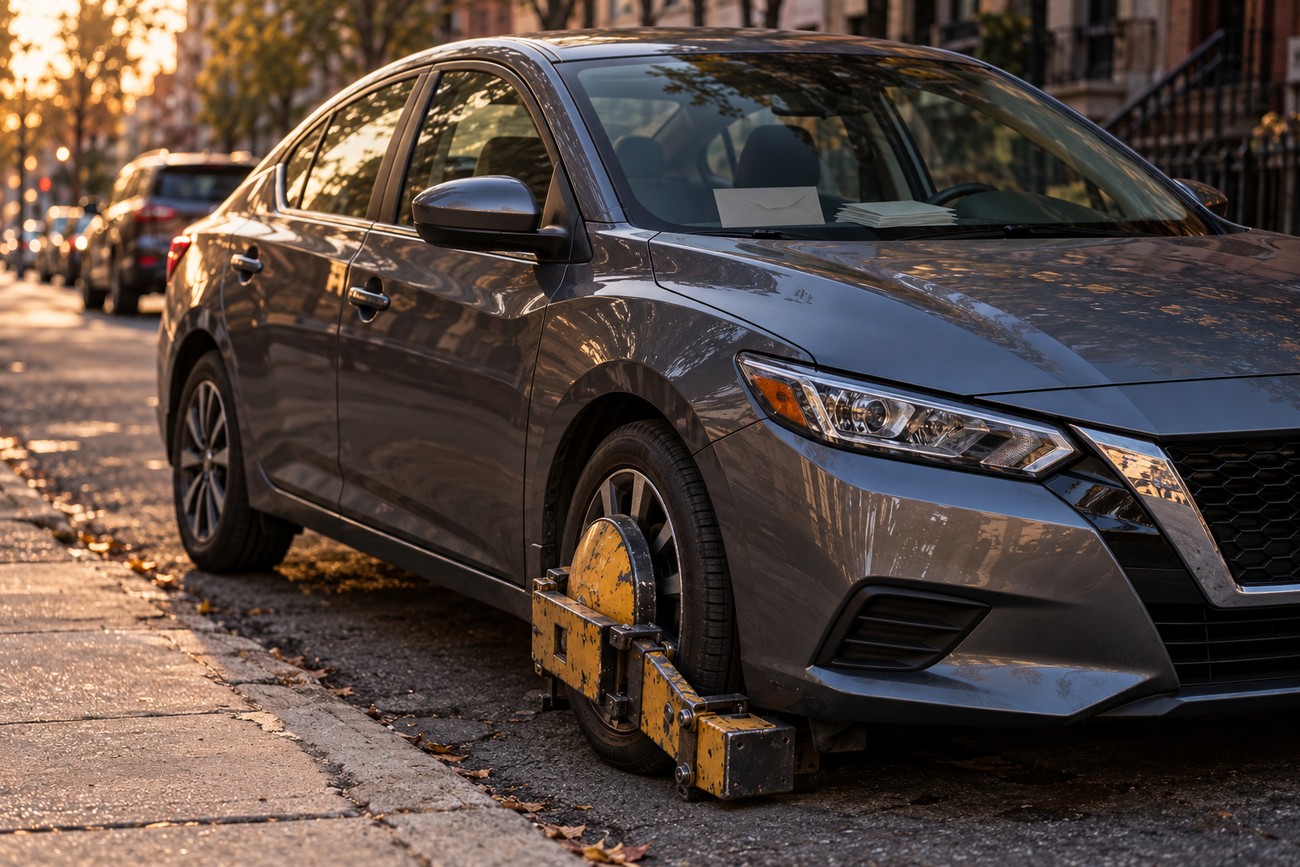
Parking debt usually threatens registration, vehicle access, collection exposure, or impoundment rather than directly causing license revocation. A municipality may place a hold that blocks registration renewal or lawful vehicle use until qualifying parking debt is resolved. That can make the car effectively unusable even when the driver’s license remains valid.
A basic ticket can become substantially more expensive through late penalties, collection costs, boot fees, towing, storage, and administrative charges. Referral to a collection agency or court may create credit-reporting consequences, but credit impact is not automatic and varies by jurisdiction and reporting practice. Treat a collection notice as a document requiring verification, not as proof that every claimed amount is correct.
Hiding the Sentra, removing its plates, or driving it while unregistered generally increases exposure to additional violations and enforcement. A vehicle that is difficult to locate may still remain tied to the registered owner. Changing states also does not make old tickets disappear; they may resurface through collections or a later registration process.
The most important distinction is between the original violation and the enforcement machinery that follows it. A ticket that began as a modest municipal charge can become a larger civil and administrative problem after missed deadlines. Check the issuing city’s rules before paying, disputing, selling, or moving the vehicle.
Frequently asked questions
Parking-ticket disputes depend on the issuing city’s procedures, deadlines, and records. The vehicle’s title, registration history, and supporting documents can all affect the outcome. Check the official notice and municipal records before taking action.
How can you challenge a handicap parking ticket successfully?
Build the challenge around the specific requirement that was allegedly violated. Gather a clear photograph showing the vehicle’s position, signs, curb markings, and permit visibility; proof that the permit was valid and authorized for the vehicle or passenger; payment or registration records where relevant; and witness or location evidence. Disability status alone does not automatically cancel a ticket if the permit was not displayed, was expired, or was used contrary to local rules.
Submit the evidence by the issuing city’s stated appeal deadline and keep proof of submission. The fine and appeal procedure vary by city and state, so use the instructions on the notice or the municipality’s official ticket schedule rather than a general online estimate.
What happens if I buy a car with parking tickets on it?
First, ask the seller to resolve the tickets or provide written proof of the ownership and payment position. Take the title, bill of sale, VIN, plate information, and registration documents to the DMV and the issuing city’s ticket office. Request a written explanation of whether the debt is personal to the former owner, attached to the vehicle record, or capable of creating a registration hold.
If the purchase has already occurred, document the sale date and contact the seller promptly. Do not assume that registration will proceed simply because the title is valid. A city may refuse to clear a hold until its own requirements are met, while the buyer may need to pursue reimbursement or another remedy against the seller under local law.
How much is a parking ticket for parking in a handicap spot?
There is no reliable nationwide price. The fine, late penalties, court costs, and other additions depend on the issuing city or state, and the amount may differ from the general parking-ticket schedule. Consult the exact notice and the local government’s current penalty schedule before estimating the balance.
Check whether the notice includes a separate deadline, appeal fee, boot or tow exposure, or enhanced penalty for repeated violations. If the amount on the city portal differs from the paper notice, ask the ticket office for an itemized ledger and retain the response.







