
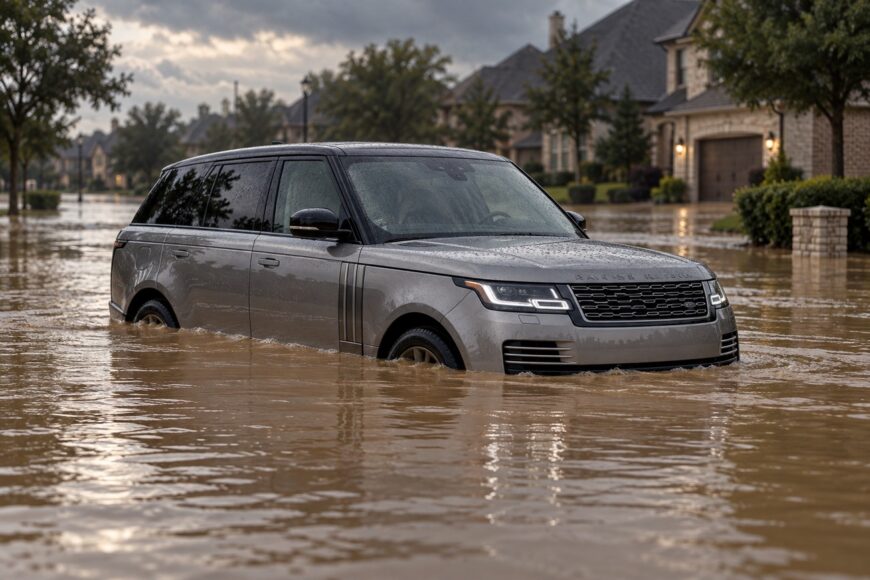
A Range Rover’s wading specification describes brief movement through water, not permission to leave the vehicle parked in it. Many L405, L460, and Range Rover Sport versions have a wading reference of up to 900 mm, depending on specification, but that figure does not define a safe standing-water depth.
The greater risk during prolonged exposure is often below the driver’s immediate notice: low-mounted electronics, trapped moisture, short circuits, and corrosion that develops after the vehicle appears to have dried. Water touching the lower door edge or sills can enter the cabin, while underbody water can affect suspension sensors, ABS wiring, parking sensors, cameras, brakes, hubs, and connectors.
Move the vehicle to genuinely higher ground before water reaches the lower door edge or underbody components, and before floodwater blocks the escape route. A high-clearance SUV can still suffer expensive damage while stationary in shallow, dirty, or salt-contaminated water.
- A Wading Rating Is Not a Parking Permission
- Why Standing Water Damages a Range Rover
- How Much Water Is Too Much for a Parked Range Rover?
- What to Do Before Floodwater Reaches the Vehicle
- What to Do After a Range Rover Has Been in Water
- The Delayed Failures Owners Often Miss
- Insurance, Warranty, and the Cost of a Deliberate Risk
- The Myths That Lead Range Rover Owners Into Trouble
- Frequently asked questions
- How high does water have to be to flood a parked car?
- Which SUV has the highest wading depth?
- What should you do with your car during a flood?
A Wading Rating Is Not a Parking Permission
Many L405, L460, and Range Rover Sport versions have a maximum official wading reference of up to 900 mm, depending on specification. That specification concerns controlled, brief movement through water, with the vehicle moving and the driver managing speed, direction, and exit conditions.
Parking creates a different load on the vehicle. Water remains against seals, connectors, brakes, hubs, and underbody components for an extended period, while the vehicle’s movement no longer helps clear contaminated water from vulnerable areas. A wading rating therefore cannot be converted into an equivalent standing-water recommendation.
JLR guidance advises against leaving the vehicle standing in water that reaches the lower door edge or sills. At that level, water may enter the cabin and reach wiring beneath carpets and sound insulation, where it can remain hidden after the visible surface has dried.
The practical rule is conservative: use the wading specification only for brief passage under suitable conditions, never as a target for flood parking. If water is rising around the vehicle, relocate it early, while the route to higher ground remains open.
Why Standing Water Damages a Range Rover
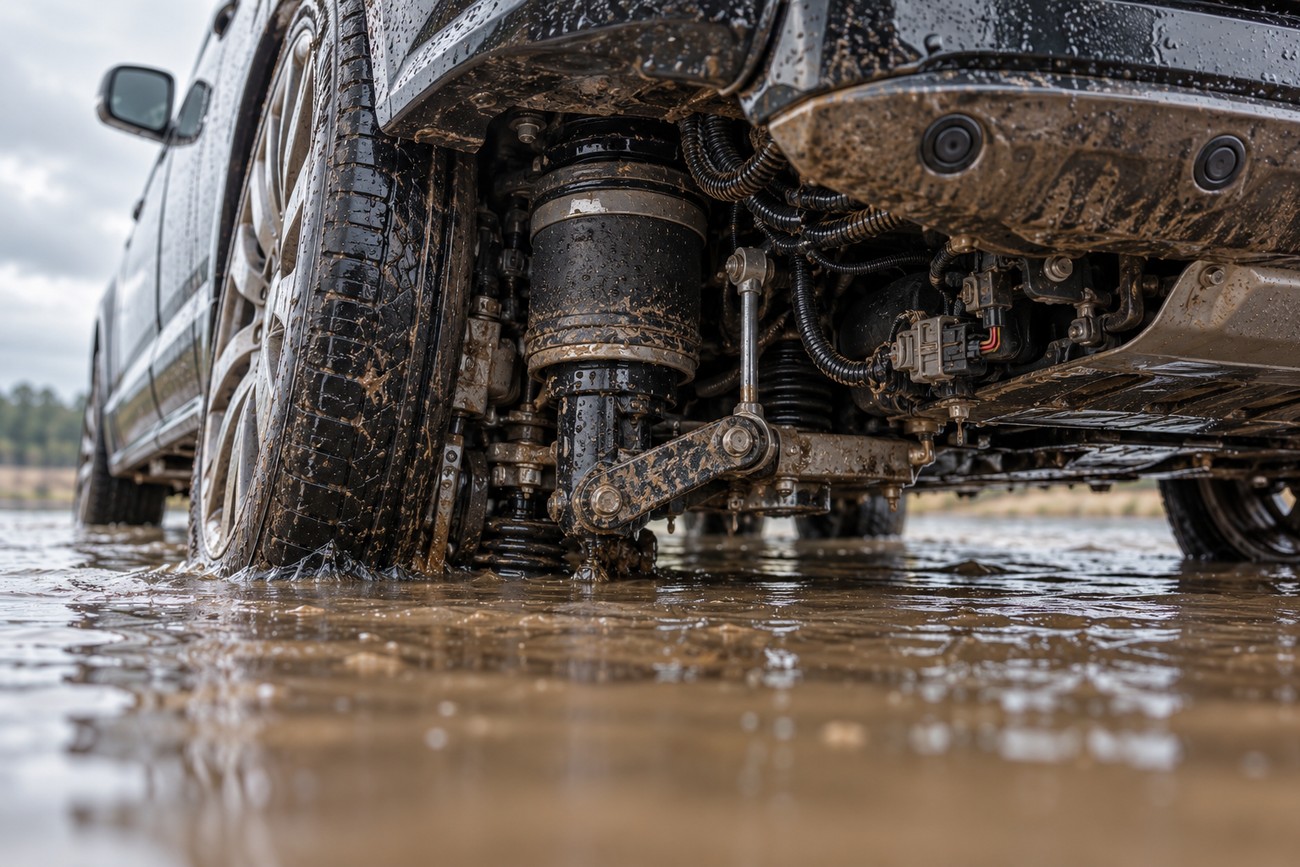
For a parked vehicle, corrosion, short circuits, and control-module damage are generally greater concerns than engine hydrolock. The engine air intake sits significantly higher than the wheel area, but many electrical and suspension-related components are positioned much closer to the road surface.
Air suspension components, height sensors, ABS wiring, parking sensors, cameras, and their connectors can sit in low splash or flood zones. Some connectors are designed to resist road spray rather than prolonged submersion, so water pressure, contamination, and exposure time can exceed their intended protection.
Water can also travel along wiring routes and collect inside sills, under carpets, or around sound insulation. This creates a delayed electrical problem: the vehicle may start and drive normally while moisture begins corroding terminals, splices, and module connections.
A parked Range Rover can therefore develop suspension warnings, false parking-sensor alerts, camera faults, or unrelated electronic errors without any dramatic engine event. The absence of an immediate warning light is not evidence that water has caused no damage.
How Much Water Is Too Much for a Parked Range Rover?
There is no manufacturer-approved standing-water depth equivalent to the vehicle’s brief wading rating. Water approaching the lower door edge or sill is already an unacceptable parking condition because it can enter the cabin and reach wiring or modules beneath carpets and sound insulation.
Damage can begin earlier around the underbody and wheels. Water around hubs, brakes, seals, bearings, and electrical connectors can contaminate surfaces and accelerate corrosion even when the cabin remains dry. Mud and debris make the problem worse by holding moisture against components after the water level falls.
Exposure time changes the risk substantially. Rising water, waves from passing traffic, a sloped parking surface, damaged door seals, and contaminated or salt water can make a relatively shallow flood more harmful than a brief, deeper crossing under controlled conditions.
For recurring flood locations, treat any water reaching the underbody as a reason to move the vehicle. Once water approaches the lower door edge or sill, the decision is urgent rather than speculative.
What to Do Before Floodwater Reaches the Vehicle
The safest response is to relocate the Range Rover before floodwater reaches the underbody or blocks the access route. Choose genuinely higher ground rather than a nearby surface that sits in a drainage channel, basement entrance, low garage, or known runoff area.
Do not wait for the vehicle’s wading capability to become relevant. A high-ground-clearance vehicle can still suffer expensive electrical and corrosion damage while stationary, and moving a vehicle after water surrounds the wheels may expose you to greater personal and recovery risk.
For recurring property risks, address the site rather than relying on the vehicle. Better drainage, raised parking, an appropriate barrier system, or an alternative storage location can reduce exposure more reliably than additional underbody cleaning after every flood.
If water is already moving across the route, do not enter it simply to save the vehicle. Rising or moving water can remove traction, conceal road damage, and leave you unable to reach higher ground safely.
What to Do After a Range Rover Has Been in Water
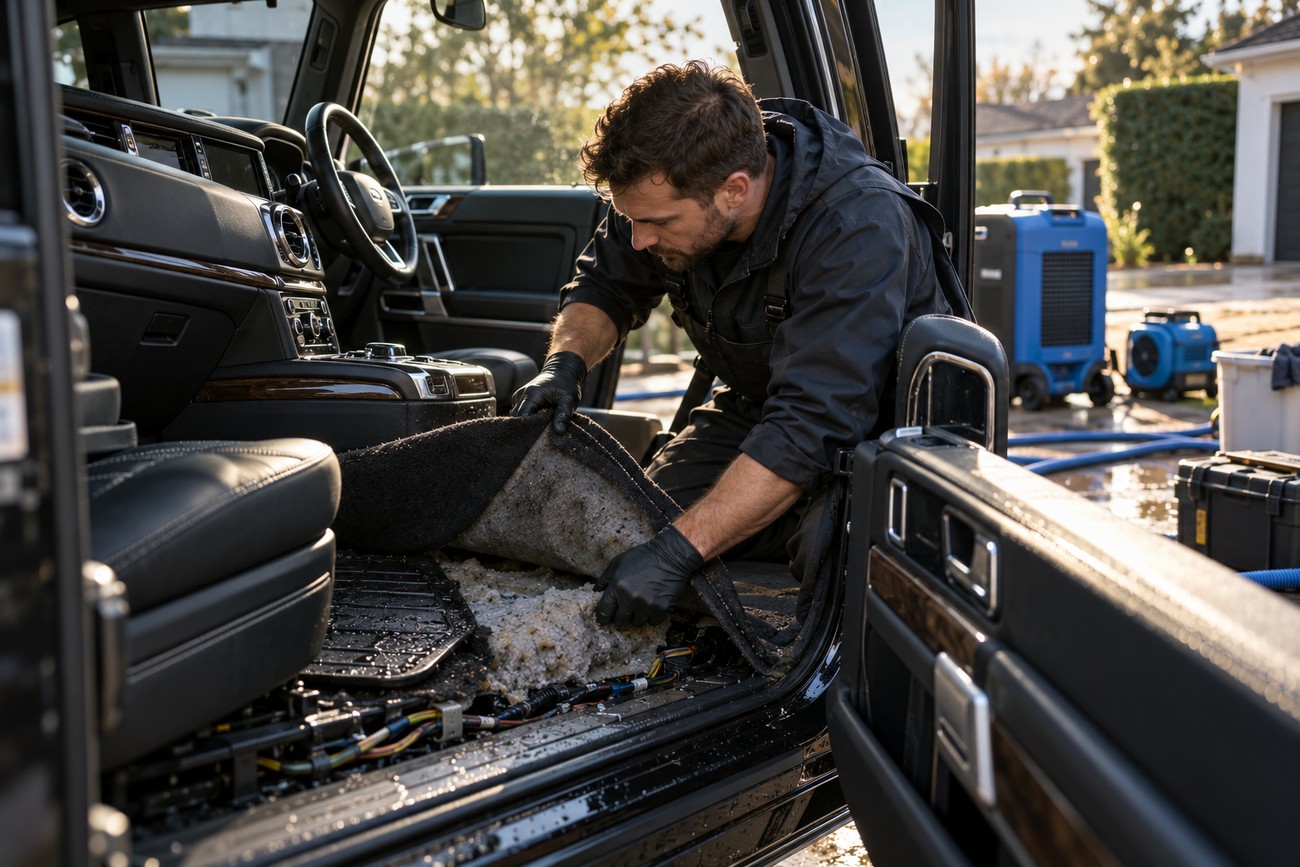
Stop treating the vehicle as ready for normal use if water may have reached the cabin, electrical components, or significant underbody areas. Avoid restarting it repeatedly, arrange qualified recovery, and have the vehicle professionally assessed before normal driving.
Remove mats and inspect beneath carpets and sound insulation, where water can remain after the cabin appears dry. Moisture may also persist in sills, wiring routes, connectors, and cavities that cannot be assessed through a quick visual check.
Engine operation and a clear instrument panel do not rule out flood damage. A proper inspection goes beneath carpets and scans every vehicle system because hidden moisture can affect modules long after the first start.
Request a full-system diagnostic, including the air suspension, height sensors, ABS, parking sensors, cameras, and other control systems. The inspection should also cover brakes, hubs, connectors, underbody components, and any signs of contaminated-water exposure.
Cleaning and drying should be matched to the type of water involved. Salt water and contaminated floodwater require particular attention because they accelerate corrosion in brakes, exhaust components, subframes, fasteners, hubs, and parking-brake mechanisms.
The Delayed Failures Owners Often Miss
A Range Rover that drives normally after drying is not necessarily sound. Owner reports describe intermittent parking-sensor and camera faults, air-suspension errors, and wiring problems after a single exposure to standing water.
Reported delayed failures can appear approximately 3–12 months after the water event. Corrosion develops at terminals and connectors over time, especially where moisture or contamination remains trapped under carpets, in sills, or around low-mounted components.
One failed component can also create confusing secondary symptoms. Paired or related systems, such as camera and parking-sensor functions or wheel-related sensors, may begin reporting faults at different times, making the original water exposure easy to overlook.
Salt water and contaminated floodwater accelerate corrosion in brakes, exhaust components, subframes, fasteners, hubs, and parking-brake mechanisms. Early inspection is therefore more useful than waiting for a warning light or a complete component failure.
Insurance, Warranty, and the Cost of a Deliberate Risk
Water-damage coverage depends on jurisdiction, policy wording, the available evidence, and the owner’s actions. In some jurisdictions, knowingly parking in a forecast or clearly identifiable flood zone may be treated as gross negligence and can lead to a coverage dispute or denial.
A warning about rising water, a documented history of flooding at the location, or evidence that the vehicle was left in a known low area may become relevant during a claim. Keep records of warnings, water levels, recovery arrangements, inspections, and repair recommendations.
Some dealer representatives may suggest that hub- or running-board-level standing water is acceptable. That reassurance does not replace manufacturer guidance against prolonged standing water, and service or insurance assessments may apply a more cautious standard.
Warranty treatment can also depend on whether the damage is considered an operating or environmental event rather than a manufacturing defect. Confirm the position with the relevant insurer and authorized service provider before assuming that flood damage will be covered.
The Myths That Lead Range Rover Owners Into Trouble
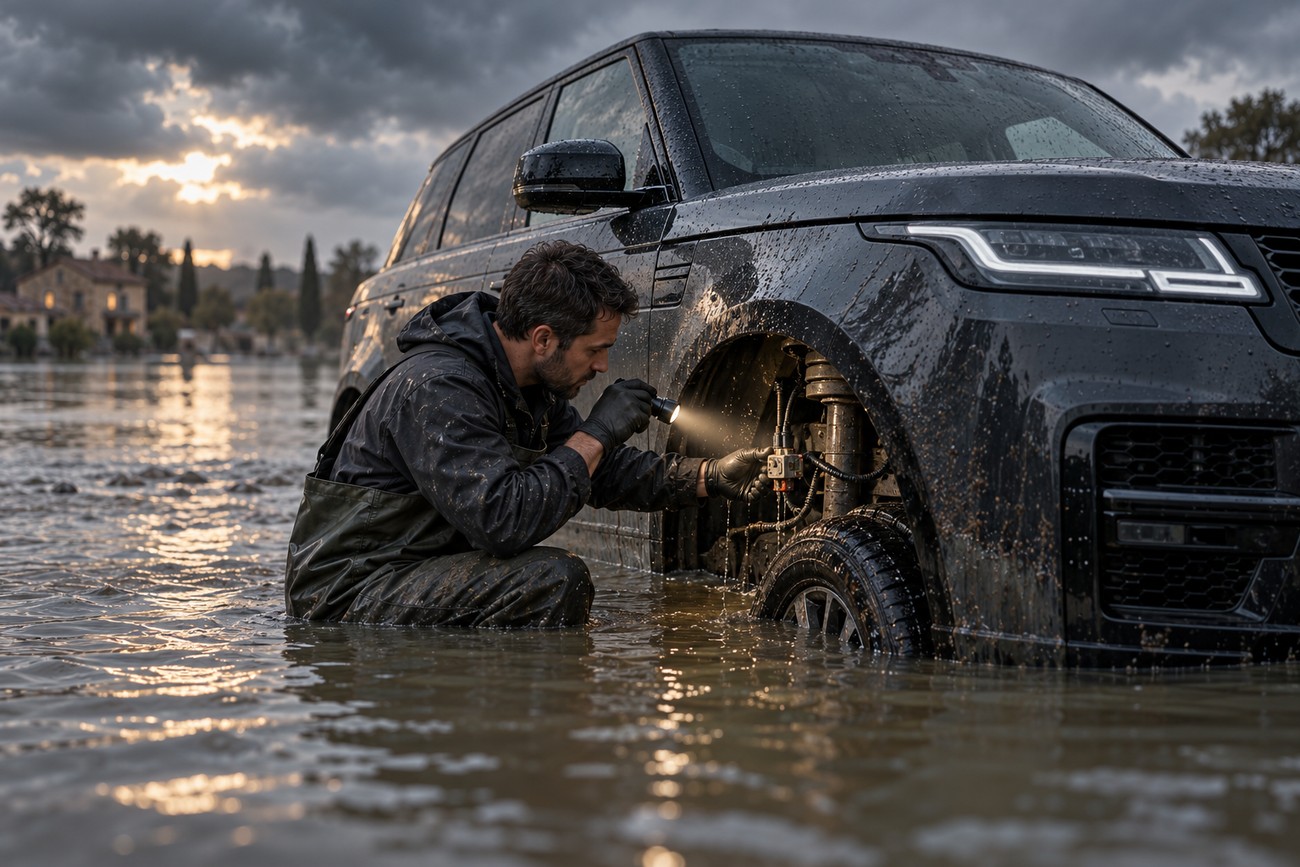
A brief wading capability does not make equivalent-depth stationary water safe. Movement through water and prolonged immersion expose different parts of the vehicle to different forces, contamination, and contact times.
“Sealed electronics” is also an overstatement. Some components may be well protected against spray, while low-mounted connectors, sensors, and modules are not designed for prolonged submersion in dirty or salt-contaminated water.
Visible drying provides limited reassurance. Hidden moisture under carpets and sound insulation can continue affecting wiring, while corrosion inside connectors may produce faults long after the water has disappeared.
The luxury off-road image does not remove flood-related risk. Aluminum components combined with steel fasteners can experience galvanic corrosion after repeated or contaminated water exposure, adding mechanical deterioration to the electrical problems that owners usually notice first.
Frequently asked questions
How high does water have to be to flood a parked car?
There is no universal depth. A sloped surface, waves, damaged or poorly sealing doors, exposure time, and contaminated water can make a parked vehicle vulnerable before water reaches the cabin.
For a Range Rover, water approaching the lower door edge or sill should be treated as an unacceptable parking condition. Underbody and wheel-hub exposure can also damage brakes, bearings, seals, and connectors while the interior remains apparently dry.
Which SUV has the highest wading depth?
Published maximums vary by model, generation, equipment, and market, so comparisons require checking the manufacturer’s specification for the exact vehicle. Many L405, L460, and Range Rover Sport versions have a wading reference of up to 900 mm, depending on specification.
No published maximum should be interpreted as permission to park in floodwater. Wading figures describe brief movement through water; they do not establish a safe duration for stationary exposure or protect against corrosion, contaminated water, or insurance disputes.
What should you do with your car during a flood?
Move the vehicle to higher ground before water reaches the underbody and before roads or access routes flood. Do not enter moving water to relocate it, because depth, traction, hidden damage, and current strength can change quickly.
If the vehicle is already immersed or the route is unsafe, use professional recovery rather than attempting to drive it out. Avoid repeated restarting and arrange a qualified inspection, including the cabin, wiring, control systems, brakes, hubs, connectors, and underbody.







