
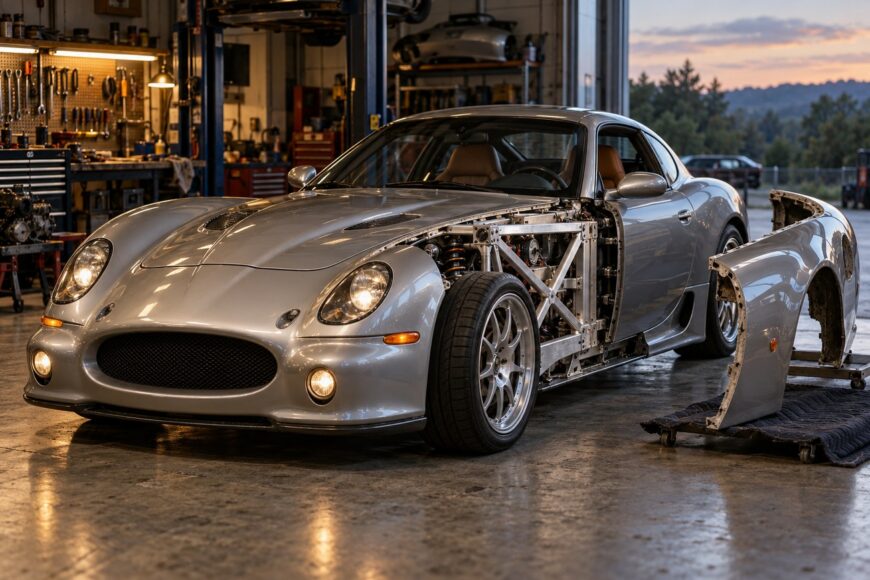
The Panoz Esperante is appealing for the same reason it can be difficult to own: it is a hand-built American GT with a distinct chassis, a V8, and almost no mass-market safety net. Its aluminum frame/spaceframe structure, composite body panels, and low-volume production give it a character that a conventional muscle car cannot easily reproduce. They also create parts, repair, and quality-control problems that become obvious only after purchase.
This is a two-door, rear-wheel-drive grand tourer rather than a Mustang with a different body. Ford-based mechanical components can simplify some maintenance, while Panoz-specific glass, trim, seals, electrical details, and composite repairs remain difficult. The useful buyer question is whether the car’s rarity and road feel outweigh slow parts searches, aging materials, and the uneven build quality found between individual examples.
What the Esperante Was Built to Be
Panoz developed the Esperante as a small-batch American GT, not as a mass-produced platform adapted for a niche market. Its aluminum frame/spaceframe structure supports composite body panels, keeping the construction distinctive and allowing low-volume production without the tooling investment of a mainstream vehicle. The result is an uncommon combination of American V8 character and specialist-car engineering.
Rear-wheel drive and a relatively long wheelbase suit the car’s grand-touring mission. The Esperante is intended to feel stable and substantial over distance, with a planted stance and a more mature road focus than an extreme track car. That orientation matters: its appeal lies in how the chassis, engine, and seating position work together, rather than in a single headline acceleration figure.
Low production volume also means that “an Esperante” is not a perfectly uniform specification. Engines, suppliers, equipment, interior details, and market availability can vary by year. Two cars that look similar in photographs may differ in originality, repair history, and the quality of their assembly.
Ford Power, GT Intent, and Road Manners
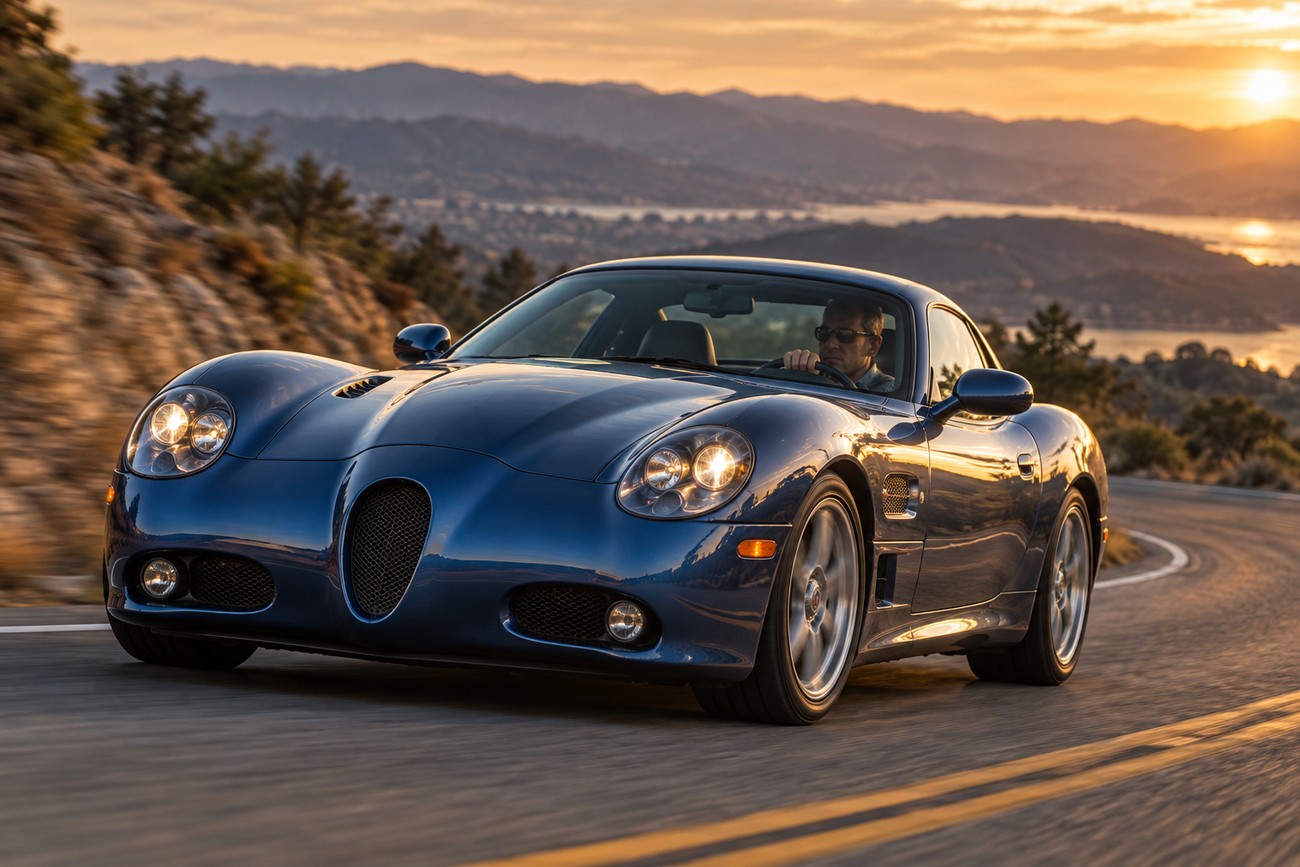
Early road versions widely used Ford’s 4.6-liter Modular V8, and most road Esperantes were fitted with a five-speed manual, with year- and market-specific variation. GTLM versions used a Ford 5.0-liter V8, with output dependent on year and calibration. Road-car power is commonly cited around 305–320 hp; higher figures appear in some listings, but they should not be treated as universal.
The Ford connection helps with the broad mechanical idea of the car, yet it does not turn the Esperante into a cheap muscle car. Steering can feel heavy, particularly at low speed, while the long-wheelbase GT setup brings stability at the cost of some friendliness on broken pavement. Earlier cars can also be noticeably noisy, with road, wind, and aerodynamic sounds intruding into the cabin.
Reported mass is sometimes given as around 1.5 tonnes, although it varies by year and specification. That uncertainty is less important than the driving impression: the Esperante feels like a serious, traditional GT with a strong engine and a distinctive chassis. Buyers focused only on acceleration may miss the reason enthusiasts value the car.
The Ownership Reality: Parts, Service, and Aging
Ford-related powertrain components may be easier to source than Panoz-specific parts. Body panels, glass, interior pieces, seals, mounting hardware, and small trim items can take weeks or months to locate. The cost often comes from scarcity and shipping rather than from exotic technology.
Technicians first separate Ford-sourced mechanical systems from Panoz-specific trim, glass, seals, and mounting hardware; estimating the repair as one ordinary Ford job can produce the wrong timeline and budget.
Service access is another practical limitation. Many ordinary repair shops are reluctant to accept a low-volume Panoz, especially when composite repair, unusual fittings, or incomplete documentation are involved. Build quality can vary between cars, including panel fit, electrical systems, and age-related squeaks, so a familiar badge does not guarantee a predictable inspection.
Composite bodywork prevents ordinary steel-panel rust from becoming the whole story, but it does not make the car immune to age or crash damage. Metal structures, fasteners, seals, joints, and wiring still deteriorate. A poor composite repair can hide alignment or structural problems beneath attractive paint.
Storage history may matter more than mileage. A lightly driven car that spent long periods standing can have hardened seals, tired electrical connections, air-conditioning faults, and neglected fluids. A documented, regularly maintained example with higher mileage can be the safer purchase.
Buying One: What Matters More Than the Badge
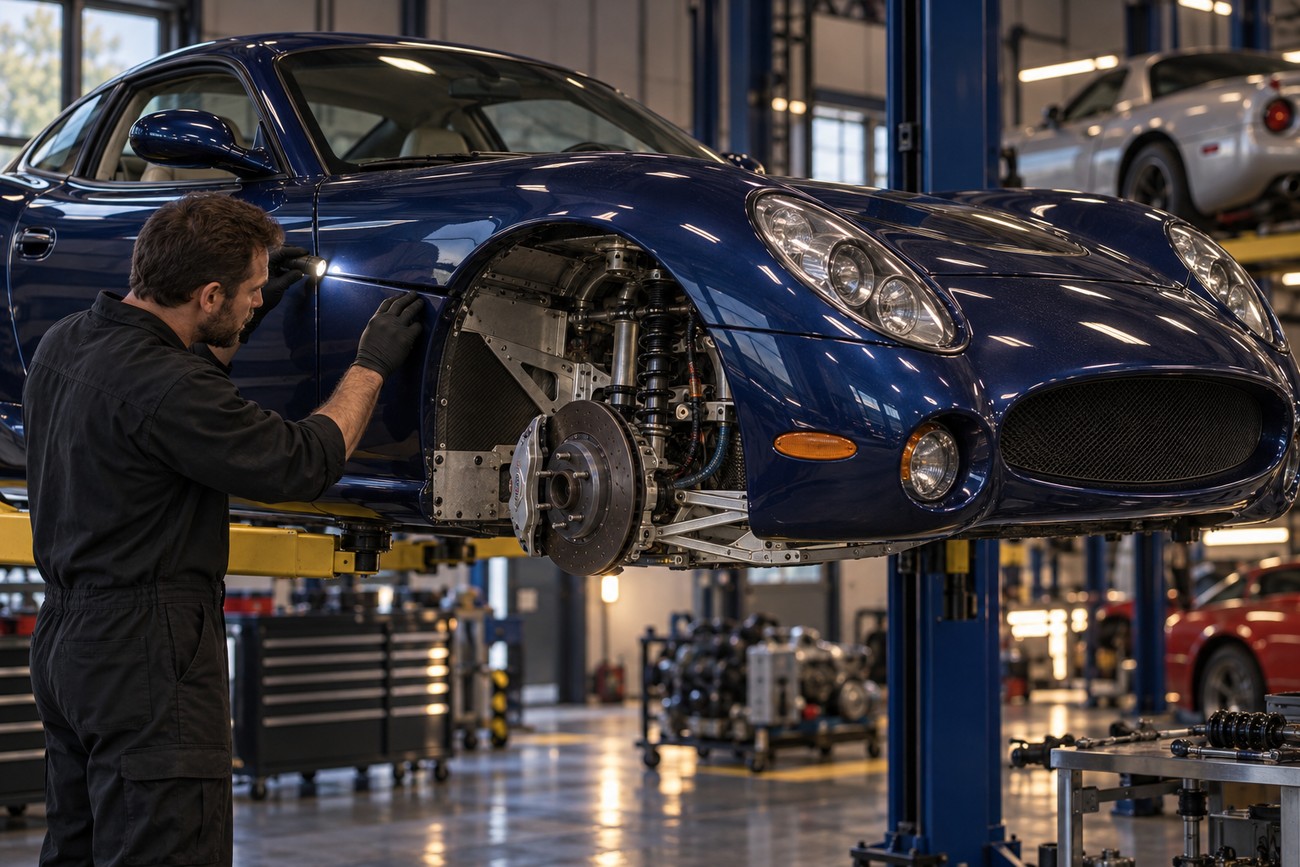
Begin with the individual chassis history, not the advertised specification. Check for accidents, composite repairs, replacement glass, water ingress, and evidence that panels were fitted correctly. Cosmetic presentation is a weak guide if the restoration work is undocumented or the car has been assembled from mismatched components.
A specialist pre-purchase inspection should cover the frame, suspension mounting points, steering, braking system, wiring, charging system, air conditioning, seals, and cabin hardware. Confirm that windows and weather seals function properly, because replacements may be harder to source than routine mechanical parts. Ask how the car was stored and request invoices rather than relying on a verbal description.
Originality deserves careful examination. Swaps, aftermarket electronics, modified cooling systems, and other non-standard components can improve a car, but they complicate diagnosis and valuation. They also make future repairs dependent on the previous owner’s choices, especially when wiring diagrams or installation records are missing.
There is no useful universal price guide for every Esperante. Version, originality, documented storage and maintenance, accident history, and overall condition carry more weight than a simple mileage comparison. Treating the car as a Mustang with a different body is the common error; the Ford parts are helpful, while the Panoz-specific ownership burden remains.
Frequently asked questions
The Esperante’s low-volume production makes condition, documentation, and specification especially important. These factors affect both purchase price and long-term ownership. The answers below address the most common questions about the car and its production history.
How much does a Panoz car cost?
There is no single universal market price for every Panoz car. Asking prices vary with the Esperante version, originality, condition, documentation, accident history, and whether rare or modified components are fitted.
A complete service file and evidence of careful storage can matter more than a low odometer reading. A cheaper-looking car may carry substantial deferred work if its glass, seals, electrical systems, or composite repairs are poorly documented.
Who makes the Panoz Esperante?
Panoz made the Esperante as a low-volume, hand-built American GT. It was assembled in a specialist production context rather than through the broad dealer, supplier, and service network used by mass-market manufacturers.
That explains the car’s individuality and its ownership risks. Ford compatibility can help with some mechanical parts, but it does not make the complete vehicle Mustang-like to maintain.
How many Panoz Esperante GTR 1 were made?
A single dependable production figure should not be assumed without identifying the exact GTR-1 version, market, and source. Motorsport cars, road-legal derivatives, and display or development chassis are sometimes counted differently.
For a specific car, a documented chassis number, provenance, and competition history are more useful than an unsupported total. Those records also help establish whether the vehicle retains original components or has been substantially reconstructed.







