
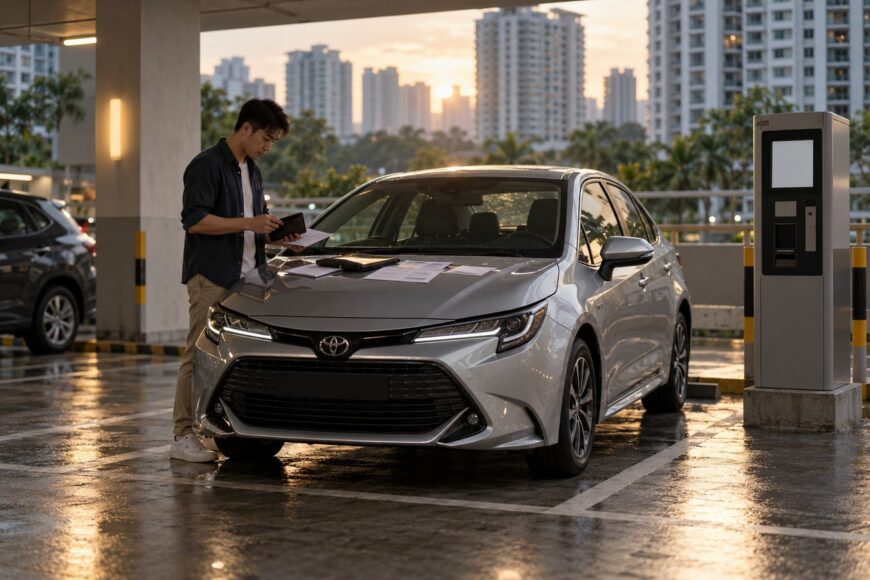
A Toyota Corolla is one of the more sensible cars to own in Singapore: parts are widely available, servicing is familiar, and routine maintenance is generally predictable. Yet the car itself is only one part of the bill. COE and parking can cost as much as, or more than, the ownership features that make a Corolla appear affordable in the first place.
The useful comparison is therefore the total cost over the full ownership period, rather than the dealer’s headline figure. You also need to match the powertrain to your driving pattern: a hybrid may suit high-mileage work, while a private driver who travels occasionally may see a smaller fuel benefit. Comfort compromises, resale timing, and the 10-year COE horizon matter just as much as reliability.
- The real cost of owning a Corolla in Singapore
- COE, Category A, and the 10-year ownership decision
- Petrol or hybrid: which Corolla makes financial sense?
- Running costs, maintenance, and the expenses owners underestimate
- What daily Corolla ownership is really like
- Resale, COE renewal, and the risks after 10 years
- Who should buy a Toyota Corolla in Singapore?
- Frequently asked questions
- How much does it cost to buy a Toyota Corolla in Singapore?
- What is the 10-year car rule in Singapore?
- How many years can you own a Toyota Corolla in Singapore?
The real cost of owning a Corolla in Singapore
A dealer quotation usually combines the car, financing assumptions, and COE in a way that makes the vehicle price look like the main decision. In Singapore, a COE grants the right to own and use the car for 10 years. Category A or B COE can be comparable to, or higher than, the Corolla’s vehicle price, so the advertised figure is a poor substitute for an ownership budget.
| Cost item | How to treat it in your budget | Why it matters |
|---|---|---|
| Corolla vehicle price | One-off purchase component | Compare equipment and warranty separately from COE |
| COE | 10-year entitlement component | Can rival or exceed the vehicle price |
| Insurance | Annual cost | Young-driver comprehensive cover is often approximately SGD 1,500–2,500 per year |
| Road tax | Annual cost | Include it even if the car is driven infrequently |
| Parking | Monthly and occasional charges | Often hundreds of SGD per month, depending on location and HDB or private parking |
| Fuel and ERP | Usage-based cost | Driving frequency, route, and traffic discipline change the result |
| Servicing and tyres | Planned and wear-related costs | Mass-market parts help, but consumables remain unavoidable |
Insurance is especially easy to underestimate. Comprehensive insurance for a younger Corolla driver is often around SGD 1,500–2,500 per year, while an experienced claim-free driver may pay materially less. Parking can be just as significant: an HDB season permit or private facility may cost hundreds of SGD per month, depending on the location and arrangement.
Fuel, road tax, servicing, tyres, ERP charges, and parking penalties complete the picture. Local ownership calculations that include purchase, COE, insurance, road tax, parking, and fuel often reach approximately 1.2–1.5 times the dealer’s headline price. A smaller or used car can therefore have a lower total cost even if its badge and equipment appear less appealing.
COE, Category A, and the 10-year ownership decision
The Singapore Corolla is mainly offered with a 1.6-litre petrol engine or a hybrid powertrain. These versions are generally oriented toward Category A, associated with cars up to 1,600 cc and up to 130 bhp. Typical output is approximately 120–130 bhp, which suits practical urban use and helps keep the car within the mainstream ownership framework.
COE changes the buying decision because you are purchasing time as well as a car. A newly registered car normally has a 10-year entitlement, and the value of the vehicle declines as that period is consumed. Financing a car close to the end of its COE can produce a different risk profile from buying a newer example with more usable entitlement, even when the older car has a lower advertised price.
As the first COE period approaches its end, owners commonly consider a further 5- or 10-year renewal or changing cars. Allowing the entitlement to end means the car can no longer be used on public roads under that COE. Renewal preserves a familiar vehicle, but it also commits you to an aging car without the warranty position of a new one.
Petrol or hybrid: which Corolla makes financial sense?
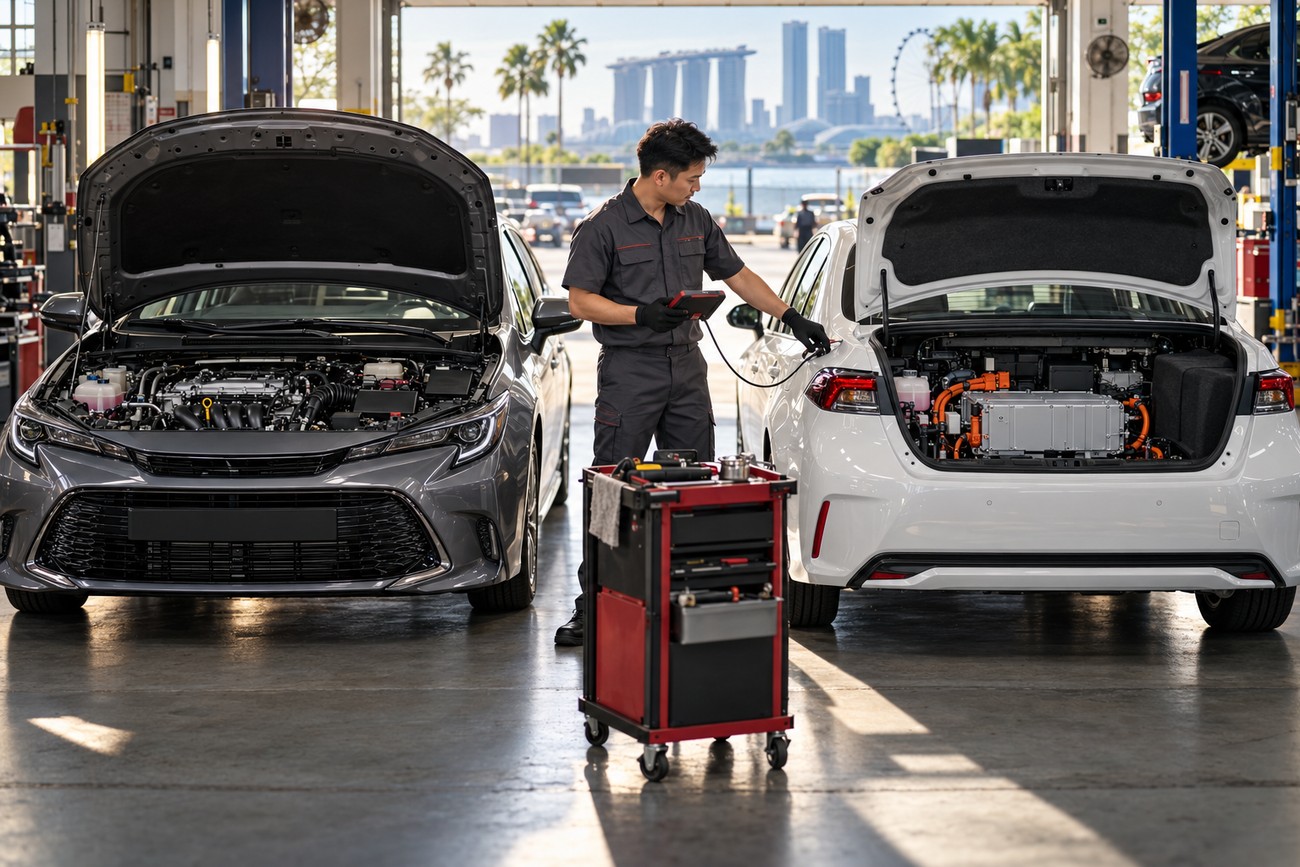
The 1.6-litre petrol Corolla is the simpler financial comparison. It has a conventional powertrain, familiar servicing requirements, and no high-voltage traction battery to include in long-term risk planning. Its performance is modest rather than sporty, but that may be acceptable for private urban driving, where predictability matters more than acceleration.
A hybrid is more compelling when the car covers substantial distance, spends long periods in traffic, or is used for taxi or PHV work. Fuel savings are strongest for high-mileage taxi or PHV use; an occasional private driver may see a smaller advantage because annual fuel consumption is lower in the first place. A short commute does not automatically make the hybrid the cheaper choice.
There are practical compromises. Battery placement can reduce boot space, which matters if you regularly carry luggage, strollers, or bulky shopping. High-voltage battery replacement after 8–10 years can also be a significant potential expense, so a used hybrid should be assessed with battery health and remaining COE in mind rather than judged only by fuel economy.
Running costs, maintenance, and the expenses owners underestimate
Corolla ownership is relatively easy to support because the model is common. Mainstream parts availability can help with repair turnaround, parts access, and insurance pricing, since insurers and workshops are familiar with the car. That does not make maintenance free: tyres, brakes, suspension components, fluids, and air-conditioning work still follow mileage, age, and road conditions.
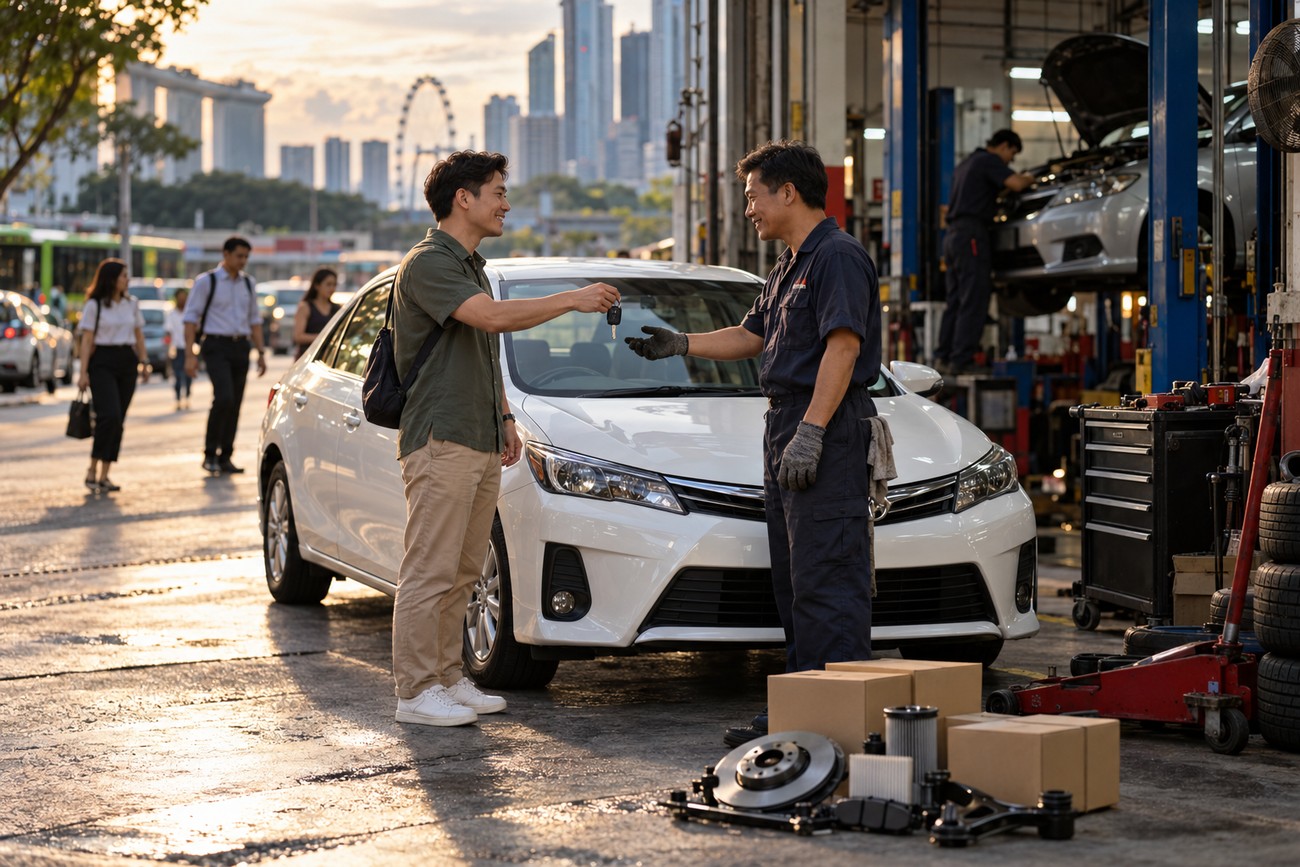
Official Toyota servicing is generally cheaper than premium-brand servicing but more expensive than independent workshops. The official route may offer clearer records, manufacturer procedures, and easier warranty administration. An established independent garage may reduce routine costs, especially after the warranty period, but you should check its diagnostic capability and the quality of replacement parts rather than choosing solely on the lowest invoice.
Insurance should be reviewed as your circumstances change. Young-driver comprehensive cover is often approximately SGD 1,500–2,500 per year, while experienced claim-free drivers may pay materially less. Staying with the same insurer for years without comparing renewal terms can turn a formerly competitive premium into a recurring overpayment.
ERP charges, parking fees, and parking penalties expose a less visible cost: driving discipline. A car parked at home and work may accumulate substantial monthly charges, while a driver who chooses routes around ERP periods can materially change the running budget. Fuel savings from a hybrid can be weakened by expensive parking habits and frequent short trips.
What daily Corolla ownership is really like
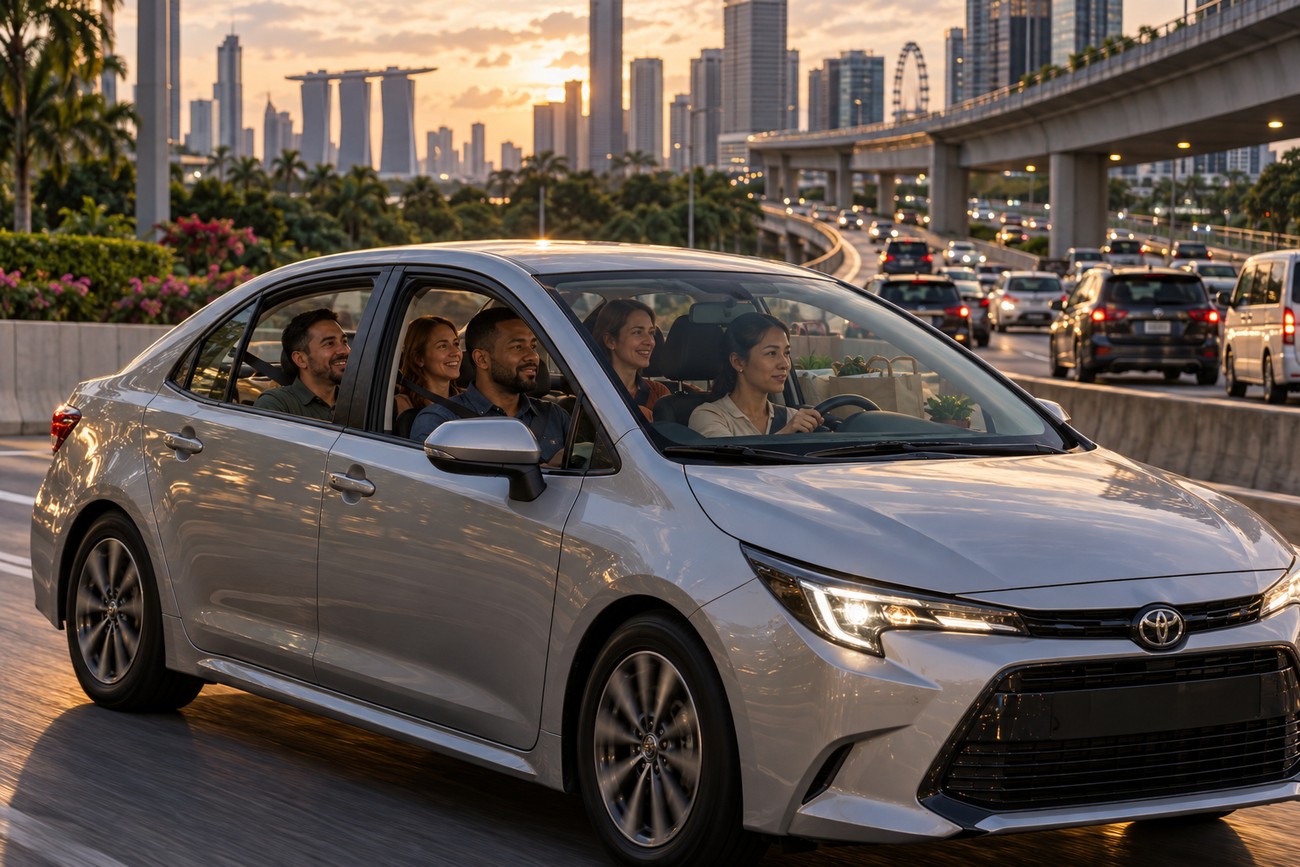
The Corolla’s everyday strengths are easy controls, predictable dimensions, and adequate space for ordinary family use. Its limitations appear when the car is loaded. Owners commonly describe acceleration and throttle response as modest or soft, particularly with a full cabin and the air-conditioning running, so overtaking and hill work require more planning than the brochure impression suggests.
Highway noise is another recurring complaint. Factory sound insulation may feel acceptable in town, then seem thin at expressway speeds, especially as tyres, suspension components, and trim age. Quality tyres can improve road noise and ride more effectively than cosmetic upgrades, although they cannot turn the Corolla into a luxury sedan.
Singapore’s heat places a heavy demand on the cabin. With several occupants, the air-conditioning may cool the interior slowly, particularly after the car has been parked outside. Rear-seat space is adequate for normal use, but three adults can find longer journeys uncomfortable because shoulder room and legroom are only average.
Some versions use basic halogen lighting that owners consider weak for frequent night driving. Check the actual specification and road illumination before buying rather than assuming every Corolla has the same equipment. Hybrid boot space should also be inspected in person, since the battery arrangement can make the luggage area less useful than the exterior dimensions suggest.
Resale, COE renewal, and the risks after 10 years
Many owners align their replacement decision with the end of the 10-year COE period. Selling earlier can be disappointing because dealers and resellers price in their own margin, the remaining entitlement, market demand, and the cost of preparing the car for its next owner. A Corolla’s reputation does not guarantee a strong offer at every point in the COE cycle.
Renewal deserves a mechanical inspection before any financial decision. After 8–10 years, age-related small faults, suspension wear, underbody or hidden-cavity concerns, and possible body fatigue become more relevant. Corrosion resistance is generally suitable for the local climate, but inspecting and treating the underbody and hidden cavities is sensible on an older car.
Before renewing COE, inspect suspension wear, underbody condition, hybrid battery health, and the accumulation of small faults as one package. A reliable model name cannot compensate for a car that needs several age-related repairs at once.
Renewing COE may preserve a known vehicle and avoid the disruption of another purchase, but rising repair risk and the absence of a new-car warranty can make replacement more rational. Neither choice is universally cheapest. For a hybrid, battery condition is part of that calculation; for a petrol car, suspension, cooling, air-conditioning, and body condition deserve similar attention.
Heavy tuning can narrow the exit market. Non-standard wheels, suspension changes, and elaborate audio installations may improve personal enjoyment while reducing appeal to conservative buyers and mainstream dealers. Keeping original parts and avoiding irreversible changes usually protects more resale flexibility.
Who should buy a Toyota Corolla in Singapore?
The Corolla suits buyers who value predictable servicing, accessible parts, familiar workshops, and mainstream resale channels. It has historically been common among taxi and PHV operators because its running characteristics and resale routes are understood. Private owners benefit from that ecosystem, although they may not achieve the same fuel-cost advantage as a high-mileage commercial driver.
It is a weaker choice for someone focused only on the lowest total cost. A smaller or used car may be cheaper once COE, parking, insurance, and fuel are included. The Corolla’s value is its balance: reasonable usability, broad support, and fewer surprises than a rare model, rather than guaranteed cheapest ownership.
Official-dealer and parallel-import cars require an apples-to-apples comparison. A parallel-import example may offer richer equipment at a similar final cost, but check warranty coverage, servicing support, parts access, recall handling, and the exact COE arrangement. A cheaper sticker price is unhelpful if support is limited or the specification differs in ways that affect insurance and resale.
Before signing, confirm the following:
- the exact vehicle price, COE component, registration assumptions, and financing cost;
- remaining COE and service history if the car is used;
- insurance quotations based on the actual driver profile;
- monthly HDB or private parking cost, plus likely ERP use;
- boot space, rear-seat comfort, lighting, and air-conditioning performance;
- hybrid battery condition or petrol-car suspension and underbody condition;
- warranty terms, workshop support, and likely resale timing.
Frequently asked questions
How much does it cost to buy a Toyota Corolla in Singapore?
There is no useful single ownership figure without separating the Corolla’s vehicle price from COE and running costs. Ask the dealer to show the car price, COE, registration-related items, financing charges, insurance, road tax, servicing package, and any options as separate lines.
For a fair comparison, request the same COE term, loan assumptions, warranty coverage, and equipment across competing quotations. Then add your own parking, fuel, ERP, tyres, and insurance costs. This avoids comparing a low headline figure with a higher all-in quotation.
What is the 10-year car rule in Singapore?
The initial COE gives the owner the right to use the car for 10 years. At expiry, you generally choose between allowing the entitlement to end, renewing COE for a further 5 or 10 years, or replacing the car.
Allowing COE to end removes the legal basis for continued road use. Renewal keeps the existing car but shifts the risk toward age-related repairs and the lack of a new-car warranty, while replacement resets the vehicle decision but brings a new purchase and COE commitment.
How many years can you own a Toyota Corolla in Singapore?
The physical car may last beyond its first COE period, but continued road use depends on choosing an available COE renewal route. A further 5- or 10-year renewal is commonly considered, subject to the applicable Singapore rules and the economics of the particular car.
That makes mechanical condition more important than the Corolla badge alone. Before extending ownership, compare renewal cost with the car’s suspension, body, underbody, battery if hybrid, accumulated repairs, and likely resale value. A well-maintained example may justify continuation; another may be cheaper to replace.







