
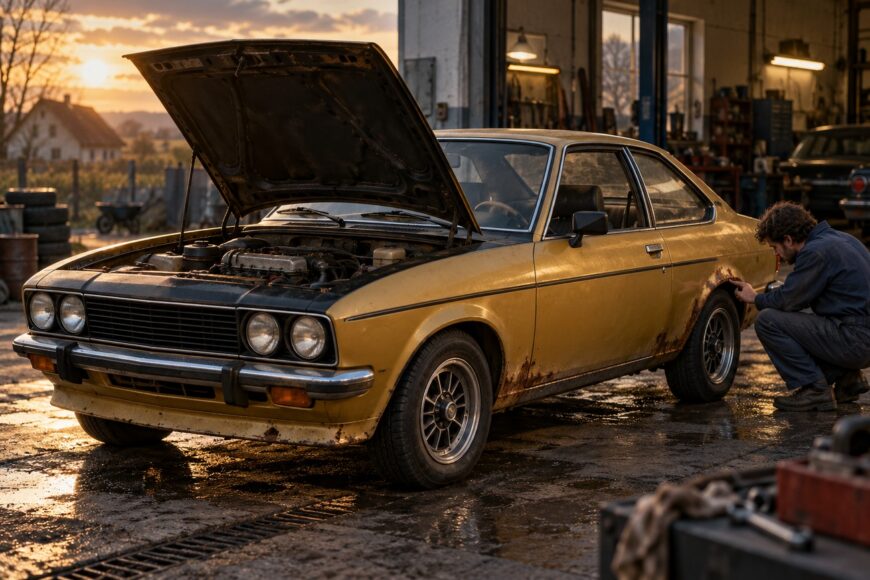
The Opel Manta GT/E is a genuine period performance coupe that somehow became Germany’s unlikely symbol of the Manta-fahrer, the mullet, and garage-built tuning culture. Its front-engine, rear-wheel-drive layout gave it the right mechanical ingredients, while its public image acquired more hairspray, wide wheels, and comic-book attitude than Opel’s engineers could possibly have planned.
That contradiction is the attraction. You can celebrate the Manta’s character and still ask whether an allegedly affordable old Opel makes sense when rust hides in structural areas, ordinary cars wear fake GT/E clothing, and tired fuel injection quietly removes the power you thought you bought. The badge may promise a cult object; the inspection still has to deal with a forty-year-old shell.
- Why the Opel Manta Became Germany’s Mullet Car
- Manta GT/E and Manta 400: The Performance Story in Numbers
- What a Good Manta GT/E Actually Feels Like to Drive
- The Rust, Injection, and Electrical Problems That Decide the Purchase
- How to Spot a Fake GT/E and an Expensive Garage Build
- Original Classic, Tuned Icon, or Overpriced Manta?
- Frequently asked questions
- How much is an Opel Manta GT/E worth today?
- Was the Opel Manta sold in the USA?
- How many Opel Mantas are left?
Why the Opel Manta Became Germany’s Mullet Car
Produced from 1970 to 1988, the Opel Manta occupied a useful middle ground in the German market. It was a two-door coupe or three-door hatchback with a front engine and rear-wheel drive, so it looked sporty without requiring the budget or mechanical seriousness of a much more exotic performance car. That combination made it accessible to young drivers, tuners, and owners who wanted something sharper than an ordinary family Opel.
The “mullet car” description works because the Manta carried a businesslike face and a party-ready rear. The long bonnet, compact cabin, and rear-drive proportions suggested purpose, while the aftermarket quickly added spoilers, wide arches, loud exhausts, and wheels of heroic width. The result was a car that could appear respectable outside a workplace and deeply unserious in a nightclub parking lot.
German popular culture fixed the image in place. Cartoons, jokes, the film Manta Manta, and the figure of the Manta-fahrer turned the car into a social type: working-class, self-confident, fashion-conscious, and enthusiastic about tuning. The stereotype was often affectionate and often cruel, yet it gave the Manta a cultural life beyond its sales brochure.
That reputation should not be confused with mechanical incompetence. The stereotype describes an owner culture, while the car itself offers a straightforward rear-drive chassis and, in GT/E form, more focused suspension and steering settings. A tidy original Manta can feel coherent and entertaining; a tired example covered in period accessories may simply be noisy, loose, and expensive.
Manta GT/E and Manta 400: The Performance Story in Numbers
The GT/E name represented genuine performance within Opel’s range, and the Manta 400 took the idea further through homologation. These were not supercars, yet their period figures were credible for a practical European coupe. The table keeps factory-oriented road-car data separate from tuned and competition claims.
| Model | Engine and fuel system | Power | Torque | 0–100 km/h | Top speed |
|---|---|---|---|---|---|
| Manta A GT/E, 1974–1975 | 1.9-litre petrol, Bosch L-Jetronic injection | 105 hp | Approximately 152–153 Nm | Approximately 11.5 seconds | Approximately 190 km/h |
| Early-1980s Manta B GT/E | 2.0-litre petrol engine | Approximately 110 hp or 81 kW | Not consistently stated in the supplied factory-oriented figures | Approximately 10.5 seconds | Approximately 192 km/h |
| Manta 400 road car | 2.4-litre petrol engine | Up to 144–145 hp | Not consistently stated in the supplied factory-oriented figures | Approximately 8.1 seconds | Approximately 210 km/h |
The wider Manta B engine range ran from 1.2 to 2.4 liters and approximately 55 to 144 hp, with torque spanning 78 to approximately 220 Nm. Typical transmissions were four- or five-speed manuals, while rare three-speed automatics appeared with 1.8–2.0-litre engines. In the GT/E and 400, the drivetrain and chassis gave the numbers enough substance to matter on a real road.
Claims of 160-plus horsepower usually describe tuned or competition versions and lack factory confirmation for the road-going Manta 400. That distinction matters because advertisements often borrow the glamour of rally hardware while selling a civilian car with a different engine, specification, and history. A factory road 400 rated at up to 144–145 hp is already a significant classic; inflation adds risk without improving the paperwork.
What a Good Manta GT/E Actually Feels Like to Drive
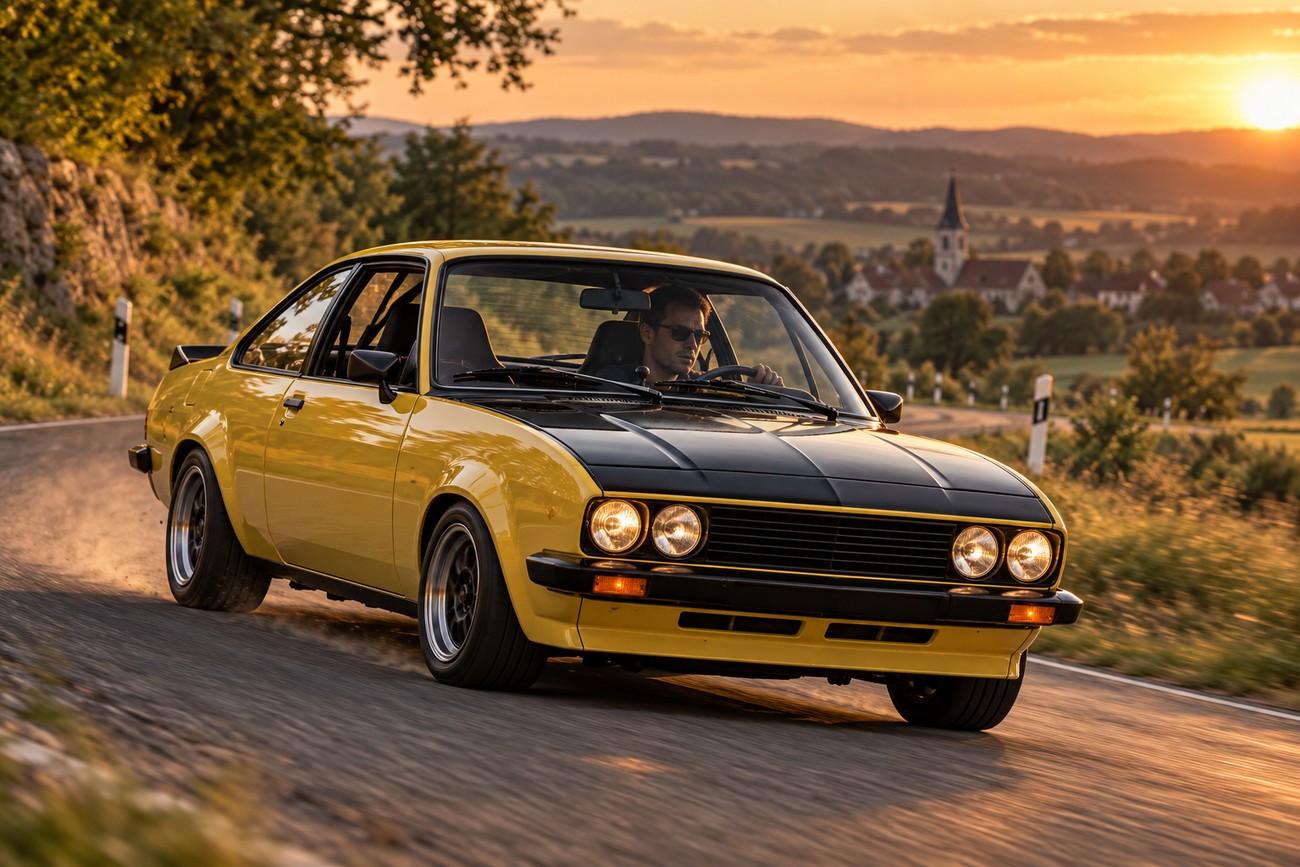
A sound Manta GT/E feels light, direct, and mechanical in a way modern coupes have largely engineered out. The rear-wheel-drive balance lets the car rotate naturally, while the GT/E’s sharper suspension and steering settings give it more alert responses than a base Manta. That sharpness depends heavily on original-quality components, correct geometry, and a body that has not spent years absorbing bad repairs.
The manual gearbox is part of the experience. Four-speed cars feel suitably old-school, while a five-speed gives the engine more breathing room on longer roads. The rare three-speed automatic, fitted to some 1.8–2.0-litre versions, suits relaxed cruising more than the energetic image associated with GT/E trim.
Period performance can still feel convincing, although modern traffic changes the reference point. Braking is the area that exposes the Manta’s age most quickly: the brakes feel limited by current standards, and pads can fade rapidly during hard driving. A car that feels lively through a sequence of bends may become much less reassuring after repeated stops.
Long-distance refinement was never the Manta’s strongest argument. Noise and vibration become tiring above 120 km/h, especially when a modified exhaust has replaced the factory system with something designed primarily for attention. That old-school soundtrack has cultural appeal, yet fatigue is still fatigue, and a road car should be judged by the journey it can complete rather than the noise it produces in a parking lot.
The Rust, Injection, and Electrical Problems That Decide the Purchase
Rust is the purchase decision. Inspect the sills, wheel arches, lower door sections, and rear chassis rails, then continue underneath to the rear axle-beam mounts and shock-absorber mounts. Clean paint can conceal serious metal loss, particularly where repairs have been covered with underseal or thick cosmetic coating.
A lift inspection is essential, and an endoscope can reveal cavities that a torch and optimistic seller cannot. Structural corrosion around suspension attachment points changes the economics of the car immediately. Welding a visible arch is one job; reconstructing weakened chassis sections and mounting areas is a far more involved restoration.
Age also attacks the electrical system in small, cumulative ways. Wiring, instrument contacts, headlamp relays, and wiper relays can all create faults that appear random until the loom and connections are checked properly. Garage-built cars add another layer of uncertainty through alarm systems, extra gauges, audio wiring, electric fans, and improvised repairs.
Diagnose the complete L-Jetronic system before condemning the ECU or fitting generic aftermarket injection, and inspect the rear suspension mounts from underneath rather than trusting clean-looking paint.
Bosch L-Jetronic can work well when its sensors, wiring, fuel delivery, and air-metering components are healthy. Tired sensors and associated parts make the system difficult to tune, encouraging owners to blame the ECU or chase universal tuning hardware. Period Opel or Volvo donor components can be a more practical route for a proper repair, provided compatibility is established before money changes hands.
GT/E and 400 parts deserve their own budget. Specific injection components, suspension pieces, and trim are scarcer than ordinary Manta parts, and original plastic interior pieces can be difficult to replace. A cheap car with missing specialist parts can therefore cost more than a sound, complete example whose price initially looked unreasonable.
How to Spot a Fake GT/E and an Expensive Garage Build
Many pseudo-GT/Es began life as ordinary Manta Bs. Body kits, seats, wheels, decals, and a sympathetic interior can create a convincing photograph while leaving the VIN, engine, suspension specification, and documents unable to support the claim. Treat the car as unverified until those elements agree.
Documentation is central because visual identity is easy to manufacture. Check the VIN, engine identity, registration history, invoices, and restoration photographs, then compare the physical specification with the story. The goal is not to find a magical identifier from an undocumented database; it is to establish a consistent chain between the shell, the drivetrain, and the paperwork.
Mattig, Irmscher, and Opel Sport parts bring another trap. Period-correct equipment can be valuable and difficult to replace, so a missing spoiler, arch extension, seat, or trim component may cost far more than a newcomer expects. A car advertised as “almost finished” often means the expensive, specific pieces are still absent.
A rally-derived shell or an engine-swapped Manta can be exciting and honest, provided it is sold as that type of car. It may never become an authentic civilian GT/E, regardless of how much money is spent on paint and badges. Buy from photographs alone and you risk paying collector money for a project whose best future is as a permanent garage resident.
Original Classic, Tuned Icon, or Overpriced Manta?
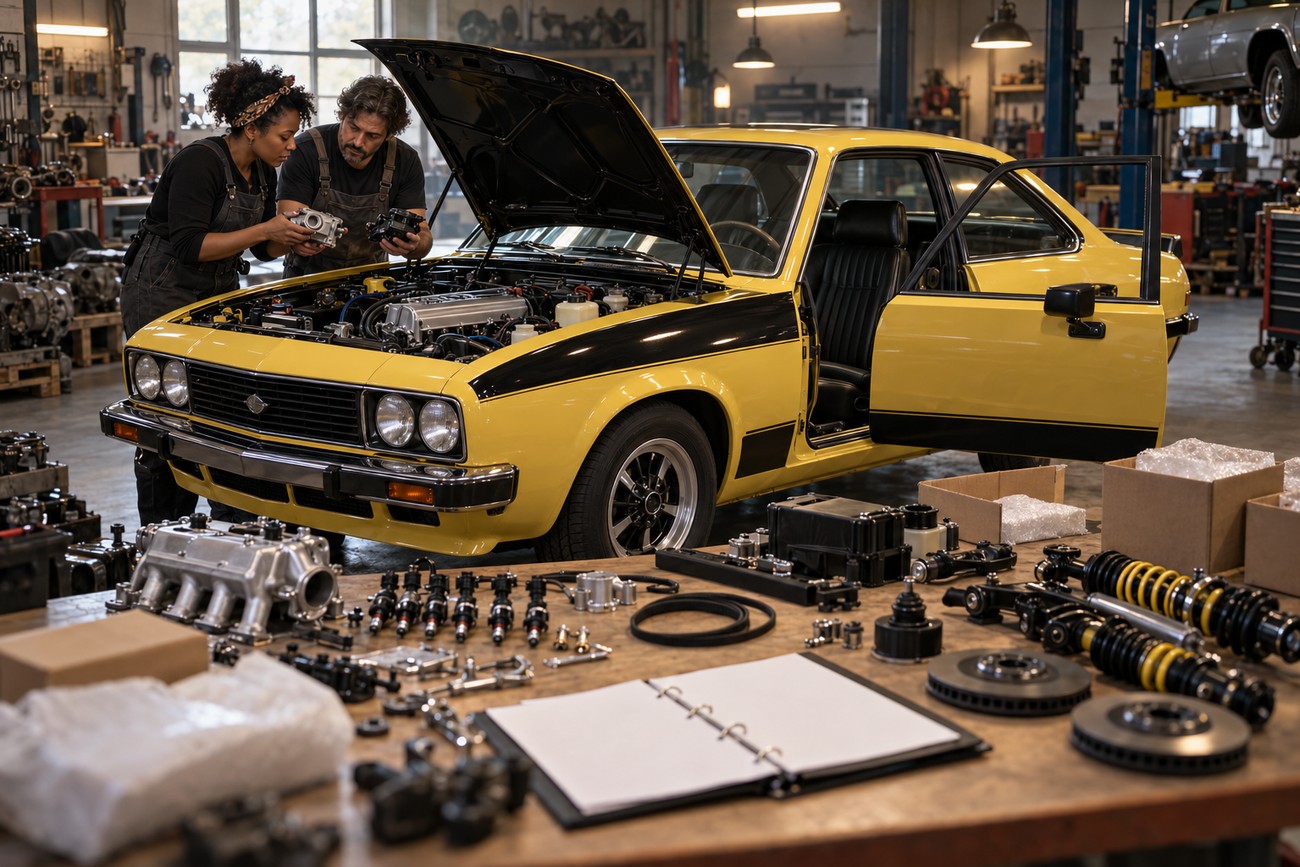
The Manta market cannot be judged by horsepower alone. Sound GT/Es are difficult to find, including in Germany, and value reflects identity, shell condition, completeness, and cultural importance as much as acceleration. A correct, usable car can therefore command more respect than a faster example assembled from unrelated parts.
Manta-fahrer culture remains part of the valuation. German clubs and forums are important channels for locating correct trim, injection components, technical advice, and owners who know which reproduction parts fit properly. That network can matter more than a general classic-car marketplace, where a rare GT/E component may be described inaccurately or priced without understanding its application.
Wide-body Mattig cars and examples carrying original or period-correct tuning can reach tens of thousands of euros in German listings. Asking prices are not guaranteed values, and the segment is widely regarded by enthusiasts as overheated in places. A high figure makes inspection more important, not less; the market does not repair a rotten sill.
Usable upgrades require restraint. Hard race-style suspension and wide wheels may deliver the expected photograph while ruining road comfort, increasing tramlining, and placing extra demands on old steering and suspension components. Modern fuel injection or turbo conversions can work, yet they require attention to cooling and the durability of the original engine block. The best road car is often the one whose modifications respect the chassis instead of trying to turn an old Opel into a different category of vehicle.
Frequently asked questions
How much is an Opel Manta GT/E worth today?
An Opel Manta GT/E’s value depends on documented identity, structural originality, running condition, specification, and the quality of its period-correct parts. A genuine GT/E with consistent paperwork, a solid shell, complete trim, and functioning injection deserves a different assessment from an ordinary Manta wearing GT/E cosmetics.
German listings for sound GT/Es and wide-body Mattig cars can reach tens of thousands of euros, but an asking price is not a guaranteed market value. Missing specialist parts, concealed welding, a tired L-Jetronic system, or a questionable engine can reduce the car’s real worth substantially. Compare completed sales where possible, then pay for an independent inspection before treating a headline price as evidence.
Was the Opel Manta sold in the USA?
The Opel Manta was not sold as a regular official-market model in the United States. American examples are therefore likely to involve imports, private transactions, or cars that have moved between markets, and their documentation should be examined accordingly.
Parts availability should not be assumed to follow the German or UK market. GT/E-specific trim, injection components, and body pieces may require specialist European suppliers, donor cars, or club networks. Registration requirements, prior repairs, and the availability of technical support can materially change the ownership cost of an imported Manta.
How many Opel Mantas are left?
There is no single reliable worldwide count of surviving Opel Mantas. Registration databases cover different countries and model definitions, while dismantled shells, unregistered projects, exports, and undocumented restorations make the total difficult to establish.
Survival estimates are also distorted by cars that retain a registration but are no longer roadworthy, and by shells that have been rebuilt around replacement panels or altered drivetrains. For a buyer, the relevant question is the condition and provenance of the individual car rather than an apparently precise global census.







