
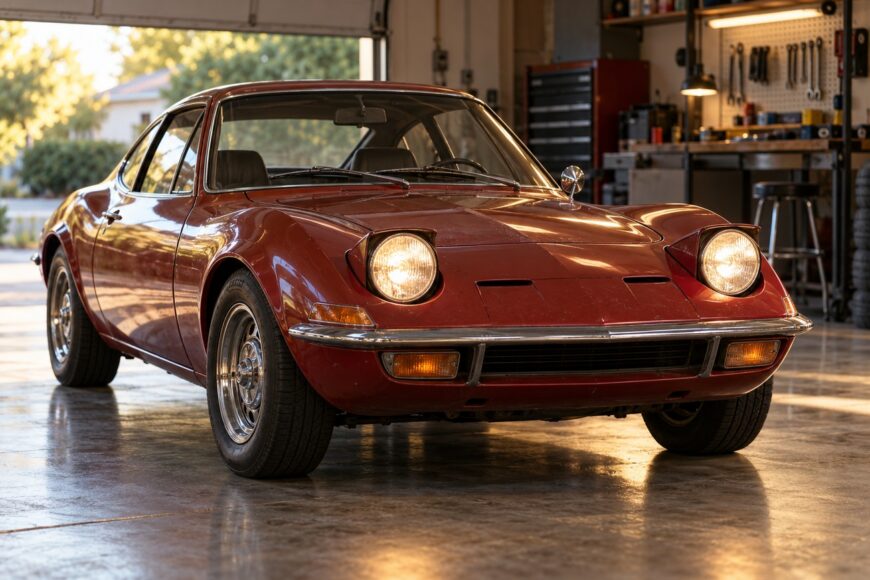
The Opel GT looks like a small Corvette at first glance: a low nose, a tight cockpit, and headlight housings that rotate out of the body. That visual trick, combined with a light curb weight, gave the little Opel a character far beyond its compact-car origins.
Its appeal, however, is easy to overestimate from a polished photograph. The real buying questions concern hidden rust, the condition of the rotating-light mechanism, and the exact engine specification behind the familiar 102-hp headline. A practical inspection matters more than showroom shine.
- Why the Opel GT Earned the Baby Corvette Nickname
- Engines, Transmissions, and the Horsepower Confusion
- The Real Buying Risk: Rust and Rotating Lights
- What Ownership Is Really Like
- Frequently asked questions
- How much is an Opel GT worth today?
- How much horsepower did a 1973 Opel GT have?
- Was the Opel GT a good car?
Why the Opel GT Earned the Baby Corvette Nickname
Produced from 1968 to 1973, the Opel GT offered a low seating position and long, sculpted bodywork that suggested a larger American sports car. The resemblance to the Chevrolet Corvette was mainly visual: both cars used concealed headlights and a dramatic, low-slung profile. The GT was smaller, lighter, and built to a very different brief.
Its headlights are often described as pop-up units, but that is technically incorrect. Each housing rotates sideways around a longitudinal axis. A mechanical lever near the center console operates the system, so the driver physically moves the lights rather than pressing an electric button.
That mechanism is one of the car’s defining details and most entertaining features. The housings swing into position with a deliberate movement, giving the GT a theatrical face without the complexity of a powered headlamp system. The same simplicity can become a repair concern once pivots, linkages, paint, and wiring have aged together.
Underneath the styling, the GT is mechanically related to the Opel Kadett rather than the Chevrolet Corvette. That relationship helps explain its accessible scale and light weight, but it also sets realistic expectations: this is a compact European coupe with sports-car styling, not a miniature Corvette in construction.
Engines, Transmissions, and the Horsepower Confusion
The smaller engine was a 1.078-liter OHV unit rated at about 67 SAE hp. The more familiar choice was the 1.897-liter CIH/OHC engine, commonly listed at 102 SAE hp in early American specifications. Both figures describe period specifications, and neither should be separated from the car’s year and market.
The 102-hp figure may appear as gross or net SAE horsepower, depending on the year and measurement method. Later American emissions-era versions are commonly listed at about 83 SAE hp. That is why two apparently authoritative descriptions can give different numbers for a 1.9-liter GT without either being automatically false.
The standard transmission was a four-speed manual, the better match for the GT’s light, responsive character. A three-speed automatic was available with the 1.9-liter engine, though it makes the car feel more relaxed and limits the sporting character that attracts many buyers.
All GTs use rear-wheel drive, independent front suspension, and a rigid rear axle. The layout suits a lightweight coupe, but the engine badge does not tell the whole story. A correctly identified specification, sound cooling system, and healthy drivetrain matter more than repeating a catalog figure without its qualification.
The Real Buying Risk: Rust and Rotating Lights
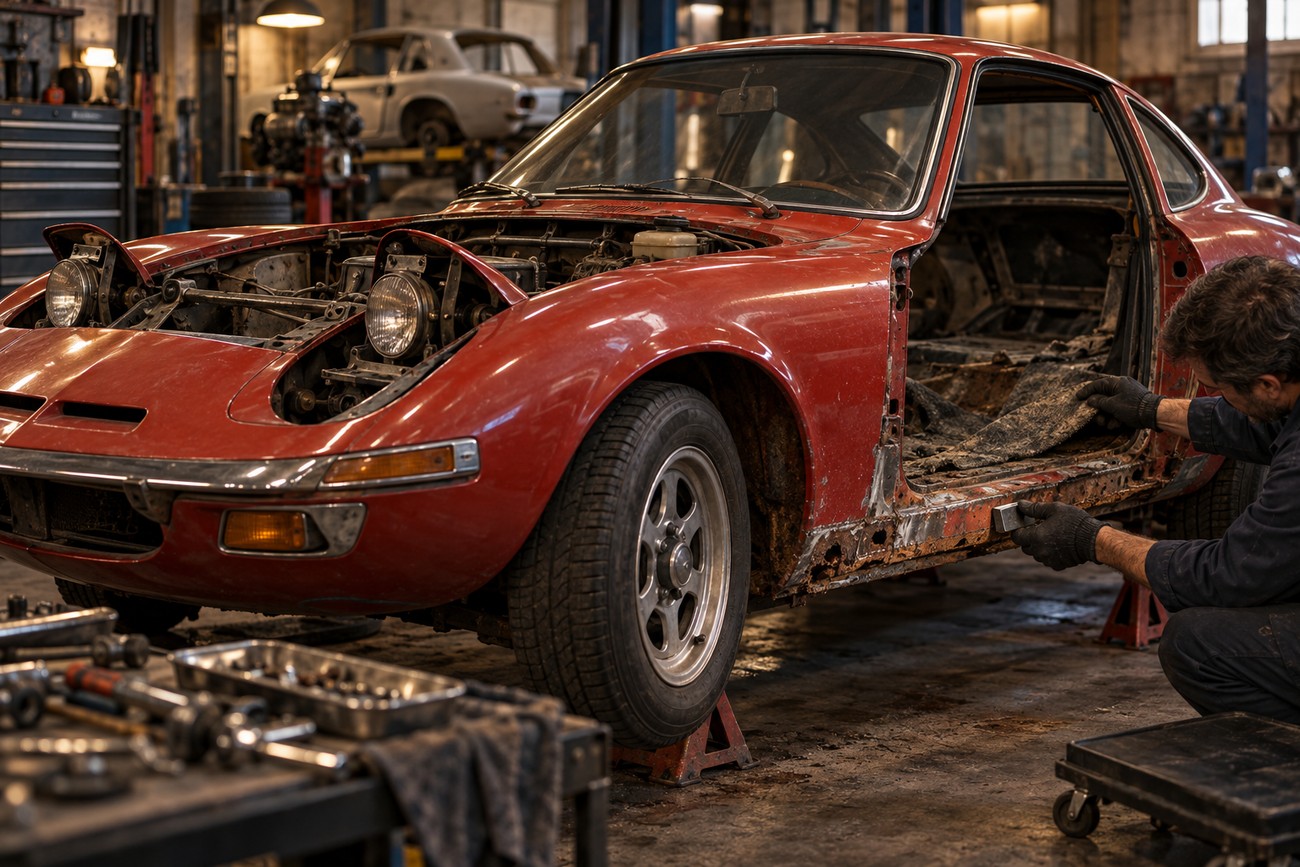
Rust is the Opel GT’s primary ownership and restoration risk. Inspect the sills, lower body edges, floors, the structure beneath the windshield, and the underside carefully. Corrosion in these areas can affect strength and suspension mounting points, turning an attractive project into a welding job.
A magnet and paint-thickness check are useful, but they cannot certify a solid shell. Look inside accessible cavities, examine seams, lift carpets where possible, and search for old welds hidden beneath paint. Standard Opel Kadett panels cannot simply replace every GT body panel, so serious damage may require fabrication or rare parts.
A headlight that works once has proved very little. Cycle both assemblies repeatedly and inspect the moving wiring, because binding, paint contact, or a chafed wire may appear only after several movements.
Operate both headlights from the closed position to the open position and back again. They should move together without scraping, excessive effort, or hesitation. Check the lever, look for contact marks around each housing, and inspect wiring inside the rotating assemblies for chafing that could cause a short circuit.
Fresh paint can conceal the most expensive problems, especially around the windshield area, floor edges, and underside. A careful buyer treats cosmetic restoration as evidence to investigate, not proof of quality. On this model, body integrity usually determines whether the project remains enjoyable.
What Ownership Is Really Like
At about 2,000 lb, or approximately 907 kg in American reference data, the GT feels light and compact by modern standards. Its rear-wheel-drive layout, independent front suspension, rigid rear axle, front disc brakes, and rear drums make it an engaging classic without pretending to be a high-performance sports car.
Age brings predictable work. Water pumps, steering racks, the front leaf spring, throttle linkage, and charging systems deserve inspection even on a car that starts and idles well. Small electrical faults can also spread across the indicators, fuel gauge, instrument lighting, charging circuit, and headlight switch.
Dried window and door seals create leaks and wind noise, then help corrosion develop inside the body. A car that has been stored for years may need its fuel system cleaned, its engine checked for free rotation, and its oil, cooling system, and rear brakes inspected before anyone attempts a proper start.
The GT is rewarding when its shell is sound and its systems are understood. Condition and body integrity should outweigh the engine badge, claimed horsepower, or glossy finish. A cheap-looking car with structural rust can cost more than a plain, complete example that needs mechanical recommissioning.
Frequently asked questions
How much is an Opel GT worth today?
There is no single Opel GT value without considering rust, structural repairs, originality, running condition, restoration quality, and the local market. A solid, complete car with documented work will generally be more useful to a buyer than a heavily modified example with uncertain body repairs.
A shiny car can still be a poor purchase if corrosion is hidden under carpets, filler, or fresh paint. Before discussing price, establish whether the sills, floors, windshield-area structure, and underside are repairable without extensive fabrication.
How much horsepower did a 1973 Opel GT have?
A 1973 Opel GT is generally associated with the later American 1.9-liter specification of about 83 SAE hp. The commonly quoted early 102 SAE hp figure should not automatically be applied to a 1973 American car, because year, emissions specification, and gross-versus-net measurement affect the published output.
Was the Opel GT a good car?
Yes, for a buyer seeking a stylish, lightweight classic and an enjoyable weekend car. It offers distinctive design, rear-wheel drive, and unusual manual rotating headlights.
It is a poor match for someone expecting Corvette-level performance, effortless daily use, or easy body repairs. The best GT is the one with a structurally sound shell and properly recommissioned systems, regardless of how impressive its badge or paint may look.







