
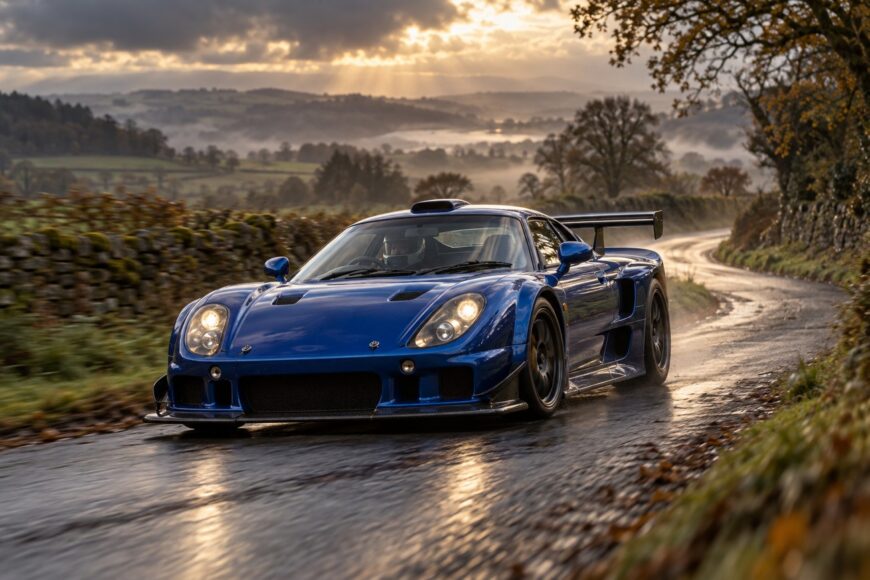
The Noble M12 is the kind of British supercar that can look almost implausibly affordable. In GTO-3R form, it combines a mid-engine, rear-wheel-drive layout, two seats, a steel spaceframe, composite panels, and a 3.0-litre aluminum twin-turbo V6. With 352 bhp/357 PS and 475 N·m, it has the hardware to deliver serious performance without the mass associated with many contemporary exotics.
That apparent bargain has a clear limit. The Ford Duratec/ES-derived engine makes some service knowledge familiar, yet it does not turn the entire car into a cheap Ford repair. Noble-specific suspension, bodywork, wiring, transmission, interior, and chassis parts can be difficult to source. Version identity, maintenance history, cooling, lubrication, and parts support deserve more attention than the asking price or a claimed 0–60 mph figure.
- Why the Noble M12 Still Looks Like a Supercar Bargain
- GTO-3 or GTO-3R: The Version Difference That Changes the Deal
- Performance: Where the Numbers Agree—and Where They Do Not
- The Ownership Trap: Parts, Cooling and Track Preparation
- How to Inspect a Noble M12 Before You Buy
- M12 Myths That Can Turn a Bargain Into a Liability
- Frequently asked questions
- What is the average price of a Noble M12?
- How many Noble M12s were made?
- Why can a Ford-engine Noble still be expensive to own?
Why the Noble M12 Still Looks Like a Supercar Bargain
The M12’s appeal begins with its layout. A mid-engine, rear-wheel-drive, two-seat coupe puts the major masses close to the center of the car, while the lightweight construction gives the engine less work to do. The result is a machine that feels more like a focused supercar than a modified road car, particularly on a demanding road where response and traction matter more than luxury equipment.
The GTO-3R’s 3.0-litre aluminum twin-turbo V6 produces 352 bhp/357 PS and 475 N·m. Two turbochargers provide strong acceleration, while the six-speed manual transmission gives the driver a direct mechanical connection. This combination explains why the M12 can remain compelling beside newer cars with more power on paper.
Mass figures require caution. About 1,080 kg is commonly quoted, while published figures range roughly from 980 to 1,080 kg depending on version, market, equipment, and measurement method. That spread is large enough to affect comparisons, so an advertised number should be treated as a clue rather than proof.
The engine’s Ford origins are useful for selected components and technical familiarity. They do not guarantee access to every part around it. A Noble-specific electrical component, composite panel, suspension item, or interior trim may create more delay and expense than the engine itself, which is why a low purchase price can conceal a substantial ownership commitment.
GTO-3 or GTO-3R: The Version Difference That Changes the Deal
An advert’s badge is insufficient evidence of specification. Confirm the VIN, gearbox, turbo configuration, and equipment before comparing cars or paying a version premium.
| Item | GTO-3 | GTO-3R | Buyer implication |
|---|---|---|---|
| Transmission | 5-speed transmission | Later 6-speed manual transmission | Changes gearing, driving character, and identification |
| Turbo configuration | Earlier specification; verify the individual car | Two Garrett T25 turbochargers | Do not assume every 3.0-litre car has the same hardware |
| Performance context | Published figures vary by test and configuration | Official 0–60 mph claim is 3.7 seconds; independent results are quicker | Use documented specification rather than an advert’s headline |
| Identification clues | VIN, five-speed transmission, and equipment | VIN, six-speed transmission, turbo hardware, and equipment | Verify the car before valuing it as a GTO-3R |
The difference is more than a naming detail. The GTO-3 used a 5-speed transmission, while the later GTO-3R used a 6-speed manual transmission and two Garrett T25 turbochargers. Gear ratios and later development work can influence how the car behaves in ordinary driving as much as the specification sheet suggests.
A seller may repeat an inherited description without having checked the car’s identity. A specialist inspection should therefore compare the VIN, gearbox, equipment, and service records. This is particularly important when a car is priced on the assumption that it is a desirable GTO-3R.
Performance: Where the Numbers Agree—and Where They Do Not

The official brochure quotes 0–60 mph in 3.7 seconds. Independent testing recorded approximately 3.3–3.5 seconds to 60 mph, and Car and Driver measured 0–60 mph in 3.3 seconds, 0–100 mph in 8.1 seconds, and the quarter mile in 11.8 seconds at 118 mph.
Those figures are not necessarily contradictory. Traction, tire condition, ambient temperature, launch technique, test surface, and measuring equipment can all alter a short acceleration run. A lightweight rear-wheel-drive car is especially sensitive to how effectively the driver converts engine torque into forward motion.
For a buyer, the important conclusion is that the M12 is genuinely rapid even if one published number cannot be treated as universal. The sensible description is a performance range, approximately 3.3–3.7 seconds to 60 mph depending on source and conditions, rather than one guaranteed result.
A road test should examine more than the first launch. Smooth boost delivery, stable temperatures, clean gear changes, and consistent performance after repeated acceleration tell you more about the car’s health than the quickest figure in an old magazine test. A tired turbo system or marginal cooling circuit can make a fast car feel impressive briefly and expensive soon afterward.
The Ownership Trap: Parts, Cooling and Track Preparation
Owners report difficulty sourcing parts, so securing a specialist or reliable supplier before purchase is sensible. The engine’s Ford-derived architecture can simplify selected maintenance tasks, but Noble-specific chassis, wiring, suspension, transmission, body, and interior components may involve custom sourcing or long waits. Downtime becomes part of the running cost.
Cooling deserves close inspection. A reported coolant leak near the passenger-side floor and fuse-box area may threaten nearby electrical systems; this is a single-source warning that should prompt careful inspection rather than an assumption that every car has the defect. Look for staining, dampness, repaired wiring, corrosion, and evidence that a previous leak was properly resolved.
Age-related exhaust manifold cracking is also reported, particularly on earlier cars. The inspection should include exhaust noise, visible cracks, heat damage, and signs of repeated repair. Turbo plumbing and the surrounding engine bay deserve equal attention because access can be difficult and labor can exceed the price of the initial component.
Track use adds another layer of risk. Owners associate track driving without a suitably prepared sump and oil system with oil-starvation risk, so a car with circuit history needs evidence of lubrication work and sensible maintenance. A sports-car reputation does not prove that the individual car was prepared for sustained cornering loads.
The financial risk therefore comes from the complete system. Routine fluids and tires may be manageable, while a bespoke component, electrical fault, or specialist diagnosis can immobilize the car for a prolonged period. The right question is whether you can support this particular M12, not whether its engine resembles one found in a mass-produced vehicle.
How to Inspect a Noble M12 Before You Buy
Start with identity and paperwork. Record the VIN, confirm the gearbox, check the equipment against the claimed version, and establish whether the service history belongs to the car. Published weight figures are too inconsistent to settle the matter; an independent weighing is more useful than relying on an advert.
View the car cold and inspect the engine bay before it has been cleaned. Look for coolant traces, oil leaks, damaged turbo plumbing, exhaust-manifold cracks, overheated wiring, and signs of hurried repairs. Inspect the passenger compartment and the area around the fuse box for dampness or residue, giving particular attention to any electrical repairs.
During the drive, select every gear under light and moderate load. Engagement should be clean, with no reluctance, grinding, or tendency to jump out of gear. Confirm that the clutch behaves consistently and that the engine delivers boost without unusual smoke, noise, or hesitation.
Monitor operating temperature in traffic and during a proper road test. Check lights, gauges, windows, fans, switches, instruments, and other electrical functions under load rather than accepting a quick static demonstration. A car that starts well on a short visit can still reveal a cooling or electrical problem after it has reached full temperature.
For a track-used example, request documentation for the sump and lubrication system, and confirm that the configuration matches the individual car. A specialist pre-purchase inspection is particularly valuable here because it can assess inaccessible Noble-specific parts and identify whether the apparent bargain is merely deferred maintenance.
M12 Myths That Can Turn a Bargain Into a Liability
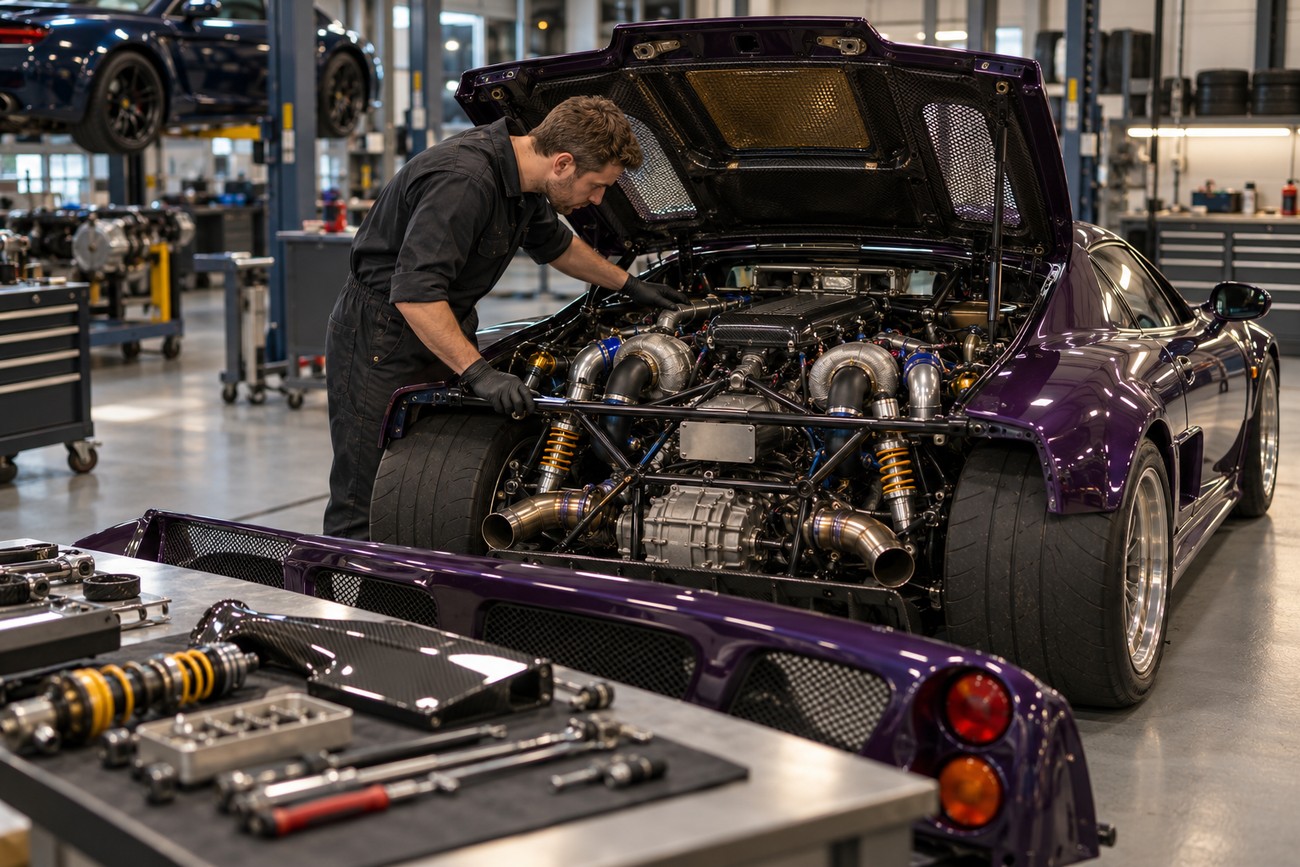
The first myth is that every M12 has the same engine, gearbox, and performance. GTO-3 and GTO-3R are different specifications: the GTO-3 used a 5-speed transmission, while the GTO-3R used a later 6-speed manual transmission and two Garrett T25 turbochargers. Identification should come from the VIN, hardware, and equipment, not the listing title.
The second myth is that the car always weighs 980 kg. Published figures range roughly from 980 to 1,080 kg, with version, market, equipment, and measuring method affecting the result. That difference matters when comparing performance claims, so verify the individual car if weight is central to your decision.
Acceleration figures also need context. The official brochure quotes 3.7 seconds to 60 mph, while independent testing produced approximately 3.3–3.5 seconds, including a Car and Driver result of 3.3 seconds. These are useful indicators of capability, not a promise that every used car will repeat the quickest number.
Finally, Ford-sourced hardware does not make ownership straightforward. Real cost includes specialist diagnosis, scarce Noble-specific parts, downtime, and the condition of cooling, wiring, suspension, transmission, and bodywork. Buy documented condition and parts support, then judge the price; choosing the lowest entry price first is the quickest route to a liability.
Frequently asked questions
The M12’s value depends on its exact version, condition, documentation, and parts support. Production numbers are difficult to verify from a single source. Ford-derived engine components can help with some repairs, but Noble-specific systems still require specialist knowledge.
What is the average price of a Noble M12?
There is no dependable single average price for a Noble M12. Asking prices vary with the exact version, condition, documentation, specialist support, and availability of replacement parts.
A cheaper car may carry incomplete history, unresolved cooling or electrical work, track-related wear, or a misidentified specification. Compare inspection findings and support prospects rather than using the lowest listing as the market benchmark.
How many Noble M12s were made?
The evidence supports describing the M12 as a limited-production and rare car, but it does not establish a verified single production total. An exact figure quoted in an advert should therefore be treated cautiously unless supported by reliable factory or registry documentation.
Why can a Ford-engine Noble still be expensive to own?
The engine’s Ford-derived origins help with some components, but the rest of the car uses Noble-specific systems. Chassis, wiring, suspension, transmission, bodywork, and interior parts may require specialist sourcing and diagnosis.
The largest cost can be downtime rather than routine servicing. A car that needs an uncommon component or electrical investigation may remain unusable while parts are located, making supplier access and specialist knowledge central to the ownership budget.







