
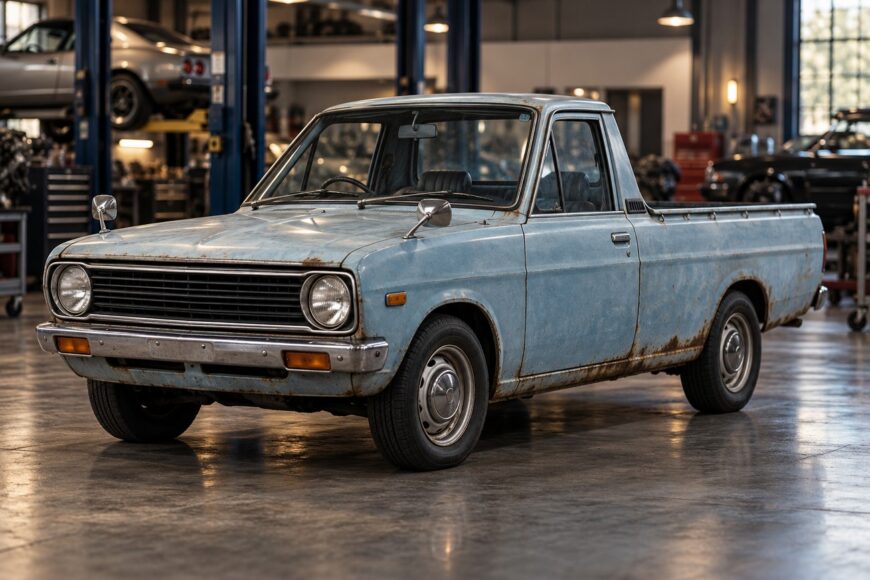
The Nissan Sunny Truck has an unusually long-lived appeal: it is compact, mechanically straightforward, and still recognizable as a small working pickup. For a buyer today, that appeal comes with an older vehicle’s compromises. Corrosion, scarce pickup-specific panels, and period safety equipment can matter far more than the charm of a tidy-looking truck.
Introduced in 1971, the Sunny Truck is often described as having been built for 23 years, through around 1994. That end date is disputed: some summaries give 1985, while catalogs and auction records contain entries dated 1993–1994. A late listing or registration does not, on its own, establish when a particular truck was built.
What endured was a useful idea. Derived from the Sunny B110 passenger-car platform, this rear-wheel-drive pickup offered a small cargo bed and familiar car-based mechanical for modest work. Its simplicity remains attractive, provided a buyer judges the individual vehicle rather than the legend around it.
- Was the Sunny Truck Really Built for 23 Years?
- The Small Pickup Beneath the Cult Following
- What It Is Like to Drive and Put to Work
- Where a Sunny Truck Purchase Goes Wrong
- Parts, Modifications and the Cost of Keeping One
- Frequently asked questions
- What does a Datsun Sunny Truck cost today?
- What paperwork should you request before importing a Sunny Truck?
- What years were Nissan Sunny trucks manufactured?
- Which Nissan truck years are considered the best?
- What is the price of a Datsun Sunny truck?
Was the Sunny Truck Really Built for 23 Years?
The Sunny Truck, identified by the B120/GB122 codes, traces its introduction to 1971 and its basis to the Sunny B110 passenger car. The often-quoted 23-year span assumes production continued to around 1994. That makes a memorable description, but it should be treated as a claim with a disputed end date.
Some summaries place the end of production in 1985. Catalog entries and auction listings dated 1993–1994 point to later activity, though their dates may refer to a catalog edition, model designation, registration, or sale. None of those dates alone proves the build date of a truck offered for sale.
The distinction matters most when age affects an import application, registration, or a claim that an example is from the final years. Ask for identity documents and build-date evidence tied to the vehicle’s identifying number. An advertisement calling it a “1994 Sunny Truck” is a starting point for verification, not a production record.
A utility model can remain useful after the passenger-car generation that supplied its original platform has moved on. A compact bed, rear-wheel drive, and familiar mechanical layout continued to serve modest transport needs without requiring the pickup to follow every change in the car range. That helps explain the truck’s longevity without settling the disputed final production year.
The Small Pickup Beneath the Cult Following
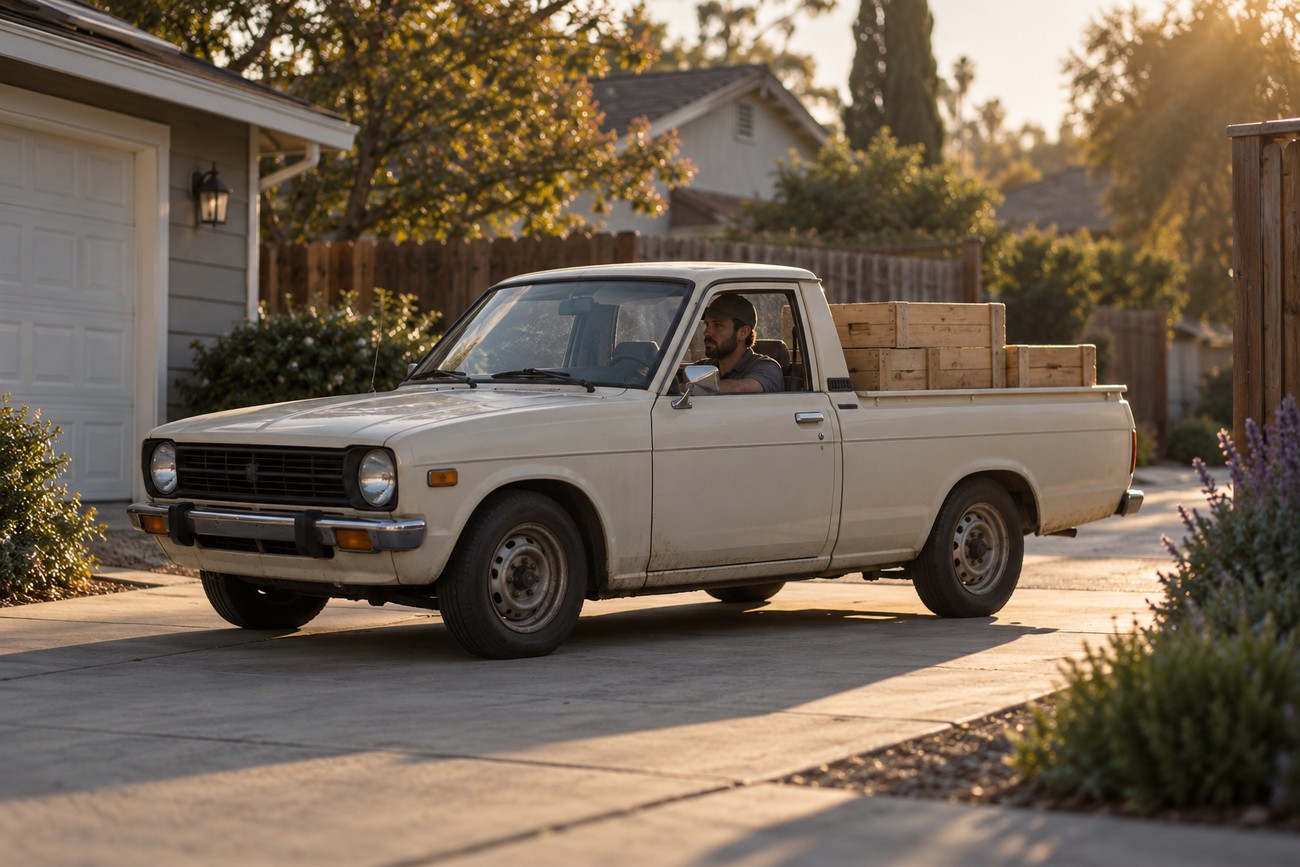
The Sunny Truck is a rear-wheel-drive pickup derived from a passenger-car platform, with B120/GB122 codes associated with the model. Its proportions and mechanical layout suit smaller jobs and narrower spaces. They do not turn it into a heavy commercial truck simply because it has a cargo bed.
Late trucks are described as having an approximately 1.2-liter naturally aspirated gasoline four-cylinder, roughly 1,171–1,200 cc and 52–55 hp depending on specification. That modest output fits the truck’s intended scale. It also makes engine condition and the weight carried especially noticeable in everyday driving.
Descriptions of the truck list front struts and rear leaf springs, along with front disc and rear drum brakes. Equipment can differ by version or previous modification, so check the hardware on the truck in front of you. The leaf-sprung rear supports cargo use, while the braking system deserves assessment against the vehicle’s condition and intended load.
Shared origins with the Sunny passenger car can make some mechanical and electrical parts easier to identify. Interchange is still a part-number question: a component from another Sunny, especially a later generation, should never be assumed to fit by name alone. The bed, body panels, and pickup-specific fittings present a different sourcing problem.
What It Is Like to Drive and Put to Work
A compact Sunny Truck can make sense for light carrying where a larger pickup would be cumbersome. Its modest engine encourages an unhurried pace, particularly when cargo is aboard. Owners have described slow loaded hill climbs, but the experience will depend on the truck’s condition, gearing, terrain, and actual load.
The rear leaf springs are another compromise worth feeling on a test drive. Reports of an unloaded rear end bouncing over rough surfaces are plausible for this layout, though they are not a measured trait of every example. Worn dampers or altered springs can change the behavior substantially.
Expect a cabin designed for a working vehicle of its period rather than quiet long-distance travel. Owner reports mention engine and transmission noise, yet a particularly harsh sound or vibration still calls for diagnosis. A test drive should reveal whether the truck is merely basic or has a fault needing repair.
Use the individual vehicle’s documentation to establish its permitted load; there is no verified universal payload figure. Regularly asking a passenger-car-derived pickup to do a larger truck’s work risks stressing its structure, suspension, and brakes. Check its actual safety equipment as well: ABS and airbags should not be assumed present, and roadworthiness needs an independent assessment.
Where a Sunny Truck Purchase Goes Wrong
Start with the platform and cab rather than the paint finish. Look for corrosion, repairs, and damage that may be hidden by bed coverings or fresh coatings. A buyer can photograph suspect areas and compare both sides, but a qualified inspector should assess whether corrosion affects the structure.
Next, examine the areas that carry and transfer a load, including the underside of the bed and its attachment points. Deformation, uneven repairs, or tired rear springs may suggest hard use; appearance alone cannot establish whether the truck has been overloaded. Pickup-specific metalwork can be difficult to source outside Japan, making a sound structure more valuable than an easy-to-replace trim piece.
Then assess the engine from a cold start, looking for leaks, smoke, irregular running, and evidence of maintenance. A buyer can make those initial observations; compression testing and investigation of abnormal noises are jobs for someone equipped to interpret the results. Mechanical simplicity is helpful during repair, but it does not establish the health of an engine that has had decades of use.
Finish with the suspension and brakes, including spring condition, dampers, lines, drums, and discs as fitted. The test drive should include braking and uneven surfaces, with any pulling, instability, or persistent noise investigated professionally. An auction grade or a reputation for Japanese reliability cannot replace these checks, especially when repairs involve structural metal rather than routine service parts.
Parts, Modifications and the Cost of Keeping One
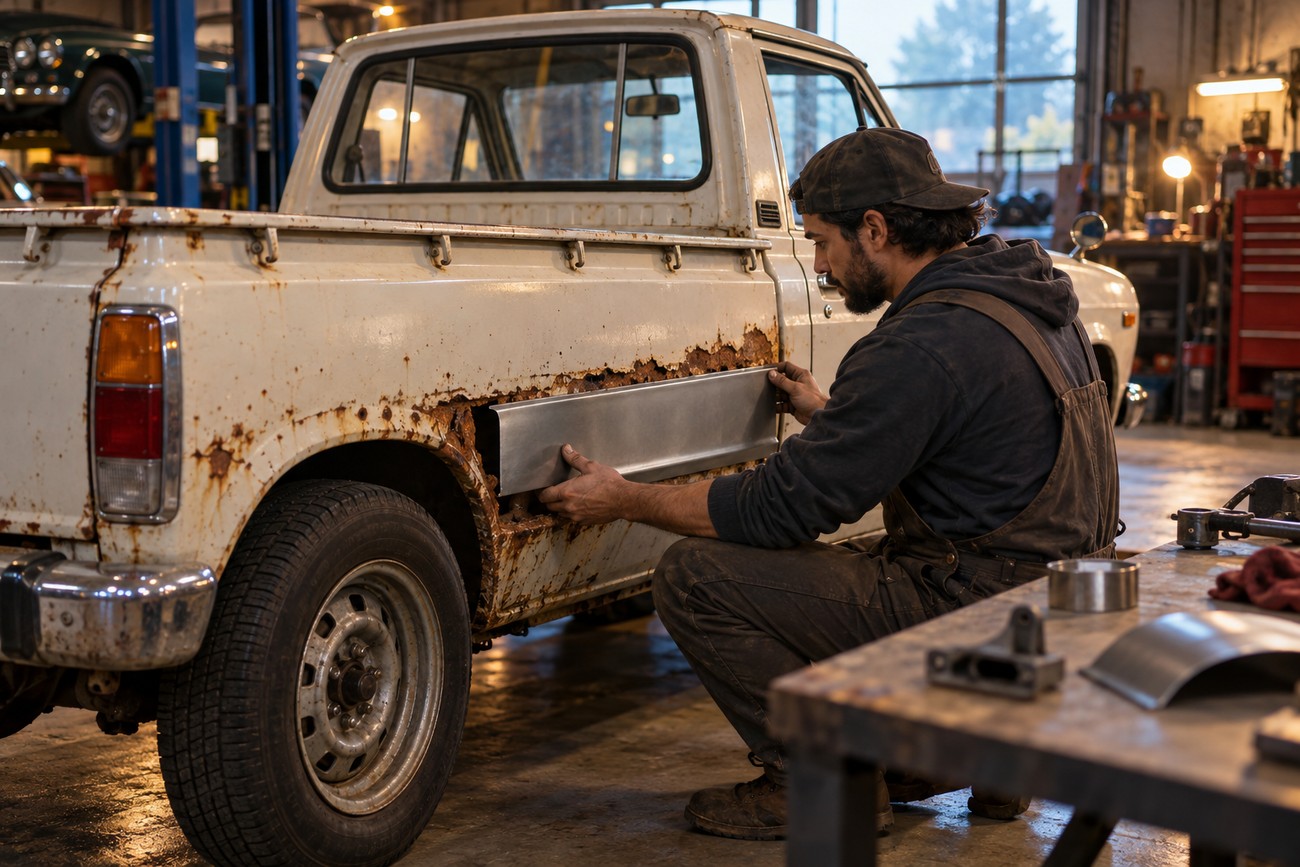
Some Sunny passenger-car engine, drivetrain, and electrical components may be shared with the truck. Confirm the vehicle code, specification, and part number before buying replacements; similarity in a catalog photograph is insufficient. That extra check is particularly important on a truck that may have received parts from several vehicles over its life.
Body repairs demand a separate plan. Bed sections, cab panels, trim, and pickup-specific fittings can be harder to obtain than routine mechanical items, particularly outside Japan. Before committing to a project, establish what is available locally and what would require specialist sourcing.
Existing modifications deserve the same scrutiny as rust. Inspect wiring for added equipment and check that suspension changes, wheels, and engine work have been installed competently and can be supported with parts. A custom truck may look complete while leaving its next owner to solve fitment or repair problems.
A usable working example, a restoration candidate, and a custom-build base therefore carry different risks. Restoration and customization interest may also increase competition for sound trucks, although no reliable market premium is established. Price the vehicle against the work it actually needs, including hard-to-source parts, rather than treating every Sunny Truck as an inexpensive route to a finished pickup.
Frequently asked questions
Dates, documents, and asking prices all need checking against an individual truck. These answers distinguish what the model’s history can tell you from what a seller must substantiate. Local rules and supply will also affect a purchase.
What does a Datsun Sunny Truck cost today?
There is no defensible current price range. Compare recent asking prices for locally available trucks of similar condition and specification, then account for import costs and written repair estimates. An advertised price is most useful when you can also establish what metalwork, mechanical work, and paperwork remain.
What paperwork should you request before importing a Sunny Truck?
Request documents establishing the truck’s identity and ownership, plus evidence supporting its claimed build date. Check that identifying numbers agree across the vehicle and records. Before paying, confirm the registration and import requirements in the destination country; a seller’s stated model year may not satisfy an authority that requires proof of manufacture.
What years were Nissan Sunny trucks manufactured?
The Sunny Truck was introduced in 1971. A production run extending to around 1994 is often described as 23 years, while some summaries give 1985 as the end date. For an individual truck, use build-date evidence rather than inferring its age from a 1993–1994 catalog or auction listing.
Which Nissan truck years are considered the best?
No particular Sunny Truck year can be identified as the best from the available evidence. Choose by structural condition, verified specification, maintenance history, and the availability of parts for that example. A sound truck from a less sought-after year may be a better purchase than a later one requiring extensive bed repairs.
What is the price of a Datsun Sunny truck?
There is no single reliable price: location, condition, specification, and whether the truck is usable or a restoration project all affect the asking figure. If an advertisement uses the Datsun name, verify the vehicle’s identity before comparing it with other Sunny Trucks. Give particular weight to the cost of missing or corroded pickup-specific parts, which may be harder to replace than shared mechanical components.







