
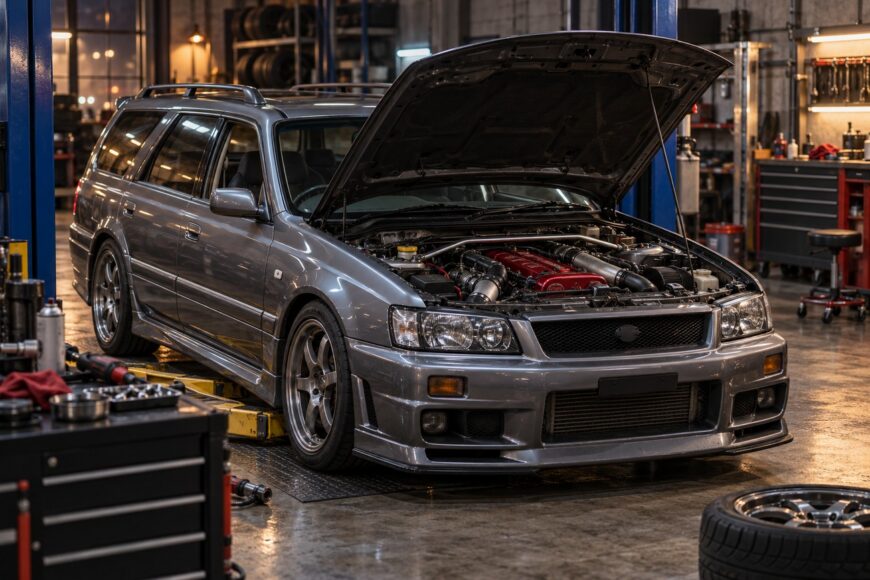
The Nissan Stagea 260RS combines the appeal of a factory-built performance wagon with hardware associated with the Skyline GT-R: an RB26DETT engine, ATTESA E-TS all-wheel drive, a rear limited-slip differential, and Super HICAS. That combination gives the car a rare place in Japanese performance history, especially for buyers who need wagon practicality without giving up a serious drivetrain.
The important correction is that the 260RS is a separate Stagea version, not literally an R33 Skyline GT-R with a wagon body. Its WGNC34 body, weight, chassis setup, and several components remain Stagea-specific. Today, the sensible buying decision depends on authenticity, corrosion, aging control systems, and parts availability as much as it does on the badge or engine name.
- What the Stagea 260RS Actually Is
- Factory Specification—and the Power Figure Dispute
- How GT-R Hardware Feels in a Heavy Wagon
- The Aging-System Problems Owners Actually Face
- How to Inspect and Authenticate a 260RS
- Originality, Parts, and the Cost of the Legend
- Frequently asked questions
- How many Nissan Stagea 260RS were made?
- How much is a Nissan Stagea 260RS?
- How much horsepower does a Nissan Stagea 260RS have?
What the Stagea 260RS Actually Is
The Autech Version 260RS debuted in 1997 as a high-performance version of the Nissan Stagea. It used the WGNC34 wagon platform and right-hand drive, giving it the long roof, rear cargo area, and practical proportions that defined the Stagea range. Autech’s work connected the car to Nissan’s performance technology without turning the wagon into a rebodied Skyline.
The connection to the Skyline GT-R is genuine. The 260RS uses the RB26DETT and ATTESA E-TS, supported by performance-oriented transmission, differential, steering, braking, and suspension hardware. Those parts explain the car’s reputation and its place among desirable Japanese-market imports.
Its identity still matters during inspection. The body structure, 1,720 kg mass, wagon geometry, cabin packaging, and chassis tuning give the 260RS a different mechanical workload from a Skyline GT-R coupe. References to “a factory GT-R wagon” describe the concept quickly, yet they can encourage inaccurate assumptions about interchangeable parts and identical behavior.
That distinction also affects restoration. A Skyline component may look familiar and still require a different mounting arrangement, specification, or control system. A genuine 260RS should therefore be assessed as a complete Stagea variant, with its chassis number, equipment, and surviving factory details verified individually.
Factory Specification—and the Power Figure Dispute
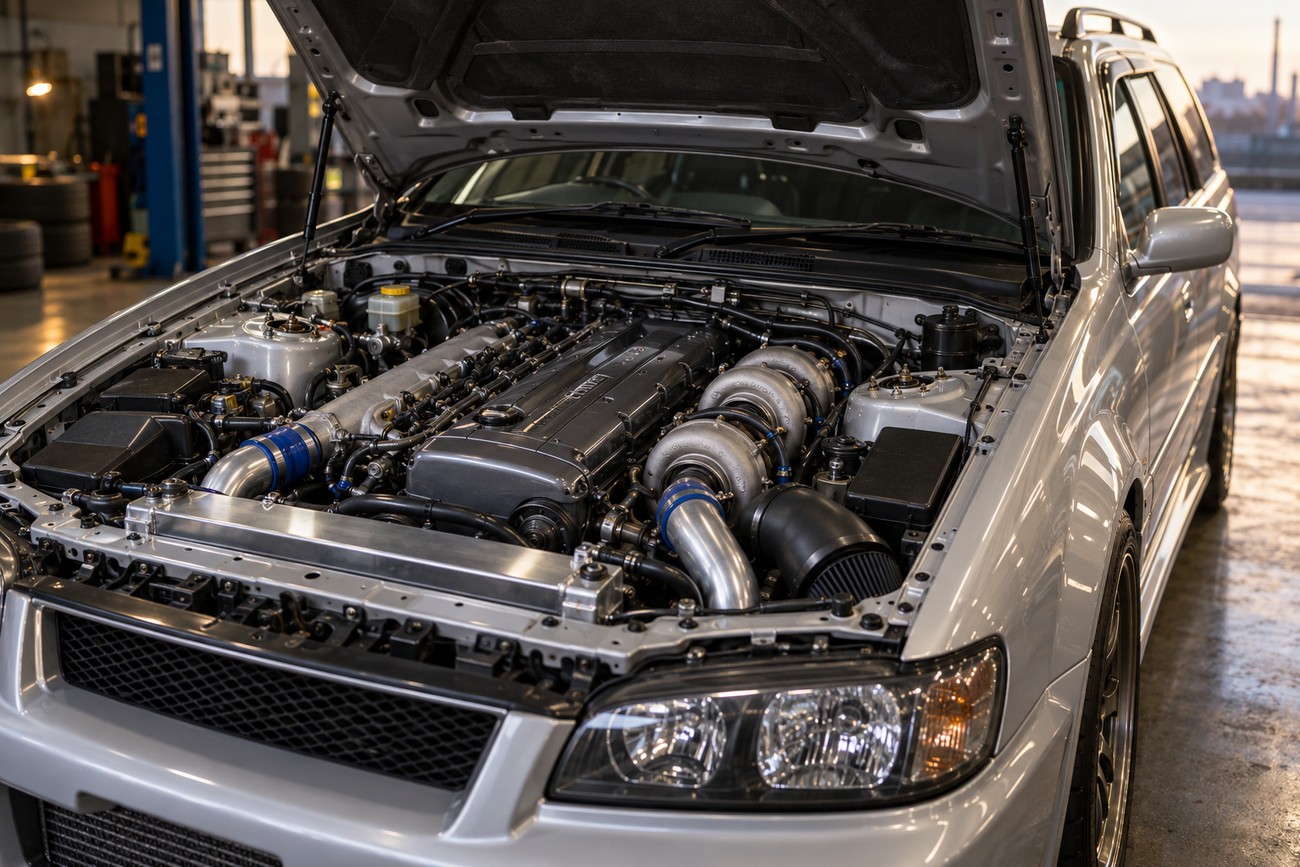
At the center of the car is the RB26DETT: a 2,568 cm³ inline-six with DOHC, four valves per cylinder, and twin turbochargers. Drive reaches the road through a five-speed manual transmission and ATTESA E-TS all-wheel drive. The chassis specification also includes a rear LSD and Super HICAS.
Nissan’s official specification lists 147 kW and 200 PS at 5,600 rpm. Catalogs and popular sources commonly quote 206 kW/280 PS or 276 hp. Those figures should remain identified by source and unit rather than being silently combined into one supposedly settled factory output.
The official torque figure is 368 N·m at 4,400 rpm. PS, hp, and kW are different units, while catalog data can also reflect different markets, publication conventions, or specification sources. A power claim without its unit and provenance is weak evidence when comparing cars or checking an advertisement.
Nissan lists independent multi-link suspension at the front and rear, together with ventilated disc brakes. The official dimensions are 4,885 × 1,755 × 1,510 mm, with a 2,720 mm wheelbase and a mass of 1,720 kg. The official tire size is 255/50R17.
These numbers are useful during a purchase inspection because they provide a reference for missing or substituted equipment. They do not prove that a used car still has its original engine, turbochargers, wheels, brakes, or control hardware. Previous-owner modifications are common enough to make physical verification more valuable than a familiar specification sheet.
How GT-R Hardware Feels in a Heavy Wagon
ATTESA E-TS can improve traction by managing torque delivery, while the rear LSD helps maintain drive when grip varies across the rear axle. Super HICAS contributes to the car’s steering response. Together, these systems give the 260RS more control on wet or uneven roads than a conventional rear-drive wagon with similar power.
The independent multi-link suspension at both ends and ventilated disc brakes support a more serious driving role, yet the wagon body remains the dominant physical fact. At 1,720 kg, the car carries substantially more mass than the performance coupe many buyers use as a mental comparison. Braking distances, tire loading, and direction changes all depend on that mass and on the condition of the dampers, bushings, brakes, and tires.
The higher center of mass also becomes noticeable in faster corners. ATTESA, the rear LSD, and HICAS can help manage the car, but they cannot erase wagon geometry. A healthy 260RS can feel composed and highly capable; it should not be expected to respond exactly like a Skyline GT-R after the road tightens.
The specified 255/50R17 tire size deserves careful attention. All four tires should match in diameter and have closely consistent wear because differing rolling circumferences can place additional stress on the all-wheel-drive system. A set of inexpensive mixed tires may create a larger mechanical concern than its appearance suggests.
The Aging-System Problems Owners Actually Face
Most 260RS examples are now old enough for age-related condition to outweigh the reputation of the RB26DETT. Turbochargers, cooling components, gaskets, electrical connections, and fuel-system parts can all require work. A clean idle or successful cold start provides limited evidence about oil pressure, boost control, cooling performance, or internal engine condition.
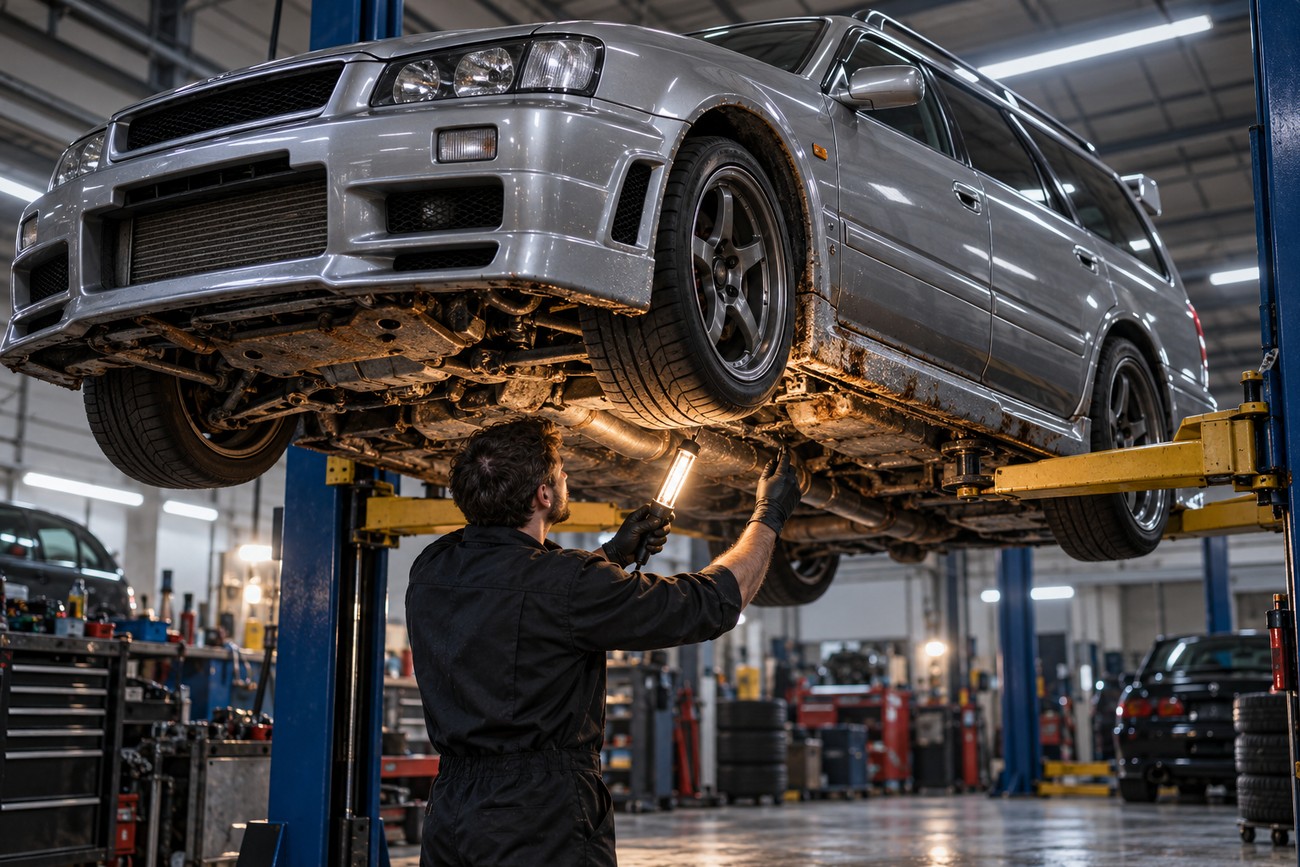
Corrosion deserves inspection beyond visible body panels. Water can remain around body mounting areas and the zones near the exterior mirrors, while rust beneath the car may affect sills, arches, subframe mounting points, or the floor under the spare wheel. An impressive Autech-style exterior can hide expensive structural or mounting-area repairs.
ATTESA and HICAS add sensors, hydraulic components, wiring, and control logic to the diagnostic process. Faults may disappear after a battery disconnect or electronic reset and then return under load. That is why a warning-free dashboard should be treated as one observation, not proof that the systems are healthy.
Parts availability can magnify a minor failure. A specialist may identify the cause quickly, yet the correct sensor, hydraulic component, body trim, or interior piece can take much longer to source. The condition of the individual car matters more than the 260RS badge or the RB26DETT name.
How to Inspect and Authenticate a 260RS
Begin with the chassis number or VIN and confirm the car’s identity against its documentation and factory configuration. Check for the RB26DETT, five-speed manual transmission, ATTESA E-TS, and the equipment expected of an original 260RS. The aim is to separate a documented, correctly converted, or modified car from one being marketed mainly through a badge.
Put the car on a lift before discussing its value. Inspect the underside, sills, arches, subframe mounting points, suspension attachment areas, and the floor beneath the spare wheel. Look for repairs, corrosion, impact damage, fluid leaks, and fasteners suggesting that major components have been removed or replaced.
Cleared ATTESA or HICAS faults do not demonstrate system health. The inspection should include a loaded road test, a lift examination, matched tires, and checks of the related hydraulic components and sensors.
Engine checks should include compression, oil pressure, turbocharger condition, cooling performance, and fuel-system operation. The drivetrain inspection should cover ATTESA, HICAS, the rear LSD, wiring, and relevant sensors. A specialist familiar with the actual systems is preferable to a generic scan alone because old electronic faults can be intermittent.
Check the tires for matching sizes, diameters, and wear before evaluating the all-wheel-drive system. Parts from an ordinary Stagea or a Skyline may be related without being automatically interchangeable. Confirm compatibility by part number, mounting arrangement, and system specification rather than relying on visual similarity.
Originality, Parts, and the Cost of the Legend
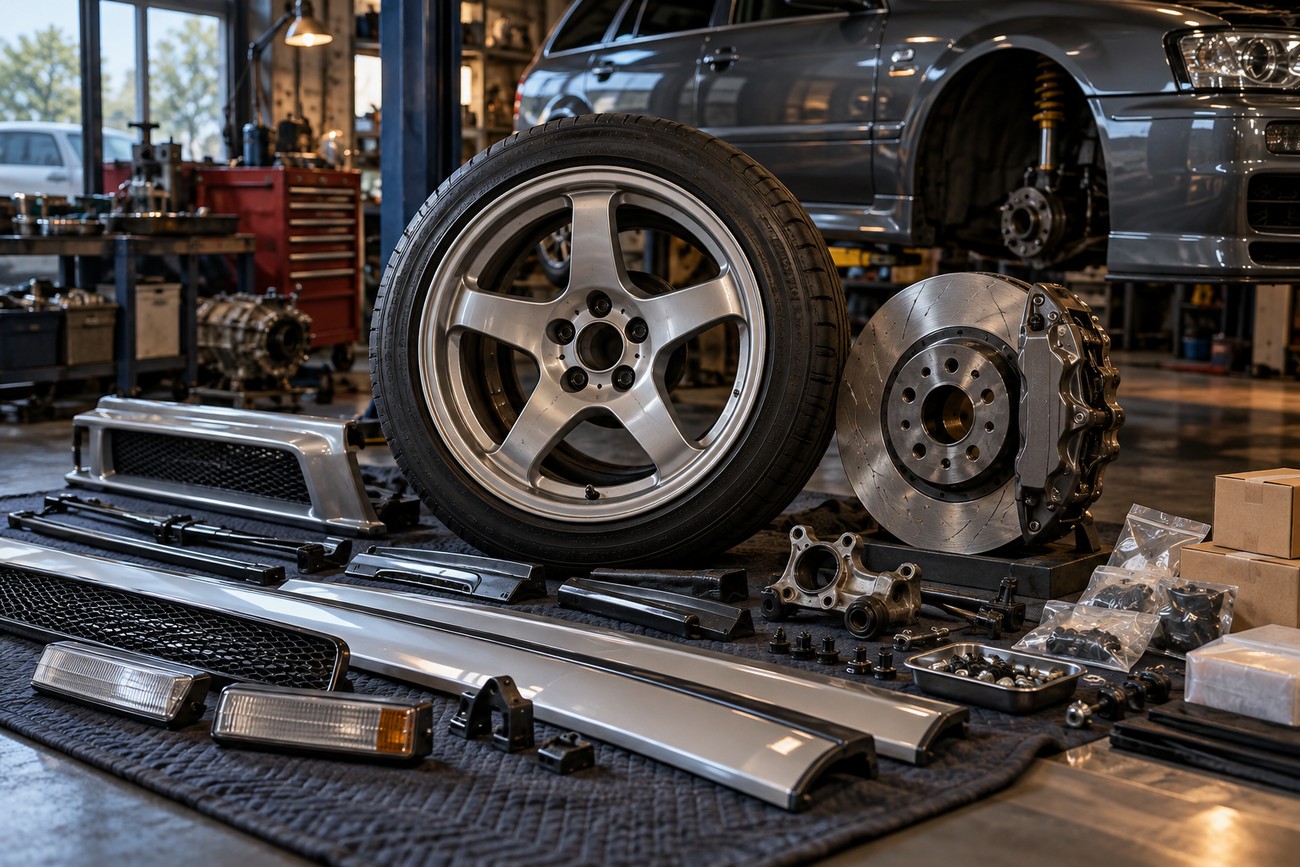
Scarcity changes how the 260RS should be maintained. Specific body pieces, original wheels, brake components, and interior parts can be difficult to source, and a damaged or incomplete car may remain unfinished for a long time. The original BBS wheels and brake components contribute to the car’s identity and value, provided they are genuine and in usable condition.
Modifications require careful interpretation. A larger turbocharger, replacement engine, altered wiring loom, or non-original brake package may be a documented improvement, or it may simply make future diagnosis harder. The absence of factory parts can reduce originality even when the replacement appears more impressive in an advertisement.
Hagerty reports production of 1,734 examples from 1997–2001. Nissan’s available factory page does not confirm the exact split by version or production period, so the total should be treated as a reported figure rather than a complete production register.
based on the experience of practicing specialists. add practical costs. Registration and insurance rules vary by market. A buyer should budget for specialist inspection, transport, parts research, and storage as well as the purchase itself.
Frequently asked questions
How many Nissan Stagea 260RS were made?
Hagerty reports 1,734 Nissan Stagea 260RS examples built from 1997–2001. Nissan’s available factory page does not confirm the exact breakdown by version or production period, so that number should be presented as a reported total rather than a fully verified Nissan production breakdown.
How much is a Nissan Stagea 260RS?
There is no responsible single price figure without a specific car and market. Value depends on originality, rust, drivetrain health, rare equipment, documentation, and location.
A car with original wheels and brakes, sound body mounting areas, correctly functioning ATTESA and HICAS, and strong mechanical evidence will occupy a different market position from a modified or corroded example. Import costs, registration, and the availability of specialists can also materially change the buyer’s total expense.
How much horsepower does a Nissan Stagea 260RS have?
Nissan’s official specification lists 147 kW and 200 PS at 5,600 rpm. Catalogs and popular sources commonly quote 206 kW/280 PS or 276 hp.
These figures should not be treated as interchangeable or as one uncontested factory output. They use different units and source conventions, and a used car may also have modified engine or turbo hardware. The car’s actual condition and measured output require separate verification.







