
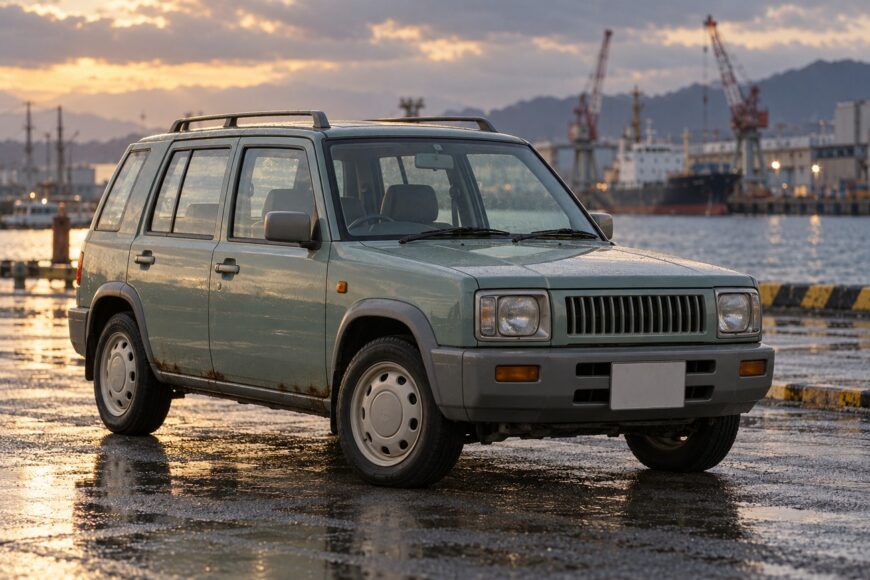
The Nissan Rasheen has the charm of a box drawn with a ruler: upright glass, short overhangs, compact wagon proportions, and a retro shape that stands apart from modern crossovers. That appeal is genuine, yet the car is now a 25-plus-year-old Japanese-market wagon with age-related corrosion, scarce trim parts, old electronics, and safety equipment from another era.
The key buying decision is therefore practical. You either accept a characterful hobby car that needs careful inspection and patient parts hunting, or choose a newer crossover that offers easier servicing, quieter travel, and more predictable daily reliability. The Rasheen can still make sense, especially as a second vehicle, provided its condition matters more than its appearance.
- What Is the Nissan Rasheen?
- Engines, Transmissions and Four-Wheel Drive
- Rasheen Specs and Real-World Driving
- The Hidden Cost of Owning a Nissan Rasheen
- How to Inspect a Used Nissan Rasheen Before Buying
- Rasheen Myths, Strengths and the Right Buyer
- Frequently asked questions
- How many Nissan Rasheen cars were built?
- What do the Nissan Rasheen Type II, Type S, and Forrester-style names mean?
- Was the Nissan Rasheen available with a diesel engine?
What Is the Nissan Rasheen?
The Nissan Rasheen was produced for the Japanese domestic market from 1994 to 2000 and assembled at Nissan’s Oppama plant. It used the Nissan B14 platform, related to the Sunny, Pulsar, and Lucino. That shared architecture matters today because several mechanical components can be sourced through mainstream Nissan parts networks, even though Rasheen-specific items are much harder to locate.
Its upright body combines the visual language of a small utility vehicle with the footprint of a compact wagon. The tall roof makes the car look more substantial than it is, while squared-off panels, distinctive lamps, and plastic exterior details give it a recognizable identity. Buyers are usually drawn to this design first; ownership becomes easier when they also understand how ordinary the underlying platform can be.
On the road, the Rasheen is closer to an early city crossover than to a traditional off-roader. Four-wheel drive helps on snow, wet roads, and rough tracks, while the compact dimensions suit urban use. The chassis, clearance, and driveline do not provide the strength, geometry, or low-range gearing associated with a serious 4WD vehicle.
Engines, Transmissions and Four-Wheel Drive
The documented engine range is entirely naturally aspirated. It includes the QG13DE 1.3 with approximately 85–88 hp, the GA15DE 1.5 with approximately 100 hp, the SR18DE 1.8 with approximately 125 hp, and the SR20DE 2.0 with approximately 145–150 hp. No turbocharged engine belongs to this supplied range, so advertised claims of a factory turbo Rasheen deserve careful verification.
Transmission choices are a five-speed manual or a four-speed automatic. Manual cars generally feel livelier because the driver can keep the engine in its useful rev range, and they avoid the additional age-related risks of an old automatic. A healthy automatic can still work well, though harsh shifts, delayed engagement, slipping, or evidence of overheating should be treated as major financial warnings rather than minor character traits.
The AWD layout is a full-time-type system using a viscous coupling and an engageable rear axle. It can distribute traction usefully when surfaces become slippery, yet the fact that all wheels turn during a test drive proves little about the remaining life of the coupling, rear driveline, or differentials. Uneven tire wear, driveline noise, vibration, and inconsistent engagement deserve attention.
The SR20 versions offer the strongest performance in the range, but the larger engine and four-wheel-drive hardware also add weight and operating cost. A manual 1.5 or 1.8 can be the more balanced choice for regular use, provided the particular car has been maintained. With vehicles this old, service history and structural condition outweigh the badge on the trunk.
Rasheen Specs and Real-World Driving
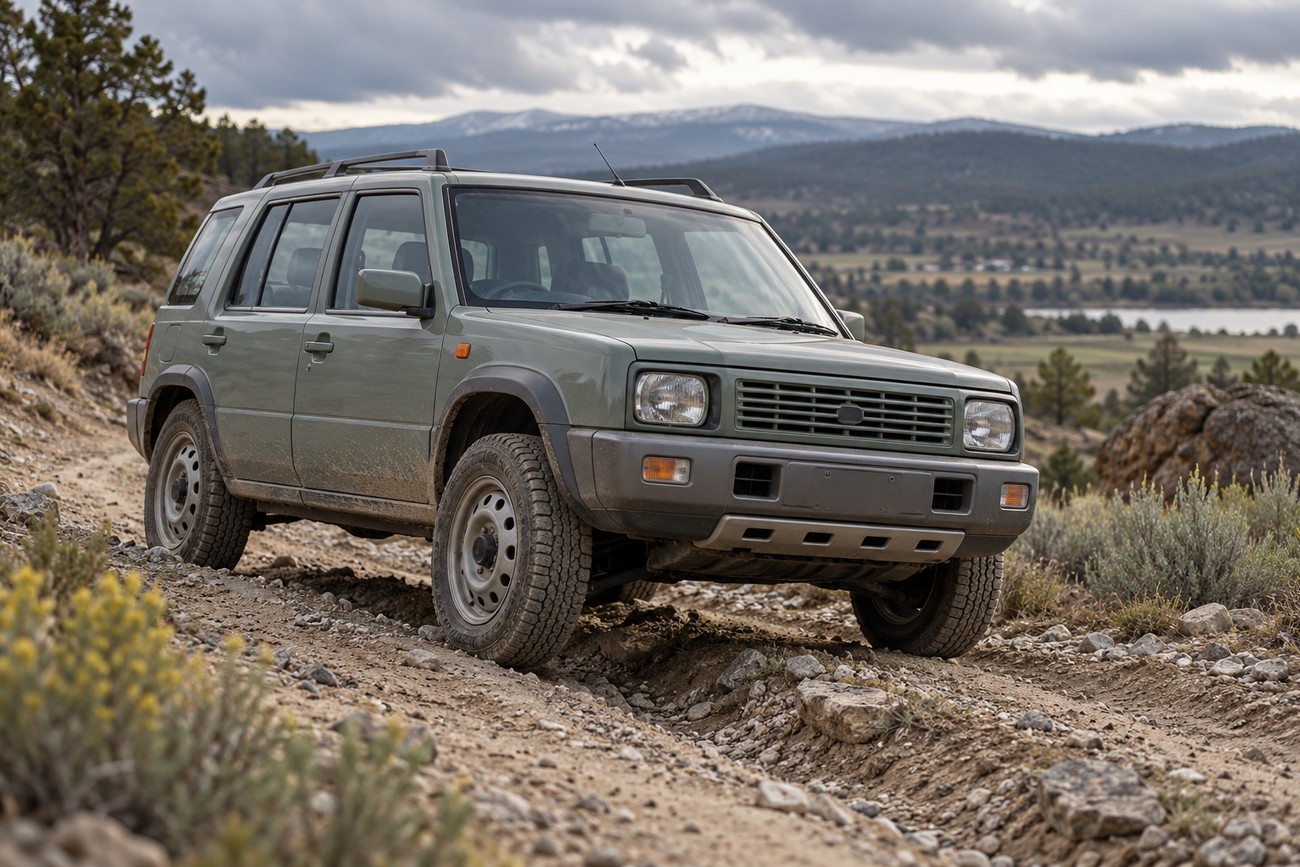
Depending on specification, kerb weight is approximately 1,160–1,300 kg, with SR20 4WD versions among the heaviest. Ground clearance is approximately 170–180 mm. The front suspension uses MacPherson struts, while the rear layout varies between a beam axle and a multi-link arrangement, so replacement parts and ride behavior can differ between versions.
Those dimensions make the Rasheen manageable on narrow streets and useful on unpaved access roads. They do not prevent it from grounding on deep ruts or losing traction diagonally. The compact body also hides a relatively narrow cabin: adults can find the rear bench tight, and the cargo area is smaller than the tall wagon silhouette suggests.
Long-distance comfort is another area where modern expectations need adjustment. Seat support is limited, while engine, wind, and tire noise enter the cabin readily through the floor and wheel arches. A careful owner can improve the experience with additional sound deadening, refreshed upholstery, better audio equipment, or USB charging, but those upgrades improve an old cabin rather than turning it into a modern touring car.
Owner-reported fuel consumption is approximately 9–11 L/100 km in town for 1.5–1.8 versions and can reach 13–14 L/100 km for an SR20 4WD. Relaxed highway driving can return approximately 7–8 L/100 km. These are real-world reports rather than laboratory figures, and winter use, traffic, automatic transmission condition, and four-wheel drive can move the result higher.
The Hidden Cost of Owning a Nissan Rasheen
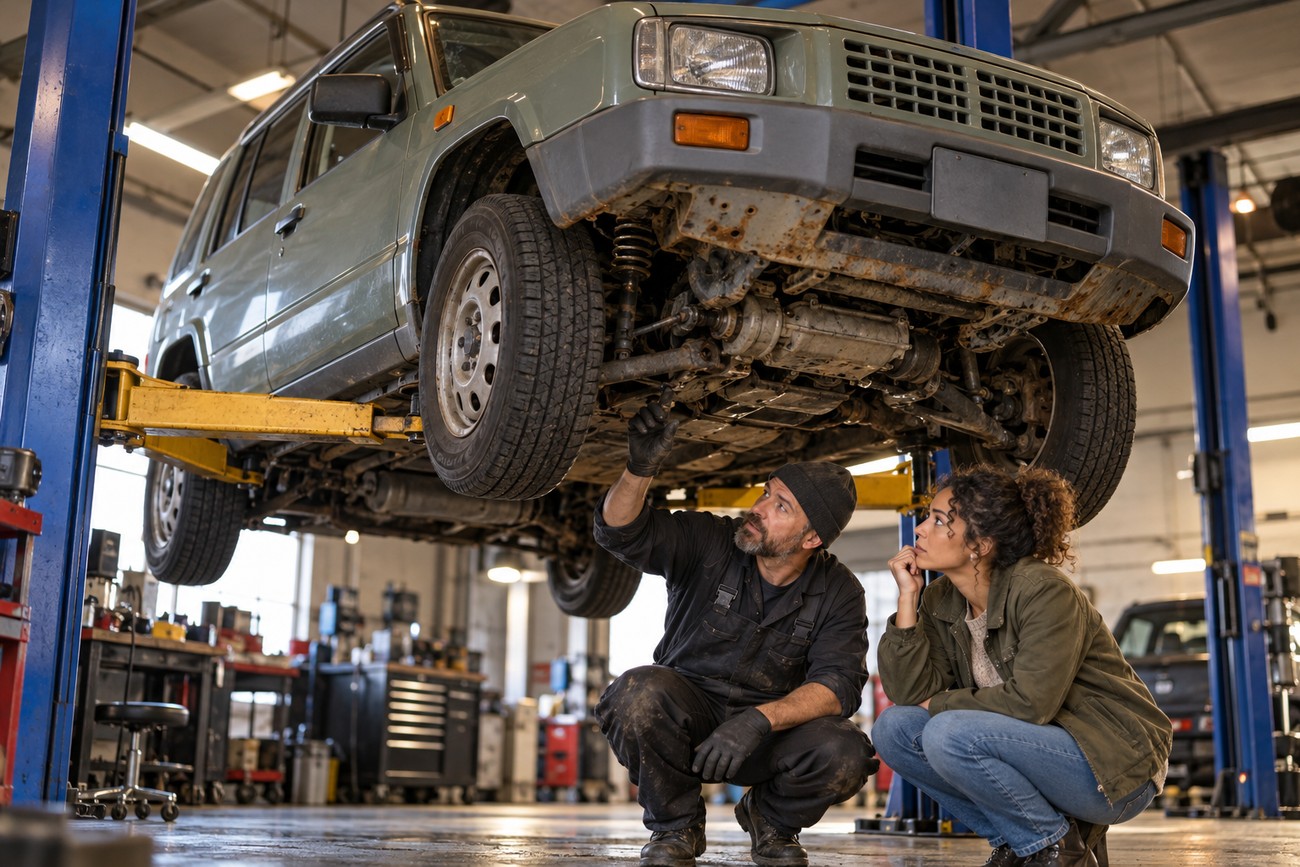
Rust is the first expense to investigate because paint and polished wheels can conceal structural deterioration. Inspect the sills, lower door edges, floor areas, jacking points, and the rear sections of the longitudinal rails. Cars exposed to Russian or European winters deserve particular caution, especially when repairs have been covered with underseal or fresh paint.
Parts availability divides into two very different categories. Engine and suspension components often relate to mass-market Nissan models, including the Sunny, Pulsar, and other cars from the same era. Body panels, plastic cladding, distinctive lamps, glass, grilles, badges, and interior trim may require used Japanese-market parts, long searches, or expensive donor vehicles.
Electrical faults are equally easy to underestimate. Aging grounds and oxidized connectors can create intermittent instrument-panel, lighting, and accessory problems that disappear during a short inspection. A car with missing trim can also become expensive in small increments: a single decorative panel may be harder to replace than a routine suspension component.
Old automatic transmissions are particularly sensitive to neglected fluid service and heat. Harsh shifting, slipping, delayed engagement, or discoloration and contamination in the fluid can point toward substantial repair work. On a 4WD car, the cooling system, rear driveline, viscous coupling, and differential fluids deserve the same attention as the engine itself.
Outside Japan, there is no broad official dealer network or local catalog support dedicated to the Rasheen. Owners therefore rely on specialist knowledge, parts interchange research, Japanese dismantles, and fabrication or restoration skills. That support can be enough for an enthusiast, though it makes the car a poor choice for someone who needs every repair to be quick and routine.
How to Inspect a Used Nissan Rasheen Before Buying
Begin underneath the vehicle, before spending time on paint, wheels, or interior accessories. Check the sills, rear longitudinal rails, floor sections, suspension mounting points, jacking points, and signs of structural welding. A clean exterior does not rule out serious corrosion, and fresh underseal may hide repairs rather than confirm good preservation.
Inspect the engine from a cold start. Look for difficult starting, unstable idle, overheating signs, coolant loss, oil leaks, and evidence of improvised wiring. Confirm that the cooling system reaches and holds normal operating temperature, since neglected cooling systems can turn an otherwise usable engine into a costly project.
Test the automatic transmission through cold and warm operation, including reverse, low-speed shifts, kickdown, and steady cruising. On a manual, check clutch take-up, gear selection, and signs of bearing noise. For 4WD versions, examine the viscous-coupling behavior, rear differential, propeller-shaft area, fluid condition, and any vibration under load; wheels turning on a lift are not a complete AWD test.
Operate every electrical item, including lights, gauges, wipers, heater controls, air conditioning, windows, and the rear hatch hardware. Then price missing lamps, glass, cladding, and trim before making an offer. A cheap car with unobtainable cosmetic parts can cost more to finish than a sound example with a higher purchase price.
Aggressive mud tires, suspension lifts, roof lights, and heavy audio equipment deserve skepticism. Such modifications can accelerate wear in the suspension and driveline and may overload the alternator, grounds, or wiring. Keep fluid changes current for the engine, automatic transmission, and differentials, even if the vehicle has already survived many years with little recorded maintenance.
Rasheen Myths, Strengths and the Right Buyer
The Rasheen is sometimes presented as a miniature Patrol because of its upright body and available AWD. Its actual capability is closer to that of an old compact crossover: there is no low-range gearbox, clearance is limited, and the car can bottom out or lose traction diagonally. It is useful on poor roads and slippery surfaces, while demanding off-road work can quickly expose the limits of the chassis and driveline.
“Parts are easy” is only partly accurate. Mechanical interchangeability with mainstream Nissan models can simplify engine and suspension repairs, but it does little for a cracked lamp, damaged cladding, missing grille, unusual glass, or worn interior fabric. A buyer should check availability of vulnerable cosmetic parts before committing to a restoration.
The claim that the Rasheen returns 6–7 L/100 km in town is not a dependable expectation. Owner-reported urban consumption is approximately 9–11 L/100 km for 1.5–1.8 versions and up to 13–14 L/100 km for an SR20 4WD. Front airbags appeared closer to the end of production, while side airbags, ESP, and modern multi-channel safety systems are absent.
The best ownership case is a well-inspected manual car used as a distinctive second or hobby vehicle. It rewards patience with character, simple naturally aspirated engines, and a design that remains unusual. It is a poor match for buyers who prioritize modern crash protection, quiet highway travel, low running costs, or effortless daily reliability.
Frequently asked questions
The Rasheen’s unusual history creates uncertainty around specifications, trim names, and market rarity. The answers below separate documented information from claims that are difficult to verify.
How many Nissan Rasheen cars were built?
A dependable official production total is not established in the supplied evidence. The Rasheen was produced for the Japanese domestic market from 1994 to 2000 and is uncommon outside Japan, but there is no confirmed official rarity ranking or reliable total that supports precise seller claims.
Descriptions such as “one of only a few thousand” should therefore be treated cautiously unless supported by verifiable factory documentation. Condition, corrosion history, drivetrain specification, and parts completeness are more useful buying criteria than an unproven production number.
What do the Nissan Rasheen Type II, Type S, and Forrester-style names mean?
These labels are associated with differences in exterior trim, body cladding, and interior equipment. The available evidence does not support one unified official classification covering every use of Type II, Type S, and Forrester-style names.
For buyers, the practical approach is to verify the actual equipment on the individual car rather than assume that a label guarantees a particular engine, drivetrain, or factory package. Photos, chassis information, and a parts check are more reliable than a seller’s trim description alone.
Was the Nissan Rasheen available with a diesel engine?
The documented Rasheen engine range consists of petrol engines: the QG13DE 1.3, GA15DE 1.5, SR18DE 1.8, and SR20DE 2.0. All are naturally aspirated, and no diesel engine is supported by the supplied model information.
A diesel listing may reflect a mistaken advertisement, an engine swap, or confusion with another Nissan model. Confirm the engine code and registration details before treating such a car as an original factory specification.







