
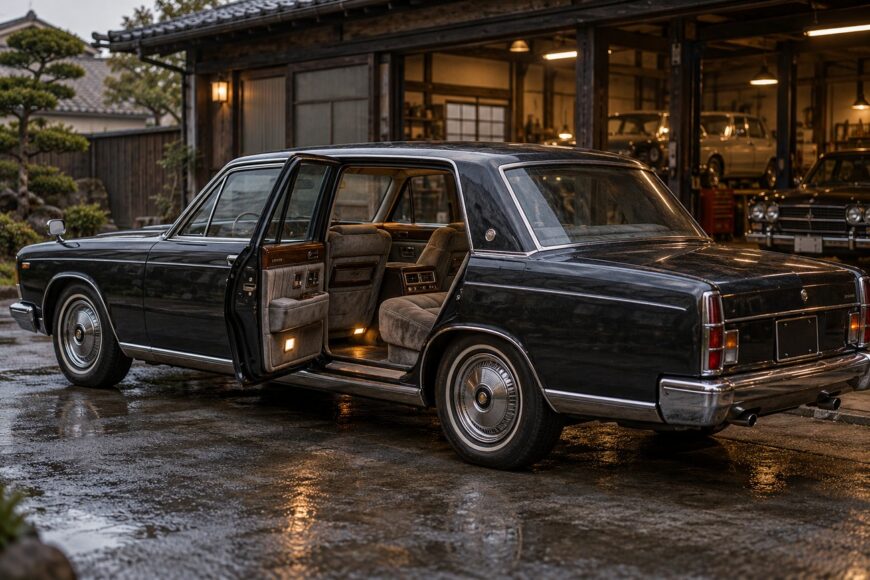
The Nissan President is Japan’s lesser-known executive sedan: a formal, full-size Nissan built for rear-seat comfort, quiet travel, and status rather than mass-market appeal. Its V8 engines and distinctive cabin can make it a compelling alternative to better-known Japanese luxury cars, yet rarity changes the ownership calculation.
A smooth-running engine does not guarantee an inexpensive car. Age-related electrical faults, worn suspension, neglected fluids, scarce trim, and long-storage damage can make a President costly to keep roadworthy. The model rewards careful inspection and parts research; it punishes buyers who treat it as an ordinary old Nissan.
- What the Nissan President was—and why it was not just a long Cedric
- Nissan President generations at a glance
- The engines changed more than the badges suggest
- What ownership gets expensive: electronics, suspension, fluids, and parts
- How to inspect a Nissan President before buying
- The President myths that lead buyers to the wrong car
- Is the Nissan President a sensible executive-limousine alternative today?
- Frequently asked questions
- How can I identify the correct Nissan President parts catalog entry?
- What does choosing a four-seat Nissan President change for an owner?
- What was the Nissan CEO scandal?
- Who are the members of Nissan’s executive team?
What the Nissan President was—and why it was not just a long Cedric
Nissan introduced the President in 1965 as a standalone full-size flagship and successor to the Cedric Special. Its purpose was executive transport, with formal styling, a quiet cabin, and equipment designed around the people in the rear seats. That placed it in a different role from the more familiar Cedric and later mainstream luxury sedans.
Early equipment reflected that mission. Nissan specified features such as rear-passenger air conditioning, heated glass, power mirrors, and power steering. These details matter today because the car’s appeal depends on the condition of its executive equipment, while each additional system creates another possible restoration cost.
The H150 measured 5,045 mm in length and had a 2,850 mm wheelbase. Those dimensions produce a substantial road presence, although they do not guarantee identical limousine-like rear space across every version. Body style, trim, and seating layout affect the actual passenger experience.
Compared with a Toyota Celsior or Century, the President is harder to find and less thoroughly documented by owners and independent specialists. That obscurity is part of its character, yet it also means fewer reference cars, fewer used parts, and less certainty when a seller describes a rare feature as original or fully functional.
Nissan President generations at a glance
The President’s history is divided into three main generation groups. Engine and transmission choices changed substantially, so the body code is the starting point for any serious inspection or parts search.
| Generation | Production period | Engines | Transmissions | Buyer-relevant context |
|---|---|---|---|---|
| H150 | From 1965 | 3.0-liter inline-six or 4.0-liter V8; H150 Type C used the 3,988 cc Y40 V8 | 3-speed automatic and separate manual versions | Early flagship engineering, distinctive trim, and substantial age-related restoration risk |
| H250 | Approximately 1973–1990 | 3.0-liter inline-six or 4.4-liter V8 | Varied by version; verify the individual car | Long production run, with drivetrain and equipment differences between cars |
| JHG50/HG50 | Appeared in 1990; production ended in 2010 with the related Cima | 4.5-liter VH45DE V8; after the 2003 update, VK45DE V8 | 4-speed automatic | Modernized executive equipment, shared parts-search territory with Cima and Infiniti Q45, and complex electronics |
The H150 Type C used the Y40 3,988 cc V8, rated at 180 hp and 314 N·m. Its independent double-wishbone front suspension, dependent leaf-spring rear suspension, front disc brakes, and rear drum brakes show how differently an executive sedan of that period was engineered from a modern luxury car.
The JHG50 brought a newer technical direction, while the related Nissan Cima became an important source of cross-reference information. Production of the President and related Cima ended in 2010, leaving buyers dependent on surviving cars, donor vehicles, specialist catalogs, and careful component verification.
The engines changed more than the badges suggest
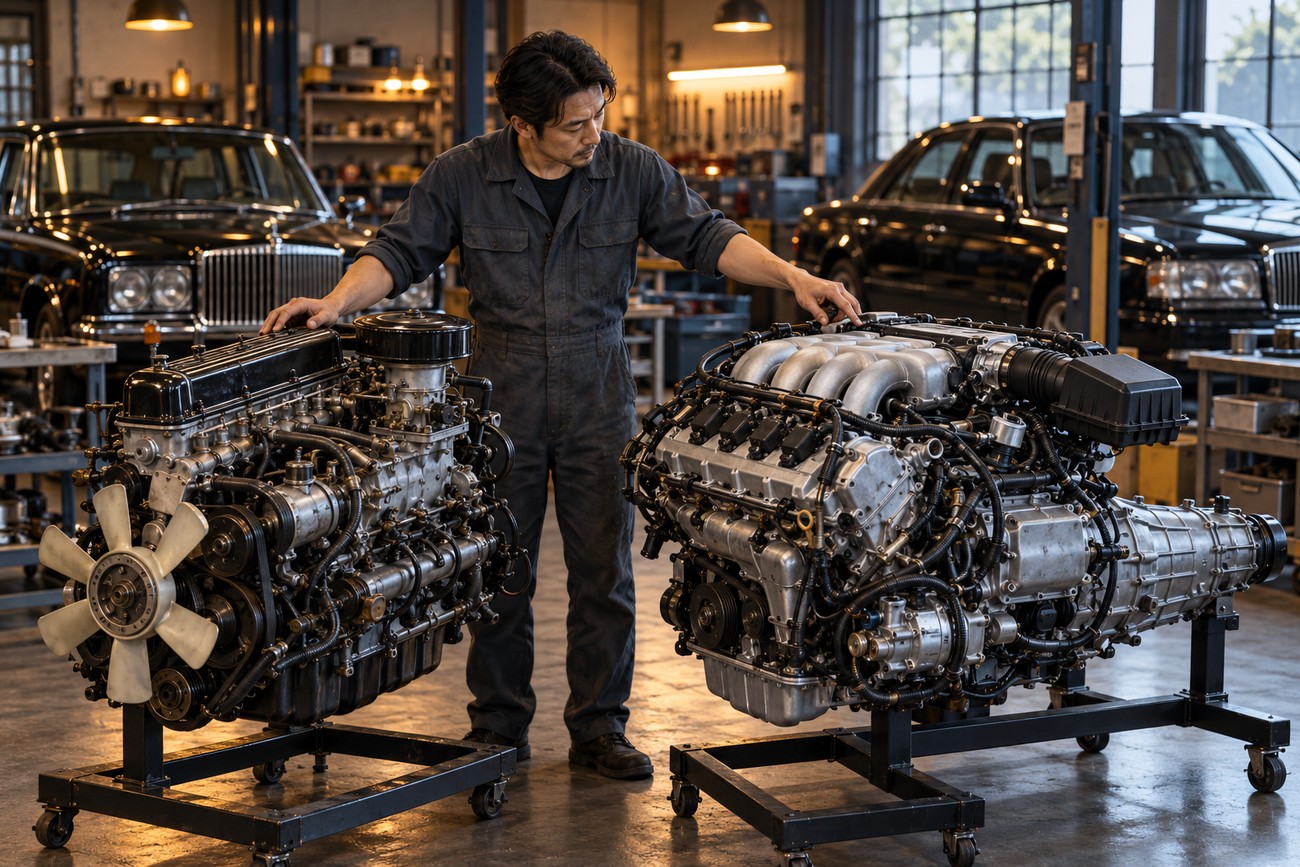
Early Presidents were available with a 3.0-liter inline-six or a 4.0-liter V8. Some used a 3-speed automatic, while separate versions were offered with a manual transmission. The assumption that every President is a V8 automatic can therefore lead to an incorrect valuation, an incorrect parts order, or a mistaken restoration plan.
The JHG50 used the 4.5-liter VH45DE V8 with a 4-speed automatic. This engine belongs to the earlier JHG50 powertrain and should be identified separately from the later VK45DE. Similar displacement and Nissan branding do not make the engines interchangeable for catalog purposes.
After the 2003 update, the President used the VK45DE V8 rated at 280 hp and 451 N·m. Those figures apply to the post-2003 version and should not be transferred to every JHG50. A seller quoting 280 hp for an early VH45DE car is either simplifying the description or failing to identify the engine correctly.
For parts research, record the body code, model year, engine code, transmission details, and Japanese part number before contacting a supplier. Searches through Nissan Cima and Infiniti Q45 catalogs can be productive for JHG50-related components, although compatibility must be confirmed by the exact component rather than by engine size alone.
What ownership gets expensive: electronics, suspension, fluids, and parts
The main JHG50 ownership risks are electronics and suspension rather than a simple reputation for V8 failure. Power adjustments, climate control, audio equipment, and rear-seat functions can each become independent repair projects. A cabin that appears complete in photographs may contain several non-working systems.
Suspension deterioration also changes the character of the car. Sagging pneumatic or conventional suspension components, worn bushings, and tired related hardware undermine the smooth ride that gives the President its appeal. Restoring that ride can cost substantially more than replacing a single visible part.
Shared architecture does not guarantee interchangeable parts. Verify the exact body and engine code, connector arrangement, mounting details, and Japanese part number before ordering a Cima- or Q45-related component.
Cooling-system neglect and overdue fluid changes create a second layer of risk. A V8 can sound quiet and maintain a normal idle while old coolant, degraded transmission fluid, leaks, or neglected accessory-belt service remain capable of producing expensive damage.
Some sellers describe the JHG50 as nearly indestructible. Buyer guidance is more cautious: electronics, suspension, and neglected fluids are major risk areas, while rare trim and rear-seat equipment can be difficult to replace. The President is less common than the Toyota Celsior and Century, so owners have a smaller pool of parts, specialists, and comparable reports.
How to inspect a Nissan President before buying
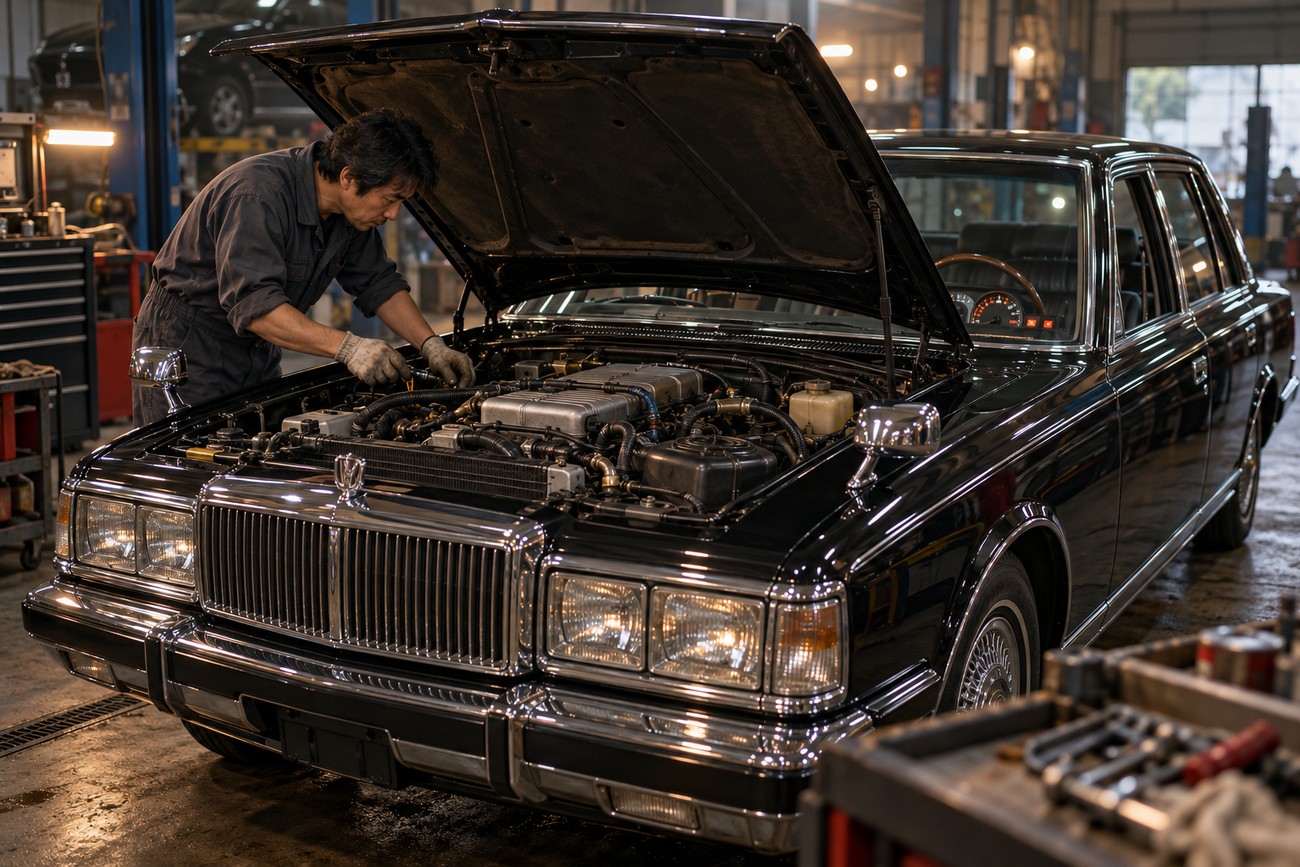
Start with a genuinely cold engine. Confirm the starting behavior, inspect for warning lights, check oil pressure where appropriate, and monitor temperature under load rather than accepting a short drive around the seller’s neighborhood. A quiet V8 at idle proves little about cooling performance or lubricant condition.
Verify the automatic transmission service history and inspect the cooling system for leaks, contamination, hardened hoses, and evidence of overheating. Check accessory belts and related service records. If documentation is vague, treat the missing history as a repair-budget issue rather than as proof that the work was completed.
Operate every electrical adjustment, climate function, audio feature, and rear-seat control. Test seat movement, mirror operation, cabin controls, and any executive equipment fitted to that particular car. Four-seat versions can contain specialized rear-seat components whose failure affects both usability and restoration cost.
Inspect stored cars especially carefully for corrosion, hardened seals, and seized mechanisms. Long storage can matter more than mileage, since a low-odometer car may have spent years deteriorating without regular operation. Order replacement parts only after recording the body code, year, engine, and Japanese part number.
The President myths that lead buyers to the wrong car
The first myth is that every President was a V8 automatic. Early cars also used a 3.0-liter inline-six, and separate manual versions existed. The transmission, engine, and equipment must be confirmed from the individual car rather than inferred from the President nameplate.
The second myth is that every JHG50 produces 280 hp and 451 N·m. Those figures belong to the post-2003 VK45DE version. Earlier JHG50 cars used the 4.5-liter VH45DE V8, so the engine code and production date matter for performance claims, service information, and parts selection.
The third myth is that the JHG50 has no relationship to other Nissan or Infiniti models. Its platform relationship with the Cima creates useful research and parts-search overlap with the Infiniti Q45. That relationship is a starting point for investigation, not permission to install any component with a similar engine or catalog description.
A further claim says the President was Japan’s first car with ABS. That statement appears in a commercial catalog, but official confirmation was not found in the available material. Treat it as an unverified catalog assertion, especially when it is used to establish the specification of a particular year or trim.
Is the Nissan President a sensible executive-limousine alternative today?
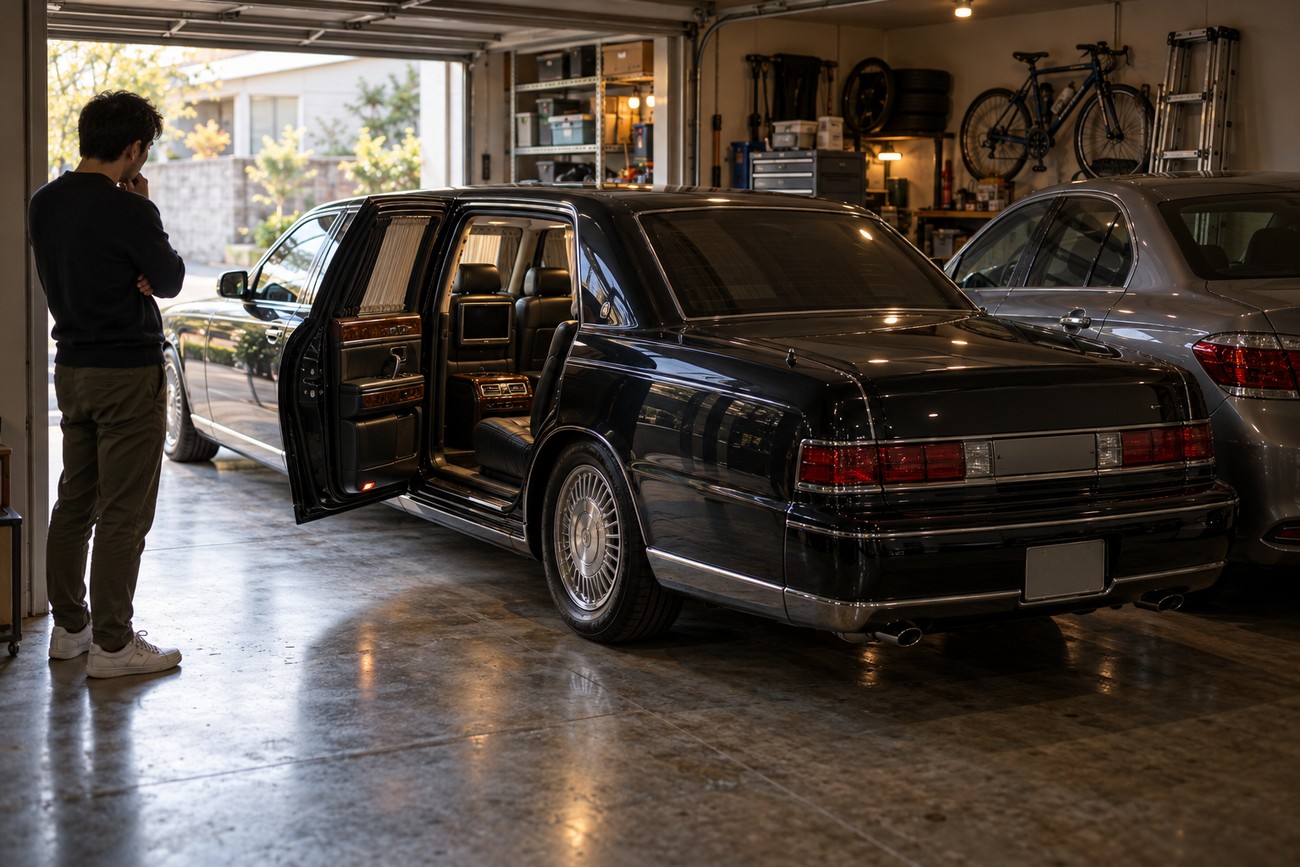
The President makes sense as a specialist purchase for someone who values rarity, formal design, rear-seat character, and V8 refinement. Its appeal is strongest when the car retains unusual executive equipment in working condition. A complete, documented example can offer a distinctive ownership experience that more common Japanese luxury sedans cannot replicate.
Its physical size requires commitment. The long body and substantial mass complicate parking, tight maneuvering, transport, and storage compared with an ordinary sedan. Rear-seat equipment and unique trim increase desirability while also increasing the number of parts that may need specialist restoration.
Low market prevalence reduces liquidity compared with the Celsior, Crown, or Century. Fewer buyers understand the model, fewer workshops know its systems, and fewer owner reports provide a reliable baseline for pricing. A reliable V8 therefore does not make the complete car inexpensive to operate.
The right buyer is someone who can verify condition, document the exact specification, and source parts through Nissan, Cima, Infiniti Q45, and specialist channels. The wrong buyer is someone seeking an inexpensive old Nissan with simple maintenance. The President and related Cima were discontinued in 2010, so preservation and parts planning are now part of the ownership decision.
Frequently asked questions
How can I identify the correct Nissan President parts catalog entry?
Record the exact body code, model year, engine, transmission, and Japanese part number. Add photographs of the old component, its connectors, mounting points, and markings when contacting a supplier. For a JHG50, search Cima and Infiniti Q45 references where useful, then confirm the exact component before ordering.
A catalog match based only on “President” or “4.5-liter V8” is insufficient. Production changes, trim differences, and equipment variations can affect fitment even within the same broad generation.
What does choosing a four-seat Nissan President change for an owner?
A four-seat version usually places greater emphasis on separate rear-passenger equipment and individual seating functions. That can increase trim value and passenger comfort, while also adding specialized controls, upholstery, mechanisms, and electrical components that may require restoration.
Inspect the rear cabin as a system rather than treating the seats as ordinary upholstery. Confirm movement, controls, climate functions, and trim completeness before paying a premium for the layout.
What was the Nissan CEO scandal?
The phrase usually refers to the Carlos Ghosn case, which began with his arrest in Japan in 2018 over allegations involving financial misconduct and disclosure of compensation. Ghosn denied key allegations, was released under conditions, and later left Japan. The case became an international dispute involving Nissan, Renault, Mitsubishi, and Japanese legal procedures.
It is separate from the Nissan President model and does not establish anything about a particular car’s specification, history, or value.
Who are the members of Nissan’s executive team?
Nissan’s executive team changes over time, so a reliable answer requires a date. The current names and roles should be checked against Nissan’s official corporate leadership page or the company’s latest annual report rather than copied from an old vehicle article.
Those corporate appointments have no direct bearing on identifying a President’s body code, engine, trim, or parts catalog entry.







