
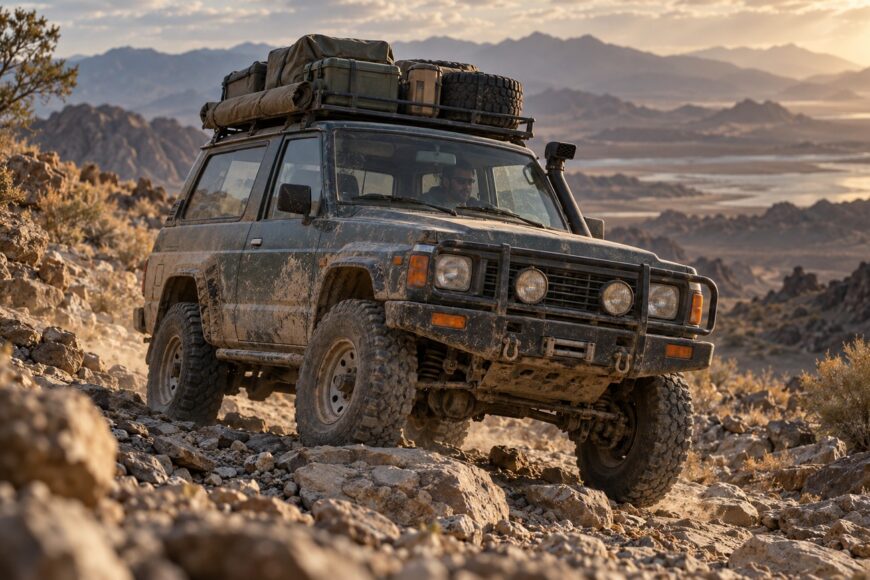
The Nissan Patrol Y60 is a genuine Land Cruiser alternative, built around the same basic overland priorities: a separate chassis, solid axles, selectable four-wheel drive, and mechanical systems that can be repaired far from a dealer. Produced roughly from 1987–1997, it remains attractive because the hardware is familiar, capable, and widely understood by specialist workshops.
Its value depends far less on the badge than on what has survived. Corrosion, hidden frame fatigue, neglected cooling systems, worn steering, and poorly engineered modifications can turn a cheap Patrol into an expensive recovery project. The Y60 is simple and tough, but “unbreakable” is folklore; condition, maintenance, and preparation decide whether it is a useful expedition truck.
- Why the Patrol Y60 Still Rivals Land Cruisers
- The Hardware That Makes It Work Off-Road
- Where the “Unbreakable” Reputation Falls Apart
- Buying and Building a Y60 Without Creating a Money Pit
- Frequently asked questions
- What is bigger, a Nissan Patrol or a Land Cruiser?
- Which Nissan vehicle is equivalent to a Land Cruiser?
- Which car can beat the Toyota Land Cruiser?
Why the Patrol Y60 Still Rivals Land Cruisers
The Y60 uses a ladder frame with solid front and rear axles and selectable four-wheel drive. That old-school layout gives the suspension substantial articulation and keeps major drivetrain components accessible. Many versions also have low range in the transfer case, which helps the truck move slowly over rough ground or control a heavy load on a descent.
For overlanding, the appeal is practical rather than glamorous. Simple electronics, broad parts compatibility, and a large owner community can make the Y60 relatively accessible to repair. A competent workshop can usually diagnose mechanical faults without proprietary equipment, although replacement-part quality varies by supplier and market.
The compromise appears on pavement. A healthy Patrol can feel stable and composed, but it will not match a newer Land Cruiser for refinement, noise control, high-speed manners, or fuel economy. Its weight, square body, and old suspension design become more noticeable with roof gear, a full cargo load, or worn components.
The Hardware That Makes It Work Off-Road
Engine choice depends on the market. The range included inline-six petrol engines and diesels such as TD42 and TD42T, with RB30 and TB42 also available. The TD42 is valued for durable, mechanically simple operation, yet age, cooling neglect, noise, and slow performance remain relevant, especially during highway overtaking with expedition equipment aboard.
Low gearing and solid axles provide the foundation for difficult terrain, but engine output is only one part of the result. Tires, axle gearing, vehicle weight, recovery equipment, and sensible loading often matter more than a modest power increase. A lightly loaded truck with correct gearing can work better than a heavily modified example carrying unnecessary accessories.
Long-distance reliability depends on supporting systems. The radiator, water pump, hoses, wiring, axle breathers, and fasteners deserve attention before remote travel. A diesel that starts easily in the workshop can still overheat under sustained load if the cooling system is restricted or poorly maintained.
Where the “Unbreakable” Reputation Falls Apart
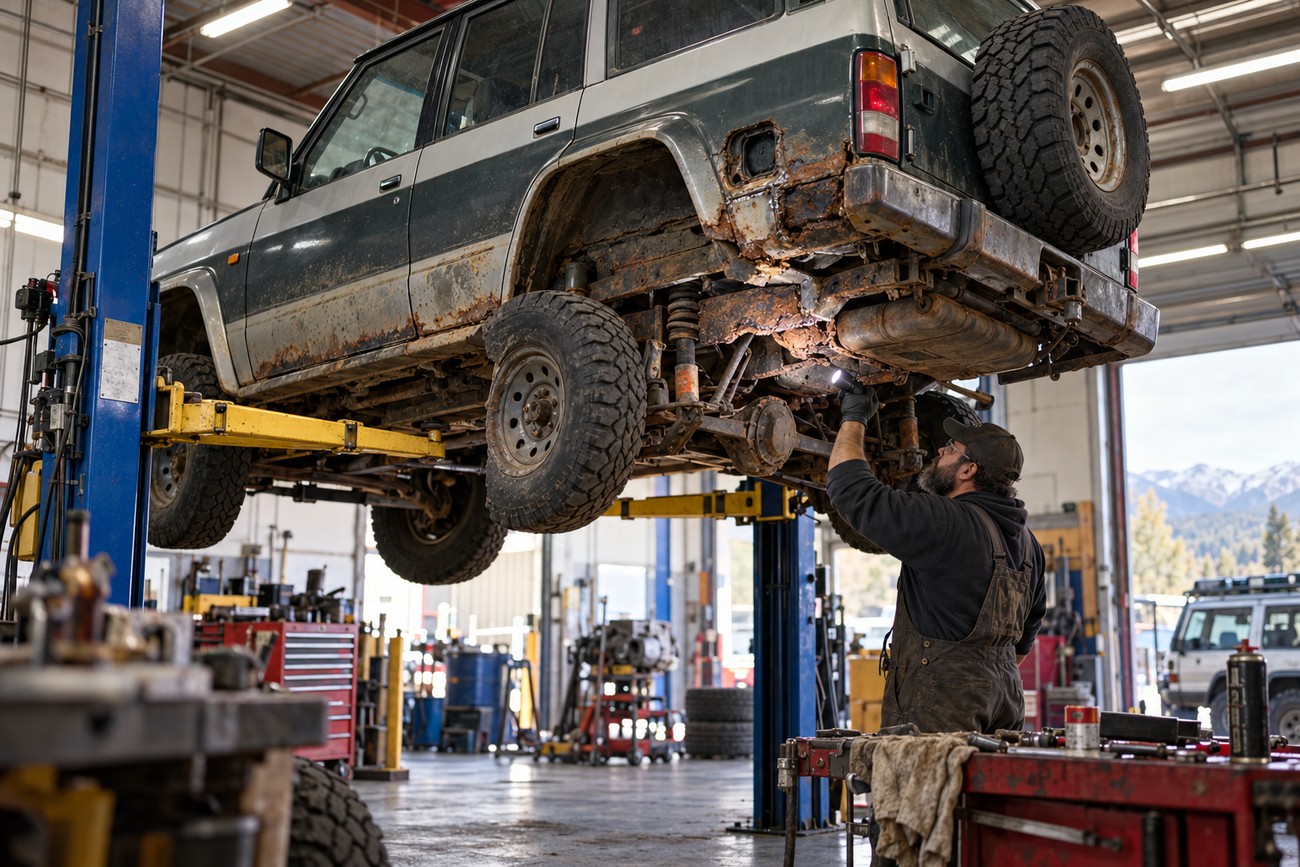
The first inspection should focus on metal, not the engine’s reputation. Common corrosion areas include sills, wheel arches, frame rails, body-to-frame mounts, and the fuel filler neck. Fresh underseal can hide repairs, so the frame, identification plates, drain points, and welding need direct inspection.
Road complaints such as wandering, floating, and pitching often trace back to worn bushes, kingpins, wheel bearings, steering components, or dampers. These faults can make a solid-axle Patrol feel unsafe at speed. They also encourage owners to blame the basic design when the real problem is deferred maintenance.
An inspection should prioritize hidden frame and body corrosion, cooling history, and steering wear before assessing engine condition or aftermarket equipment. A strong engine cannot make an economically unsound shell a good expedition vehicle.
Neglected axles, hubs, transfer cases, and propeller shafts can create expensive work even when the vehicle still drives. Incorrect oils, persistent play, and ignored leaks accelerate wear. Age-related wiring adds another layer of risk, particularly after accessories have been installed without proper protection.
The Y60 is often repairable, not immune to failure. A low purchase price can be followed by repairs exceeding the vehicle’s value, while inconsistent quality among replacement parts makes supplier choice important. The condition of the individual truck matters more than its reputation.
Buying and Building a Y60 Without Creating a Money Pit
Start with an independent inspection of the frame and body. Check the rails, mounts, arches, sills, fuel filler area, identification plates, and every visible repair. Buying from photos or an “almost expedition-ready” description is especially risky because polished paint and accessories can conceal structural fatigue.
Then test the cooling system and inspect the radiator, pump, hoses, and electrical condition. Service the axles, hubs, transfer case, and propeller shafts before adding equipment. Regional access to suitable fuel, mechanics, and reliable parts should influence the engine choice as much as fuel consumption.
Large lifts are a common source of expensive secondary problems. A lift can cause vibration, altered caster, poor propeller-shaft angles, brake-hose issues, and steering instability unless the geometry and supporting systems are corrected. A moderate, correctly set-up truck is generally a better travel tool than a taller vehicle with unknown workmanship.
Keep modifications legal and inspect their safety rather than accepting the seller’s description. Confirm that recovery points, suspension components, wiring, and load-carrying equipment are properly mounted. A healthy, mostly standard Y60 with documented maintenance is often a stronger purchase than a heavily modified example with an impressive appearance.
Frequently asked questions
The Patrol and Land Cruiser comparison changes with generation, body style, market, and condition. Specific vehicles should be compared directly, especially when age and modifications are involved.
What is bigger, a Nissan Patrol or a Land Cruiser?
There is no universal answer because dimensions vary by generation, body style, and market. A long-wheelbase Y60 may be larger in one comparison, while a particular Land Cruiser may be longer, wider, or roomier in another. Compare wheelbase, body width, cargo space, and actual vehicle condition rather than the badge.
Which Nissan vehicle is equivalent to a Land Cruiser?
The Nissan Patrol is Nissan’s direct functional equivalent to the Land Cruiser in the large, body-on-frame off-road segment. The Y60’s appeal comes from older mechanical simplicity and strong off-road hardware, not from identical comfort, equipment, or specifications.
Which car can beat the Toyota Land Cruiser?
No model wins every comparison. A healthy Patrol Y60 can be the better purchase when its frame, body, cooling system, and maintenance history are substantially better than those of a comparable Land Cruiser. That is a condition-based advantage, not proof that the Patrol is universally stronger.







