
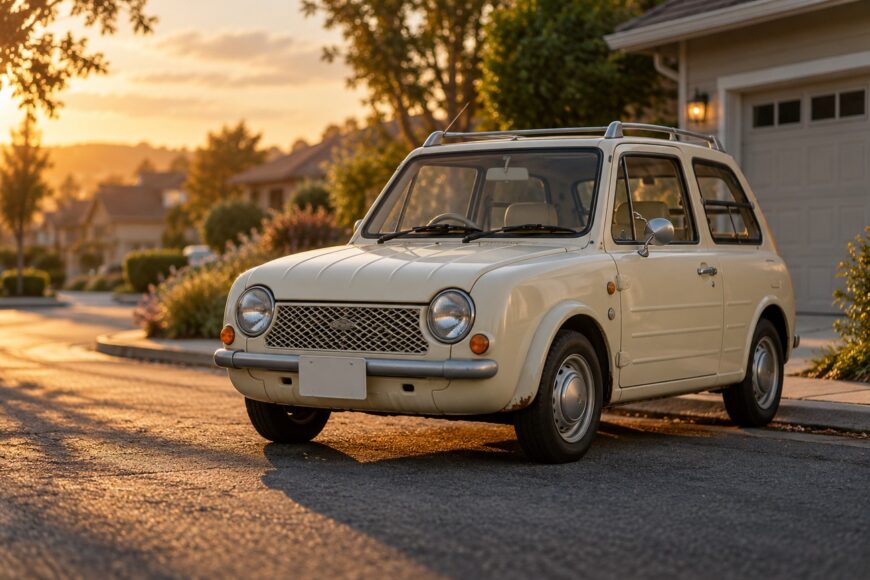
The Nissan Pao pairs charming retro styling with the ordinary, slow, age-sensitive mechanical base of a small late-1980s hatchback. Its friendly shape suggests a tiny classic, while the engineering underneath is closer to a Nissan March than to a sporting coupe. That distinction defines the ownership experience.
The real buying decision is whether to pay for a complete, rust-free example or save on the purchase price and inherit restoration work. This article assesses the Pao as an imported, aging car with specific parts risks, rather than celebrating its styling alone.
- Why the Nissan Pao Still Attracts Import Buyers
- The Pao Is a March K10 Underneath
- What Importing One Really Costs
- Rust Is the Inspection That Matters Most
- Parts, Trim, and the Cost of Being Different
- How It Drives: Charming in Town, Limited on the Highway
- The Buying Mistakes That Turn a Pao Into a Project
- What a Good Example Should Have
- Frequently asked questions
- How much is a Nissan Pao worth?
- How rare is a Nissan Pao?
- What was the top speed of a 1989 Nissan Pao?
- What is the average value of a 1990 Nissan Pao?
Why the Nissan Pao Still Attracts Import Buyers
The Nissan Pao was one of Nissan’s Pike cars from the late 1980s, a group of limited-production models built around deliberately nostalgic styling. Production ran from 1989 to 1991, with approximately 51,000 cars produced. That volume makes the Pao unusual and collectible without making it mechanically exotic.
Its appeal comes from the details: rounded bodywork, external visual cues inspired by older cars, a distinctive cabin, and a shape that stands apart from ordinary compact hatchbacks. The design works especially well in urban settings, where its small dimensions and slow-paced character feel appropriate rather than compromised.
Owners and fans often describe the Pao as the most desirable Pike car. That is an enthusiast and market opinion, not an official ranking, and it varies with personal taste. The broader point is that the Pao has developed a strong identity, which helps preserve interest in good examples.
That identity also creates a trap. Buyers can become focused on the appearance and overlook corrosion, missing trim, or poor previous repairs. The Pao rewards careful selection because its visual charm is easy to imitate with paint, while its original details and sound structure are much harder to replace.
The Pao Is a March K10 Underneath
The Pao uses the Nissan Micra/March K10 platform. Its power comes from a naturally aspirated 1.0-liter MA10S inline-four producing about 52 hp, with front-wheel drive and a choice of a three-speed automatic or five-speed manual transmission.
This specification explains the car’s intended role. The Pao was built for urban driving rather than high-speed performance, with simple mechanical hardware suited to compact streets and everyday errands. It was never engineered to deliver modern highway acceleration or long-distance refinement.
Many basic mechanical and suspension components are related to March K10 parts, which can make routine servicing more manageable than the unusual body suggests. That advantage has limits. Mechanical familiarity does not automatically provide a source for Pao-specific exterior pieces, cabin trim, or sealing components.
The platform relationship also changes how the car feels. Behind the wheel, the Pao is closer to a standard March K10 than to a powerful classic coupe. Buyers who expect dramatic performance from its retro appearance are likely to be disappointed, while those seeking an easygoing city car may find the character more honest.
What Importing One Really Costs
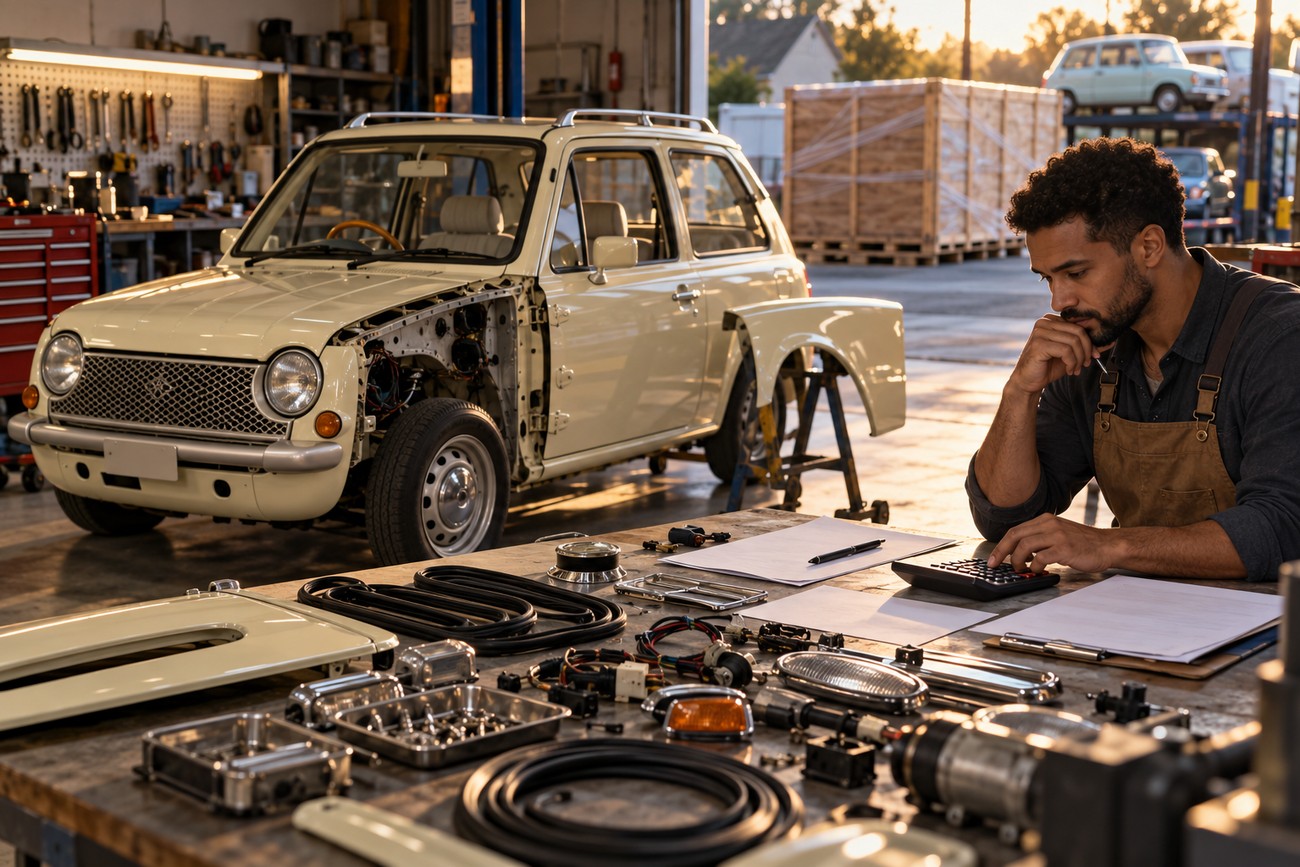
The purchase price is only the first part of an imported Pao’s budget. The landed and usable cost can include the auction or seller price, shipping, customs or import charges, registration, inspection, and repairs required before the car can be used confidently.
Condition has an outsize effect on that calculation. A low-priced car may need bodywork, seals, interior restoration, electrical repairs, and missing trim. Once those jobs are added, the apparent saving can disappear, particularly when rare parts must be sourced from Japan or dismantlers.
Age-related import history creates further uncertainty. A Pao may have spent long periods in storage, received incomplete maintenance, or been repaired before export without a clear record. Registration and inspection requirements also vary by country and may involve lighting, emissions, seat belts, or structural condition.
Build the budget around the car’s condition and completeness rather than the listing price. A more expensive example with a sound body and complete interior may require fewer difficult parts and less specialist labor than a cheaper shell with attractive photographs.
Rust Is the Inspection That Matters Most
Corrosion deserves priority because attractive paint can conceal structural and repair problems. Inspect the sills, wheel arches, lower door sections, hidden cavities, and underside, with particular attention to areas where moisture and dirt remain trapped.
The inspection should include the inside of body cavities and the underside, not only visible panels. Fresh paint, underseal, uneven panel gaps, bubbling around seams, or mismatched finishes can indicate previous corrosion repair. Surface rust is only one possibility; deeper corrosion may be hidden beneath coatings or replacement panels.
Many apparently good examples have been repainted or restored to varying standards. A tidy exterior therefore says little about the quality of the work underneath. Evidence of welding, filler, water ingress, or badly aligned replacement parts should affect both the valuation and the decision to proceed.
Low mileage cannot compensate for a weak body. Completeness and structural condition generally matter more than a low odometer reading because missing Pao-specific parts can be difficult to replace, while a tired mechanical component may be easier to repair through March K10-related sources.
Parts, Trim, and the Cost of Being Different
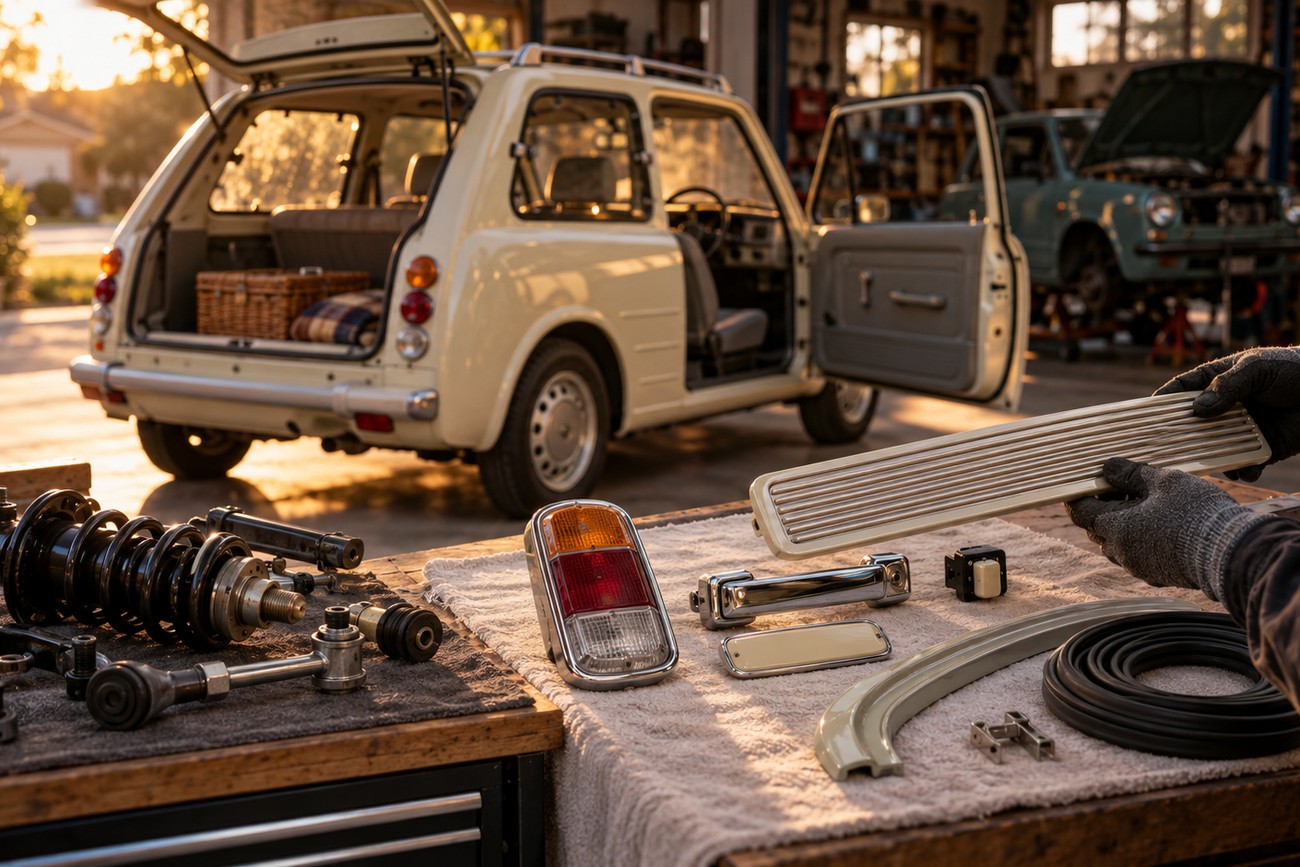
The Pao’s mechanical side is more approachable than its cosmetic side. Many basic mechanical and suspension components are related to March K10 parts, giving owners useful options for routine service and some repairs.
Unique body, exterior, interior, lighting, trim, and sealing parts are substantially harder to source. Body panels, exterior plastic, badges, handles, switches, decorative pieces, light units, and door seals may require Japanese sellers, dismantles, donor cars, or used parts with uncertain condition.
A small missing item can become a disproportionate expense. One damaged handle or unavailable trim piece may delay a restoration, force a search through several markets, or require a compromised replacement. The engine may be straightforward while the surrounding details determine whether the car feels complete.
For that reason, inspect every Pao-specific part before buying. The most expensive ownership problems are often in the body, interior, and rare trim rather than the engine. A complete car with worn but present components can be more useful than a cleaner-looking example missing several original details.
How It Drives: Charming in Town, Limited on the Highway
The 1.0-liter engine and approximately 52 hp favor city driving. In town, the compact dimensions, front-wheel drive, and relaxed pace suit short trips and narrow streets. The car’s visual character and driving rhythm feel most coherent in that environment.
High-speed performance and highway refinement are weak points by modern standards. Acceleration is modest, and the available gearing does not turn the Pao into a relaxed long-distance cruiser. Joining fast traffic requires realistic expectations and more planning than it would in a contemporary compact car.
Limited sound insulation means the cabin can become noisy at speed. Vibration and a sense of strain may also be noticeable, especially when the car is carrying passengers or climbing. These qualities are design and age characteristics rather than evidence of a fault in one particular example.
The Pao’s driving feel is closer to a standard March K10 than to a performance-oriented classic. That makes it appealing as a collectible urban car and less convincing as a vehicle expected to cover modern highway distances every day.
The Buying Mistakes That Turn a Pao Into a Project
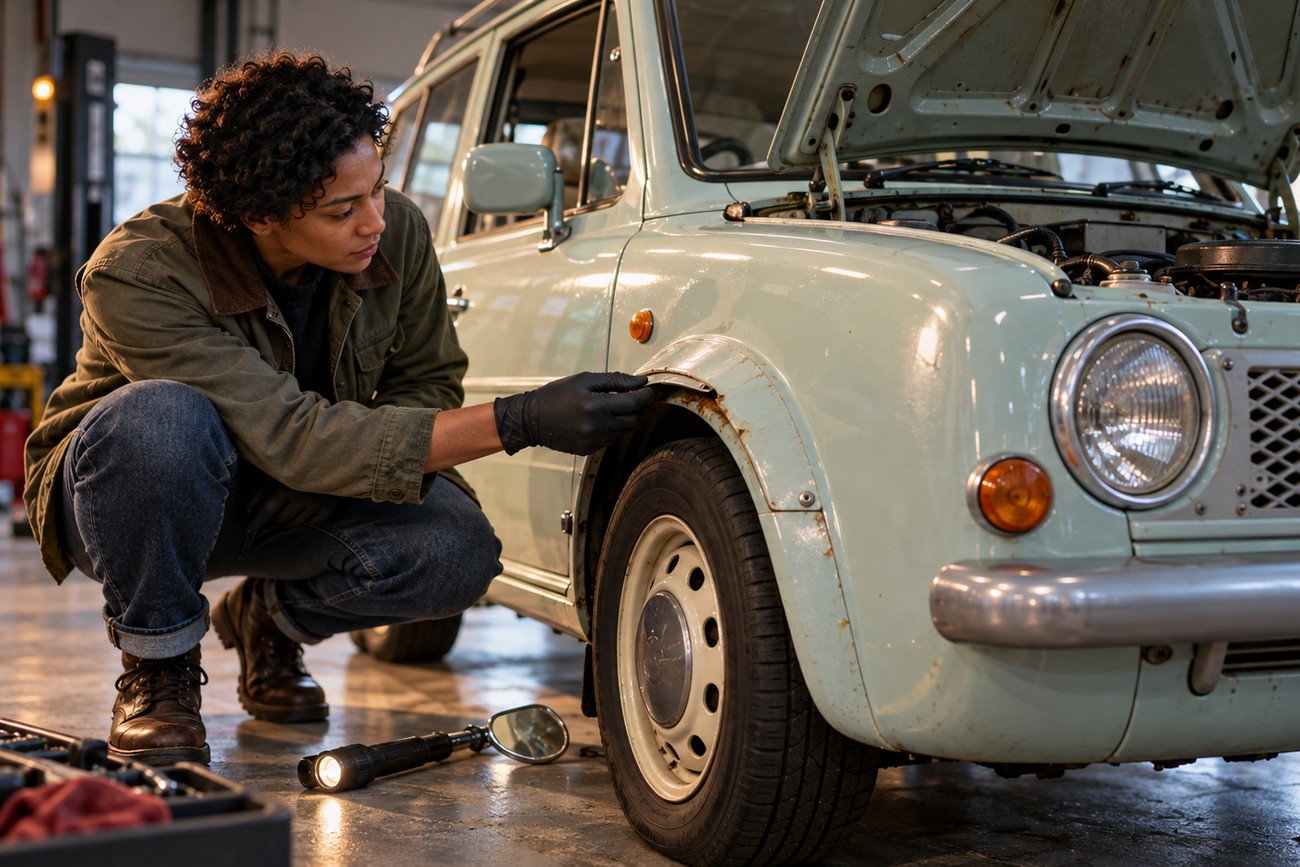
The first common mistake is choosing the prettiest photographs. A photogenic car may still have hidden rust, tired mechanical components, water damage, or a low-quality repaint. Buyers should request underside images, cavity photographs, close-ups of seams, and evidence of the cabin and engine bay before treating an imported example as sound.
The Nissan badge does not guarantee easy access to every part. March K10-related mechanical components can help with basic servicing, while Pao-specific trim, handles, switches, seals, lighting, and body pieces may be unavailable through ordinary parts channels. A vehicle identification number is useful for identification, but it cannot create discontinued stock.
Another mistake is underfunding the interior and electrical systems. Old plastics, seals, buttons, wiring, and switches may need careful restoration even when the engine starts. Long storage can add service needs that are invisible in a short test drive.
Low purchase cost is also frequently mistaken for low-cost ownership. The Pao is small, yet its rare parts and age-related work can make ownership expensive relative to its size. Shipping, customs, registration, inspection, and repairs should be considered before committing to the purchase.
Finally, treating the Pao as a modern daily driver creates avoidable frustration. It is better understood as a collectible urban car with limited practicality, modest highway ability, and a need for planned maintenance. Its strongest use is one that values character and condition over speed, space, and convenience.
What a Good Example Should Have
Start with the body. Look for sound sills, wheel arches, lower doors, hidden cavities, and underside areas, along with evidence that previous corrosion repairs were carried out properly. A complete, structurally sound shell should take priority over an impressive odometer reading.
Next, assess completeness and originality. Original or high-quality replacement trim, intact lighting, present handles, usable seals, and a complete interior reduce the risk of a long parts search. Modifications are not automatically unacceptable, but poorly matched replacements can make future restoration harder.
Documentation is useful when available. A full import or auction history can clarify the car’s condition and previous ownership, although older JDM records may be incomplete or absent. Treat paperwork as supporting evidence rather than a substitute for a physical inspection.
- Check the underside and inner body cavities for corrosion.
- Confirm that rare exterior and interior parts are present.
- Review evidence of maintenance, storage, repainting, and electrical repairs.
- Identify likely March K10-related service parts before purchase.
- Make a sourcing plan for Pao-specific trim, seals, lighting, and body parts.
Mechanical simplicity does not remove age-related service and storage risks. The best example is usually the one with a sound body, credible history, complete trim, and a realistic maintenance plan, even if its mileage is higher than that of a less complete alternative.
Frequently asked questions
The Pao’s value and usability depend heavily on condition, originality, completeness, and location. Production rarity provides useful context, but it does not turn every surviving car into a valuable collector example.
The answers below separate the model’s production history from the condition of individual cars. They also avoid treating unsourced performance claims or a model-year average as reliable buying guidance.
How much is a Nissan Pao worth?
There is no single fixed Nissan Pao value. Condition, corrosion, originality, completeness, documentation, local market, and landed import cost determine what a particular car is worth.
A complete, structurally sound example may justify a substantially different budget from a repainted car with missing trim or unclear repairs. Compare the total cost of acquiring and making the car usable, including logistics, customs, registration, inspection, and parts, rather than comparing advertised purchase prices alone.
How rare is a Nissan Pao?
Approximately 51,000 cars were produced between 1989 and 1991. That makes the Pao a limited-production Nissan Pike car, although production rarity and the availability of good examples are separate issues.
Intact, complete cars are harder to find than the production figure suggests, and individual body or trim parts can be rarer still. A missing badge, handle, seal, or interior piece may create a sourcing problem even when the model itself is known in enthusiast circles.
What was the top speed of a 1989 Nissan Pao?
A precise top-speed figure should be treated cautiously unless it comes from a verified source. The Pao’s 1.0-liter engine, approximately 52 hp, three-speed automatic or five-speed manual transmission, and urban design make high-speed usability more relevant than an unsourced headline number.
Gearing, mechanical condition, load, traffic, road conditions, noise, and driver comfort all affect highway performance. For an importer, the practical question is whether the car suits the intended roads and journey lengths, not whether an unverified specification appears in a listing.
What is the average value of a 1990 Nissan Pao?
A model-year average can mislead because imported examples differ substantially in corrosion, restoration quality, originality, completeness, documentation, and delivery costs. A 1990 Pao with its original trim and sound body belongs in a different buying category from one requiring structural repairs and rare replacement parts.
Assess each car using its condition, local market, and landed cost. The year alone provides limited guidance, while the quality of the bodywork, the presence of Pao-specific parts, and the credibility of the car’s history have a direct effect on ownership risk.







