
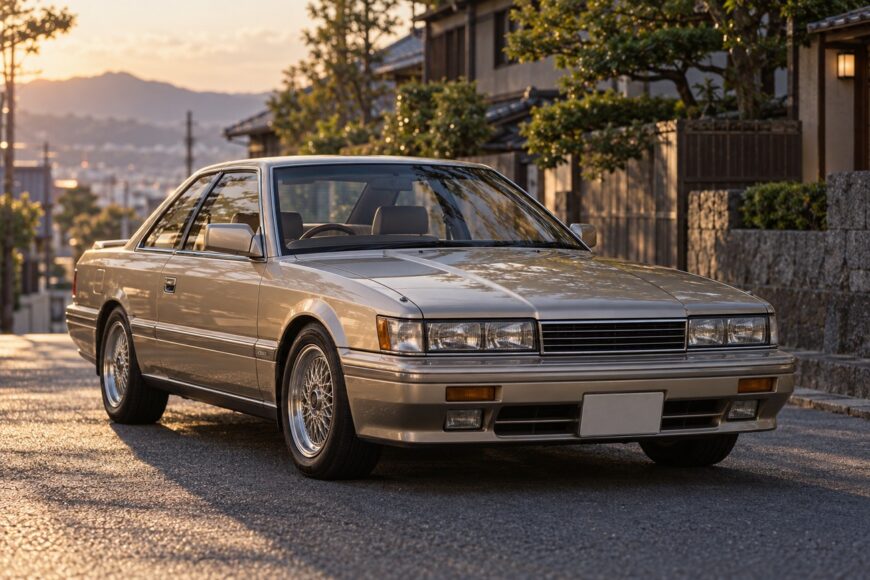
The Nissan Leopard F31 is a rare Japanese luxury coupe with rear-wheel drive, low proportions, and a wider range of specifications than its name alone suggests. Built for buyers who wanted a distinctive two-door car, it can still make a rewarding enthusiast choice when its body and mechanical systems have been cared for.
Age is the deciding factor. A beautiful survivor may drive as convincingly as it looks; a car with equally good paint and trim may conceal rust underneath, intermittent electronics, or an automatic transmission nearing repair. For an F31, condition and evidence of maintenance tell you more than the badge or an advertised horsepower figure.
- What the Nissan Leopard F31 Actually Is
- Nissan Leopard F31 Versions and Core Specifications
- Engines, Performance and the Power-Figure Problem
- Luxury-Coupe Character: Design, Cabin and Road Manners
- F31 Ownership: The Problems That Matter Most
- How to Inspect and Buy a Nissan Leopard F31
- Rarity, Status and the Myths Around the F31
- Frequently asked questions
- What is the average price of a Nissan Leopard F31?
- Why do Nissan Leopard F31 listings show different horsepower figures?
- What makes the F31 different from a more common Japanese coupe?
What the Nissan Leopard F31 Actually Is
The F31 is the second-generation Nissan Leopard coupe, produced from 1986–1992. Facelift-period cars date from August 1988–May 1992. It was a Japanese-market, right-hand-drive model with a front-engine, rear-wheel-drive (FR) layout, a combination that shapes both its appeal and the practicalities of owning one outside Japan.
GF31 and UF31 are body codes associated with the F31 range. They are useful starting points for identifying a car, though a body code alone should never replace a check of its engine and exact modification. Years of repairs and parts swaps can also make the equipment on an individual example differ from what a broad model listing suggests.
The Leopard’s period luxury-coupe positioning matters because it explains why buyers value more than straight-line performance. Its long, low body and varied cabin specifications give it a different character from an ordinary old two-door. At the same time, “F31” does not identify one engine, one equipment level, or one driving experience: compare individual cars on what they actually have and how well it all works.
Nissan Leopard F31 Versions and Core Specifications
The figures below describe the F31 range rather than a single car. Engine, transmission, and performance entries come from listings for different modifications, so confirm a specific example before applying any of them to a purchase or parts order.
| Item | F31 range or catalog listing | What to check |
|---|---|---|
| Body dimensions | Approximately 4695 mm long, 1690 mm wide, and 1370 mm high | These describe the coupe’s overall proportions. |
| Wheelbase | Approximately 2615 mm | Relevant to its substantial, stable feel. |
| Layout | Front-engine, rear-wheel drive (FR) | Inspect the rear driveline as well as the engine. |
| Transmissions | Four-speed automatic and five-speed manual, depending on modification | Confirm the gearbox fitted to the car. |
| Engines | Listings include naturally aspirated and turbocharged 2.0-liter versions, plus 3.0-liter V6 versions | Identify the exact engine before ordering parts. |
| Catalog power range | Approximately 115–255 hp across listed versions | This is a range, not a standard F31 output. |
| Top 3.0 24V listing | Approximately 255 hp; claimed top speed approximately 230 km/h | Neither figure applies to every 3.0-liter car. |
Engines, Performance and the Power-Figure Problem
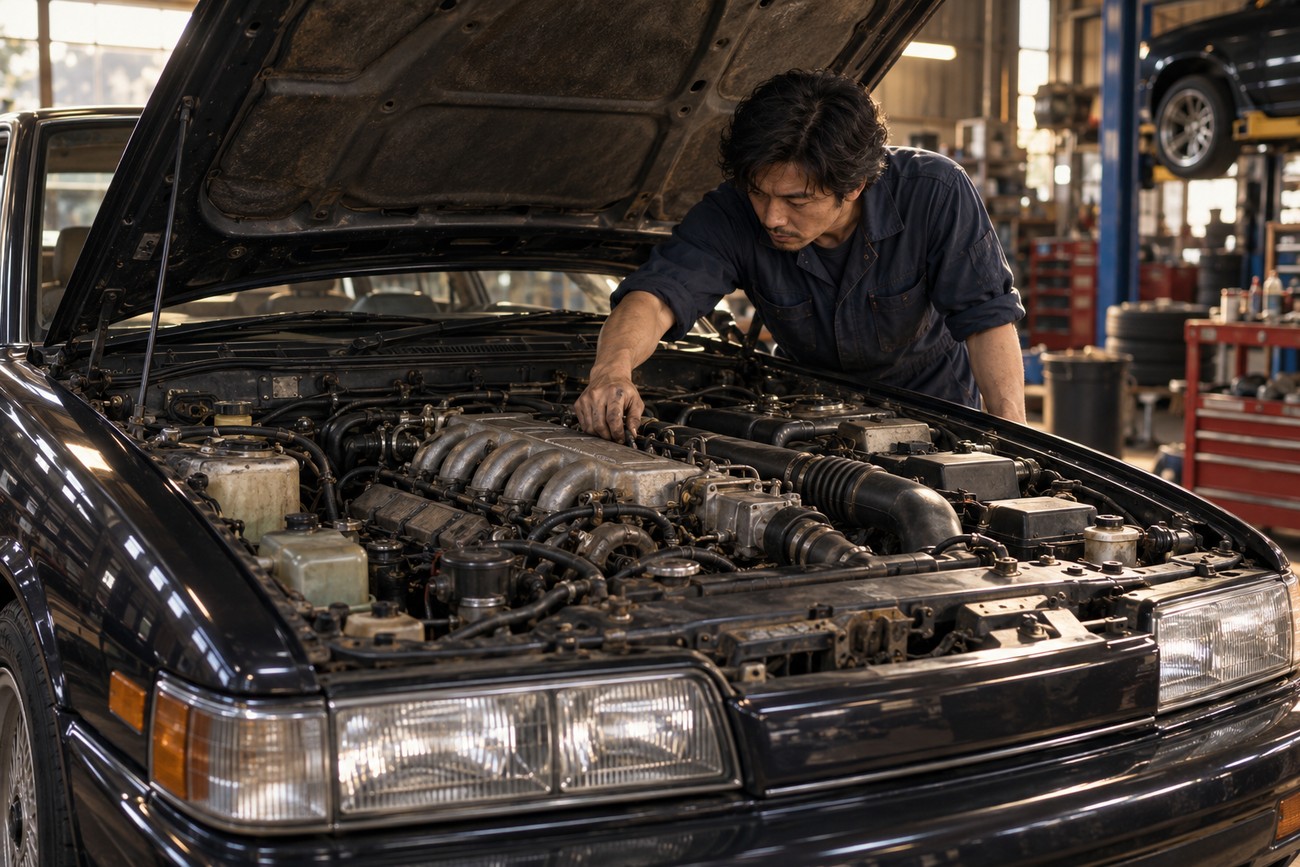
The F31 was offered with substantially different levels of power. Listings cover 2.0-liter and 3.0-liter engines, including naturally aspirated and turbocharged 2.0-liter versions; catalogs variously list approximately 115, 124, or 210 hp for 2.0-liter versions. A buyer expecting the pace of a high-powered car may be disappointed by a lower-output example, even if its body and cabin look similar.
Later versions may use the VG30DE 3.0-liter V6, while F31 listings also include VG30DET references. The VG30DE figures themselves need care: some sources give approximately 200 hp, while others give 210 hp and 260 Nm. Those entries should be treated as descriptions to verify against the exact version, rather than blended into a single definitive specification.
The separate top 3.0 24V listing claims approximately 255 hp and a top speed of approximately 230 km/h. It is a mistake to transfer those numbers to every V6, or to assume that a badge or an online ad settles the engine question. Gearbox choice also changes the feel of the car: four-speed automatics and five-speed manuals appear on different modifications, and their present condition matters more than their catalog promise.
Before buying sensors, intake components, or service items, identify the engine fitted to the car and check its exact modification against vehicle documentation and the parts supplier’s application data. This is especially important if previous work is poorly documented. A generic “Leopard F31” catalog match can leave you with a part intended for another engine or version.
Luxury-Coupe Character: Design, Cabin and Road Manners
At approximately 4695 mm long, 1690 mm wide, and 1370 mm high, the F31 has low coupe proportions without feeling like a tiny sports car. Its approximately 2615 mm wheelbase contributes to the substantial, settled character buyers associate with a luxury coupe, while the rear-wheel-drive layout shapes its handling. A sound example should give you a sense of stability rather than relying on sharp reactions for its appeal.
That impression depends on the parts beneath the styling. Worn suspension components and bushings can make the car feel loose; neglected brakes or unsuitable tires can erode confidence before an engine’s performance becomes relevant. Seals also deserve attention on an older coupe, particularly where deterioration has allowed water into the cabin or encouraged corrosion out of sight.
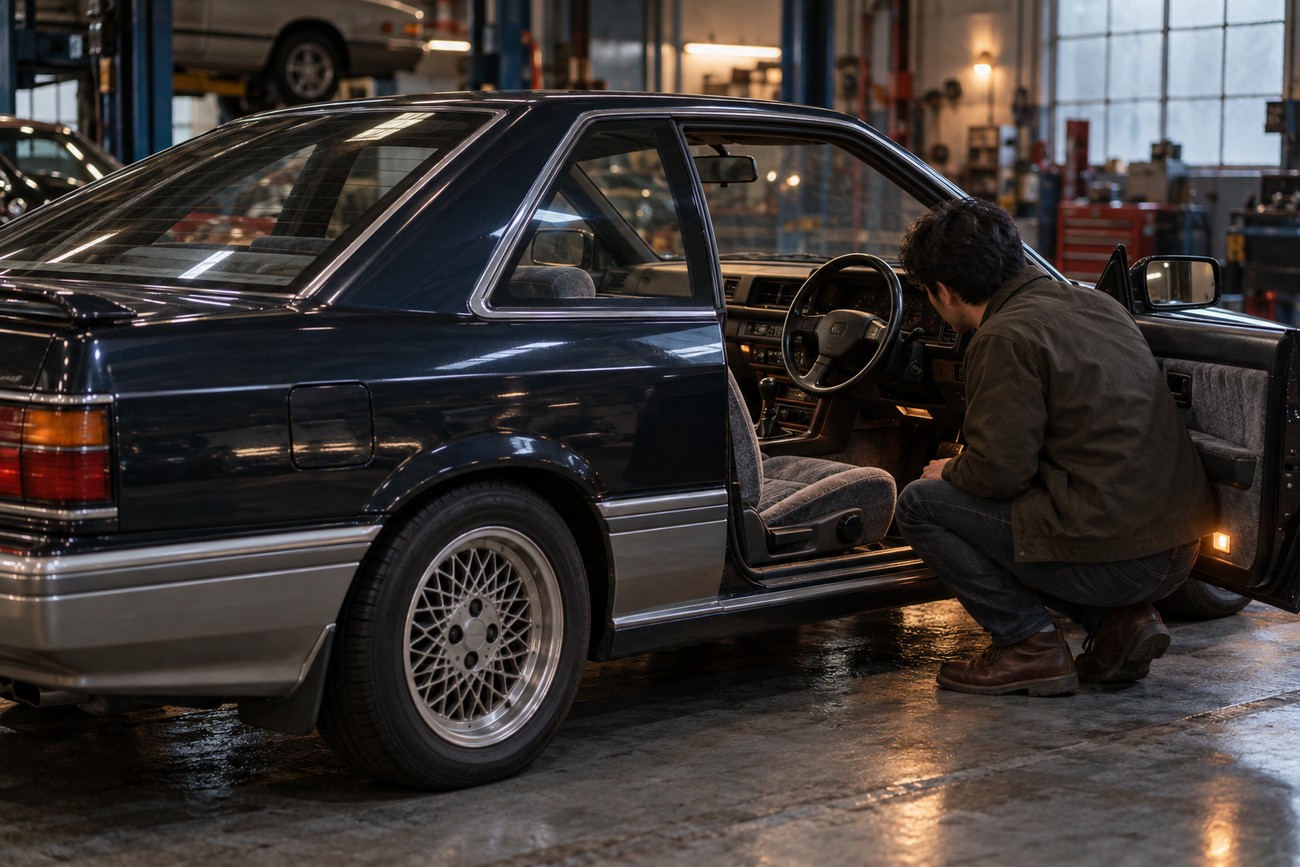
Cabins and equipment vary significantly between versions, so photographs of one well-equipped car are a poor guide to another. Check the fitted controls and equipment in person, including whether they operate consistently. The luxury presentation makes the F31 appealing, although it cannot remove the maintenance needs of a car more than three decades old.
F31 Ownership: The Problems That Matter Most
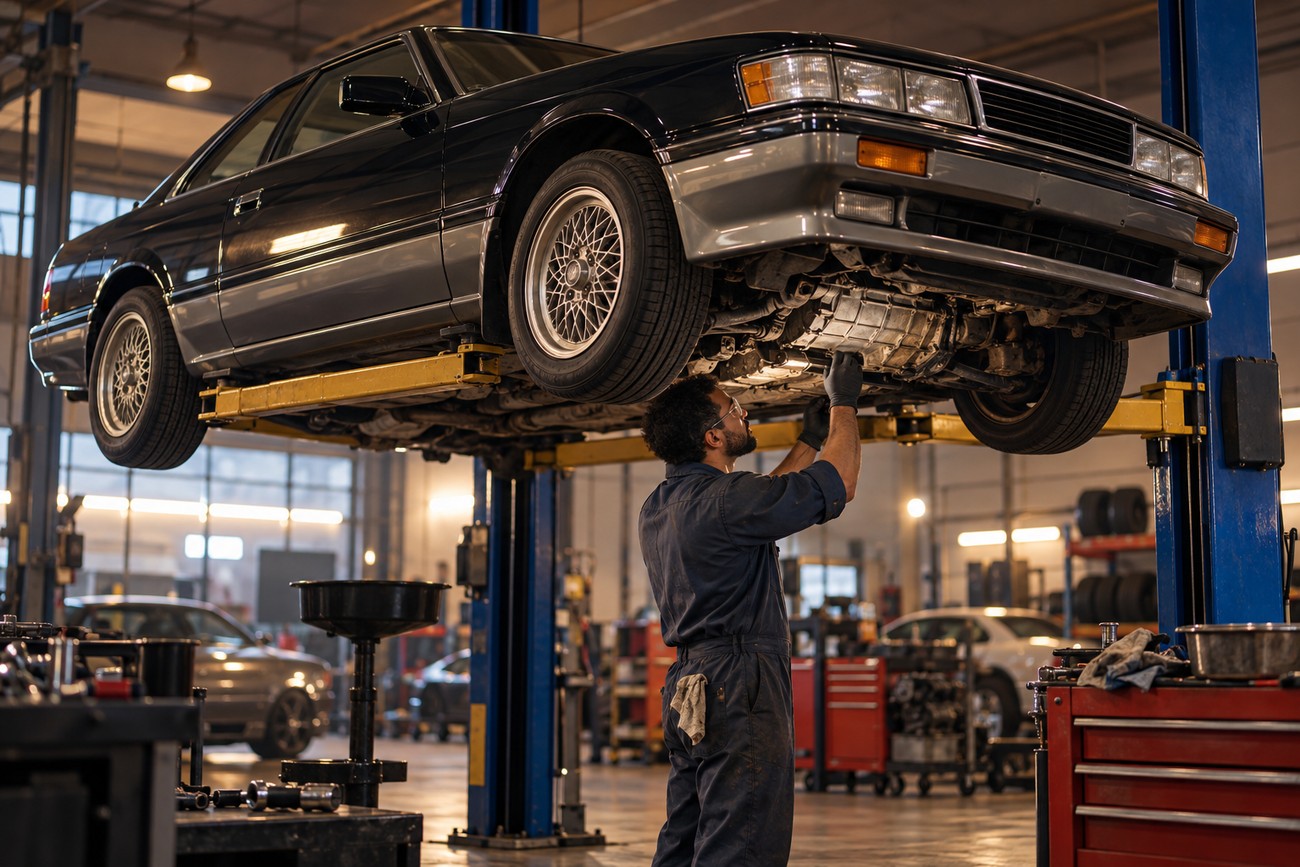
Parts availability is a central ownership constraint. Rare components may require dismantles, specialist suppliers, or import from Japan, adding time and uncertainty to a repair. That changes the cost of neglect: a small fault is easier to live with briefly than a car left unusable while the correct part is located.
An aging four-speed automatic may develop lazy shifts or jolts, and a presentable exterior says little about the health of the transmission. A usable engine or automatic gearbox may be harder to source than a presentable body. Listen for driveline faults and judge how the car drives after it is fully warmed up, rather than accepting a brief demonstration as proof that everything is sound.
Electrical contacts, connectors, and old wiring can cause intermittent faults that resist a quick inspection. Vacuum lines and seals also deteriorate with age, while improvised repairs may obscure the original source of a problem. A car whose equipment works during one viewing still benefits from a careful check of the wiring and the quality of previous repairs.
Corrosion can affect arches, sills, floors, the underside, and body edges or hidden cavities. Fresh cosmetic work is no substitute for examining those areas: paint and trim may improve the first impression while structural or mechanical work remains outstanding. Owners should budget for bringing the whole car into dependable condition, rather than treating restoration as a matter of appearance alone.
How to Inspect and Buy a Nissan Leopard F31
Start underneath. Inspect the floors, sills, arches, body edges, and accessible hidden cavities, looking for corrosion as well as signs of earlier repair. Photographs rarely show enough of these areas, and a clean interior cannot establish that the structure is sound. If access is limited, arrange a proper inspection before making a commitment based on paintwork.
Next, establish what car you are inspecting. Check its documentation and identification details, then identify the fitted engine and exact modification: listings may refer to a VG30DE, VG30DET, naturally aspirated 2.0-liter engine, or turbocharged 2.0-liter engine. Compare that information with service records and visible components, particularly if the car has been restored or modified.
Give the transmission and rear driveline a dedicated road test and inspection. On an automatic, watch for delayed engagement, lazy shifts, or jolts; on a manual, check operation across the gears. Include the differential and driveshafts in the assessment rather than attributing every noise or vibration to the gearbox. A short, gentle drive may miss faults that appear after the car warms up.
Finish with the systems that can turn a usable classic into a prolonged project: wiring and connectors, vacuum lines, cooling, suspension, brakes, seals, and evidence of improvised repairs. Confirm that parts needed for known faults can actually be sourced for that engine and modification; avoid ordering from a generic F31 listing alone. Condition, documentation, and parts access matter more than advertised trim or peak horsepower.
Rarity, Status and the Myths Around the F31
The familiar claim that every F31 is a 255-hp V6 erases much of the range. Catalog power listings span approximately 115–255 hp, and not every F31 used the VG30DE. Figures of approximately 200 hp or 210 hp associated with some VG30DE listings must also be kept distinct from the separate approximately 255-hp top 3.0 24V claim.
The F31 has genuine interest as a rare Japanese luxury coupe, with specification variety that rewards careful identification. A five-speed manual may particularly appeal to an enthusiast who wants a more involved drive and less dependence on an aging automatic. Neither rarity nor transmission choice guarantees a good car, however; maintenance history and the quality of earlier work remain decisive.
Scarcity is therefore a trade-off, not an automatic investment case. It gives a well-preserved Leopard character and makes finding another like it less straightforward. It also narrows the supply of parts, knowledgeable help, and comparable cars, so a neglected example can demand far more work than its polished appearance suggests.
Frequently asked questions
These answers are best used alongside an inspection of the individual car. F31 listings cover different engines and conditions, so broad model descriptions have limited value when you are judging a particular example.
What is the average price of a Nissan Leopard F31?
There is no reliable single average price that captures the condition of this uncommon classic. Judge an asking price by documented rust repairs, engine and transmission health, originality, maintenance records, and the availability of parts for faults you can identify. Compare the work each car needs before comparing its advertised price with a cleaner example.
Why do Nissan Leopard F31 listings show different horsepower figures?
Listings can describe different engines, trims, or markets, and catalogs may record their figures differently. For example, some VG30DE entries show approximately 200 hp, others show 210 hp and 260 Nm, while the approximately 255-hp claim belongs to a separate top 3.0 24V listing. Check the car’s identification details, fitted engine, and documentation before accepting an ad’s figure.
What makes the F31 different from a more common Japanese coupe?
Its period luxury positioning and varied specifications make an F31 more distinctive than a straightforward two-door purchase. Rarity also means fewer easy comparison cars and less predictable access to replacement parts. Buyers who value that character should allow time to identify the exact version and locate specialist or imported components when ordinary parts channels fall short.







