
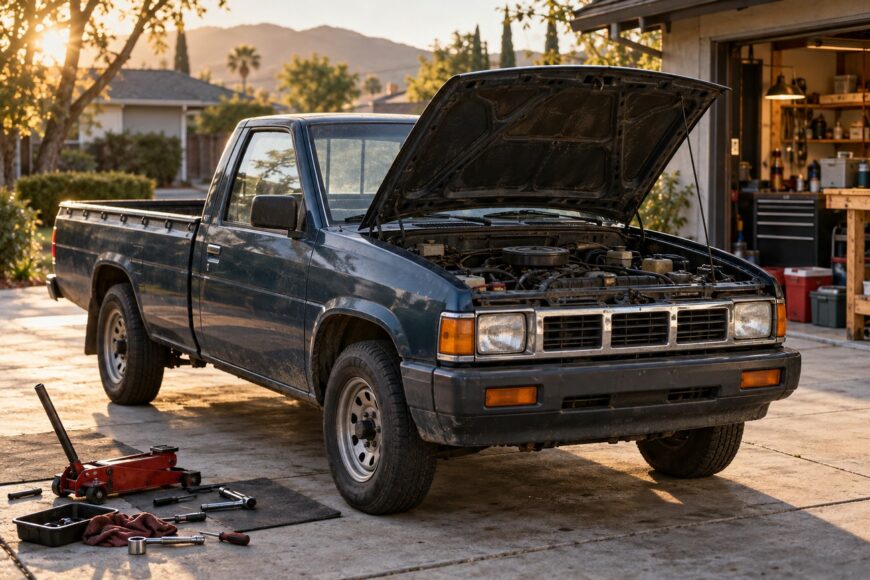
The Nissan D21, commonly known as the Hardbody, earned its reputation honestly: it is a simple, durable compact pickup that can keep working long after newer trucks become expensive to repair. That reputation also creates the main buying risk. A sound engine may still be attached to a corroded frame, worn suspension, damaged driveline, or neglected electrical system.
The useful question is therefore the condition of the individual truck. Climate, road salt, towing, off-road use, maintenance history, and documented repairs tell you more than a low odometer reading or the word “unbreakable” in an advertisement. A surviving Hardbody can be excellent value; a neglected one can consume the purchase price several times over.
- Why the Nissan Hardbody Earned Its Reputation
- D21 Configurations: What Changes by Year and Market
- The Rust and Wear That Decide Whether It Is Safe
- Engines, Transmissions, and 4WD: Test More Than the Start-Up
- The Hidden Ownership Costs Behind the Cheap Parts
- A Buyer’s Inspection Sequence and Final Verdict
- Frequently asked questions
- Which Nissan Hardbody years are considered the best?
- Why is the D21 called Hardbody?
- What is the toughest truck ever made?
Why the Nissan Hardbody Earned Its Reputation
The D21 appealed to owners because its basic design was easy to understand and suited to real work. It was sold in 2WD and 4WD configurations, with Regular Cab and King Cab bodies. That gave buyers a practical choice between a lighter, road-oriented pickup and a more capable truck for poor roads, job sites, or recreational use.
Engine choices included 2.4-liter and 3.0-liter gasoline engines and the SD25 diesel, with exact combinations varying by year and market. The truck’s character came from a relatively straightforward layout, a separate pickup body, and mechanical systems that many independent repair shops could diagnose without specialized equipment. Parts availability can still help keep routine ownership manageable.
Its reputation was built through work and off-road use rather than showroom luxury. A Hardbody that spent years carrying tools may show wear in the bed, springs, steering, and driveshafts while retaining a healthy engine. A truck used gently in a dry climate may have the opposite profile: attractive bodywork with age-related mechanical faults hidden underneath.
“Tough” should mean durable when maintained and repairable when worn. It does not mean immune to corrosion, overheating, neglected fluids, cracked rubber, or failed electrical connections. The present condition and use history matter more than the odometer reputation. A documented, structurally sound truck with higher mileage can be a safer purchase than a polished example with an uncertain past.
D21 Configurations: What Changes by Year and Market
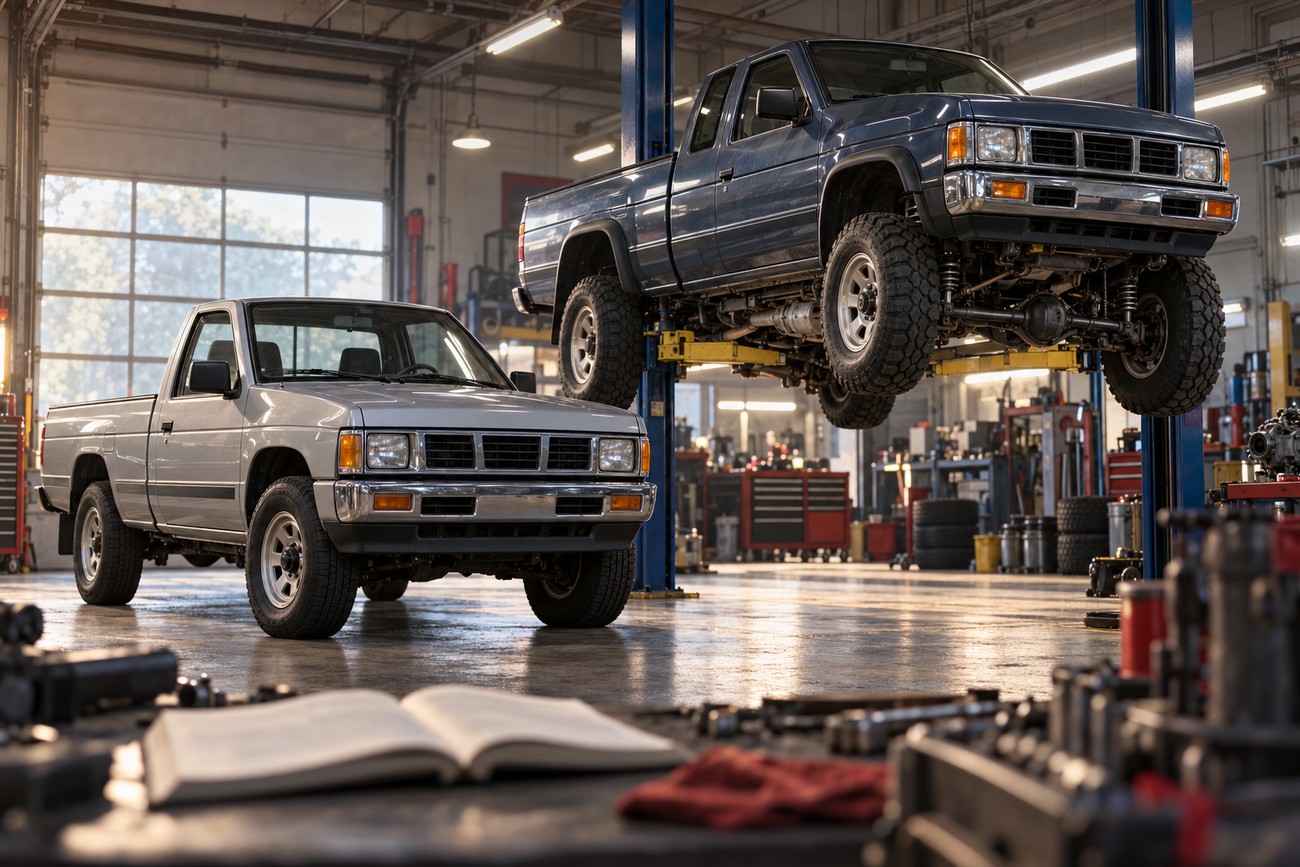
Generic Hardbody advice can mislead because the D21 was not built to one fixed specification worldwide. Engines, transmissions, axle ratios, body styles, emissions equipment, and drivetrain details changed with the year and market. Even two trucks that look nearly identical may require different service procedures or have different towing limits.
Factory manuals provide separate procedures for 2WD and 4WD, including lifting points, towing guidance, and tightening specifications. That matters during both maintenance and inspection. A jack position suitable for one configuration may be inappropriate for another, while a torque figure copied from a different year can damage a component or leave it inadequately secured.
Figures near 2,500 lb appear in some listings, yet there is no universal 2,500-lb rating for every D21. The applicable capacity depends on the year, engine, axle ratio, transmission, hitch equipment, and factory specification. Confirm those details through the VIN and the correct factory documentation before planning regular trailer work.
The same caution applies to replacement parts. A clutch, driveshaft, axle component, brake part, or electrical item may vary by configuration. Verify the truck’s market, production year, drivetrain, and transmission before ordering. The model name identifies the family; it does not replace the vehicle identification number.
The Rust and Wear That Decide Whether It Is Safe
The most expensive buying mistake is judging a Hardbody from the paint outward. Inspect the frame rails, leaf-spring mounts, cab mounts, floors, rocker areas, rear arches, cab corners, and brake lines. Surface rust can be cleaned and monitored, while perforation or weakened mounting metal can affect safety, alignment, and the economics of the entire vehicle.
Salt and moisture can destroy the structure before the engine gives an obvious warning. Pay particular attention around spring hangers and the points where the cab and bed attach to the frame. Brake lines deserve equal attention because corrosion there can create a serious failure risk. A seller’s fresh undercoating or new paint should prompt an inside-out inspection, not automatic confidence.
Frame rails can look solid from below while rust advances inside a boxed section. Probe questionable areas, inspect drain openings, and examine the metal around leaf-spring mounts before accepting any fresh coating as protection.
Heavy use often wears springs, bushings, steering parts, driveshafts, and mounts before it destroys the engine. On 4WD trucks, steering-center and linkage play can make the vehicle wander, produce uneven tire wear, and complicate alignment. Check tie rods, idler or center components where fitted, spring condition, bushings, and wheel movement with the truck safely supported.
A straight-looking body can hide a truck that needs structural welding, suspension renewal, brake-line replacement, and steering repairs. Those jobs may exceed the value of an inexpensive example. Rejecting a rusty truck early is usually cheaper than discovering the extent of corrosion after buying it.
Engines, Transmissions, and 4WD: Test More Than the Start-Up
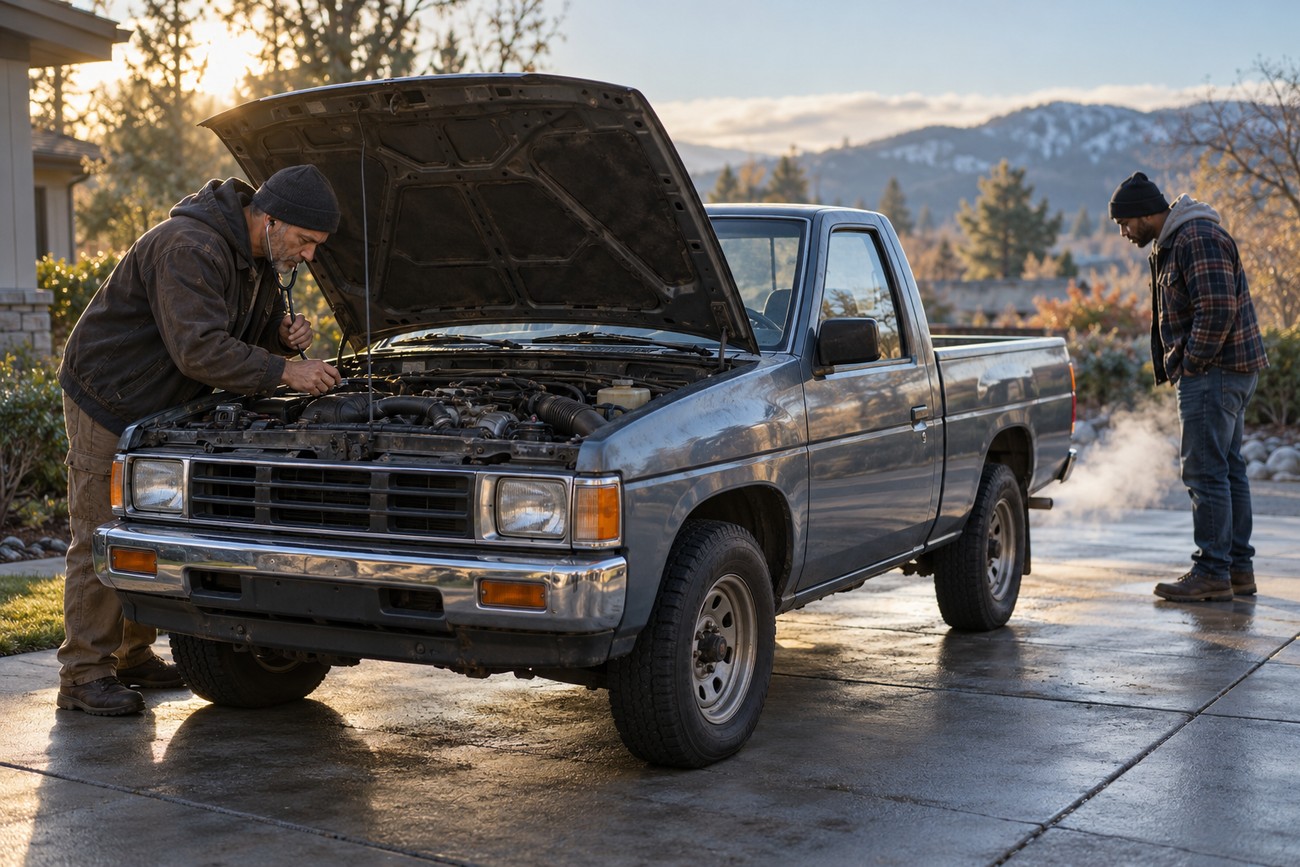
Insist on a genuinely cold start. Listen for timing-chain rattle, belt squeal, uneven running, or smoke after the truck has been sitting. Check for evidence of oil consumption, low compression, low oil pressure, overheating, coolant loss, and previous overheating. A clean idle after the engine is warm does not rule out problems that appear during the first minute or under load.
Owners often regard the five-speed manual as more tolerant of hard use than the automatic. That is useful community experience rather than a guaranteed service-life rule. A manual still needs a careful check for clutch slip, difficult engagement, gear noise, damaged mounts, and impact during take-up.
Some automatic transmissions use a heat exchanger inside the radiator. Inspect the automatic-transmission fluid and cooling system together for abnormal color, odor, or evidence of mixing. Coolant entering ATF can damage or destroy friction materials, even if the transmission initially shifts normally. Automatic overheating and accelerated wear are particular concerns on trucks used for towing.
Four-wheel drive needs a complete road and lift inspection. Test 4H and 4L, then examine the transfer case, front differential, driveshafts, universal joints, hubs, boots, and related mounts. Listen for crunching, clunks, vibration, or impacts while moving under load; a system that engages while stationary may still fail when torque reaches a worn component.
A torn transfer-case lever boot is an easy detail to miss. It can admit dirt and moisture, make range selection stiff, and allow corrosion inside the mechanism. A short drive on a flat, dry road is a poor substitute for inspecting the underside and testing the system under suitable conditions.
The Hidden Ownership Costs Behind the Cheap Parts
Low-cost replacement parts do not guarantee a low-cost repair. Corroded connectors, relays, and fusible links can cause unstable gauges, dim lights, or intermittent starting. Finding the cause may require tracing grounds and power supplies through an aging harness rather than replacing one obvious component.
Interior age also affects ownership. Old plastic and trim can crack from ultraviolet exposure, and replacement pieces may be difficult to match. Heater-core replacement is considered labor-intensive, so a cooling or heating complaint deserves more attention than a quick check of whether warm air eventually appears.
Four-wheel-drive and steering repairs can consume substantial workshop time even when individual parts are affordable. Seized fasteners, worn mounts, damaged splines, and corroded lines turn a simple parts list into a longer repair. This is why a pre-purchase inspection should estimate labor as well as component cost.
An auxiliary automatic-transmission cooler may be practical for some towing use, especially where heat is a concern. It remains an owner recommendation rather than a universal factory requirement. The correct first step is to verify the original cooling arrangement, the truck’s specification, and the planned load before adding equipment.
A Buyer’s Inspection Sequence and Final Verdict
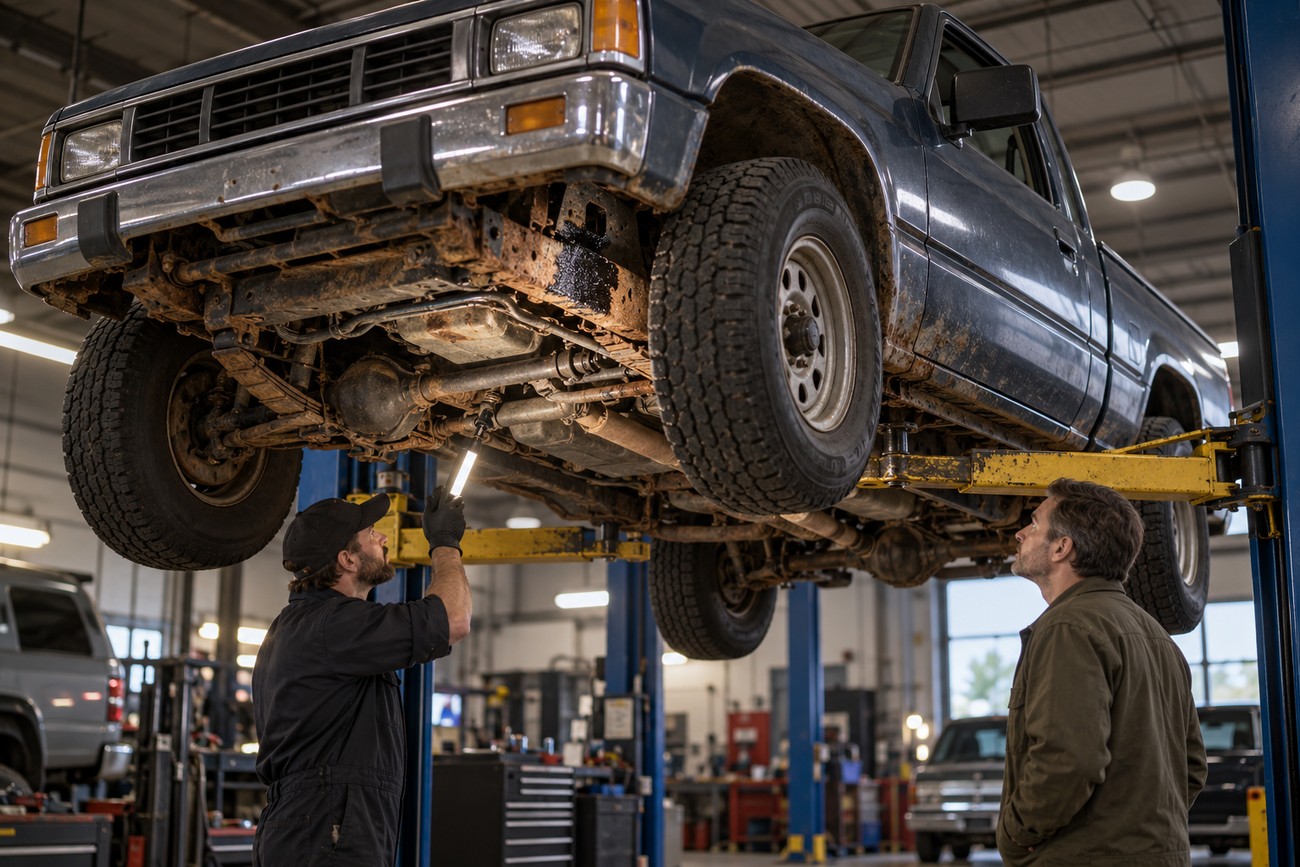
Start underneath, preferably with the truck safely lifted. Inspect the frame rails, spring mounts, cab mounts, floors, brake lines, steering joints, driveshafts, and signs of fresh coating. Use the VIN to confirm the year, market, engine, transmission, axle, and drivetrain before applying any repair, lifting, towing, or torque specification.
Then evaluate the truck cold and hot. Check the start-up noises, exhaust, fluid levels, oil pressure where possible, cooling-system condition, and evidence of overheating. Drive the manual or automatic under load, checking clutch or shift behavior, vibration, braking, steering return, and impacts during gear selection.
On a 4WD truck, test 4H and 4L and confirm that the transfer case, hubs, front differential, driveshafts, universal joints, boots, and mounts behave correctly. A lack of noise on smooth pavement does not prove that the system is healthy. Pay attention to resistance, vibration, and load-dependent knocks.
Check automatic-transmission fluid alongside the radiator and coolant condition. If a trailer is part of the intended use, reject a generic claim near 2,500 lb unless the specific truck’s factory specification supports it. Year, engine, axle ratio, transmission, hitch equipment, and factory documentation all matter.
The best Hardbody is the documented, structurally sound example, regardless of whether its odometer figure is impressive. A clean frame, sensible maintenance history, and limited evidence of abuse are worth more than fresh paint or a legendary mileage claim. Structural corrosion is a reason to walk away; worn service items are a reason to calculate the repair honestly.
Frequently asked questions
The Hardbody name covers many year and market combinations, so broad claims need careful qualification. These answers focus on the details that most often distort a buying decision.
Which Nissan Hardbody years are considered the best?
There is no universal best year independent of market, configuration, maintenance, and corrosion history. A later truck with severe frame rust can be a worse purchase than an older, well-maintained example from a dry climate. Verify the VIN, factory equipment, service records, and structural condition before treating a model year as a recommendation.
One fault summary flags in-tank fuel-pump and speedometer-drive failures on 1990–1997 trucks. That finding should be confirmed against the individual year and truck rather than treated as a universal defect. A pre-purchase inspection remains more useful than selecting a year from a reliability list.
Why is the D21 called Hardbody?
Hardbody is a model identity and reputation associated with the D21’s durable, squared-off pickup character. The name reflects how the truck was perceived as a work-ready, straightforward vehicle. It is not a mechanical guarantee and does not confirm that a surviving truck has a sound frame or healthy driveline.
What is the toughest truck ever made?
No objective universal ranking can establish one toughest truck ever made. The Hardbody’s stronger case is narrower and more useful: its durable, relatively straightforward design can tolerate substantial work when the structure and maintenance are sound.
Safety and ownership value still depend on rust, workload, climate exposure, and repair history. A neglected Hardbody can fail in ordinary age-related ways, while a carefully maintained example can remain a dependable tool for years.







