
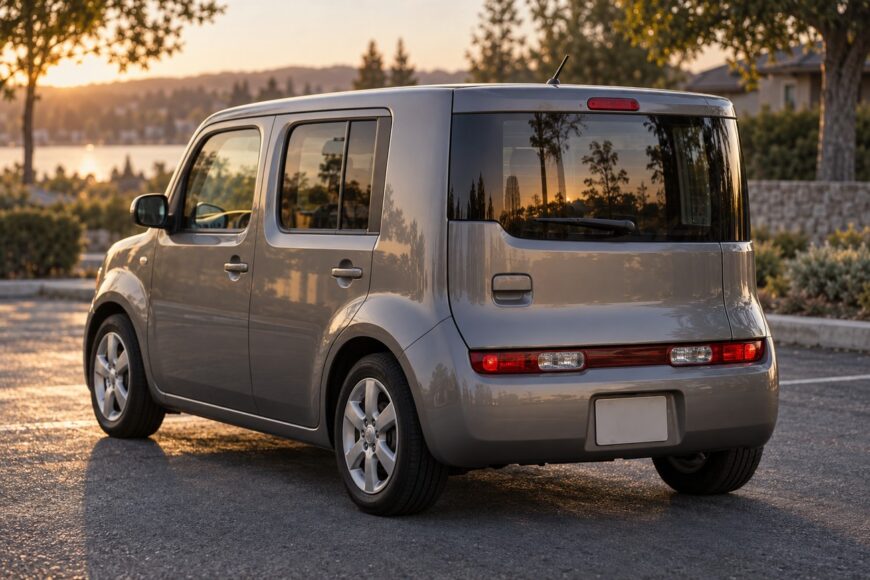
The Nissan Cube’s third-generation rear corner can look as if the glass flows around the body with no conventional pillar in the way. From outside, that impression is one of the vehicle’s defining design tricks. From the driver’s seat, the view is more conventional: the glass opens a diagonal sightline, while bodywork and a substantial rear pillar still occupy part of the view.
Nissan said the arrangement was intended to improve diagonal visibility during lane changes and reversing. That makes the design worth assessing as a driving feature, rather than treating it as styling alone. The useful question is how the glass, pillar, mirrors, and side-opening rear door work together during real maneuvers, without assuming that one unusual window can remove every blind spot.
- Why the Nissan Cube’s rear window looks asymmetrical
- What you can—and cannot—see from the driver’s seat
- The practical trade-offs behind the design
- How to assess the window on a used Cube
- Frequently asked questions
- How much does it cost to replace a Nissan Cube rear window?
- How can I identify the correct replacement glass for my Cube?
- What are some common faults with the Nissan Cube?
- What is the best year for the Nissan Cube?
- Why did the Nissan Cube get discontinued?
Why the Nissan Cube’s rear window looks asymmetrical
The third-generation Cube’s rear glass visually wraps around a rear corner of the body. This creates the distinctive “missing pillar” effect seen in photographs and gives the rear of the vehicle a less symmetrical appearance. Structural rear pillars remain on both sides, however, so the visual impression should not be confused with an absence of supporting bodywork.
In the U. S. left-hand-drive layout, the visual wrap is on the right, and the rear door opens toward the left. This arrangement was adapted for different markets and steering-side layouts, so a Japanese-market Cube or another imported version may present the design differently. Confirm the actual vehicle’s layout before judging its sightlines or parking clearance.
Nissan described improved diagonal visibility during lane changes and reversing as a design goal. The wrapped glass can make it easier to look toward the rear corner during a slow maneuver, especially when the driver is checking an angled approach or backing into a space. Its benefit depends on the driver’s seating position, the size of the pillar, and the amount of dirt or glare on the glass.
From the outside, the corner appears more dramatic than it does inside the cabin. The interior view resembles a broad rear window with an adjoining side section, while the rear pillar remains part of the driver’s visual field. That difference explains why a Cube can look almost pillar-free in a listing photo yet feel more obstructed during an actual shoulder check.
What you can—and cannot—see from the driver’s seat
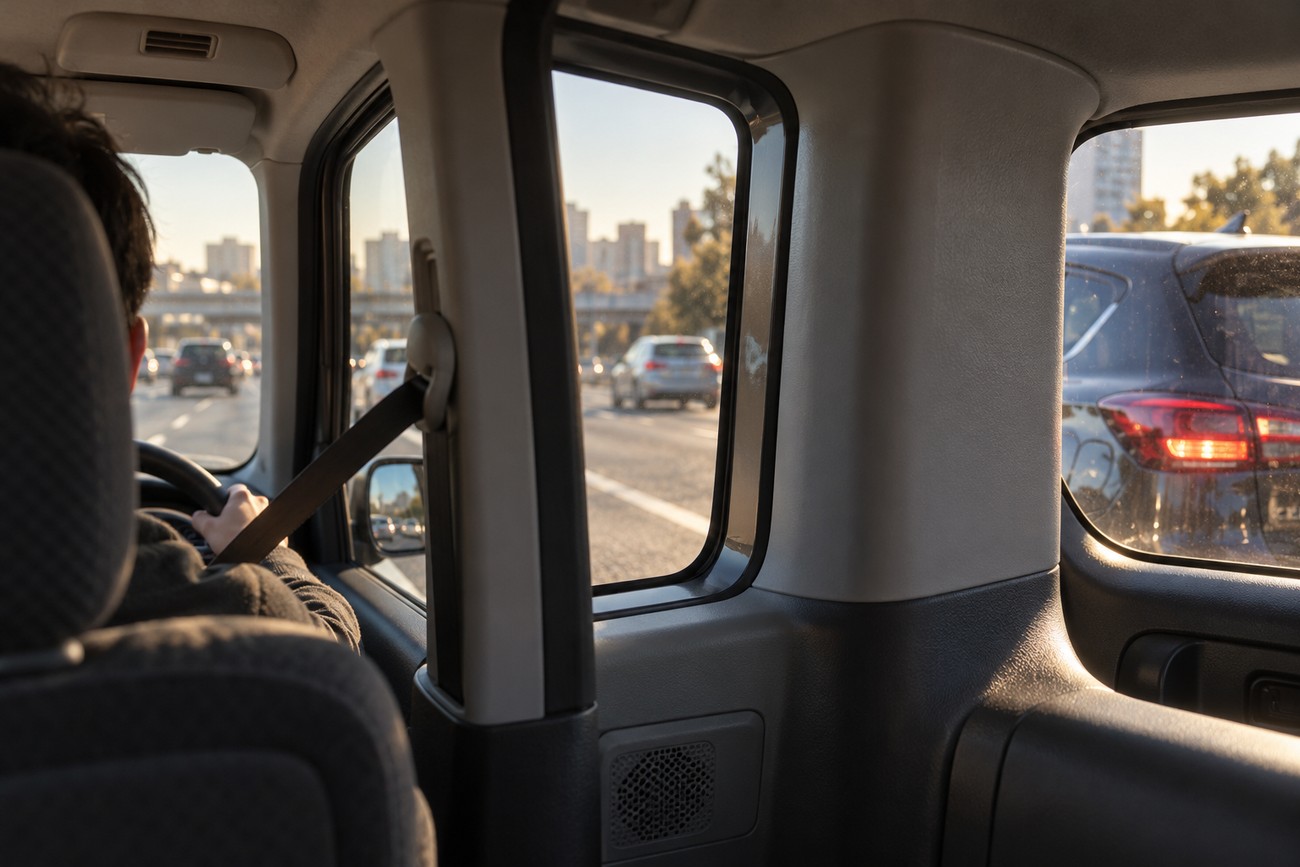
Nissan promoted improved visibility and fewer blind spots, and the window can provide a useful diagonal view during slow reversing. It may help you see toward the rear corner sooner than a conventional, more upright rear window would. The effect is most useful when positioning the vehicle, rather than as a substitute for the full set of checks used during faster traffic movements.
Practical reviews still identified a substantial rear-pillar obstruction. The pillar remains visible from the driver’s seat, and its width can limit the view of a vehicle traveling in the adjacent lane. The asymmetrical window supplements the mirrors and a shoulder check; it does not eliminate blind spots.
Lane changes require more than a glance through the unusual rear glass. Set the mirrors correctly, check the relevant mirror, and turn your head far enough to inspect the area that the pillar and mirror may hide. The right-side wrap on a U. S. left-hand-drive Cube is particularly important to evaluate from the actual driver’s position, rather than assuming the exterior shape tells the whole story.
Reversing presents a different limitation. The window cannot reveal every low area immediately behind the bumper, including objects below the rear-glass line. A rearview camera was not available on every trim, and neither a camera nor the window should replace a slow check of the surrounding space.
The rearview mirror also has a narrower job than many buyers expect. It shows traffic and objects that rise into the rear-window view, while the corner glass helps with an angled side view. Low posts, short walls, and children can remain outside both sightlines, so mirrors, direct observation, and available parking sensors must work together.
The practical trade-offs behind the design
Some drivers notice an unusual perspective in the mirrors and rear glass because the side of the rear door and the surrounding glazing have a curved, bulbous shape. Straight lines and nearby vehicles may appear slightly different from what you expect in a conventional hatchback. A short test drive is the best way to decide whether the view feels natural before buying.
The visibility advantage also depends on clean glass. Dirt on the right-hand corner section can obscure the very area the design is meant to expose, while glare can make a broad pane less useful than its size suggests. Nissan listed an adjustable intermittent rear wiper, so the wiper, washer jet, and defogger deserve attention whenever the rear view seems unclear.
The side-opening rear door creates a separate practical compromise. In the U. S. left-hand-drive layout, it opens toward the left, so a wall, another vehicle, or a post on that side can prevent full access to the cargo area. The door may be easy to use in an open parking space and awkward in a narrow one.
The unusual glass and door shape can also make damage assessment more vehicle-specific. Replacement difficulty depends on the exact glass location, model year, market, fittings, and local parts supply. Obtain a quote using the vehicle identification number rather than assuming that every Cube uses the same glass or that a repair will carry a predictable premium.
How to assess the window on a used Cube

Start the inspection from the driver’s seat, not from the curb. Adjust the seat and steering wheel to your normal position, set the mirrors, and look toward the right-rear corner through the glass. Then perform a shoulder glance and note exactly where the pillar, trim, and door frame interrupt the view.
Test the sightline during a slow reverse in a quiet area. Use the mirrors and look around the vehicle before moving, then check how much of the diagonal area the window adds. Treat the space immediately behind the bumper separately, because the glass cannot show every low obstacle and a rearview camera was not fitted to every trim.
With the vehicle stationary, operate the rear wiper through its settings and confirm that the washer fluid reaches the glass. Check the defogger lines, inspect the corner glass for chips or haze, and look closely at the seals for lifting, gaps, or signs of water entry. A dirty window can hide a maintenance problem as well as reduce the design’s visibility benefit.
Finally, open the rear door as part of the inspection. Leave clearance on its opening side and check whether it can swing far enough to load the items you normally carry. Confirm the camera, sensors, and other equipment on the particular trim and market instead of assuming that a used Cube has the same visibility aids as another example.
Frequently asked questions
Replacement glass and equipment can vary by model year, market, and trim. The questions below cover parts identification, inspection concerns, model-year choice, and discontinuation. For a used Cube, verify the equipment and parts support for the specific vehicle.
How much does it cost to replace a Nissan Cube rear window?
A reliable replacement quote requires the model year, market, exact glass location, and any attached hardware. Rear door glass and adjacent fixed side glass may be different parts, and equipment such as heating elements or wiper-related fittings can affect the job.
Give the installer the VIN and photos of the damaged area before approving work. Local labor rates, glass availability, insurance requirements, and whether trim or seals must be replaced can change the final estimate.
How can I identify the correct replacement glass for my Cube?
Use the VIN, model year, market, and steering-side layout when ordering. Then specify the glass location precisely: rear-door glass or fixed side glass, noting whether the damage is in the corner-wrapping area.
Verify applicable heating elements, tint, antenna features, seals, and wiper fittings against the vehicle’s existing part. Market layouts were adapted, so a visually similar pane from another country may not match the door, body, or equipment.
What are some common faults with the Nissan Cube?
For this rear-window design, inspection concerns include a non-working rear wiper or washer, ineffective defogging, damaged seals, obscured corner glass, and limited rear-door clearance in tight parking spaces. These issues can reduce the practical value of the visibility design.
Also check the pillar obstruction from the driver’s seat, because a clean window does not make the structural rear pillar disappear. Confirm whether the vehicle has a camera or sensors rather than assuming that every trim includes them.
What is the best year for the Nissan Cube?
There is no single best year based on the asymmetrical rear window alone. Equipment, market specification, condition, service history, and the exact trim can matter more than the design feature itself.
Choose the example whose sightline, rear-wiper operation, seals, camera or sensor equipment, and door clearance suit your use. Compare specific vehicles and verify parts availability before treating a model year as automatically preferable.
Why did the Nissan Cube get discontinued?
The rear-window design itself does not establish a single reason for discontinuation. Availability and market strategy can differ by country, so the relevant explanation depends on where the Cube was sold.
For a used-car buyer, the practical issue is support for the individual vehicle: confirm glass availability, door and trim parts, repair coverage, and equipment compatibility in your market. That information is more useful than assuming that the unusual rear glass is either the cause of, or protection from, discontinuation.







