
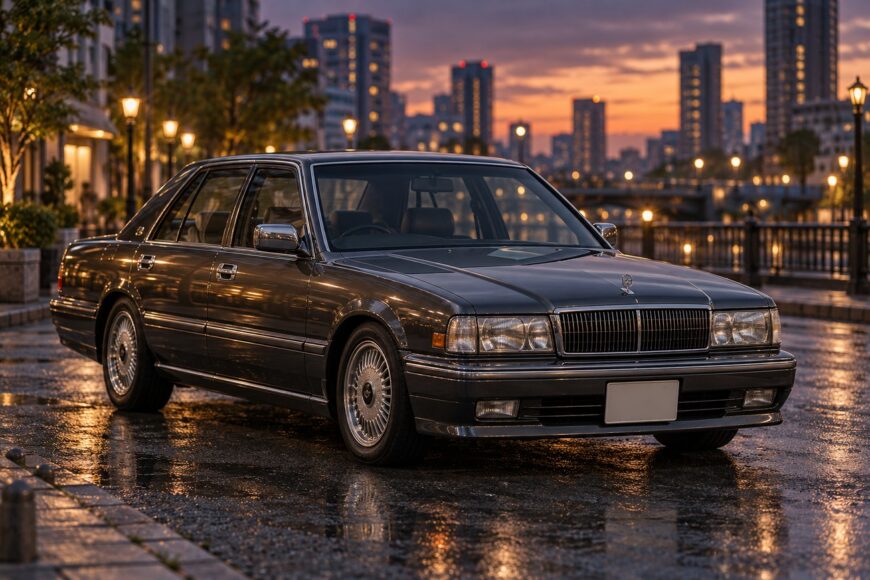
The Nissan Cima delivers a rare combination of Japanese executive-car isolation, rear-wheel drive, and factory-turbocharged performance. The version most enthusiasts seek is a large, formal sedan with a smooth V6, substantial equipment, and the effortless acceleration expected from a high-end car of its period.
That appeal comes with a difficult ownership equation. A desirable turbo Cima is also a 30-year-old Japanese import with corrosion exposure, aging electronics, heat-management demands, and limited parts support. Condition, cooling, transmission health, and originality matter more than the badge or an advertised power figure.
- What the Nissan Cima Turbo Actually Is
- Y31 Nissan Cima Turbo: Core Specification Snapshot
- How the Factory Turbo Hardware Changes the Driving Experience
- The Real Ownership Problems: Rust, Heat, and Old Electronics
- Buying a Turbo Cima Without Buying Someone Else’s Project
- Turbo Tuning Myths and the Safer Reliability Strategy
- Importing and Living With a Right-Hand-Drive Cima
- Frequently asked questions
- What is the American version of the Nissan Cima?
- How much is a Nissan Cima?
- How much horsepower did a 1996 Nissan Cima have?
What the Nissan Cima Turbo Actually Is
The turbo Cima most commonly discussed by enthusiasts is the Y31 Nissan Cima, produced from 1988 to 1991. It occupied a high-end executive position above the Cedric and Gloria in Nissan’s domestic-market range. The car targeted buyers who wanted formal luxury with more presence and performance than a conventional family sedan.
Its relevant engine is the VG30DET, a 3.0-liter turbocharged V6 driving the rear wheels through a four-speed automatic transmission. The layout gives the Cima a traditional luxury-sedan character: quiet forward progress, long-legged cruising, and strong acceleration without requiring constant driver involvement.
Typical Japanese rivals included the Toyota Crown Royal and Majesta. The Lexus LS became a later luxury reference point, although the Cima should not be treated as a direct specification match for every LS or later Nissan model carrying the Cima name.
Later Cima generations used different engines, equipment, and market strategies. A later naturally aspirated or V8 Cima may share the name and luxury brief while having little mechanical connection with the Y31 turbo car. Confirming the chassis code, engine, and production period is essential before comparing prices or performance.
Y31 Nissan Cima Turbo: Core Specification Snapshot
This table describes the factory-oriented Y31 turbo specification. Output figures are approximate and should not be confused with later tuning claims.
| Item | Y31 turbo Cima |
|---|---|
| Production period | 1988–1991 |
| Engine | VG30DET, 3.0-liter turbocharged V6 |
| Factory power | Approximately 255–270 hp |
| Factory torque | Approximately 343–355 N·m |
| Drivetrain | Rear-wheel drive |
| Transmission | Four-speed automatic |
Those figures remain useful for identifying an authentic turbo car, especially when an advertisement combines a factory engine with undocumented modifications. A claimed output far above the factory range requires evidence of fuel-system, boost-control, cooling, and engine-management work.
The Cima’s specification makes sense as a luxury performance sedan rather than a lightweight sports car. Its strength lies in high-speed composure and immediate torque, while its age means that the condition of the supporting systems can matter more than the original engine specification.
How the Factory Turbo Hardware Changes the Driving Experience
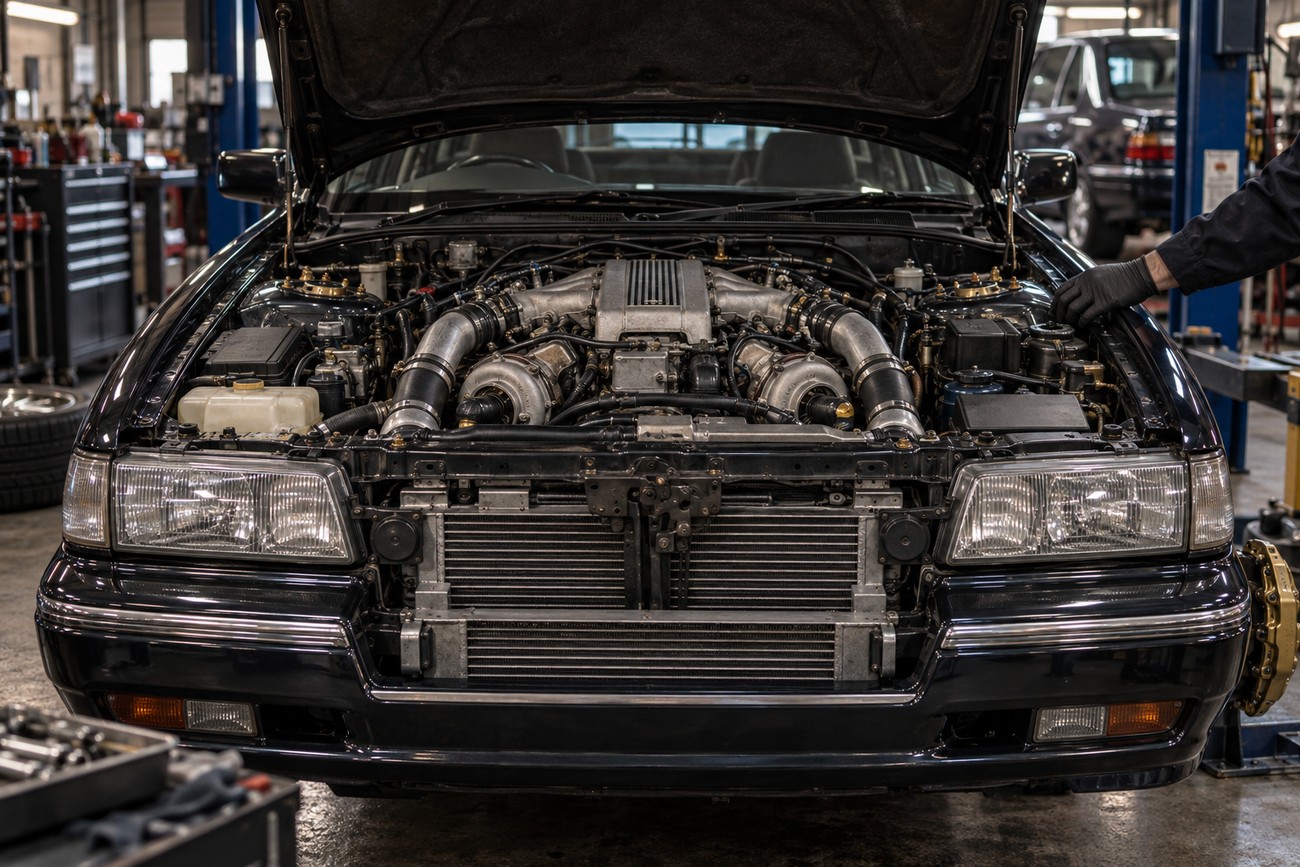
Turbo versions received a strengthened automatic transmission, larger radiators, and an intercooler. They also used stronger brakes and suspension changes that were firmer than those fitted to naturally aspirated variants. These upgrades supported the additional output and reduced the strain imposed by the turbocharged drivetrain.
On the road, the VG30DET gives the Cima effortless executive-sedan acceleration. The automatic transmission suits the car’s character, and the engine can build speed with little drama. The cabin remains more important than the exhaust note or steering feedback, which is exactly what many buyers want from a formal Japanese sedan.
The large body and high mass limit its agility on winding roads. Even with firmer turbo suspension, the underlying platform can feel like a barge when pushed through tight bends. A turbo badge should not be mistaken for the balance or responses of a dedicated sports sedan.
Braking performance deserves particular attention on older cars. Factory hardware can be compromised by seized calipers, degraded hoses, worn pads, or neglected fluid, while additional boost increases the demands placed on the entire chassis. A well-maintained standard car is easier to trust than a modified example with unknown brake and suspension work.
The Real Ownership Problems: Rust, Heat, and Old Electronics
Corrosion is the first inspection priority. Late-1980s and 1990s bodies generally lack the corrosion protection expected by current standards, and imported cars may have spent years in damp or salted environments. Check the sills, wheel arches, underbody, suspension mounting points, and structural rails rather than relying on clean exterior photographs.
Hidden sill corrosion can affect jacking points and structural strength, while rust near suspension mounts can turn an apparently cosmetic problem into a major repair. Fresh underseal is not proof of quality; it can conceal repairs or trap moisture. A lift inspection and probing of suspect areas are safer than judging the underside from an auction sheet alone.
Heat management is the second major concern. Owners report rising coolant and oil temperatures during summer driving and traffic, particularly when the cooling system is dirty, the radiator is tired, or the car has been given more boost. The turbocharger, automatic transmission, and engine all depend on stable temperatures, so a car that runs acceptably on a short test drive may still be unprepared for prolonged heat.
Electrical faults are frequently intermittent. Old control modules, relays, connectors, and wiring can produce climate-control glitches, instrument failures, inoperative cruise control, and slow or failed power windows. Diagnosis may require factory wiring information and patience, since replacing parts at random can become expensive without resolving the underlying fault.
Where fitted, air suspension adds another aging system. Air springs, the compressor, and control components can fail separately or interact in ways that are difficult to diagnose. Treat an apparently low or uneven car as a mechanical inspection issue rather than assuming the ride-height problem is a minor luxury-equipment fault.
Buying a Turbo Cima Without Buying Someone Else’s Project
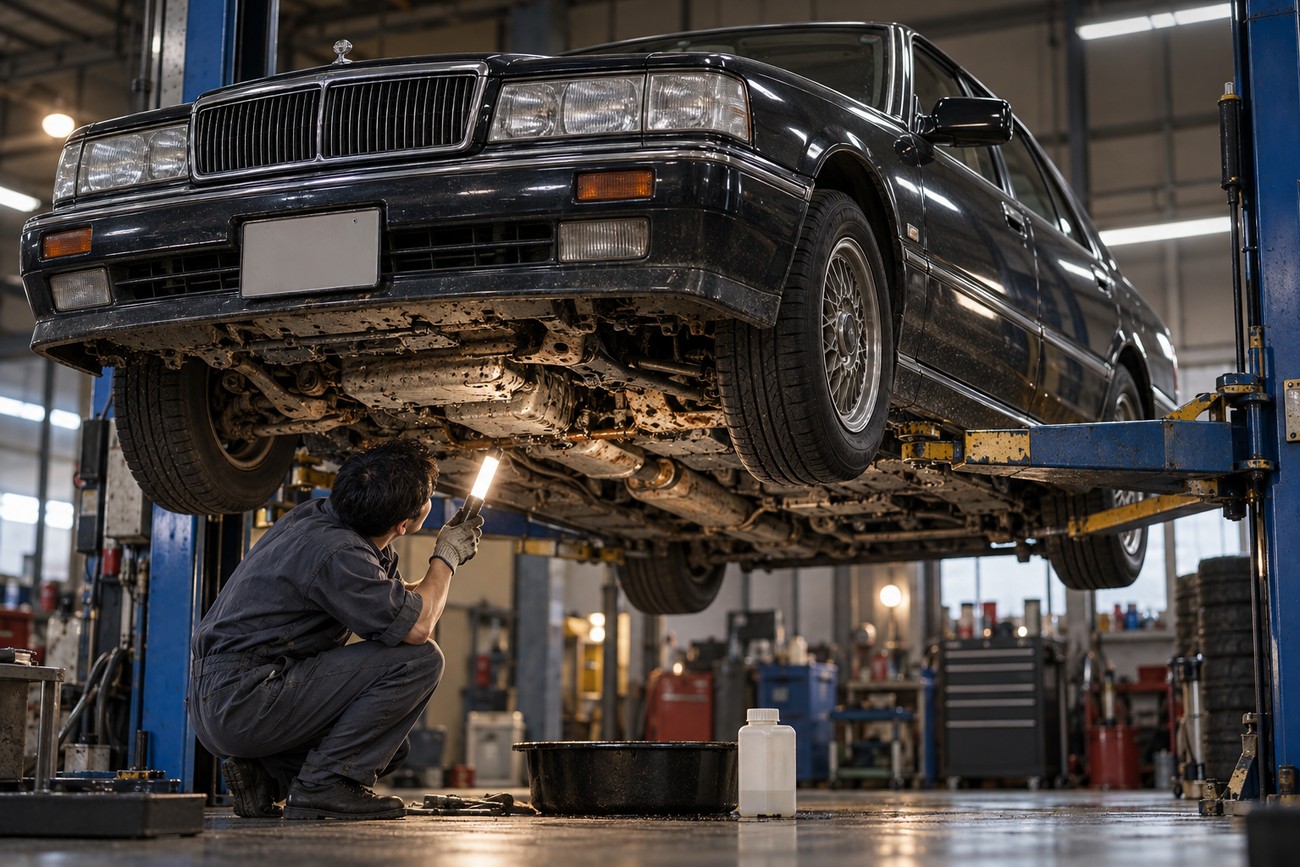
Buying from photographs alone is a poor strategy for a turbo Cima. Many available cars have extensive tuning, engine swaps, rolled-back mileage, or neglected underbodies. Review auction records and service documentation, then arrange an in-person inspection that includes the sills, underside, suspension mounts, structural rails, and evidence of previous accident repair.
The automatic transmission needs its own assessment. Check shifting behavior when cold and hot, look for delayed engagement or flare between gears, and inspect the automatic-transmission fluid for abnormal color or smell. Service history matters because a car that feels acceptable during a brief drive may still be approaching an expensive transmission repair.
Apparently usable hoses, bushings, and cooling-system rubber deserve early replacement because age can make them unreliable without obvious visual damage. Verify the automatic transmission and hidden sill corrosion before spending on cosmetic restoration or additional boost.
Inspect the cooling system, turbo plumbing, intercooler, boost-control hardware, and signs of improvised wiring. A factory-boost or mildly modified car with documented maintenance is generally a safer foundation than an aggressively tuned example with unclear calibration. Originality also helps future diagnosis, especially when replacement electronic components are scarce.
A low purchase price can conceal months of parts hunting. Body panels, lighting, interior trim, and rare electronic components may require Japanese dismantles, international shipping, and long waits. Mechanical parts can sometimes be sourced through Cedric, Gloria, or other Nissan applications, but interchangeability should be confirmed before ordering.
Turbo Tuning Myths and the Safer Reliability Strategy
Some tuners claim that a stock VG30DET can produce approximately 320–330 hp without internal engine work. That remains a tuner opinion with limited broad supporting evidence, so it should not be treated as a guaranteed safe limit for every engine. Age, compression, cooling condition, fuel delivery, calibration, and previous abuse change the risk substantially.
The claim that a stock VG30DET easily supports 400-plus hp is an unreliable basis for a purchase or build plan. Increasing boost without wideband-lambda monitoring, mixture control, and temperature management can lead to detonation and serious engine damage. The same power increase also adds stress to the transmission, cooling system, brakes, and aged driveline components.
A sensible reliability strategy starts with clean radiators, quality oil, sound hoses, verified sensors, and stable coolant and oil temperatures. Replace aged hoses, bushings, suspension rubbers, and other rubber components even when they look usable. Preventive work is especially valuable on a car whose failures can leave you waiting for parts from another country.
Some owners deliberately reduce boost and power to preserve engine, turbocharger, and transmission life. The Cima remains a quick luxury sedan at conservative output, and restrained tuning usually produces a more usable car than a headline dyno number. Factory boost, careful calibration, and documented maintenance are stronger buying signals than a large turbocharger or an impressive parts list.
Importing and Living With a Right-Hand-Drive Cima
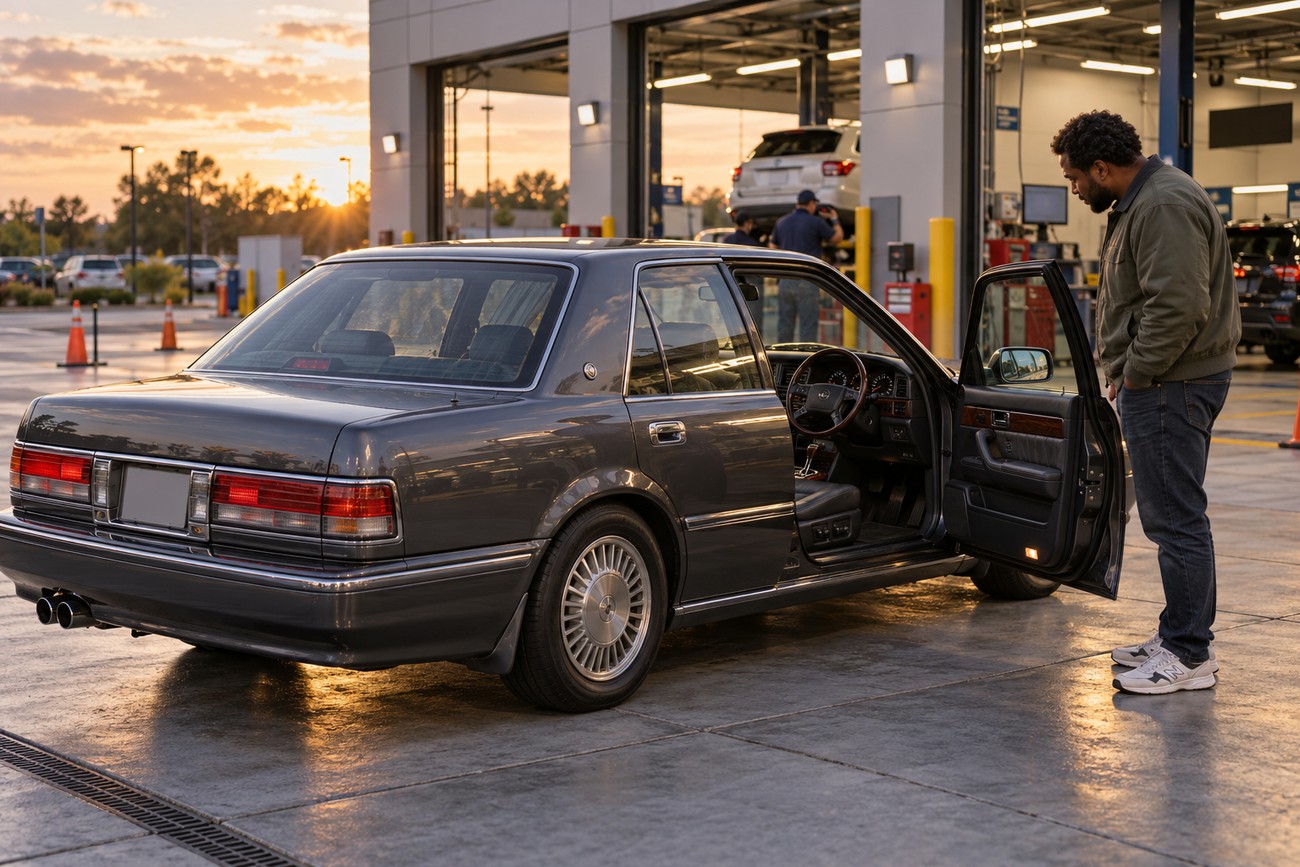
The Cima was primarily a Japanese domestic-market model and was scarcely sold officially in Europe or the United States. Right-hand-drive examples reach other markets through import systems that vary by country. In the United States, the 25-year rule can provide an import route where applicable, subject to registration, emissions, safety, and state requirements.
Right-hand drive changes daily use. Parking garages, narrow streets, toll roads, and overtaking can demand more concentration, especially in European cities designed around left-hand-drive traffic. The Cima’s size adds another layer of effort, and repeated short urban trips can make the car tiring rather than relaxing.
Owner-reported fuel consumption for the VG30DET is approximately 13–15 L/100 km in mixed driving and 18-plus L/100 km in active city driving. Fuel is only one part of the budget: taxes, insurance, import charges, specialist labor, parts shipping, and cooling or transmission work can all be substantial.
Registration and inspection authorities may apply local emissions or equipment rules, while insurers can be cautious about valuing a rare JDM import. For many owners, the Cima works better as a weekend or collection car than as a daily urban vehicle. That use also gives the owner more time to address small electrical, cooling, and corrosion problems before they become immobilizing failures.
Frequently asked questions
What is the American version of the Nissan Cima?
The closest American-market relationship is the Infiniti Q45, which shared Nissan’s large luxury-sedan family and was sold in the United States. It should not be assumed to have the same engine, trim, equipment, or factory-turbo specification as a Y31 Nissan Cima.
The Japanese Y31 turbo Cima used the VG30DET, while American-market Q45 models followed a different specification and engine strategy. Treat the Q45 as a market-related reference rather than a direct mechanical substitute for a turbo Cima.
How much is a Nissan Cima?
There is no meaningful single global price for a Nissan Cima. The total cost depends on purchase condition, import and registration charges, corrosion repair, specialist labor, parts availability, and the condition of the cooling system and automatic transmission.
A cheaper car can require more money and waiting time than a better-preserved example. Include inspection, transport, rust repair, deferred rubber replacement, electrical diagnosis, and possible Japanese dismantler parts in the budget before comparing advertised prices.
How much horsepower did a 1996 Nissan Cima have?
A 1996 Nissan Cima belongs to a later generation than the 1988–1991 Y31 turbo commonly discussed by enthusiasts, so the Y31 VG30DET output range should not be applied automatically. The correct figure depends on the later car’s engine, trim, and market specification.
Identify the chassis code and engine before quoting horsepower. Model year alone does not establish whether a 1996 Cima has the same turbocharged V6, a naturally aspirated engine, or another later-generation powertrain.







