
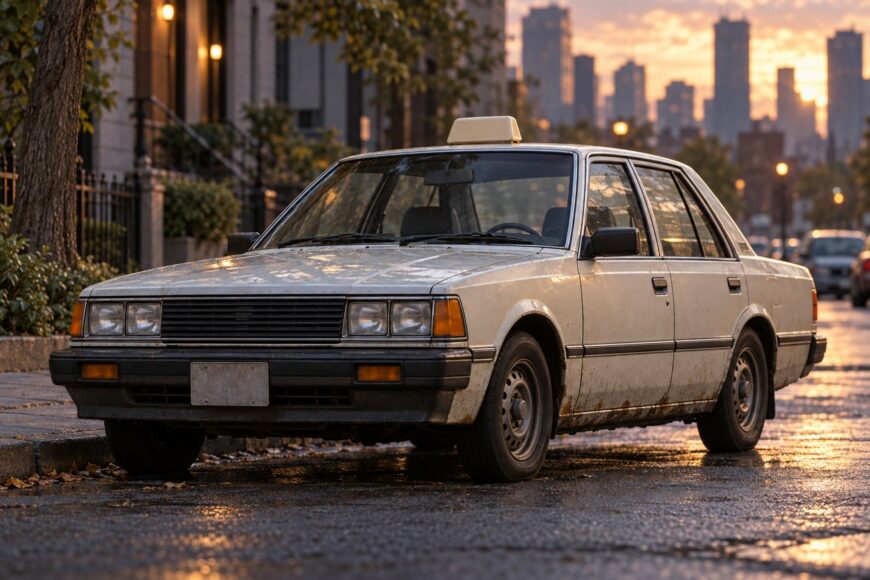
The Nissan Bluebird 910 earned a reputation as a hardworking sedan, yet fresh paint on a surviving car can conceal decades of wear. Its appeal to taxi operators was practical: a rear-wheel-drive layout, a live rear axle in the sedan, and straightforward suspension made a working car easier to keep on the road. Those strengths say little about the condition of a particular car now.
Produced from 1979 to 1983/84, depending on the market, the 910 also existed well beyond taxi ranks. Most former taxis were ordinary sedans, while the wider range included more distinctive body styles and engines. For a buyer, the useful question is whether a car’s structure and mechanical condition still support the durability its design once offered.
- Why the 910 made sense as a taxi
- The ordinary sedan behind the reputation
- What long shifts felt like from the driver’s seat
- Where taxi toughness meets old-car reality
- How to judge a surviving 910 before buying
- Two myths that distort the Bluebird 910’s story
- Frequently asked questions
- How much does a Nissan Bluebird 910 cost today?
- What replaced the Nissan Bluebird 910?
- How can you tell whether a Bluebird 910 was originally used as a taxi?
Why the 910 made sense as a taxi
A taxi spends much of its life carrying passengers over roads its driver cannot choose. The rear-wheel-drive 910 sedan’s live rear axle and straightforward suspension suited that work because their layout was familiar and repairable. On rough roads, the ability to diagnose wear and replace conventional components mattered more than sporting handling.
Simple petrol engines gave operators another reason to consider the sedan. Japanese-market taxi versions are reported in auction and enthusiast material with basic equipment, simple petrol or LD20 diesel engines, and strengthened suspension. Those reports describe particular working specifications; they do not mean that every Bluebird 910 left the factory equipped for taxi service.
The sedan body was central to the appeal. Four doors made repeated passenger stops practical, while the mechanical layout put serviceability ahead of novelty. A car could tolerate demanding work when maintained, although that same work could eventually wear out its body, interior, and drivetrain.
Claims that Nissan officially advertised the 910 as an “ideal taxi” appear in isolated enthusiast accounts, without a clear factory brochure slogan established here. The stronger explanation is the car’s working attributes and its reported use in taxi specification, rather than an advertising line.
The ordinary sedan behind the reputation
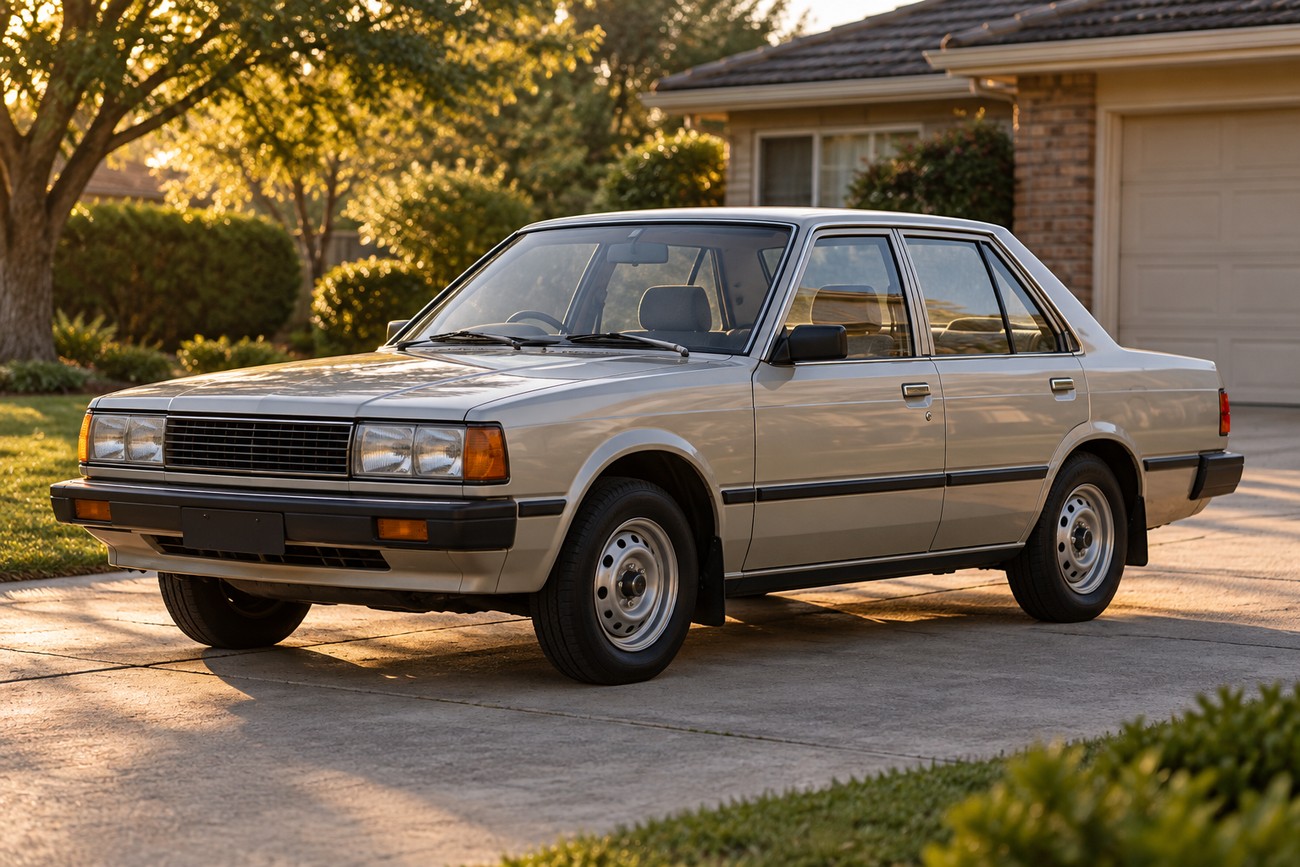
The Bluebird 910 was built from 1979 to 1983/84, depending on the market. Buyers could encounter a four-door sedan, four-door hardtop, two-door coupe, or five-door wagon. Former taxis were predominantly sedans, so the taxi reputation should not be applied equally to every body style.
Engine availability also varied by market. Basic 1.6–1.8-liter petrol cars were generally modest performers, a reasonable match for everyday duties rather than quick acceleration. The LD20 diesel offered a different working-car character, with performance that owners often describe as sluggish.
SSS and turbo variants sit at the other end of the range. They are rarer and carry different performance and maintenance expectations from a basic carbureted sedan. A sporting badge, engine swap, or attractive coupe listing therefore tells you little about how a typical taxi-spec 910 drove.
This distinction matters when comparing cars for sale. A plain sedan may offer simpler mechanical upkeep, while a rare specification can require harder-to-find parts. Condition still outranks the brochure hierarchy: a sound ordinary car is a more credible usable classic than a neglected sporting example.
What long shifts felt like from the driver’s seat
The 910’s reputation for endurance should not be mistaken for modern refinement. Basic 1.6–1.8-liter petrol sedans have modest acceleration, and reported taxi-spec interiors can have firm seats, sparse equipment, and limited sound insulation. On damaged roads, axle hum, suspension noise, and cabin rattles can make a tired car feel particularly worn.
Night work could expose another weakness. Owners report weak output from aging headlamps, especially when reflectors and lenses have deteriorated. Extra lighting or relay modifications appear on some cars, but the quality of that work matters as much as the intended improvement.
Ventilation and heating fall short of what drivers of newer cars may expect, particularly in traffic or hot weather without air conditioning. The LD20 diesel can feel slow, and neglected glow-plug equipment or worn injectors can make cold starting difficult. These are reasons to test a car in relevant conditions, rather than assume every example behaves the same way.
Fuel use is similarly dependent on condition. Owners report disappointing consumption from poorly adjusted carbureted engines; a correctly serviced carburetor and ignition system can change the result substantially. A seller’s claim that an old 910 is inherently economical is less useful than evidence that it starts, idles, and runs properly.
Where taxi toughness meets old-car reality
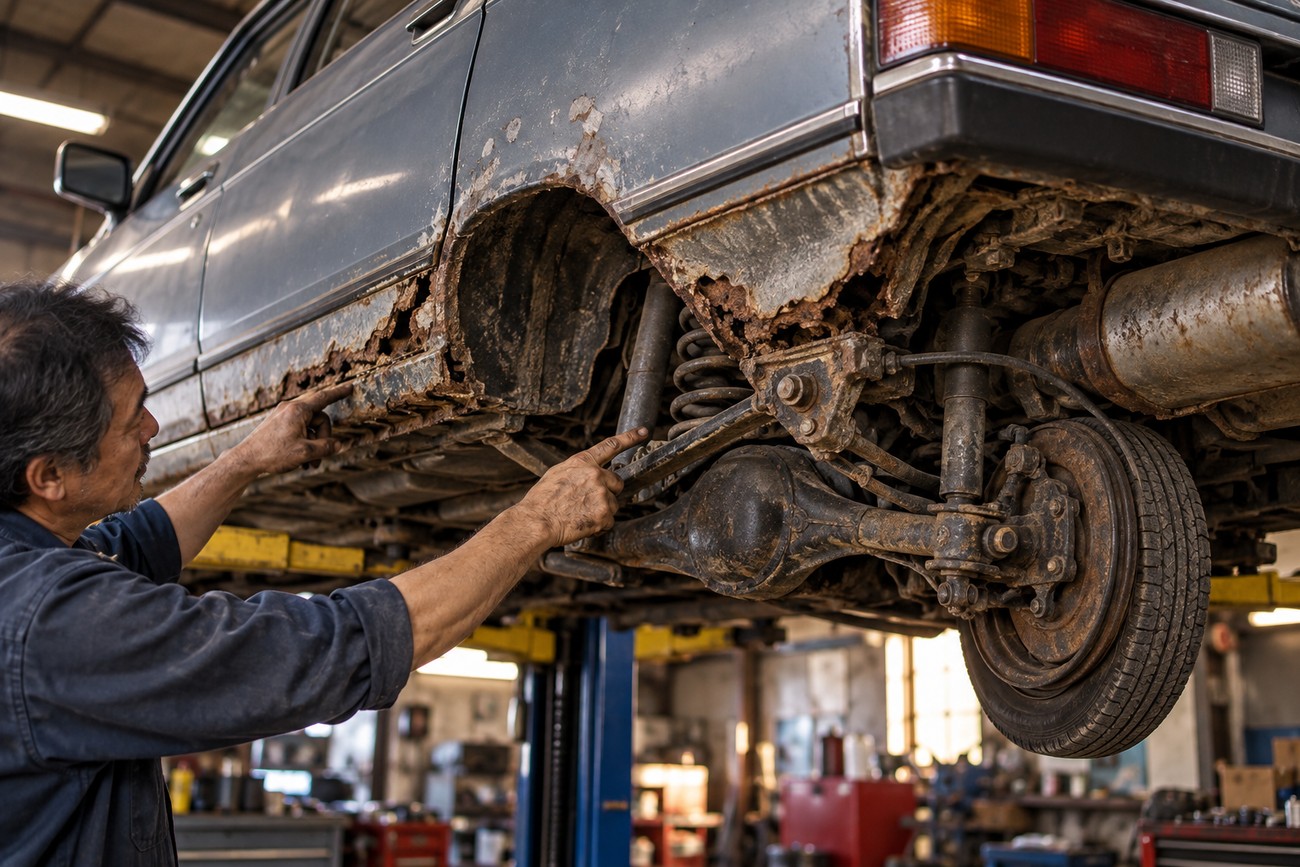
A durable layout cannot protect a body indefinitely. Corrosion can affect sills, suspension mounting areas, and structural rails, particularly on hard-used cars or those kept in damp climates. A repainted former workhorse may look tidy while rust or earlier repairs remain beneath its finish.
Long service can also leave damage that is harder to spot than a rusty panel. Distorted body geometry or weakened mounting points may only become apparent during an underside inspection and alignment check. An odometer reading, especially on a car this old, cannot settle that question.
Electrical faults deserve the same scrutiny as visible wear. Aging grounds and oxidized connectors can cause intermittent instrument or lighting problems, while poorly executed repairs add another layer of uncertainty. Original body panels and lighting parts can be difficult to source, so seemingly minor damage may take time to put right.
Some mechanical parts may be sourced through compatibility with other period Nissans, provided fit is verified before purchase. That helps keep cars in use, but it does not make every restoration straightforward. The 910 also lacks modern passive-safety equipment such as airbags; its appeal as a classic should be weighed against the protection expected of a current daily driver.
How to judge a surviving 910 before buying
Start beneath the paint. Inspect sills, structural rails, and suspension mounting areas, looking for corrosion, uneven repairs, and signs that the body no longer sits square. Fresh paint deserves closer examination when the underside has not received comparable attention.
Next, seek evidence of how the car was used and maintained. Worn controls, tired seats, old equipment mounts, and extensive repairs may suggest heavy service, but none proves a taxi history on its own. Records and the consistency of repairs across the whole car carry more weight than a low odometer reading or a clean-looking dashboard.
Only then assess the engine, drivetrain, and electrics on a proper test drive. Check cold starting where possible, listen for axle noise, and confirm that lights and instruments work reliably. Trace non-original fuel-system, lighting, or wiring changes; poorly executed modifications can turn a straightforward car into one with persistent faults.
Price the missing pieces before committing. Original body and lighting parts may require a long search, even when compatible mechanical parts from other period Nissans are available. Confirm fit rather than buying a part because a listing names a related model.
Finally, judge the car against its actual specification. A basic sedan and an SSS or turbo variant do not pose identical upkeep demands, and a rare badge cannot compensate for a weak structure. The cheapest-looking 910 can become costly when repairs depend on scarce panels or specialist engine components.
Two myths that distort the Bluebird 910’s story
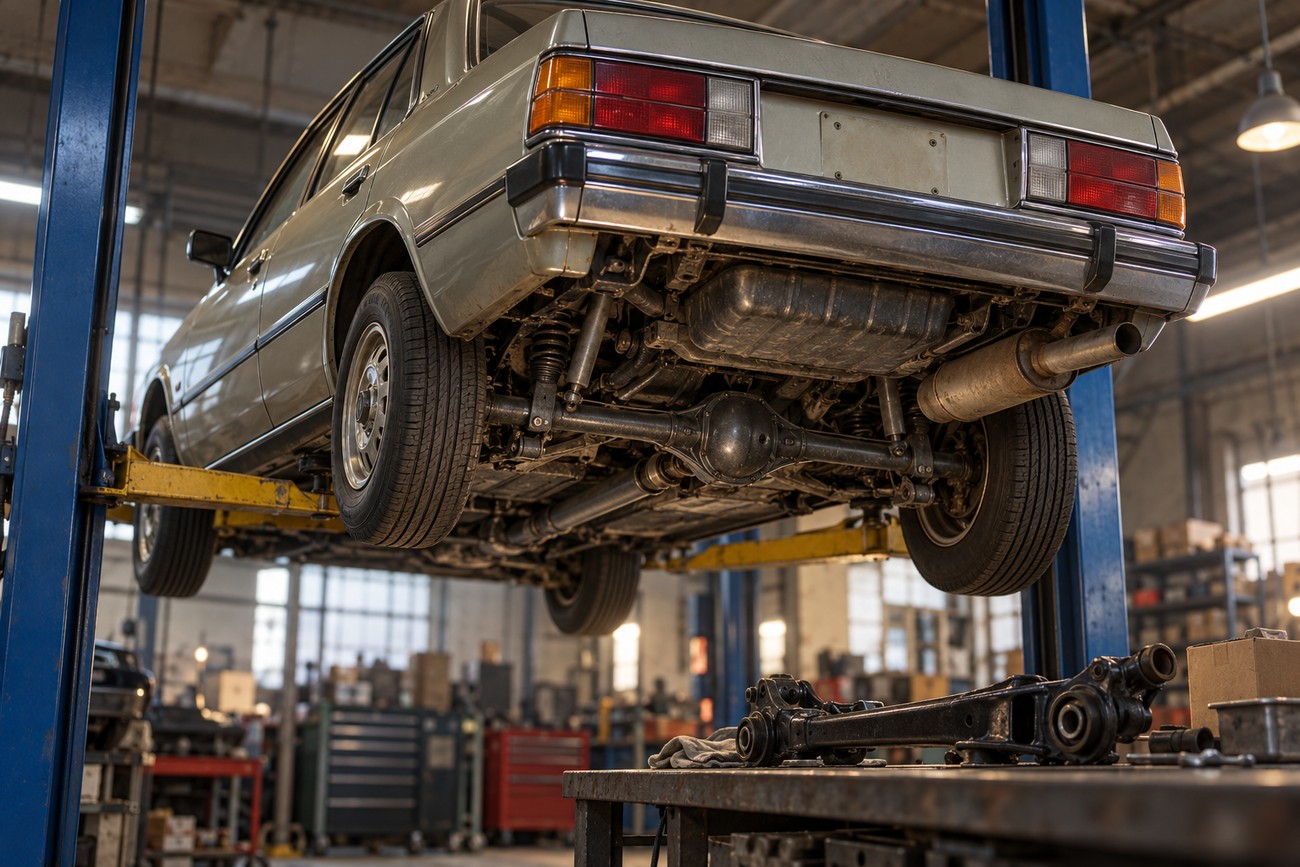
Some catalogs incorrectly list the Bluebird 910 as front-wheel drive. Specialist references and owner accounts identify the 910 generation as rear-wheel drive; the Bluebird’s transition to front-wheel drive came later. For parts searches, that distinction is more than historical trivia: a mistaken drivetrain listing can send a buyer after the wrong component.
The second myth gives every 910 the character of an SSS. Most taxi-relevant sedans were ordinary cars with modest engines, while SSS and turbo versions were rarer. Evaluate acceleration, equipment, and repair needs against the version in front of you, rather than a sporting model’s reputation.
Broad claims that the 910 was either indestructible or inherently unreliable are equally unhelpful. Owners describe durable basic mechanical when maintained, but their accounts are not controlled reliability data. Present-day faults often reflect age, corrosion, and deferred maintenance—conditions that vary sharply from one survivor to another.
Frequently asked questions
Prices, model chronology, and taxi history all need careful qualification with a car this old. The answers below distinguish advertised prices from sale values, and identifying clues from documented history.
How much does a Nissan Bluebird 910 cost today?
Usable examples in parts of Europe and the CIS are often advertised around $2,500–$3,000. That is an indicative asking-price range, not a guaranteed sale value, and it should not be applied to every market.
Body style, structural condition, and specification change the comparison. Coupe, SSS, and turbo examples may be advertised for more, while a cheaper sedan with serious rust or missing original lighting can cost more to put right than its asking price suggests.
What replaced the Nissan Bluebird 910?
The Bluebird continued into a subsequent generation after the 910. The later move to front-wheel drive does not make the 910 itself front-wheel drive; the 910 belongs to the rear-wheel-drive generation.
Replacement timing depended on the market, as did the 910’s 1979–1983/84 production period. Check the market and model year when comparing a late 910 with the Bluebird that followed it.
How can you tell whether a Bluebird 910 was originally used as a taxi?
Service records are the strongest starting point. Surviving equipment mounts and taxi-specific trim reported on some Japanese-market cars can add useful clues, especially when they agree with the paperwork and the car’s wear pattern.
Trim alone does not establish its history: fittings can be removed, replaced, or added later. An ordinary-looking sedan may have worked as a taxi, while a sparsely equipped car may never have carried paying passengers.







