
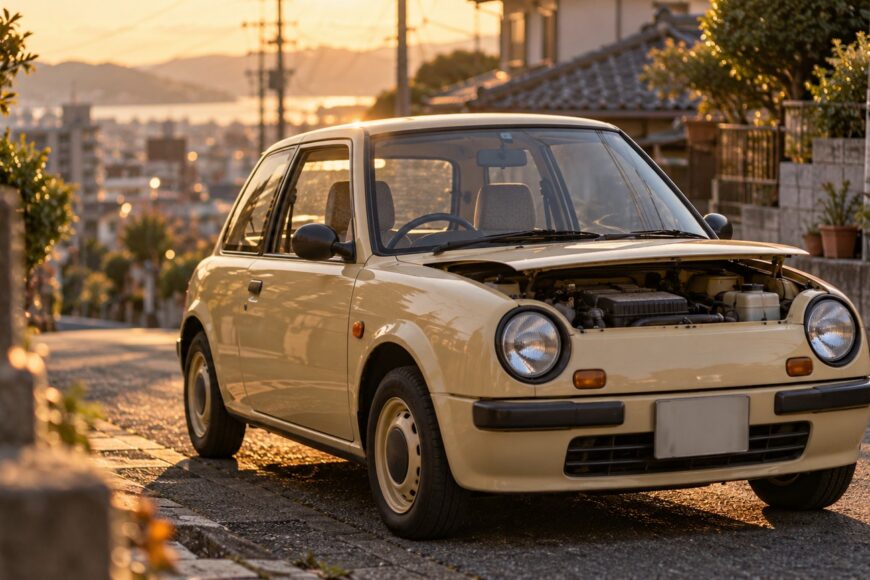
The Nissan Be-1 looks like a toy escaped from a 1950s showroom: rounded nose, upright cabin, cheerful details, and a body with more personality than its size suggests. Underneath, however, it is an aging Nissan March/K10 with a carbureted 1.0-liter engine, front-wheel drive, and the straightforward hardware of a late-1980s economy car.
That combination made the Be-1 important beyond its limited production. Introduced in 1987, it showed that a small Japanese car could sell an attitude and a visual idea rather than performance or equipment. The ownership bargain remains double-edged: March-based mechanics are comparatively approachable, while Be-1 body panels, trim, and original interior parts can turn a simple repair into a specialist search.
- Why the Nissan Be-1 Started the Pike-Car Craze
- What the Be-1 Shares with the March—and What It Does Not
- The Design Choices That Made the Be-1 Collectible
- Nissan Be-1 Specifications at a Glance
- The Real Cost of Owning a Be-1
- How to Buy a Be-1 Without Buying a Restoration Problem
- Frequently Asked Questions
- What Is the Average Price of a Nissan Be-1?
- How Can You Tell Whether a Nissan Be-1 Is Genuinely Original?
- How Many Original Nissan Be-1s Are Still Left?
Why the Nissan Be-1 Started the Pike-Car Craze
The Be-1 appeared in 1987 as a deliberately characterful alternative to anonymous compact cars. Approximately 10,000 examples were produced, enough to make the design visible without making it ordinary. Its appeal came from proportion, color, and retro references rather than speed, luxury, or technical novelty.
The Nissan Be-1 is generally regarded as the starting point of Nissan’s pike-car wave. Nissan followed it with the Pao, Figaro, and S-Cargo, each applying a different visual theme to familiar compact-car foundations. The formula was commercially significant because it treated styling as the main product while keeping the mechanical package relatively understandable.
Calling the Be-1 the first mass-produced Japanese retro car is a collector and club interpretation, not an official Nissan designation. It was an early and highly visible mass-produced Japanese retro-style car, which explains why the label remains common in enthusiast writing. The safer historical claim is that the Be-1 helped establish a recognizable Japanese pike-car movement.
Its timing mattered as much as its appearance. Buyers who wanted an expressive city car could accept modest performance if the car felt personal and distinctive. The Be-1 therefore became a cultural marker: a small Nissan that made individuality a practical selling point and gave later pike cars a ready-made audience.
What the Be-1 Shares with the March—and What It Does Not
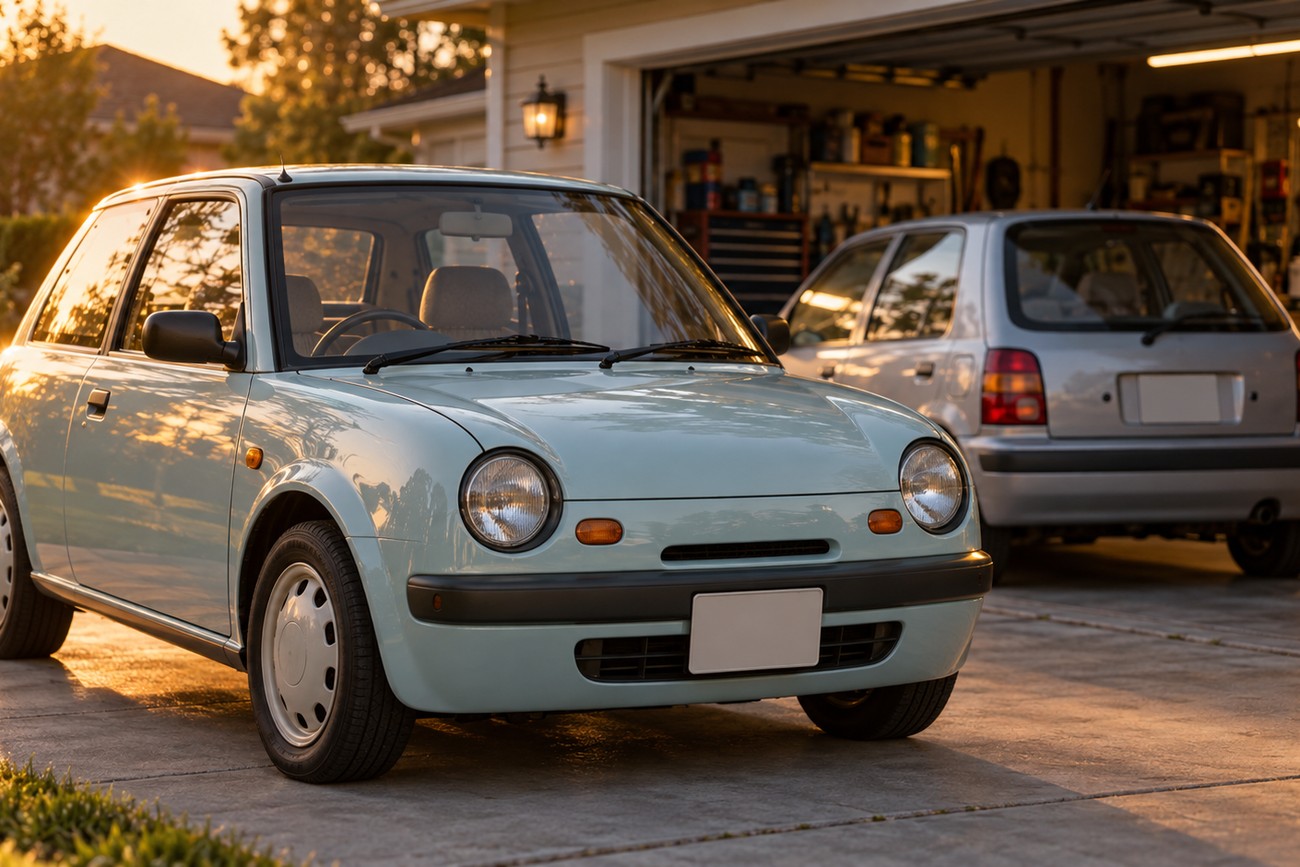
The Be-1 is based on the Nissan March/K10, sharing the basic front-wheel-drive concept and much of the simple mechanical logic of that mass-market hatchback. This is why routine work can be less intimidating than the car’s unusual appearance suggests. Engine, transmission, and running-gear issues can often be approached through knowledge of the March family.
That mechanical relationship does not make the Be-1 a March with inexpensive replacement bodywork. Nissan extensively redesigned the body and cabin in a retro style, and those visible elements define the car’s identity. A mechanical substitute may keep the car moving, while an incorrect lamp, grille, molding, or interior piece can seriously reduce its originality.
Mechanical interchangeability with the March/K10 is comparatively useful, but body, interior, and decorative-part compatibility is limited. Owners who assume every part will transfer easily usually discover the distinction when they need a specific panel, badge, trim clip, or piece of cabin plastic. The platform helps with service; it does not remove the scarcity of Be-1-specific parts.
This split also changes how you should budget. A worn mechanical component may be repairable through normal Japanese-car channels, whereas a damaged original trim item may require used parts, specialist fabrication, or a long wait. The Be-1’s collectible value sits largely in the areas that the March connection cannot supply.
The Design Choices That Made the Be-1 Collectible
The three-door hatchback body gives the Be-1 a compact footprint and a clear visual profile. Its rounded surfaces, upright glass, and deliberately friendly details create an object-like presence that is easy to recognize at a distance. The retro body and interior are central to its identity rather than decorative additions to an otherwise interchangeable hatchback.
That identity makes condition assessment different from ordinary used-car shopping. Original paint, factory badges, correct equipment, and intact interior plastics can matter more to collectors than modest mileage. A low-mileage example with a replaced cabin, missing emblems, or poorly matched panels may be less desirable than a more used car that retains its factory character.
The original interior deserves particular attention because small cracks, broken clips, and improvised replacements are difficult to reverse. A cabin that appears complete in photographs may contain non-original switches, damaged trim, or mismatched upholstery. These details are easy to overlook until the car is viewed as a collector object rather than a basic commuter.
Usability follows the same logic. The Be-1 is best understood as a compact collector-oriented city car rather than universal modern transportation. Its small cabin, limited sound insulation, and modest engine suit relaxed local driving; long highway trips expose the age of its ergonomics and mechanical reserves.
Nissan Be-1 Specifications at a Glance
The following figures describe the Japanese-market specification in cautious terms. Equipment and transmission should still be verified on the individual car.
| Item | Specification |
|---|---|
| Engine | 1.0-liter MA10S gasoline engine |
| Fuel system | Carbureted |
| Factory output | Approximately 52 hp for Japanese specification |
| Transmission | Five-speed manual or three-speed automatic |
| Drivetrain | Front-wheel drive |
| Body style | Three-door hatchback |
| Platform | Nissan March/K10 |
The Real Cost of Owning a Be-1
Rust is the primary threat, especially around arches, sills, floor areas, and hidden cavities. Cosmetic paint can conceal repairs at the lower edges of the body, while corrosion inside an arch or under the floor may be visible only from below or after removing trim. A clean exterior therefore says little about structural or restoration quality.
Specific panels and decorative parts are scarce and can be expensive used. This is where the Be-1 differs sharply from a normal March: the mechanical base may be familiar, but a correct lamp, grille, molding, emblem, or glass component is tied to a much smaller supply. Rare bodywork can cost more than routine mechanical repairs, especially when shipping and restoration are added.
On a Be-1, a missing small trim piece can determine the restoration schedule more than a tired engine. Mechanical work has several possible solutions; an original emblem, lamp, or interior component may have only one realistic source.
Age affects the cabin and electrical system as well. Interior plastics become brittle, clips break during removal, and electrical contacts, connectors, and wiring can develop faults after decades of heat and use. Preventive inspection of the fuel system is equally sensible on an aging carbureted Japanese car, particularly if the vehicle has spent long periods stored.
The 1.0-liter engine can feel slow on modern roads, especially with the three-speed automatic and a full load. Limited sound insulation adds fatigue at highway speed, even when the engine and transmission are functioning correctly. A simple mechanical platform does not guarantee inexpensive ownership: rarity shifts the cost toward finding the right parts and preserving the correct details.
How to Buy a Be-1 Without Buying a Restoration Problem
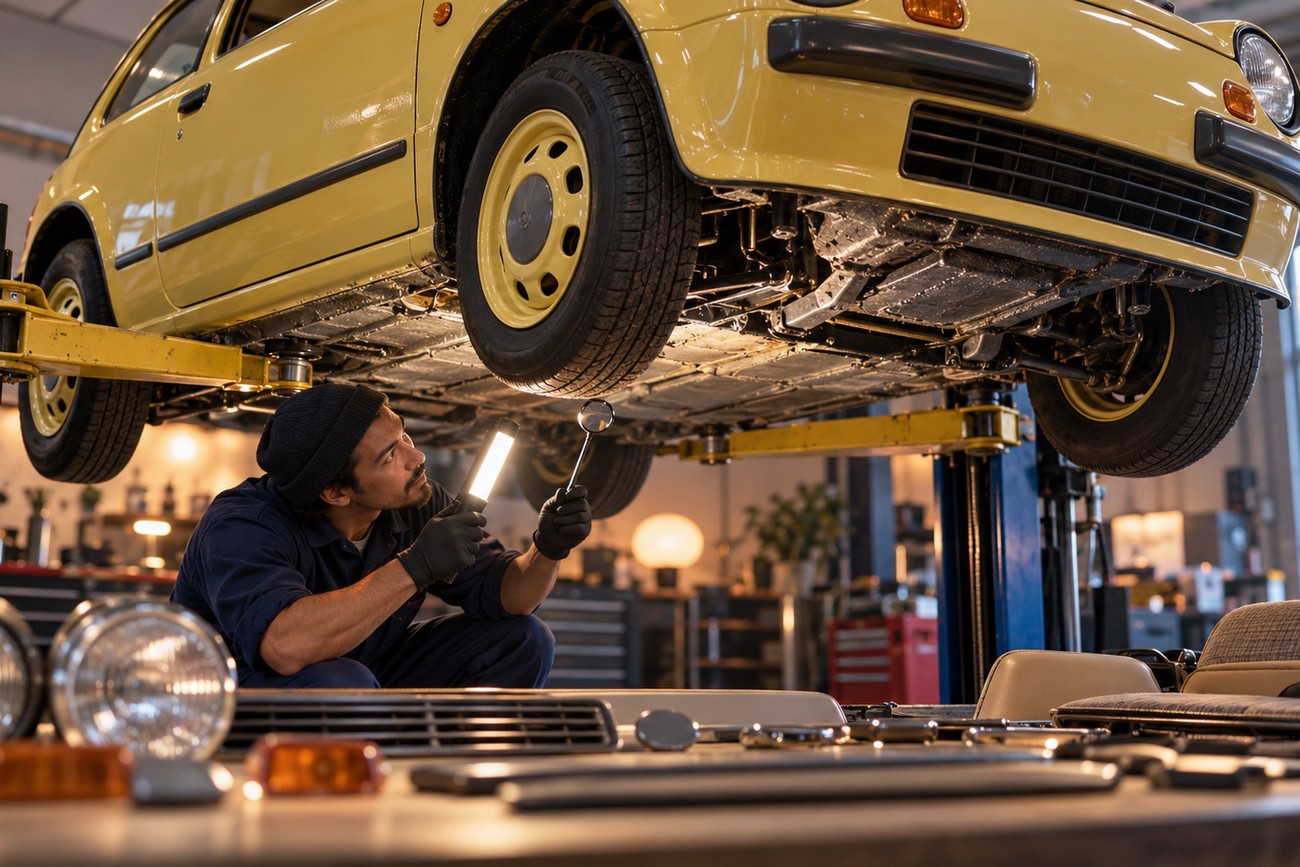
Begin underneath, not with the paint. Inspect the arches, sills, floor areas, suspension mounting regions, and hidden cavities, using a lift where possible. Look for fresh underseal, uneven welds, overspray, and corrosion that has been covered rather than repaired; a bright exterior can conceal substantial work.
Next, inventory the parts that cannot be replaced casually. Check the original lamps, glass, grille, badges, moldings, interior pieces, and other visible trim. Do not assume that a March/K10 donor will solve a Be-1 body or cabin problem, because interchangeability is much stronger for mechanical components than for these distinctive parts.
Test the fuel system and electrical system rather than accepting a seller’s description of recent running. Cold starting, carburetor behavior, charging, lighting, switches, and instrument functions reveal age-related faults that may not appear during a short warm-engine drive. Check whether the automatic transmission shifts correctly and whether the manual gearbox and clutch operate without abnormal resistance.
Finally, establish what the car actually is. Compare body numbers, equipment, factory paint evidence, badges, interior, and import history with the listing and available records. Many surviving cars have been repainted or partially restored, and repair quality varies widely, so photographs of hidden areas and invoices are more useful than claims such as “original” or “rust-free.”
Frequently Asked Questions
The Be-1’s status makes simple answers unreliable. Production history, originality, and market value must be separated before comparing one example with another.
What Is the Average Price of a Nissan Be-1?
There is no responsible single average price for a limited-production Be-1. Asking prices reflect condition, originality, rust repair, completeness, transmission, import history, and the availability of rare trim, so two cars with similar mileage can represent very different purchases.
Compare listings by condition tier instead: preserved and documented, usable but modified, or incomplete and requiring restoration. Then price the missing lamps, badges, moldings, interior parts, corrosion repair, and transport separately. This method shows the likely cost of ownership without inventing a universal market number.
How Can You Tell Whether a Nissan Be-1 Is Genuinely Original?
Originality is established by matching evidence, not by a seller’s description. Look for consistent factory paint and body condition, correct badges and equipment, an intact original interior, matching body numbers, and documented import history. Uneven color, fresh fasteners, replacement plastics, or unexplained gaps in the record can indicate repainting or partial restoration.
No single feature proves originality. A car may retain its factory interior after a repaint or have original badges attached to repaired panels. Treat the Be-1 as a collection of evidence and record which parts are confirmed, replaced, repaired, or unknown before assigning collector value.
How Many Original Nissan Be-1s Are Still Left?
Approximately 10,000 examples were produced, but that figure does not establish how many original, unrestored cars survive today. There is no authoritative public census of surviving original Be-1 examples, and club registers or online listings cannot reliably count every car or distinguish preserved cars from restored ones.
For a buyer, the practical answer is the condition of the individual example. A documented car with factory paint, correct equipment, original interior, and traceable history is more informative than an unsupported claim about survivor numbers. Production volume provides historical context; it does not certify a particular car’s authenticity.







