
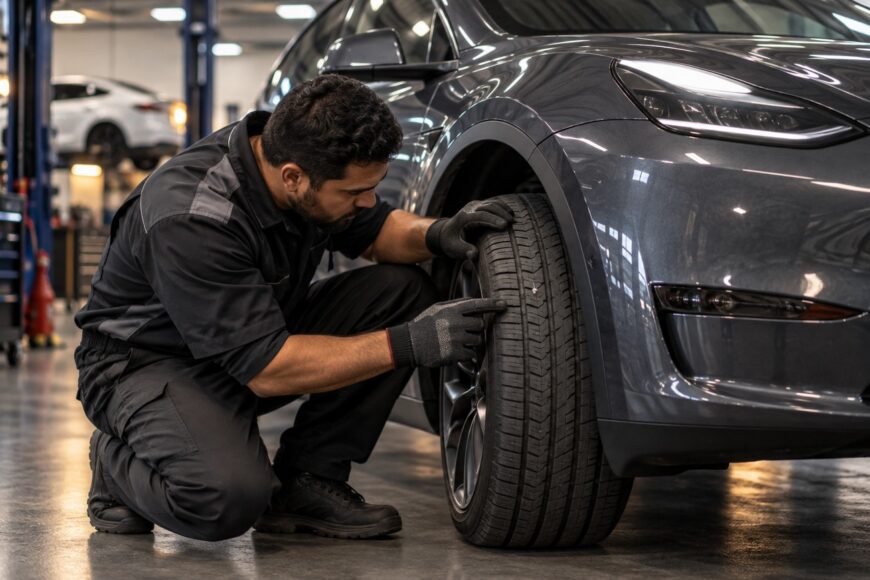
A nail in a Tesla Model Y tire can be unsettling, especially when the tire still holds pressure. Stable pressure does not prove that the puncture is harmless or that the tire is safe for a trip to a shop.
A small puncture in the central tread may qualify for professional internal repair. A roadside plug alone is a temporary measure and cannot replace an internal inspection, permanent repair, or replacement. Acoustic foam in some Model Y tires can also lead a general tire shop to decline the job, but foam does not automatically mean the tire must be replaced.
What to do when you find the nail
Leave the nail or other object in place until a service professional can assess it. Removing it may allow air to escape quickly and can make it harder to identify the puncture path. Tesla says a damaged or punctured tire should be permanently repaired or replaced as soon as possible.
Do not treat normal pressure as permission to continue driving on the tire. Tesla says not to drive on an unrepaired puncture, even if the tire has not lost pressure. A puncture can worsen without triggering an immediate warning on the tire-pressure display.
If the vehicle develops vibration, unusual noise, or changed handling, slow down and stop safely. Tesla advises having the vehicle towed to a service center or tire shop in that situation. Do not assume that a tire that feels stable at low speed will remain safe during a longer drive.
Contact a shop that can remove the wheel, inspect the tire internally, and complete a permanent repair when the tire qualifies. Tell the shop that the tire is fitted to a Model Y and ask whether it handles acoustic-foam tires before arranging transport.
Model Y tire puncture: plug, internal repair, or replacement?
The decision depends on more than the visible size of the nail. Location, entry angle, internal damage, the bead, and previous repairs all affect whether the tire can remain in service.
| Situation | What it means | Practical decision |
|---|---|---|
| Roadside plug or sealant | A temporary measure in limited circumstances, subject to Tesla’s guidance. It does not reveal hidden internal damage or establish permanent repairability. | Arrange professional inspection and permanent repair or replacement as soon as possible. |
| Small puncture in the central tread | Tesla owner guidance describes temporary repair for certain punctures up to 1/4 in (6 mm). Size alone does not establish eligibility for permanent repair. | Remove the tire for internal assessment. A qualified shop may complete an internal repair if all criteria are met. |
| Puncture in the shoulder or sidewall | These areas are outside the repairable zone under Tesla service instructions. | Replace the tire. |
| Object entered more than 15° from perpendicular | The puncture path does not meet Tesla’s repair criteria. | Replace the tire. |
| Object larger than 1/4 in | The damage exceeds the stated service limit. | Replace the tire. |
| Evidence of driving on a flat tire | Internal damage may exist even if the outside looks acceptable. | Replace the tire. |
| Bead damage or overlapping repair areas | The tire does not meet the service conditions for repair. | Replace the tire. |
Why a small tread puncture still needs an internal inspection
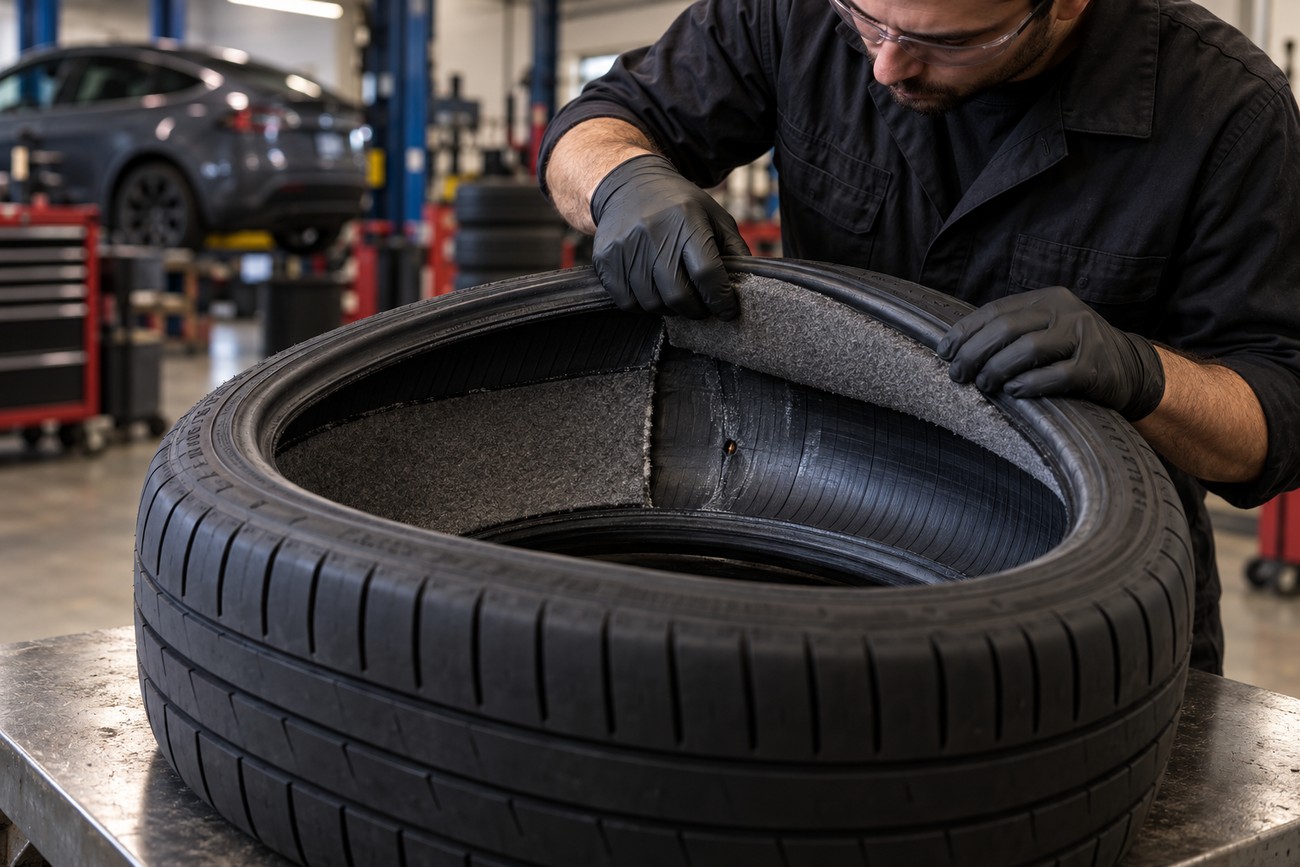
The visible nail shows where the object entered, but it does not show the tire’s full condition. A technician needs to remove the tire from the wheel and inspect the inside for damage, contamination, and signs that the tire was driven while underinflated.
Repair eligibility depends on the tread location, puncture size, entry angle, and internal condition. Tesla service instructions rule out repair when the object entered more than 15° from perpendicular. A puncture that looks straight from the outside may follow a different path inside the tire.
The inspection also covers the bead and any earlier repair locations. Evidence of driving on a flat tire, bead damage, or overlapping repair areas requires replacement under Tesla service instructions. Normal pressure does not remove those concerns.
An external plug-only fix seals the entry from the outside, while an internal assessment can reveal damage that the plug cannot address. If the tire qualifies, the shop should carry out the repair according to its approved procedure; if it does not, replacement is the safer outcome.
Does acoustic foam mean a Model Y tire cannot be repaired?
Some, but not all, Model Y tires have an acoustic foam layer bonded inside the tire. The foam reduces road noise, but it adds a step to the repair process. Its presence alone does not automatically require replacement.
Tesla’s service procedure calls for removing foam around an eligible puncture to a radius of 50 mm before completing an internal repair. This allows the technician to inspect and work on the repair area instead of placing a repair over the foam.
Foam-related refusal can reflect a shop’s workflow rather than the tire’s final repairability: a shop equipped only for a quick external plug may decline a job that requires tire removal, foam clearance, and internal inspection.
Some general tire shops decline foam-lined tire repairs because they do not handle that procedure or do not want the associated responsibility. This explains why owners can receive different answers from different shops without the tire automatically being condemned.
When booking, ask directly: “Do you inspect and internally repair Model Y tires with acoustic foam?” If the answer is no, find a service provider that can evaluate the tire properly rather than accepting an external plug as the final repair.
Where temporary plugs and sealants fall short
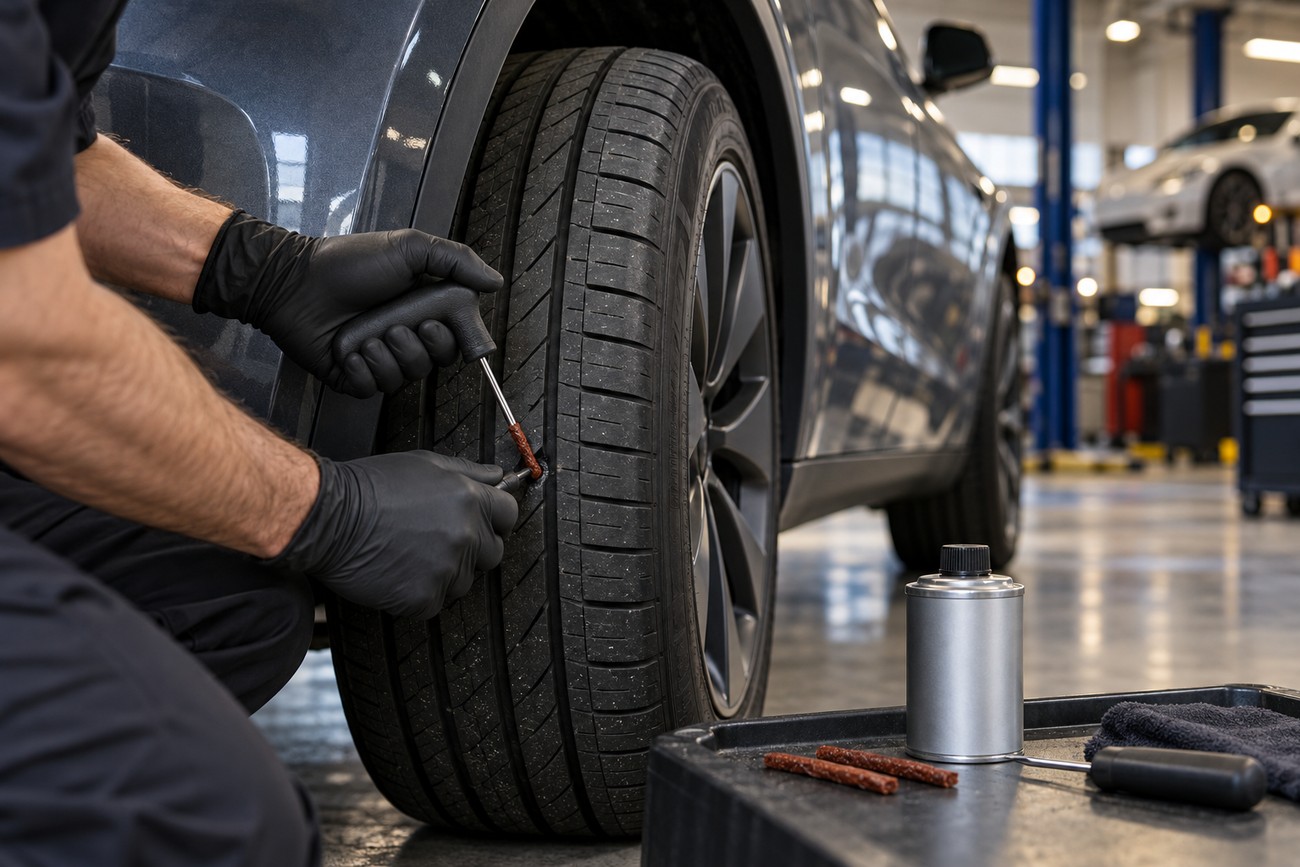
A plug or sealant can help manage a small puncture temporarily in limited circumstances, including a situation covered by Tesla’s guidance for certain punctures up to 1/4 in (6 mm). It remains a temporary measure, and Tesla calls for permanent repair or replacement as soon as possible.
Temporary products cannot show whether the tire was damaged while underinflated, whether the bead is sound, or whether the puncture entered at an unacceptable angle. They also cannot override the replacement criteria for shoulder or sidewall damage, excessive size, bead damage, or overlapping repair areas.
Continuing to drive because the tire holds air creates a separate risk. A tire may lose pressure later, and evidence of driving on a flat tire requires replacement under Tesla service instructions. Arrange a proper inspection even when a temporary measure appears to have worked.
Use the Model Y tire-pressure information as an indication that needs attention, not as a safety certification. The final decision should follow a professional internal assessment and the applicable Tesla repair criteria.







