
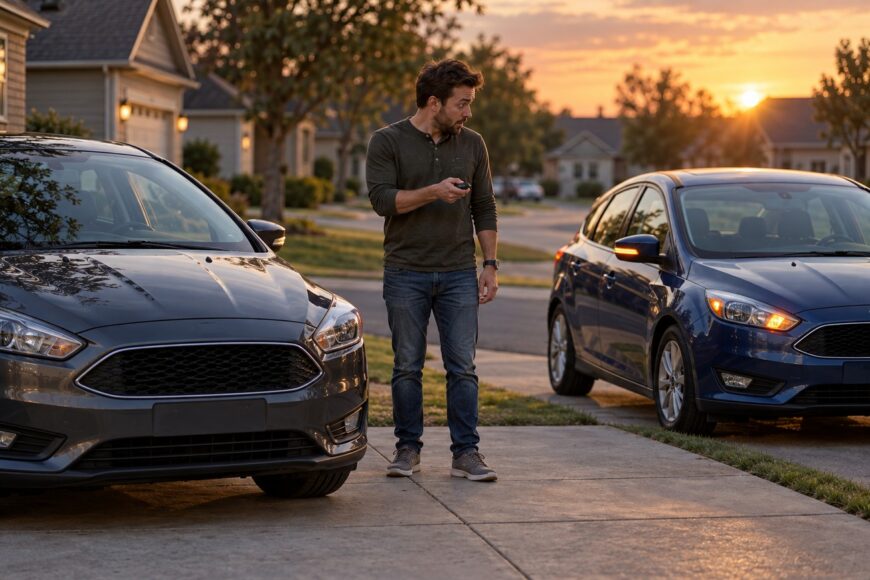
One Ford key fob appears to unlock a neighbor’s Ford Focus. That symptom is unsettling, but it does not by itself prove that the two cars share a universal remote code or that either vehicle is dangerously mispaired. The response may come from a radio-control fault, an aftermarket alarm, an unintended button press, or a mistaken identification of which car reacted.
The first task is to separate the vehicle’s systems. A remote fob sends lock and unlock commands, while an immobilizer transponder authorizes engine starting. A receiver module and, in some vehicles, an added alarm system handle other parts of the signal path. Safe diagnosis comes before buying another fob or reprogramming every key.
- Why a Ford Key Fob Can Affect Another Focus
- Check the Simple Causes Before Reprogramming Anything
- Separate the Remote, Transponder Key, and Aftermarket Alarm
- Ford Focus Remote Programming: What the Common Procedure Actually Means
- When Reprogramming Does Not Fix the Cross-Response
- Common Mistakes and Myths About Range and Compatibility
- A Safe Decision Path: Test, Program, Diagnose, or Replace
- Frequently asked questions
- How do I get a Ford Focus out of theft mode?
- When does a Ford Focus key fob need a PIN, locksmith, or diagnostic scan?
Why a Ford Key Fob Can Affect Another Focus
A standard Ford remote key fob typically operates at about 10 m in suitable conditions. Its real-world range depends on the battery, the fob’s construction, the vehicle’s receiver, and radio interference. A response from another Focus therefore deserves a controlled test rather than an immediate conclusion about compatibility.
Passive keyless entry works differently. It is a close-range authorization system that checks whether the key is within a defined zone near the vehicle, often around the door handle or inside the cabin. It is not equivalent to long-distance remote unlocking, so a key that works from several meters away does not provide the same evidence as a proximity system.
Ford Focus remotes are matched to the vehicle’s generation, market, frequency, remote type, and vehicle module. Two fobs may look alike and use similar buttons while requiring different programming or operating with different systems. A shared frequency can explain why signals are present in the same environment, but it does not prove that the neighbor’s vehicle accepted your fob as an authorized remote.
Record exactly what happened: which button was pressed, which car responded, whether the response was a lock cycle or an alarm event, and how far away the fob was. Repeat the test with the owner’s key and with the neighbor’s vehicle secured. This evidence helps distinguish a genuine cross-response from a coincidental lock movement or an alarm reacting to another signal.
Check the Simple Causes Before Reprogramming Anything
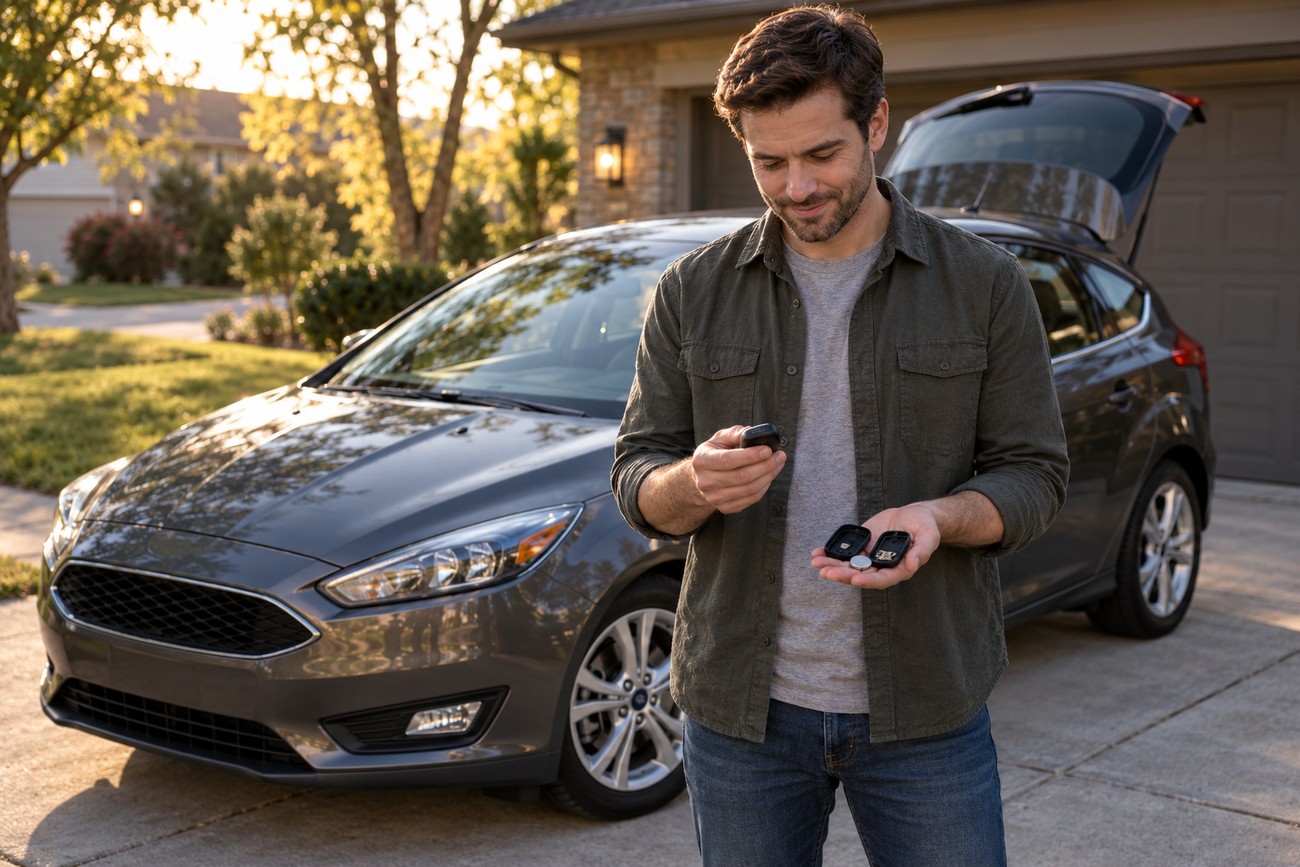
Start beside your own Focus with the vehicle clearly visible. Test unlock, lock, trunk release, and panic or alarm functions separately, then repeat the same sequence beside the neighbor’s car only with permission. A remote that works beside one vehicle but behaves differently several meters away may be showing a range or interference problem rather than a programming fault.
Inspect the fob battery and its contacts. A weak battery, a loose contact, or contamination inside the case can produce intermittent commands that look like random vehicle behavior. Compare the result with a spare key, if one is available, and test again away from both vehicles.
Range can change significantly between a driveway, a city street, and a parking lot. Metal structures, nearby electrical equipment, other radio transmitters, and an added alarm can reduce the useful signal. Repeated button presses in the same noisy location may create confusing results, so move to an open area and wait between tests.
Do not erase working remotes while investigating. If programming is started before the fault is understood, an incorrect procedure may leave previously working keys or fobs unusable. First establish whether the owner’s fob works consistently, whether the spare behaves the same way, and whether the engine-starting function is separate from the door-locking symptom.
Separate the Remote, Transponder Key, and Aftermarket Alarm
The lock and unlock remote is a radio-control device. The immobilizer transponder is a separate electronic component in the key or key assembly that allows the vehicle to recognize an authorized key for starting. A third-party alarm may add its own receiver, remote, control module, or wiring to the factory system.
This distinction explains a common complaint: the car starts, but the buttons do not open or close the doors. In that situation, the immobilizer transponder may be functioning while the remote lock/unlock channel has a separate fault. The likely checks include the fob battery, remote programming, receiver operation, and the wiring or integration of any added alarm.
An aftermarket alarm may suppress, block, or interfere with the factory remote signal. Its control module can also change how the central-locking system responds, especially if the installation interrupts factory wiring or uses an additional receiver. If the problem began after an alarm installation or update, inspect that system before condemning the Ford fob.
An immobilizer warning, a failure to start, or a persistent security indicator points toward a different diagnostic path. It may involve the transponder, the ignition reader, or related wiring. Pressing the lock button repeatedly will not repair that authorization system, and replacing the remote shell will not resolve an immobilizer fault.
Ford Focus Remote Programming: What the Common Procedure Actually Means
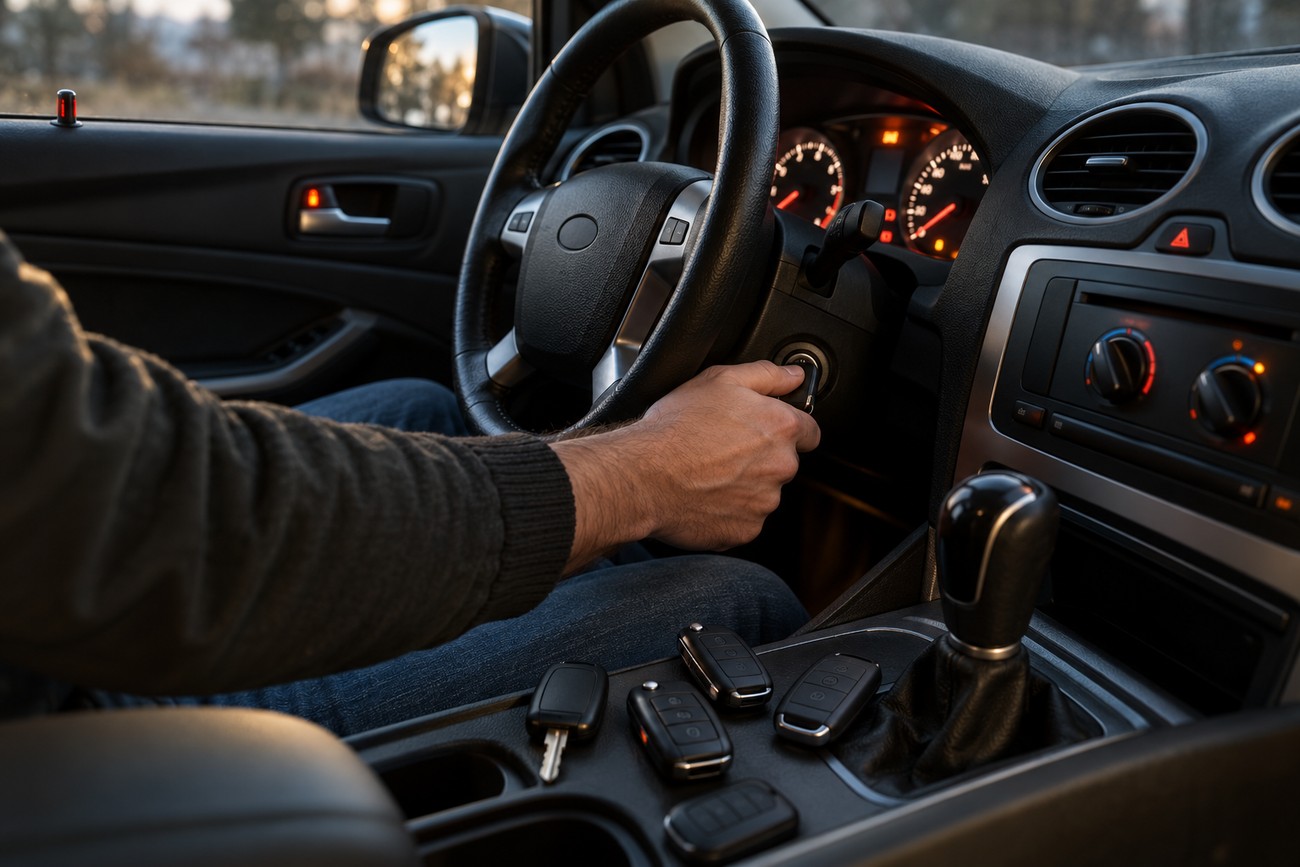
On some Ford Focus versions after 2006, owner-community instructions describe a procedure using eight ignition-switch changes within 10 seconds, followed by a central-locking click or lock-cycle confirmation. This is a variant-specific procedure reported for some vehicles, rather than a universal Ford specification.
If the vehicle enters programming mode, the lock-cycle response indicates that the car is ready to receive remotes. All existing remotes should be present during the session, because the procedure may define the complete list of accepted fobs. Some Focus versions are reported by owner communities to support up to 8 fobs, including those already programmed.
The exact sequence depends on the Focus generation, market, immobilizer and body-control configuration, and installed alarm equipment. Some systems require a PIN or diagnostic equipment, while others provide an owner-level sequence. Confirm the instructions for the exact vehicle before turning the ignition repeatedly.
After programming, test every available function. Check lock, unlock, trunk release, and panic or alarm operation, then verify the spare fobs. A single successful unlock does not establish that the complete programming session was correct.
When Reprogramming Does Not Fix the Cross-Response
A replacement fob marked “fits Ford Focus” may still be wrong for the vehicle. Compatibility must match the Focus generation, market, frequency, remote type, and vehicle module. A similar case, button layout, or product photograph cannot confirm those electrical details.
Repeated programming failure can indicate a receiver-module problem, immobilizer circuitry, damaged wiring, or an aftermarket alarm that is disrupting the factory system. In some cases, the fob transmits correctly while the vehicle fails to receive or process the command. Replacing the transmitter alone then leaves the underlying fault untouched.
Programming success does not clear the receiver or an added alarm. If the vehicle accepts the programming sequence but locking remains unreliable, checking the receiver path and alarm integration can be more useful than trying several replacement fobs.
In Focus owner discussions, error 16 is associated with the ignition key or immobilizer reader. That association is not definitive proof of a remote-control radio fault. Treat the code as a reason to investigate the immobilizer system, especially if starting problems or a persistent security indicator occur at the same time.
Stop DIY work when a working key has been lost, the immobilizer indicator remains active, or programming repeatedly fails. A vehicle-specific locksmith or Ford-capable diagnostic service can identify the module, read relevant faults, and confirm whether the problem is in the fob, receiver, immobilizer, wiring, or alarm integration.
Common Mistakes and Myths About Range and Compatibility
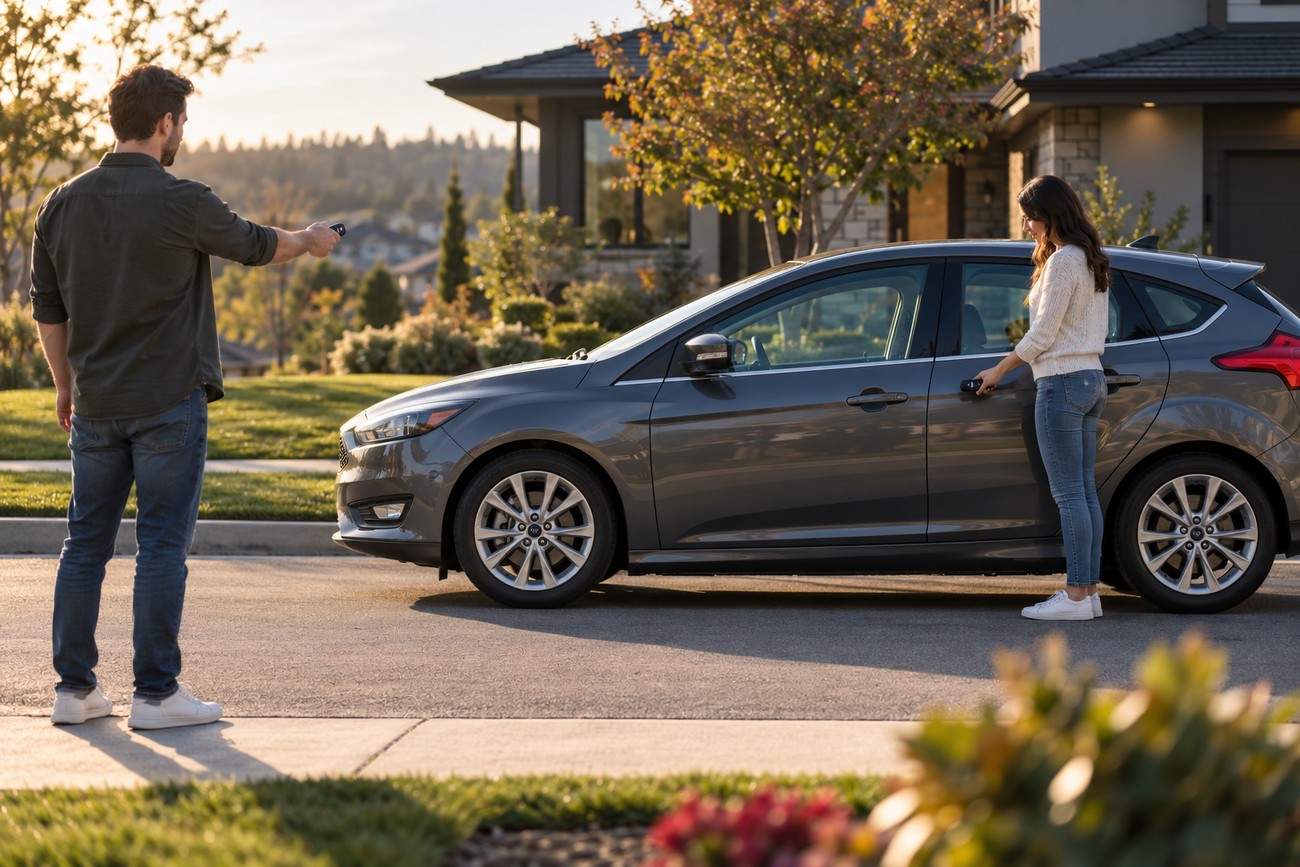
Myth: a remote that operates from a long distance proves that passive keyless entry works at the same distance. Reality: ordinary remote range and passive keyless-entry authorization distance are different functions. Passive entry requires the key to be within a close zone near the vehicle, while a standard remote sends a command over a radio link.
Myth: every Ford Focus fob is interchangeable. Reality: the correct match depends on the generation, market, frequency, remote type, and vehicle module. A universal-looking fob may still need programming, coding, or key cutting, and a replacement listing that names the Focus alone is insufficient evidence of compatibility.
Myth: a nonresponsive central lock always means a dead fob. Reality: the cause can be a weak battery, poor contact, interference, a receiver fault, wiring, or an added alarm. A vehicle that starts normally may still have a failed remote-control channel because the immobilizer and lock/unlock functions are separate.
Another mistake is assuming that a new shell contains a working electronic remote. A replacement case may only provide the housing, while a complete key may still require the correct circuit board, programming, and a cut mechanical blade. Incorrect programming can also leave previously working keys or remotes unusable.
A Safe Decision Path: Test, Program, Diagnose, or Replace
Begin with the battery, contacts, and controlled range tests. Confirm whether the owner’s fob operates the car beside the vehicle, compare the spare, and repeat the test away from the neighbor’s Focus and likely interference sources. This sequence costs little and prevents an unnecessary purchase.
Before ordering a replacement, verify the fob’s exact part information, frequency, remote type, Focus generation, market, and vehicle module. If the fob is only a shell or an unprogrammed unit, account for the required programming and any key cutting. The phrase “fits Ford Focus” should be treated as a starting point for verification.
Use the vehicle-specific programming process only when the system variant is known and all existing remotes are available. Instructions vary by Focus version and may require a PIN or diagnostic equipment. Afterward, test unlock, lock, trunk, and panic or alarm functions on every programmed remote.
Choose professional diagnostics when programming repeatedly fails, a working key is missing, the security indicator remains active, error 16 accompanies starting problems, or an aftermarket alarm is installed. Confirm the apparent neighbor-car response with controlled tests and permission rather than repeated random button presses.
Frequently asked questions
Ford Focus remote and theft-mode symptoms can involve separate systems. The remote may control the locks while the transponder authorizes starting, and an aftermarket alarm may interfere with the factory remote circuit. Use the symptom pattern to decide whether to test the fob, follow the correct programming procedure, or seek diagnostics.
How do I get a Ford Focus out of theft mode?
Ford Focus theft mode is an immobilizer issue, not simply a failed lock/unlock remote. Use a recognized transponder key and try the spare key if one is available. If the engine still will not start, the security indicator remains active, or error 16 persists, the vehicle needs vehicle-specific immobilizer diagnostics.
A remote fob can unlock doors without authorizing the engine, and an immobilizer transponder can authorize starting while the remote buttons fail. Keep those symptoms separate when describing the fault to a locksmith or diagnostic technician.
When does a Ford Focus key fob need a PIN, locksmith, or diagnostic scan?
Professional equipment is appropriate when the vehicle variant is unknown, the user-level programming sequence fails repeatedly, no working key remains, or the symptoms involve the immobilizer. An aftermarket alarm is another reason to use a technician because its wiring or receiver may interfere with the factory system.
A PIN may be required by some Focus systems, while others use a vehicle-specific ignition and lock procedure. Do not guess the code or erase existing remotes until the correct system and recovery method have been identified.







