
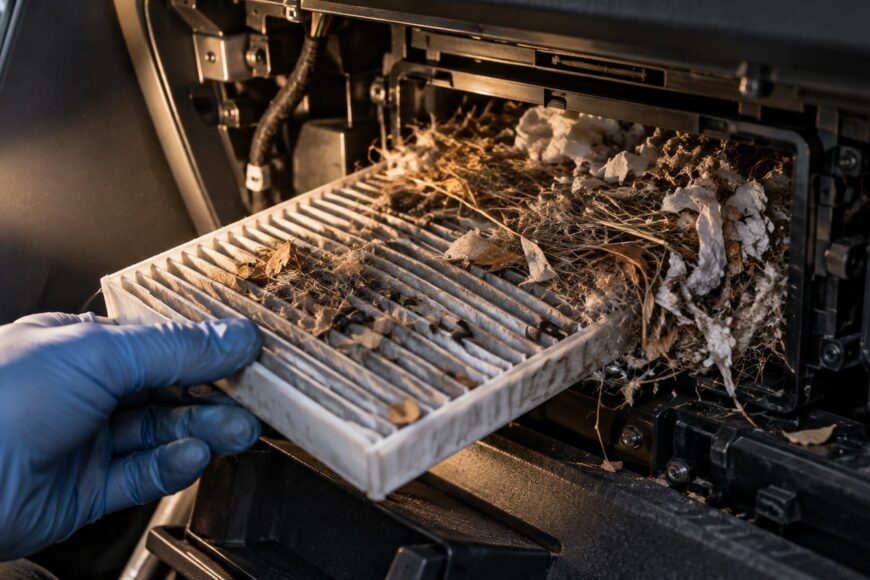
A sudden mouse-like odor, rattling, or bits of paper and seed husks from the passenger-side vents can point to a nest near the Subaru Forester’s cabin air filter. The discovery is unsettling because the material may contain droppings, urine residue, allergens, and damaged insulation.
The fastest-looking response can spread the problem. Running the blower may distribute contaminated particles through the cabin, while dry vacuuming or sweeping can put them into the air. Leave the vehicle unused until the HVAC area has been safely cleaned and nearby wiring has been inspected.
- What a Mouse Nest in the Forester Cabin Filter Usually Means
- How Mice Reach a Subaru Forester Cabin Filter
- What to Do Before Opening the Filter Housing
- Inspect More Than the Cabin Filter
- Replace the Filter and Remove the Odor Without Spreading It
- Prevent Another Mouse Nest in the Forester
- Common Mistakes That Make the Problem Worse
- Frequently asked questions
- How did a mouse get in my Subaru Forester cabin air filter?
- How can I stop mice from getting into the cabin air filter?
- What smell do mice absolutely hate?
What a Mouse Nest in the Forester Cabin Filter Usually Means
A mouse nest can occupy the cabin air filter area, also called the pollen-filter area, after rodents enter through the vehicle’s air channels. Common signs include a stale or mouse-like odor, scratching behind the glovebox, debris from the vents, reduced airflow, or unusual blower noise. Odor often becomes more noticeable when the heater, air conditioner, or recirculation mode is used.
Paper, insulation, seeds, and droppings around the filter housing indicate that the filter has been contaminated. It should be discarded and replaced, even if it appears possible to shake it clean. A contaminated filter can retain urine residue and fine particles that are not safely removed by ordinary handling.
Some people develop coughing, eye or throat irritation, or allergy-like symptoms after spending time in a contaminated vehicle. These symptoms do not establish a specific infection, and odor alone cannot diagnose hantavirus or another disease. They do justify stopping HVAC use and treating the contamination as a public health and vehicle-safety issue.
Finding a nest also calls for an inspection beyond the filter itself. The blower, nearby ducts, insulation, connectors, and wiring may contain debris or show chewing damage. Do not operate the Forester until contamination has been removed and nearby wiring has been inspected, particularly if there is a burning smell, electrical fault, or unusual fan noise.
How Mice Reach a Subaru Forester Cabin Filter
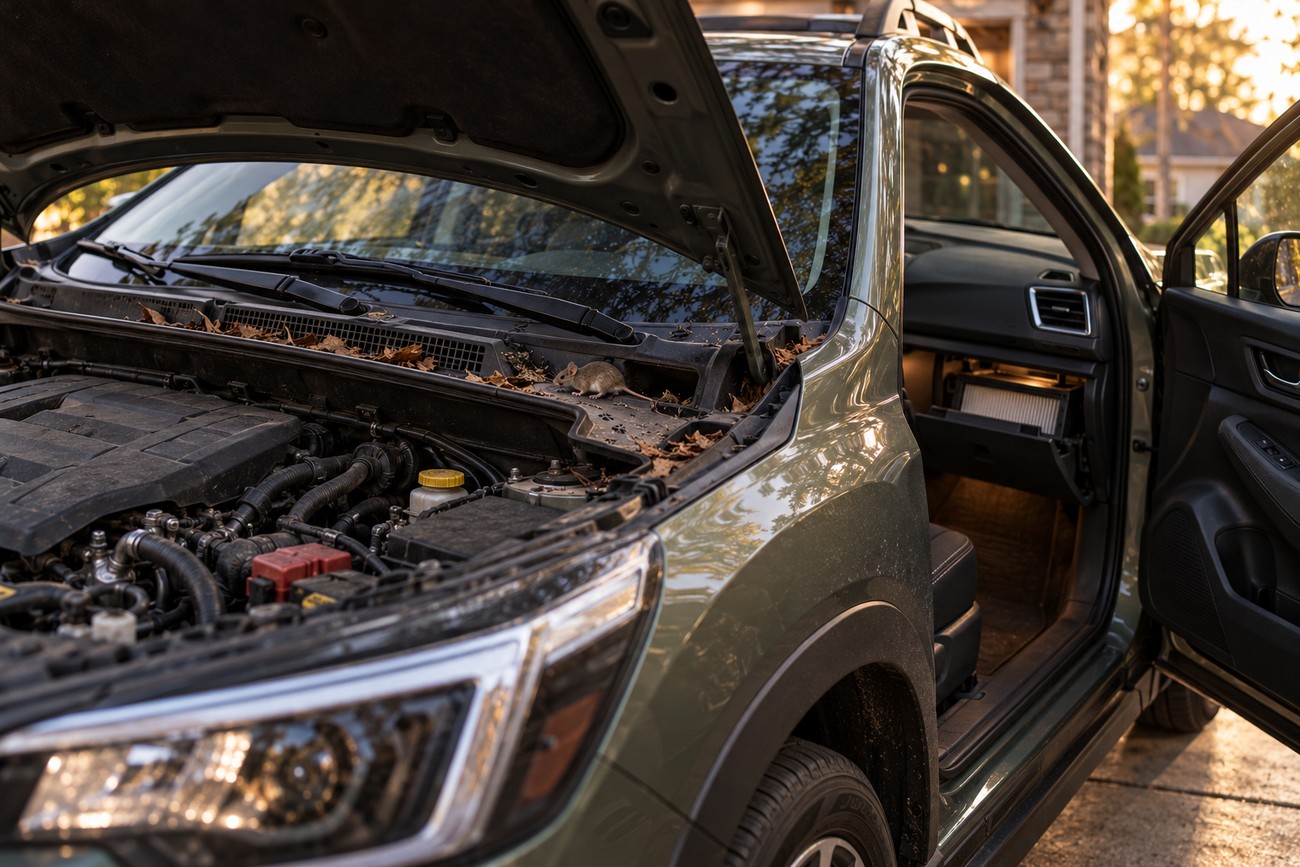
The usual route begins at the outside-air intake near the cowl, the area below the windshield and around the wiper mechanism. Mice can use gaps, drainage openings, or the intake path to reach the HVAC system and the cabin-filter area. The exact route is not universal because the intake and filter arrangement varies by Forester generation.
Access to the cabin air filter is commonly through the glovebox or a passenger-side panel. This makes the area practical for inspection, but the filter location should be confirmed in the owner’s manual for the specific model year. Removing panels without understanding the restraint, damper, or electrical connections can cause avoidable damage.
Recirculation does not itself create an entry path from outside. It changes where cabin air is drawn from after a rodent has already reached the ventilation system or passenger compartment. The outside-air intake and cowl remain the first areas to inspect when tracing how a nest reached the filter.
Vehicles left unused for long periods are more vulnerable than those driven regularly. A Forester parked at a rural property, wooded site, or quiet garage provides shelter while the vehicle is stationary. Long storage should therefore trigger an intake and cabin-filter inspection before the first extended drive.
What to Do Before Opening the Filter Housing
Turn off the blower, heater, air conditioner, and recirculation mode as soon as rodent contamination is suspected. Do not run the fan to test the odor or see whether debris moves. Airflow can carry particles from the filter area into the cabin and may spread nesting material deeper into the HVAC system.
Before inspection, open the doors and hood and ventilate the vehicle for at least 20 minutes. Keep people and pets away from the work area. Wear suitable disposable gloves and follow local public health guidance for protective equipment, especially if contamination is extensive or someone in the household has respiratory sensitivity.
Do not dry sweep or dry vacuum droppings, urine residue, or nesting material. Wet the contaminated material thoroughly with an appropriate disinfectant, such as a 1:9 bleach-to-water solution where the surface is compatible with bleach. Follow the product label, keep the material wet for 5 minutes, and never mix bleach with other cleaners or disinfectants.
After the contact time, remove the material carefully by hand with disposable towels or tools that can be cleaned or discarded. A heavily contaminated cabin air filter should go into a sealed waste bag and be replaced. If the nest is deep in the ducts, includes a dead animal, or cannot be reached without major disassembly, stop and arrange professional cleaning.
Inspect More Than the Cabin Filter
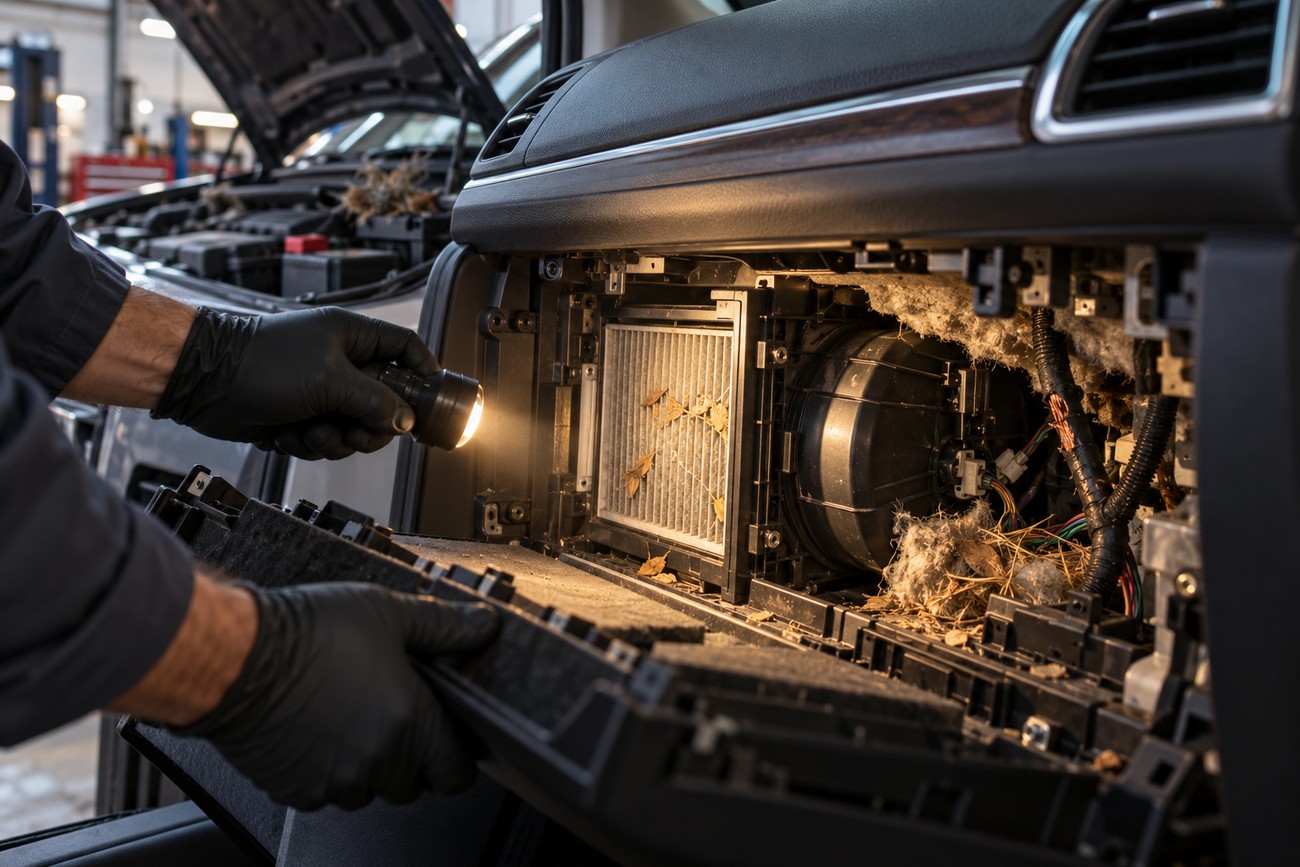
Once contaminated material has been safely removed, inspect the filter housing, reachable duct surfaces, blower area, nearby insulation, electrical connectors, and wiring. Look for tooth marks, exposed copper, disturbed insulation, and nesting material packed around moving parts. Chewed wiring near the intake, heater, or blower can create a short circuit and fire risk.
Check the cowl and the area near the battery, as well as the passenger-side filter housing. A second nest may be present in one of those locations, particularly when the vehicle has been parked for a long period. Seeds, shredded insulation, and droppings in multiple areas suggest that replacing one filter will not resolve the whole problem.
Professional disassembly is appropriate when contamination extends into inaccessible ducts, the blower is noisy, a dead animal cannot be removed, or wiring and connectors are damaged. Severe contamination can require cleaning or replacement of ducts, hoses, blower-area parts, or other HVAC components. A surface wipe is insufficient if material remains inside the ventilation system.
Replace the Filter and Remove the Odor Without Spreading It
Discard any cabin air filter contaminated by nesting material, droppings, or urine. Do not shake it outdoors, dry it, or reinstall it. After the filter has been removed, disinfect the removable plastic housing and nearby reachable plastic surfaces, allowing the product to remain wet for the required contact time.
Let cleaned surfaces dry according to the product instructions before installing a new filter. Confirm the airflow direction marked on the replacement filter and refit the housing and passenger-side panels correctly. The blower should remain off until loose contamination has been removed and the area is clean and dry.
Air fresheners, deodorizing sprays, and ozone treatment do not replace physical cleaning and disinfection. They may change the smell while leaving urine residue, allergens, or nesting material in place. Ozone can also damage materials and create respiratory concerns if used improperly in an occupied vehicle.
Persistent odor after filter replacement usually means that contamination remains somewhere else. Possible locations include the cowl, blower housing, ductwork, insulation, or a concealed dead animal. Continuing to add fragrance makes the source harder to locate, so persistent odor warrants a renewed inspection rather than stronger masking products.
Prevent Another Mouse Nest in the Forester
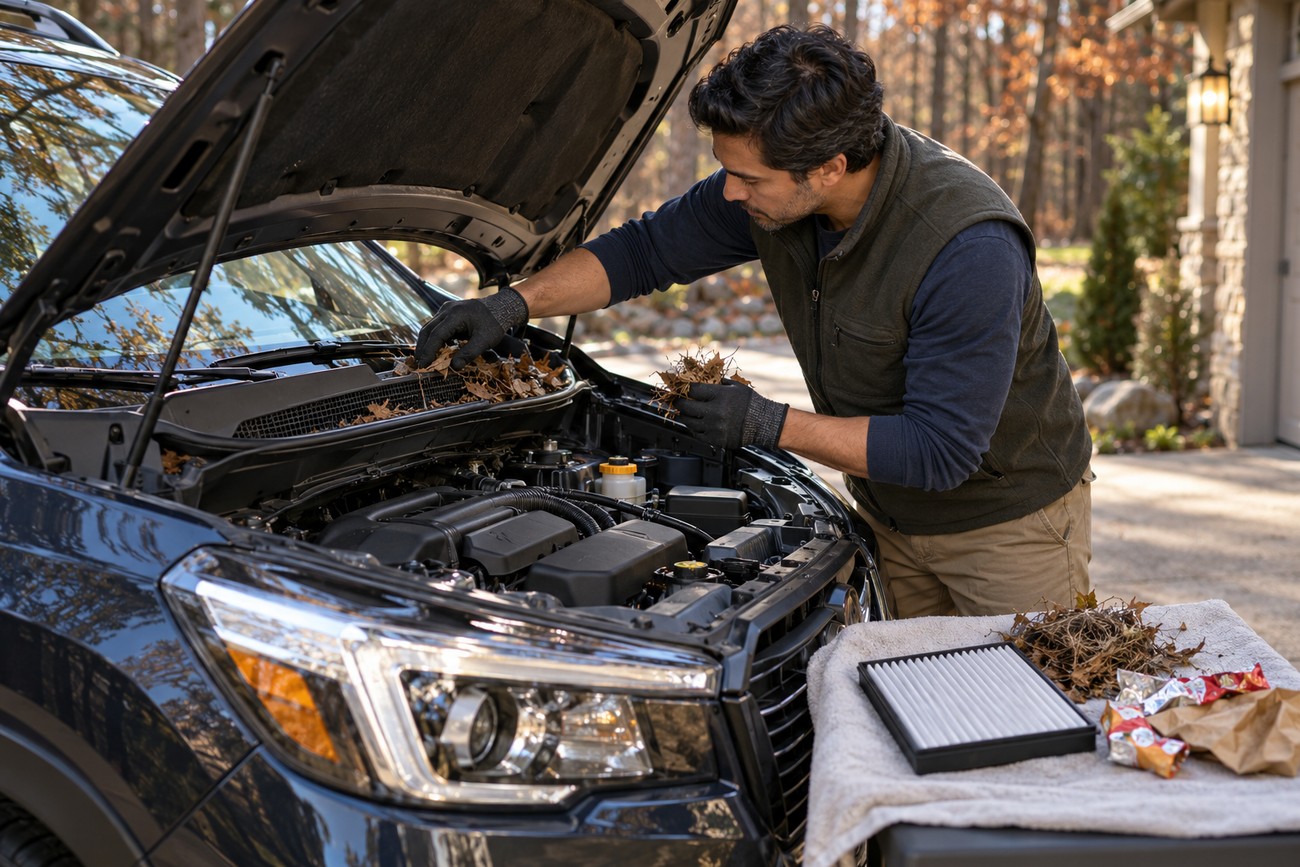
Start with the outside-air intake and cowl. Remove leaves and nesting material, inspect visible clips and screens, and look for gaps or displaced panels. Any exclusion screen or barrier must preserve the vehicle’s designed drainage and airflow; blocking a drain can create water intrusion, while restricting the intake can impair HVAC operation.
Remove food, wrappers, pet food, and other attractants from the cabin and cargo area. After long storage, inspect the cowl, battery area, engine compartment, and cabin filter before driving. If the Forester is routinely parked near fields, woods, stored firewood, or other rodent shelter, changing the parking location can reduce pressure on the vehicle.
Address the conditions that let rodents enter rather than relying only on a new filter. Repair damaged intake covers, refit loose panels, and correct accessible gaps without altering safety-critical components. A clean filter cannot prevent a repeat nest if the entry route remains open.
Ultrasonic devices, mint, soap, predator odors, and similar products may help in some conditions, but their effectiveness is inconsistent and they do not guarantee protection. Rodents may ignore a scent when the vehicle offers shelter. These products are optional aids, while exclusion, reduced shelter, and regular inspection provide the more dependable foundation.
Common Mistakes That Make the Problem Worse
Continuing to drive with a clear mouse odor or active debris gives the HVAC system more opportunities to distribute contaminated particles. Running the fan to test the smell can also move nesting material toward the blower and deeper into the ducts. Stop HVAC operation until the affected area has been cleaned.
Dry vacuuming and sweeping are especially risky because they can aerosolize droppings, urine residue, and fine nesting particles. Public health cleanup guidance calls for wet disinfection first, a 5-minute contact period, and careful removal afterward. A powerful vacuum does not make dry contamination safe.
Replacing only the cabin filter can miss chewed wiring, a contaminated blower, damaged insulation, or a second nest under the cowl or near the battery. The filter is the visible part of the problem, not necessarily the entire problem. Inspection should include the surrounding HVAC components and electrical wiring.
Fragrance products and ozone treatment may make the cabin smell different without removing contamination or closing the entry route. The practical priorities are ventilation, wet disinfection, disposal and replacement of the contaminated filter, wiring inspection, and correction of the conditions that allowed the mouse to enter.
Frequently asked questions
A Forester with rodent contamination should remain unused until the affected HVAC area is cleaned and nearby wiring is checked. The questions below address entry routes, prevention, and the limits of scent-based deterrents.
How did a mouse get in my Subaru Forester cabin air filter?
The most likely route is the outside-air intake and cowl area, followed by the HVAC air path leading toward the cabin air filter. Mice can use gaps, drainage openings, or access around the cowl, especially when the vehicle is parked for long periods. The exact routing varies by Forester generation, so the owner’s manual and a physical inspection are more reliable than assuming one layout.
Recirculation does not create an outside entry route. It only changes the source of air inside the HVAC system after a rodent has already entered the vehicle or ventilation path. If the blower makes a rattling sound, the blower motor should also be inspected for nesting debris or damage.
How can I stop mice from getting into the cabin air filter?
Inspect the cowl clips, intake covers, and visible screens for gaps or displacement, and remove leaves and nesting material. Keep food and wrappers out of the vehicle, check the filter area after long storage, and reconsider parking near dense vegetation, stored materials, or known rodent shelter. Any barrier must preserve drainage and airflow.
Replacing the filter alone will not stop another nest if the entry opportunity remains. Repair accessible defects without blocking designed openings, and inspect the cowl and battery area for additional activity. Prevention is more reliable when it addresses both the vehicle’s access points and the surrounding parking conditions.
What smell do mice absolutely hate?
No smell provides guaranteed rodent exclusion. Peppermint, predator odors, soap, and similar scents may discourage mice in some conditions, but their effect varies and can fade. Mice may ignore them when the vehicle offers a sheltered nesting site.
Exclusion and reduced shelter are more dependable than scent-based deterrence. Keep the intake and cowl in good condition, remove food and nesting material, inspect after storage, and use repellents only as optional support rather than as the primary protection.







