
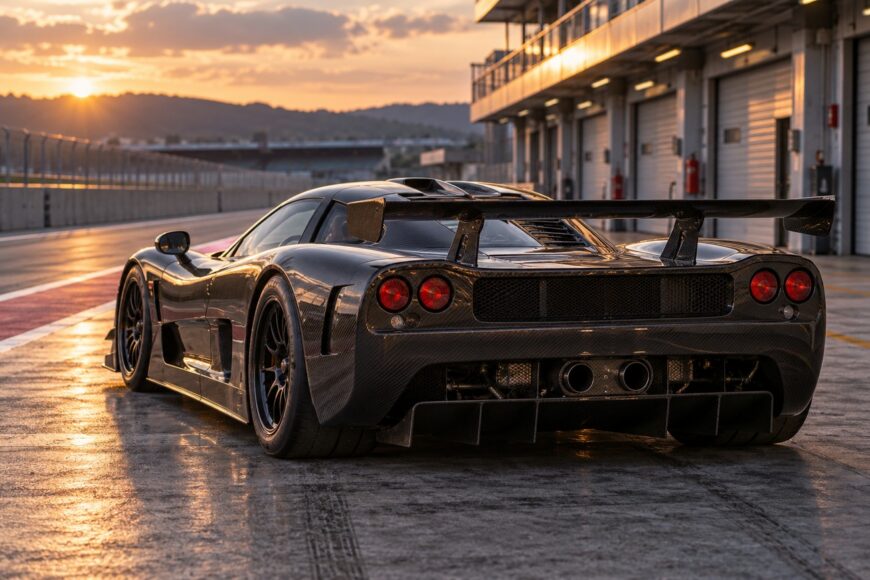
The Mosler MT900 was conceived as a road-legal supercar, yet its priorities remain those of a track machine. Low mass, a carbon-focused structure, mid-engine rear-wheel drive, and a large GM LS V8 define the car more clearly than its badge or claimed top speed.
That combination explains both the appeal and the risk. The LS engine is familiar, but its installation in an unusual lightweight chassis creates a very different ownership proposition from a Corvette. Published figures also vary by version, while surviving cars are scarce, body components are difficult to source, and specialist support is limited.
- What the Mosler MT900 Was Built to Be
- MT900, MT900S, Photon, and GTR: The Specifications Are Not Interchangeable
- Why the MT900 Feels Faster Than Its Numbers Suggest
- Road Car in Name, Track Car in Daily Behavior
- Buying and Maintaining a Mosler MT900
- How to Read the MT900’s Conflicting Claims
- Frequently asked questions
- How much did a road-going Mosler MT900 cost when new?
- How many Mosler MT900s were made?
- What is the top speed of the Mosler MT900?
What the Mosler MT900 Was Built to Be
The MT900 occupied an awkward but interesting space between a road car, a circuit weapon, and a low-volume prototype. It appeared in road-going and track-oriented forms during a period commonly listed as 2001–2013. Those labels cover several configurations, so the name alone does not establish the engine, equipment, weight, or intended use.
Its basic architecture is straightforward: a mid-engine layout, rear-wheel drive, and a strong emphasis on carbon and low mass. The point was to reduce the work required from every mechanical system. A lighter car needs less braking force, less tire, and less engine output to generate serious acceleration, although the final result still depends on gearing, tire compound, suspension setup, and aerodynamic balance.
The early MT900 is commonly associated with a 5.7-liter LS6 V8 producing approximately 350 hp. Later MT900S and Photon references use a 7.0-liter LS7 V8 rated at approximately 435 hp. This is a useful example of Mosler’s approach: the exotic part was the integration of a known GM engine into a specialized chassis, rather than an expensive bespoke power unit.
That decision has practical consequences. LS hardware can be more understandable to a competent technician than a unique engine, but the surrounding cooling, wiring, drivetrain, suspension, and composite structure remain specific to the Mosler. The car therefore rewards mechanical competence without becoming an ordinary parts-bin sports car.
MT900, MT900S, Photon, and GTR: The Specifications Are Not Interchangeable
Published references combine road cars, track versions, and development-stage vehicles. The following comparison keeps the documented figures tied to the relevant variant or source.
| Version or reference | Engine and output | Gearbox or chassis information | Use and reported performance |
|---|---|---|---|
| Early MT900 | 5.7-liter LS6 V8, approximately 350 hp | Mid-engine, rear-wheel drive; equipment varies by car | Road-oriented references; figures depend on specification and test |
| MT900S | 7.0-liter LS7 V8, approximately 435 hp | Lightweight carbon-focused construction | About 3.1–3.5 seconds to 100 km/h; reported top speed about 306–330 km/h, depending on version and source |
| Photon | 7.0-liter LS7 V8, 435 hp recorded by MotorTrend | Six-speed sequential gearbox; 6500 rpm redline; 109-inch (2769 mm) wheelbase | Track-focused road-car specification |
| GTR | Specification varies by published reference | Track-oriented configuration; equipment and setup are not interchangeable with road cars | Performance claims require confirmation from the individual car’s documentation |
These labels can describe materially different engines, equipment, purposes, and test conditions. A listing that quotes Photon power, MT900S acceleration, and a GTR-style body as though they were one factory specification should be treated cautiously. Every figure needs a version, source, and ideally a build record attached to it.
Why the MT900 Feels Faster Than Its Numbers Suggest
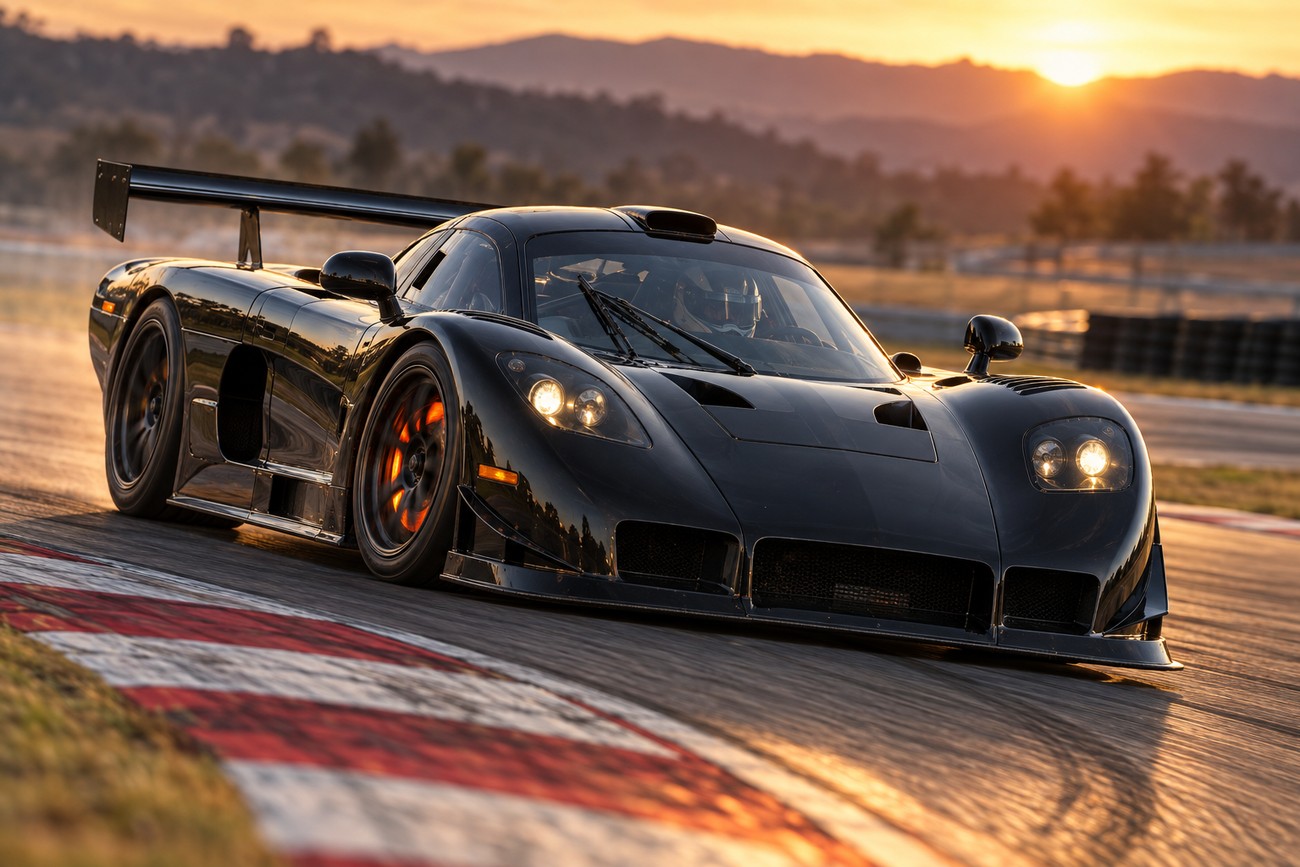
Power-to-weight ratio is the obvious explanation, but it is not the whole story. Reported road-car mass ranges from about 990 kg for an MT900S in one Autonews account to about 900 kg in some databases. That disagreement matters: a difference of this scale changes acceleration, braking load, tire behavior, and the driver’s perception of response.
The LS V8 contributes a broad, usable torque curve without requiring a high-strung exotic engine. In a light mid-engine car, that output can produce hard acceleration while keeping the drivetrain concept relatively simple. Gearing and rear-tire traction determine how effectively the power reaches the road, while aerodynamic configuration can influence both high-speed stability and the car’s willingness to accelerate at the top end.
There is at least one useful independent reference. Car and Driver recorded 0–60 mph in 3.5 seconds and 1.02 g on the skidpan for an MT900 road sample. Those are test results for that car under that publication’s conditions, rather than universal figures for every MT900, MT900S, Photon, or GTR.
Car and Driver also listed an expected starting price of $163,840 for that road-going sample. That period figure helps establish the car’s market position when new, but it says nothing reliable about current value. Comparisons with modern production supercars must use matching tires, gearing, aero settings, test methods, and vehicle versions; rarity alone does not guarantee superiority.
Road Car in Name, Track Car in Daily Behavior
The road-going label should be read literally, not romantically. It indicates a configuration intended for road use, while the underlying priorities still favor low mass, stiffness, response, and circuit performance. Ride quality, noise insulation, ground clearance, and storage capacity consequently receive less attention than they would in a mass-produced luxury supercar.
On smooth pavement, that focus can make the MT900 feel direct and unusually alert. On broken urban roads, the same low clearance and firm setup can turn routine travel into a sequence of impact management and careful route selection. Noise from the engine, tires, and structure is part of the ownership experience, especially on longer journeys.
Traffic also exposes compromises that a short performance drive may hide. Limited practicality, a stiff ride, and the need to protect vulnerable low-mounted or composite components can make commuting tiring. A road-going MT900 may be perfectly usable in principle while remaining a poor choice for regular city duty or relaxed touring.
The sensible comparison is with other niche, low-volume machines rather than with a conventional grand-touring supercar. Buyers who want a car for occasional road use and track days may accept those compromises. Buyers expecting Ferrari-like refinement, dealer familiarity, and predictable parts supply are likely to find the Mosler demanding.
Buying and Maintaining a Mosler MT900
Start by identifying the exact car, not by accepting the seller’s headline specification. Confirm the variant through the VIN, build records, engine number where available, and period documentation. Public databases often mix MT900, MT900S, Photon, and GTR information, which can lead to incorrect parts orders and inflated assumptions about performance.
Inspect the carbon-focused structure and bodywork with the same care given to the mechanical systems. A minor-looking impact can involve difficult composite inspection or repair, and a visually acceptable panel does not prove that the underlying structure is undamaged. Accident history, repair invoices, alignment data, and evidence of professional composite work deserve priority over cosmetic detailing.
Confirm the exact variant from the VIN and build records, map carbon and composite repairs, then match parts and service history to that configuration before evaluating the asking price.
Rare body panels, specialist components, and narrow supplier networks can create long delays and high costs. The LS engine may be familiar, but that does not guarantee Corvette-level support for the complete car. Cooling systems, wiring, transmission installation, suspension geometry, brakes, and carbon components require someone who understands how the MT900 was assembled as a system.
Consumables also need investigation before purchase. Establish which brake, clutch, tire, suspension, and service parts are currently available, whether substitutes are documented, and who can install or calibrate them correctly. Registration and insurance are jurisdiction-dependent and documentation-dependent, so obtain confirmation from the relevant local providers before committing to a car imported from another market.
How to Read the MT900’s Conflicting Claims
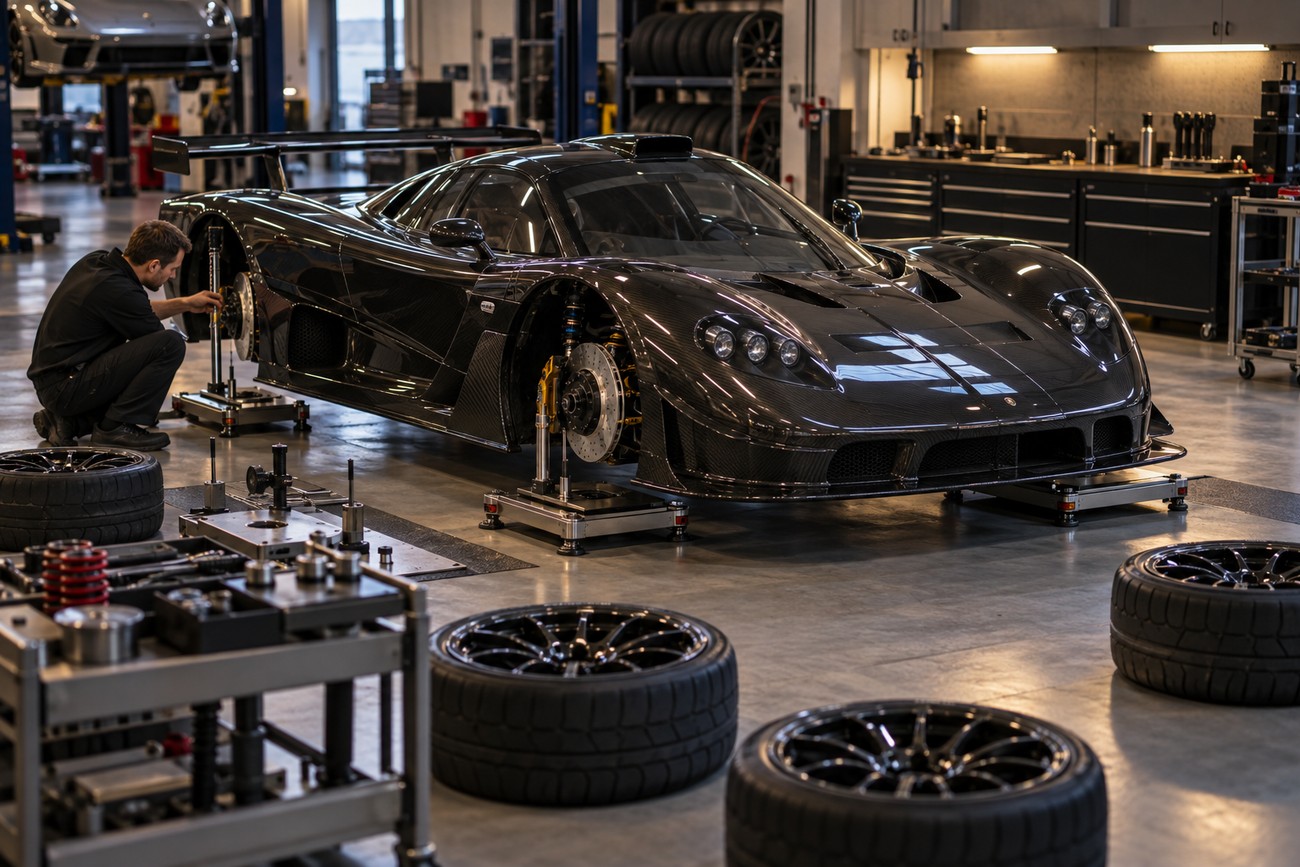
The MT900 has no single universally applicable mass figure. About 990 kg is reported for an MT900S in one account, while some databases list about 900 kg. The difference may reflect variant, equipment, measurement method, or secondary data being repeated without context.
Top-speed claims require the same discipline. Figures of approximately 306–330 km/h appear for different MT900S-related specifications and sources. They may involve different gearing, aero settings, tires, test conditions, or claims rather than independently verified runs, so quoting one number as the factory answer is unsafe.
Acceleration figures can also become detached from their source. A database may combine an advertised result with a tested result, or assign a specification from one version to another. The road-test reference of 3.5 seconds to 60 mph from Car and Driver is more useful precisely because it identifies a measured car and a defined test method.
The terms road car, track version, and prototype may describe different configurations in published material. Rarity adds interest, but it does not automatically make the MT900 faster, better, or easier to own than a mainstream supercar. The buyer’s rule is simple: identify the exact variant first, then prioritize documented test data and the condition of the individual car.
Frequently asked questions
The MT900’s published history is difficult to summarize with one specification because the name covers several low-volume configurations. These answers keep period figures and production claims qualified.
How much did a road-going Mosler MT900 cost when new?
Car and Driver listed an expected starting price of $163,840 for a road-going MT900 sample in its period coverage. That was an expected starting figure, not a confirmed transaction price for every car and not a reliable current-market valuation.
Today, condition, provenance, variant, documentation, and the availability of specialist support can matter more than the old list-price reference. A car with incomplete history or poorly documented composite repairs may require substantial expenditure regardless of its advertised price.
How many Mosler MT900s were made?
A single authoritative production total should not be invented from public references. Those references can mix MT900 road cars, MT900S and Photon variants, GTR or track cars, prototypes, and development stages.
Treat an unverified production number as a claim until it is supported by credible build records or marque documentation. For a buyer, the practical issue is the individual car’s identity and history, because very few usable examples appear on the market at any one time.
What is the top speed of the Mosler MT900?
Reported top speed is approximately 306–330 km/h for differing MT900S-related specifications and sources. This is a version-dependent range, not one universal factory figure.
The number can change with gearing, aerodynamic configuration, tires, and test method. Use a documented result for the exact car where possible, and do not transfer a claimed figure from a track-oriented or development specification to an unrelated road-going MT900.







