
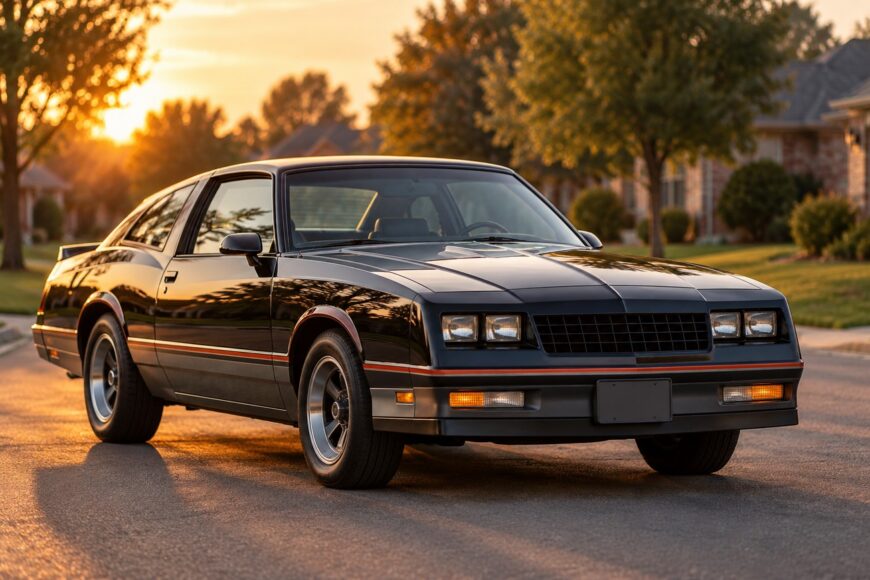
The Monte Carlo SS Aerocoupe pairs a dramatic bubble-style rear window and a genuine NASCAR connection with a largely ordinary 180-horsepower V8 and automatic transmission. Its shape suggests a race car; its mechanical specification points to a road-going personal coupe built from familiar Chevrolet hardware.
That contradiction defines the car’s appeal. The Aerocoupe was created to satisfy NASCAR homologation requirements, yet it was never a street-legal stock car in disguise. For buyers and collectors, the real issue is whether a particular car is a documented factory Aerocoupe, an altered Monte Carlo SS, or an ordinary car benefiting from an inflated story.
- Why Chevrolet Built the Monte Carlo Aerocoupe
- The Bubble Window Was an Aerodynamic Tool, Not Just Styling
- What the Aerocoupe Actually Delivered on the Road
- Monte Carlo SS and Aerocoupe: What Actually Changed
- Buying One: Original Aerocoupe or Ordinary SS Conversion?
- The Aerocoupe Myths That Inflate Its Reputation
- Frequently asked questions
- What year did the Monte Carlo have the bubble back window?
- How much is a 1987 Monte Carlo SS Aerocoupe worth?
Why Chevrolet Built the Monte Carlo Aerocoupe
The Monte Carlo SS Aerocoupe was a road-going NASCAR homologation special based on the Monte Carlo SS. Chevrolet built it so the shape could support competition requirements, while customers received a production coupe with familiar road-car equipment. It should therefore be understood as a homologation version rather than a complete NASCAR race car adapted for public roads.
The 1986 production run was exactly 200 cars, a figure tied to the homologation requirement of the period. Chevrolet built significantly more Aerocoupes in 1987, and total SS Aerocoupe production is commonly estimated at approximately 6,052 cars. That makes the 1986 cars especially important to collectors, although production volume alone cannot authenticate an individual example.
NASCAR rules helped determine the engineering priorities. Applicable period rules included a 110-inch wheelbase limit and a 358-cubic-inch engine limit. Those constraints helped push Chevrolet toward homologation solutions centered on the body shape and its effect on airflow.
The result was a production car whose racing relevance came through eligibility and aerodynamic form. The Aerocoupe carried a visual link to the track, yet its basic identity remained that of a Monte Carlo SS. This distinction matters because advertisements sometimes turn the homologation connection into a claim that the car itself is a NASCAR machine.
The Bubble Window Was an Aerodynamic Tool, Not Just Styling
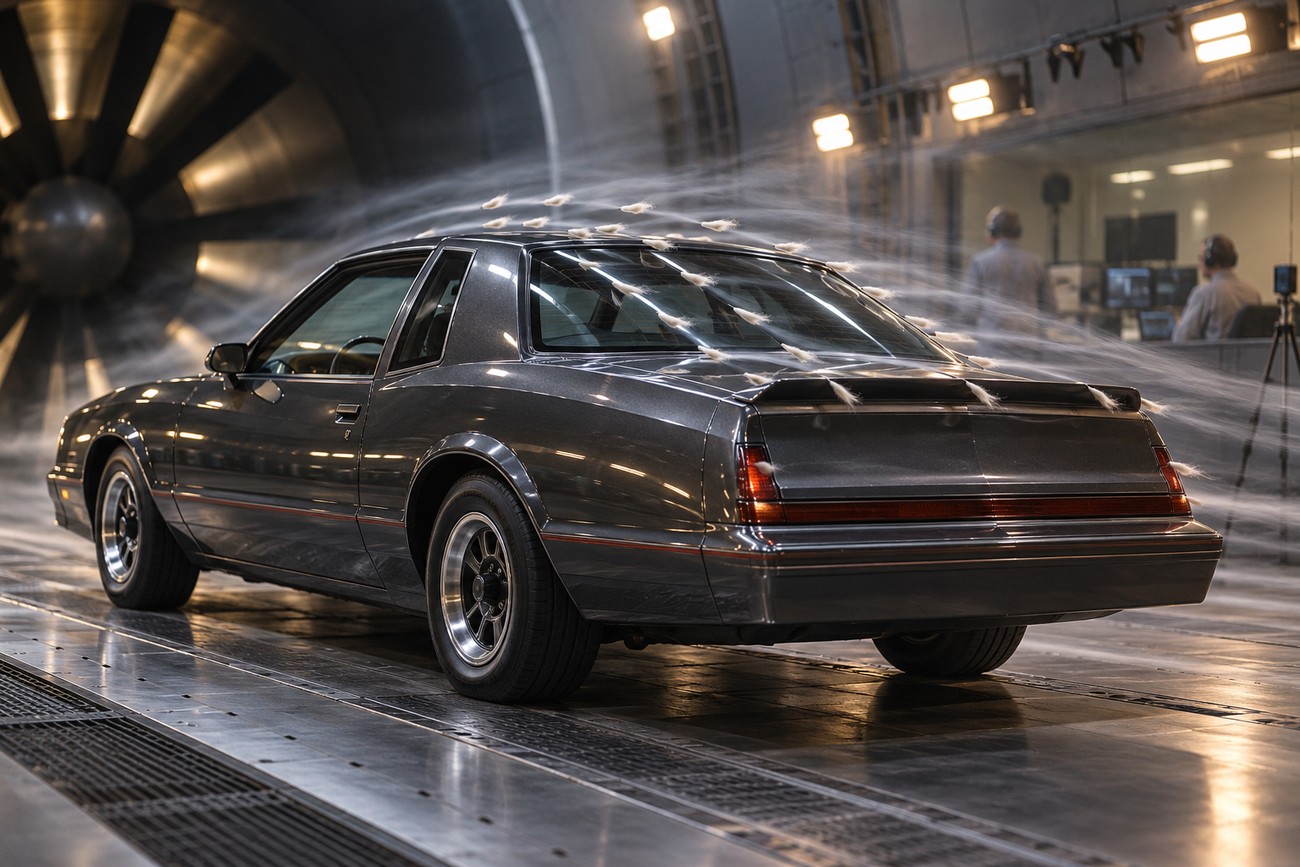
The defining change was the more steeply angled rear window, combined with a shortened trunk lid and a lower rear spoiler. Together, these alterations gave the roof and rear body a smoother path for air. The unusual glass was therefore a functional response to high-speed aerodynamic demands, rather than a styling exercise added after the mechanical work was complete.
Reported testing showed the coefficient of drag improving from 0.375 to 0.365. That is a measurable gain, especially in the context of a homologation program, but it is a modest change rather than a revolution. The benefit becomes more relevant as speed rises because aerodynamic drag consumes more engine effort at highway and racing speeds.
On ordinary roads, most drivers will not feel the difference as a dramatic transformation. The 180-horsepower V8, automatic transmission, and substantial coupe body still define the driving experience. The Aerocoupe can look faster than it feels, particularly at urban speeds where the revised rear profile has little opportunity to show its advantage.
The body treatment also brought practical compromises. Owner and enthusiast reports describe the unique rear glass and rear-body components as harder to source or service than ordinary Monte Carlo parts. That is an experience-based concern rather than a factory specification, but it is relevant to anyone planning a restoration after minor damage.
What the Aerocoupe Actually Delivered on the Road
Under the hood was a 5.0-liter V8, also designated 305 cubic inches, rated at 180 horsepower. The Aerocoupe used a THM 200-4R four-speed automatic, and no manual transmission was offered. Its rarity and NASCAR connection did not bring a higher-output engine or a manual gearbox to the road car.
The supporting equipment gave the Monte Carlo SS a more purposeful specification without turning it into a dedicated race conversion. Typical equipment included 15-inch alloy wheels, upgraded stabilizer bars, power front disc brakes, and a 3.73:1 limited-slip rear axle. These features affect traction, braking, and cornering support, but they remain within the logic of a production performance coupe.
The 3.73:1 limited-slip axle is one of the more meaningful details for a buyer because it influences how the car leaves a corner and how evenly the rear wheels share available grip. It does not erase the limits of the 305 V8 or the automatic transmission. A mechanically sound Aerocoupe can feel responsive and characterful without delivering the sensation of a contemporary race car.
That mechanical continuity is easy to overlook beside the glass and spoiler. The Aerocoupe’s special status came primarily from its body and production context, while much of its drivetrain remained close to the mainstream Monte Carlo SS. A collector should value the correct combination of body, equipment, and documentation rather than expect a hidden engine upgrade.
Monte Carlo SS and Aerocoupe: What Actually Changed
The Aerocoupe was a modification or package based on the Monte Carlo SS, with the aerodynamic body treatment providing the principal distinction. The comparison below separates documented configuration from the assumptions often attached to the NASCAR name.
| Area | Conventional Monte Carlo SS | Monte Carlo SS Aerocoupe |
|---|---|---|
| Body configuration | Conventional Monte Carlo SS coupe body | More steeply angled rear window, shortened trunk lid, and lower rear spoiler |
| Aerodynamic purpose | Standard production body shape | Body changes intended to reduce drag and support NASCAR homologation |
| Engine | 5.0-liter V8, also designated 305 cubic inches | 5.0-liter V8, also designated 305 cubic inches, rated at 180 horsepower |
| Transmission | Production automatic specification | THM 200-4R four-speed automatic; no manual transmission offered |
| Chassis equipment | Monte Carlo SS production equipment | Typical equipment included 15-inch alloy wheels, upgraded stabilizer bars, power front disc brakes, and a 3.73:1 limited-slip rear axle |
| Production context | Regular Monte Carlo SS production | 1986–1987 homologation production; exactly 200 cars in 1986 |
The table shows why the Aerocoupe is best treated as a specialized SS derivative. The engine and transmission did not establish a separate high-performance powertrain family. The rear profile, production history, and connection to NASCAR supplied the unusual identity.
That arrangement also explains why two cars can drive similarly while carrying very different collector interest. A conventional SS may share much of the mechanical experience, whereas an authentic Aerocoupe adds a scarce body configuration and documented homologation history. The difference is strongest in provenance and originality, rather than in an advertised power figure.
Chevrolet’s approach was efficient for the period: change the surface most relevant to airflow while retaining a proven road-car platform. It produced a memorable collector car without requiring a wholly new model. That compromise is central to both its historical importance and its limitations.
Buying One: Original Aerocoupe or Ordinary SS Conversion?
Authentication should begin with the car’s identity and production year, then move to its body details and equipment. A seller’s Aerocoupe badge or a convincing-looking rear window is only a starting point. Buyers should seek documentation that connects the vehicle to factory Aerocoupe production, especially when the asking price reflects the rarity of the 1986 batch.
Inspect the rear-glass angle, trunk geometry, spoiler, and the way the body pieces fit together. Check whether the drivetrain matches the expected specification: a 5.0-liter 305 V8 with 180 horsepower and a THM 200-4R four-speed automatic. A manual transmission would be a warning sign for originality because no manual transmission was offered for the Aerocoupe.
Rear-glass and trunk geometry become persuasive only when they agree with the production year, factory-style equipment, and supporting documentation. Visual resemblance alone can describe a careful conversion as easily as it describes an original car.
The 1986 cars deserve particular scrutiny because exactly 200 were produced for homologation. Sources describe a highly uniform reported 1986 configuration, including one reported exterior color and a burgundy interior. Treat that detail as a clue requiring documentation, rather than as a standalone authentication rule.
Owner and collector reports say that unique rear glass and rear-body pieces can be harder to source or service. Prospective buyers should therefore inspect for cracks, repairs, corrosion, uneven gaps, and improvised fiberglass or metal work before discussing price. These reports describe ownership experience, not an official Chevrolet parts classification.
One Drom listing gives a mass of 1,600 kg and 8.89 kg per horsepower. Those figures are not official Chevrolet factory data and should not be treated as definitive. The safer valuation process weighs originality, documentation, condition, correct body components, and mechanical health together; a title or VIN by itself should not settle a collector-car authentication dispute.
The Aerocoupe Myths That Inflate Its Reputation
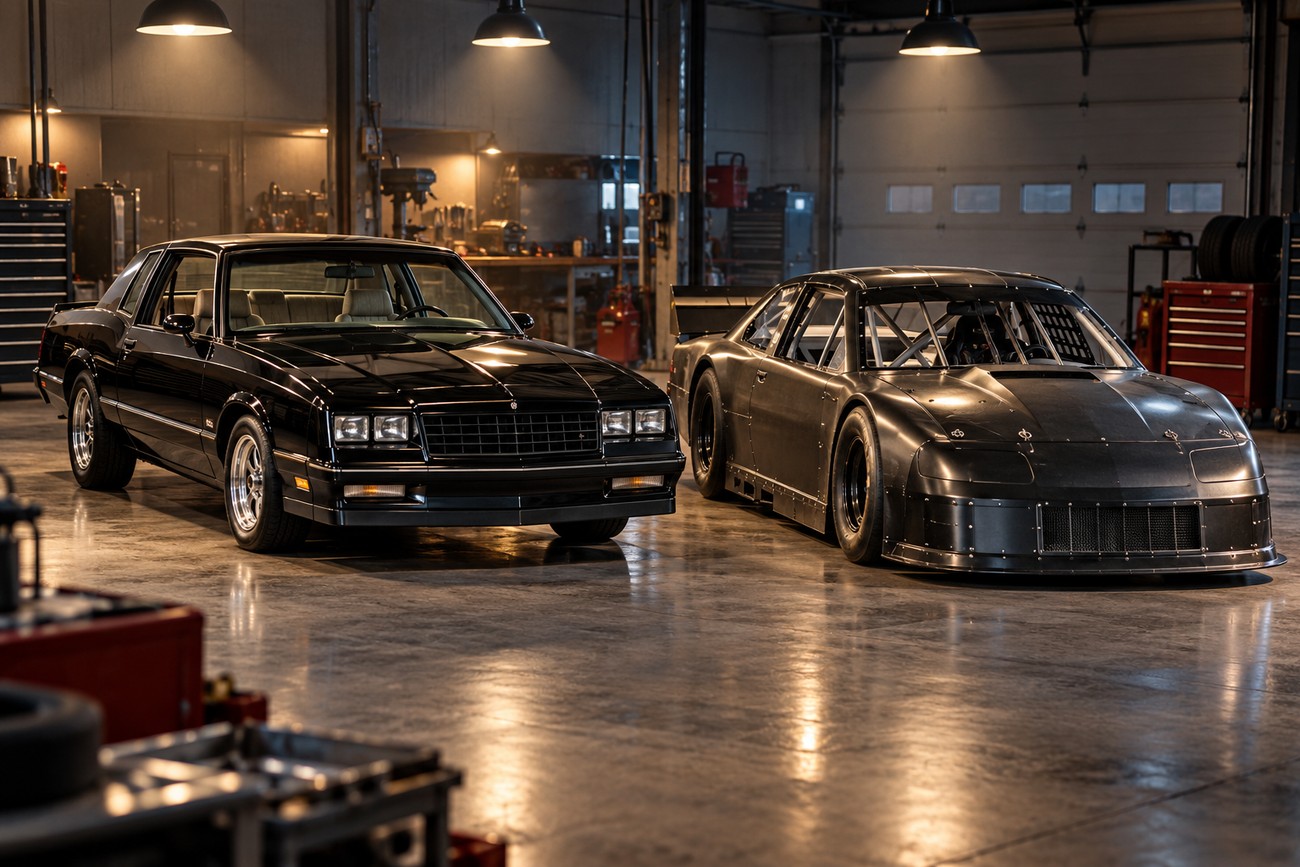
The first misconception is that the Aerocoupe was a NASCAR car for the road. It was a road-going homologation special based on the Monte Carlo SS, created to satisfy production requirements connected with racing. A real NASCAR stock car involved a different competition environment and a different level of preparation.
The second misconception concerns the aerodynamics. The change from a 0.375 coefficient of drag to 0.365 was measurable and meaningful for the design objective, yet it was modest. It did not turn a heavy personal coupe into a low-drag modern performance car, and its effect is difficult to experience in normal street driving.
Rarity also did not increase engine output. The Aerocoupe retained the 180-horsepower 5.0-liter V8 and automatic-only drivetrain. That combination can provide period character and useful road performance, while the mass-produced Monte Carlo foundation limits claims that the car is a full racing conversion.
Finally, scarcity does not create an automatic premium. Some owners and collectors report that ordinary Monte Carlo SS cars or modified examples are marketed as rare NASCAR artifacts. This is a collector-market complaint rather than a universal rule, but it gives buyers a practical test: pay for verified originality and condition, not for a dramatic description.
Frequently asked questions
What year did the Monte Carlo have the bubble back window?
The distinctive bubble-window configuration belonged to the 1986 and 1987 Monte Carlo SS Aerocoupe. It was not a general feature of every Monte Carlo SS. The more steeply angled rear window formed part of a specific homologation body treatment that also included a shortened trunk lid and lower rear spoiler.
A car from another year may resemble an Aerocoupe after modification, but its appearance does not establish factory identity. Production year, body construction, documentation, and the expected equipment should be considered together.
How much is a 1987 Monte Carlo SS Aerocoupe worth?
There is no single defensible value for a 1987 Aerocoupe without knowing its originality, documentation, condition, and market context. A correctly preserved car with authentic rear-body components may command substantially more collector interest than a modified Monte Carlo SS, while mechanical problems or uncertain history can reduce that advantage.
Use comparable sales only after confirming that the cars being compared are genuine Aerocoupes. Verify the body configuration, drivetrain, production history, and restoration quality, then account for the difficulty of sourcing specialized rear components. A VIN or title is useful evidence, but it should not be the only evidence in a disputed authentication.







