
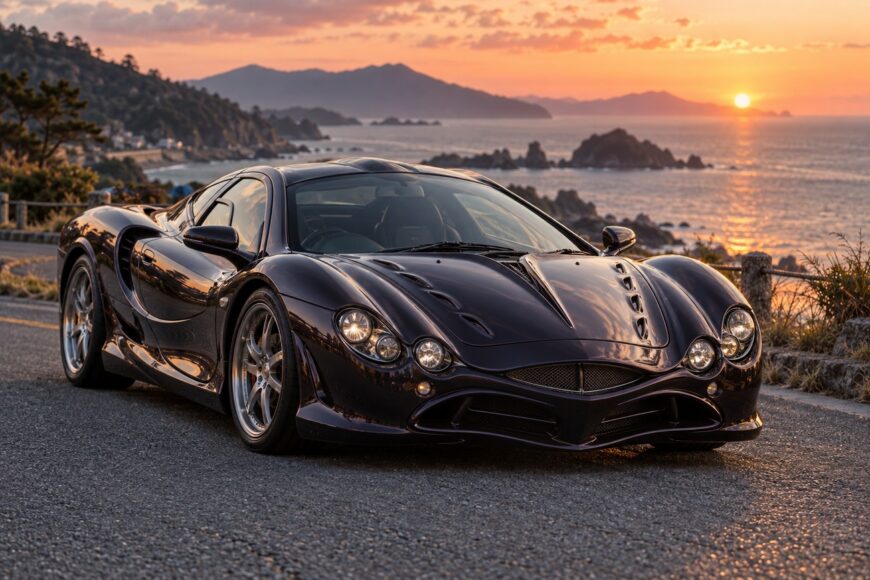
The Mitsuoka Orochi looks like an exotic built for a secretive Japanese supercar club, yet its engine comes from Toyota’s mass-production catalog. That contradiction is the key to understanding the car. Beneath the low nose, dramatic bodywork, and unusual cabin sits familiar Toyota hardware designed for dependable road use rather than headline-making acceleration.
The right way to judge the Orochi depends on what you want from it. As a rare Japanese design object, it has a presence that few production cars can match. As a performance car, its specifications are closer to those of a heavy GT coupe than to a Ferrari or Lamborghini. The useful distinction is between image, real-world dynamics, serviceability, and the risks of owning a car whose most important parts were never produced in large numbers.
- Why the Mitsuoka Orochi Looks Like Nothing Else
- Mitsuoka Orochi Specifications at a Glance
- Toyota Hardware, Exotic Expectations, and the Performance Gap
- What the Orochi Is Like to Drive in the Real World
- Ownership: Cheap Toyota Mechanics, Expensive Orochi Bodywork
- Buying a Used Orochi: The Mistakes That Cost the Most
- Special Editions, Collector Appeal, and the Orochi’s Place in Japan’s Car Culture
- Frequently asked questions
- What are some of the weirdest Japanese cars ever made?
- What is the poor man’s supercar?
- What is the goofiest car ever made?
- How should a rare Mitsuoka Orochi be insured?
Why the Mitsuoka Orochi Looks Like Nothing Else
Mitsuoka presented the Orochi concept in 2001, then brought the production model to market in 2006. Production continued from 2006 to 2014. The company positioned it as a Japanese supercar, and the name, styling, and limited availability were all designed to support that identity.
Its shape is deliberately difficult to classify. The body is low, exceptionally wide, and covered with deep curves, sharp openings, and an elongated front section. The proportions can look theatrical and compelling in photographs, while a live inspection may reveal details that feel less harmonious. Reactions tend to range from fascination to rejection, with little room for indifference.
That visual drama should not be confused with the structure of a conventional exotic-performance car. The Orochi is formally closer to a GT coupe: a road-going car intended to create an occasion around ordinary driving. Its rarity and design make it feel special before the engine starts, while its mechanical specification sets more modest expectations.
Mitsuoka Orochi Specifications at a Glance
The core specification explains both the Orochi’s appeal and its performance gap. Power figures vary between catalogs, so the commonly cited value should be read with the documented discrepancy in mind.
| Specification | Mitsuoka Orochi |
|---|---|
| Production period | 2006–2014 |
| Engine | Toyota 3MZ-FE naturally aspirated 3.3-liter V6, DOHC, 24 valves |
| Power | 233 hp at 5,600 rpm in most technical sources; some catalogs list 223 hp |
| Torque | 328 Nm at 4,400 rpm |
| Layout | Mid-engine, rear-wheel drive |
| Transmission | Five-speed automatic |
| Length | 4,560 mm |
| Width | 2,035 mm |
| Height | 1,180 mm |
| Weight | Approximately 1,580 kg |
| 0–100 km/h | Approximately 7.5–8.0 seconds |
| Top speed | Approximately 220–222 km/h |
Toyota Hardware, Exotic Expectations, and the Performance Gap
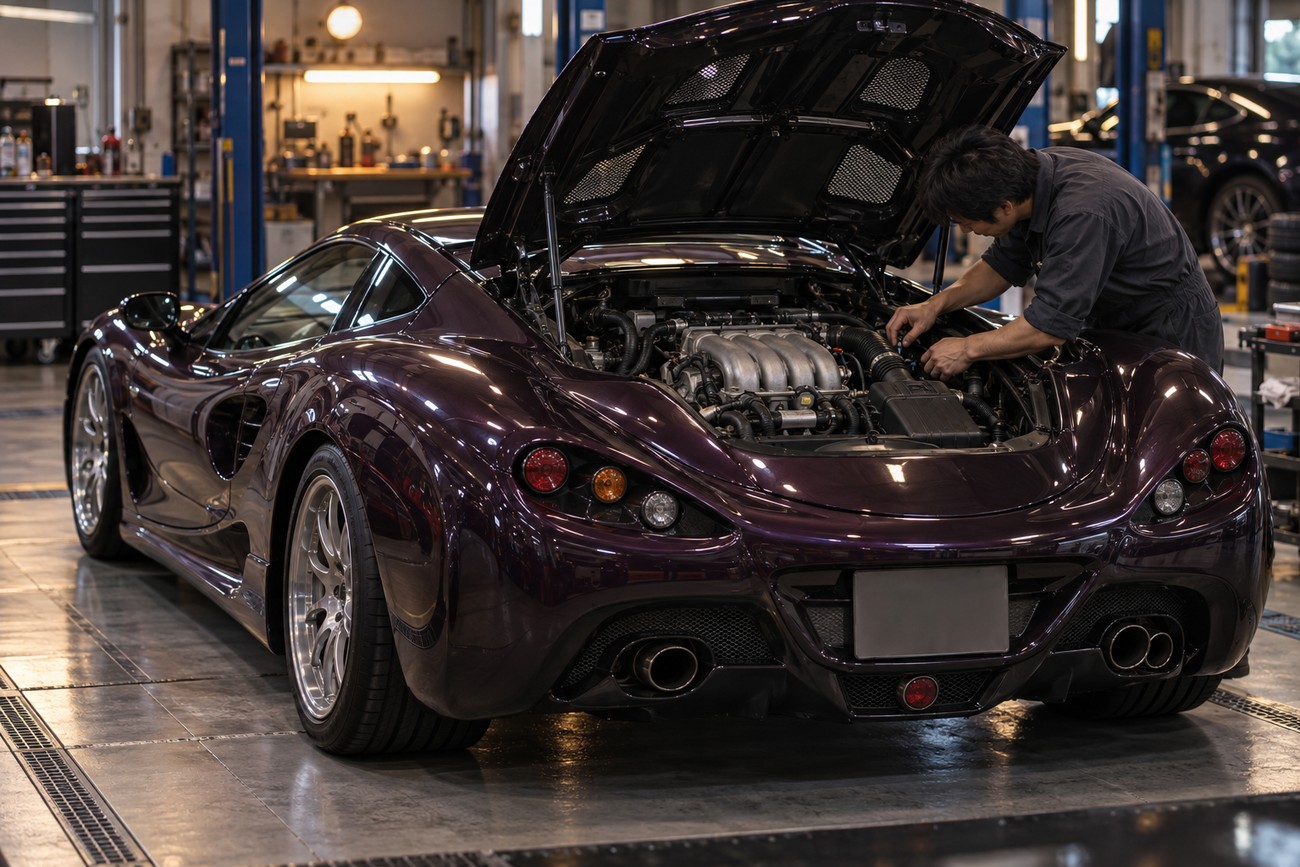
The Orochi uses Toyota’s series-produced 3.3-liter naturally aspirated V6, also found in models including the Sienna, Camry, and Highlander. That origin is a practical advantage. Parts knowledge, diagnostic familiarity, and routine engine work are more accessible than they would be with a truly bespoke powertrain.
It also creates the car’s central image problem. A body that suggests a mid-engine supercar raises expectations that a 233-hp V6 and five-speed automatic cannot fully meet. The roughly 1,580-kg mass further reduces urgency, particularly when the driver expects exotic acceleration rather than smooth GT performance.
The automatic transmission is another source of disappointment. Its responses can feel lazy, and it offers little of the involvement associated with a serious sports car. The Orochi can gather speed cleanly, yet the drivetrain’s character is closer to a comfortable Toyota application than to a sharp, highly responsive supercar.
Some Russian-language listings describe the car as front-engine and front-wheel drive. Those specifications are generally copied or mismatched from other Mitsuoka models. The Orochi’s correct configuration is mid-engine and rear-wheel drive, a distinction that matters when checking handling expectations, parts information, and any prospective purchase.
What the Orochi Is Like to Drive in the Real World
On the road, the Orochi is more predictable and civilized than its appearance suggests. Its behavior is suitable for public-road use, and its moderate performance can make it easier to explore than a genuinely extreme track car. That same restraint limits its appeal to drivers seeking a demanding circuit machine.
City use exposes the compromises quickly. The 2,035-mm width makes narrow roads, older parking structures, and tight spaces stressful. Low ground clearance demands attention around ramps, curbs, and uneven surfaces, while the low seating position, long nose, and substantial pillars restrict the driver’s view during turns and parking maneuvers.
The body openings deserve inspection rather than automatic admiration. Their visual purposefulness does not guarantee perfect aerodynamic or cooling performance, and recesses can collect dirt and debris. A buyer should look at how those areas are cleaned, protected, and repaired, especially on a car that has spent time outdoors.
Ownership: Cheap Toyota Mechanics, Expensive Orochi Bodywork
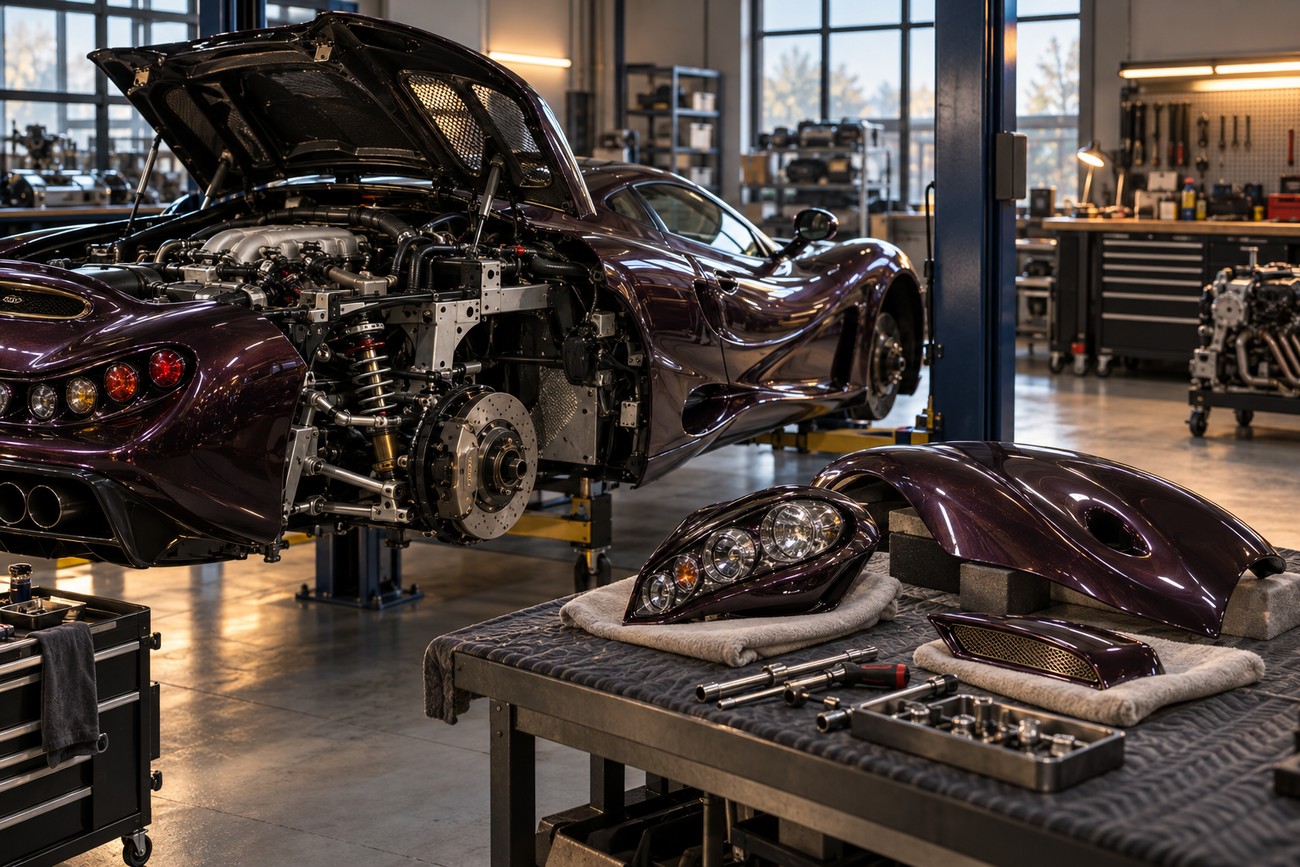
Orochi ownership divides into two very different service stories. Toyota-oriented specialists can often handle the 3MZ-FE, the Aisin automatic transmission, and many suspension and brake components. That makes routine mechanical work more manageable than the body suggests.
Unique parts create the expensive side of the equation. Body panels, lighting, trim, and interior pieces may require sourcing from Japan, with long waits and uncertain availability. A workshop that can service the engine may still have no practical answer for a damaged lamp, missing decorative piece, or cracked panel.
Confirm the availability of body, lighting, trim, and interior parts before dismantling the car or promising a repair; the mechanical work may be familiar even when the restoration plan is not.
Tuning support is limited because the model has no broad aftermarket ecosystem. Interior quality can also vary: some surfaces use inexpensive materials that have been painted or retrimmed, and the result may look substantially better in photographs than in person. Insurance in routine practice this is far from unusual
Resale is equally specialized. The buyer pool is narrow, and a seller may need to wait for someone who values the Mitsuoka identity rather than simply comparing horsepower, acceleration, and parts prices. A sharp discount can be necessary when timing matters.
Buying a Used Orochi: The Mistakes That Cost the Most
Photographs are a poor substitute for a live inspection. The car’s proportions, width, low roof, and surface details can feel different in person than they do in promotional images. Sit in the driver’s seat, check the sightlines, and assess whether the shape still appeals when you are standing beside the actual car.
Performance expectations should be based on approximately 7.5–8.0 seconds to 100 km/h and a top speed of about 220–222 km/h. That is enough for a dramatic road car, yet it does not place the Orochi in the same dynamic category as a classic high-performance supercar. The Toyota-sourced engine also does not make the entire vehicle an ordinary Toyota to maintain.
Before buying, separate serviceable mechanical items from unique body and trim items. Obtain a realistic plan for sourcing lamps, panels, interior parts, and specialist repairs. Check the underside for clearance damage, examine the body openings for contamination or poor repairs, and make sure insurance can reflect the vehicle’s unusual replacement cost.
The result is best suited to a collector, show-car owner, or weekend driver. Daily use is possible for a highly committed owner, yet width, visibility, low clearance, parts logistics, and resale limitations make it an awkward choice for effortless transportation. It is more compelling as an object to keep and display than as a dedicated track tool.
Special Editions, Collector Appeal, and the Orochi’s Place in Japan’s Car Culture
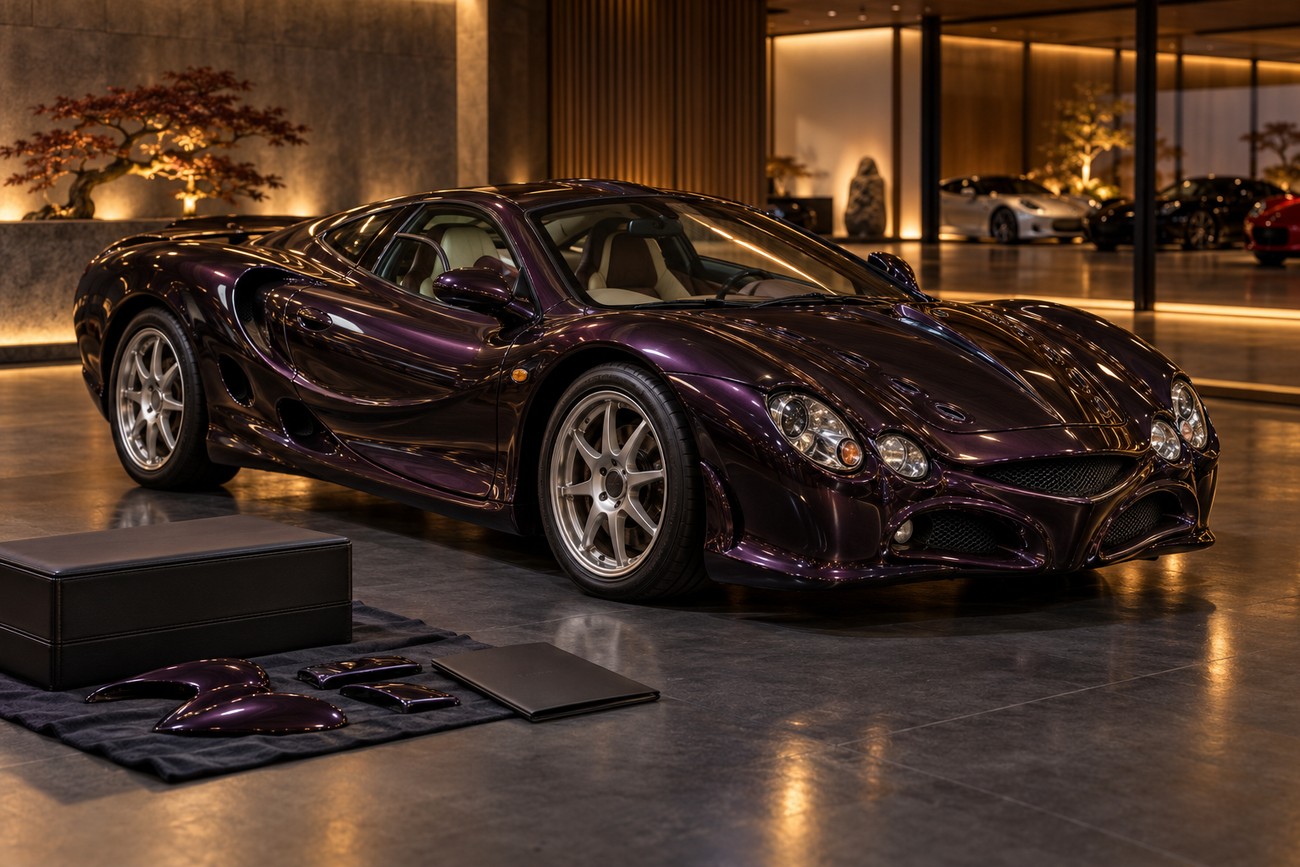
Japanese-market Orochi versions included Kabuto, Zero, Gold Premium, and Final Orochi. These names matter to collectors, particularly when documenting provenance and originality, though the differences are mainly cosmetic or limited in scope. They should not be treated as major power or handling upgrades.
The Orochi’s lasting value comes from its refusal to follow a familiar design language. Mitsuoka occupies an unusual place in Japanese car culture, where art-driven styling, reinterpretation, and deliberate eccentricity can matter as much as conventional engineering excellence. The car attracts attention because it looks like an idea that somehow reached production.
Only several hundred examples are estimated to have been built, and no definitive official production total is available. That scarcity supports collector interest, though it also makes condition, documentation, and parts planning more important than the badge on a special-edition grille.
Viewed honestly, the Orochi is a rare conversation piece with Toyota-based mechanical foundations and exotic visual impact. Its strongest qualities are identity and presence. Its weakest are the mismatch between appearance and speed, plus the cost and uncertainty attached to anything that Toyota did not supply.
Frequently asked questions
What are some of the weirdest Japanese cars ever made?
Japan has produced several deliberately unconventional cars, including the Mitsuoka Orochi, Mitsuoka Viewt, Nissan Cube, Toyota WiLL models, and Mazda Autozam AZ-1. They differ in purpose, yet share a willingness to prioritize character and visual identity over mainstream appeal. The Orochi is unusual even within that group because it applies an art-car design approach to a low, mid-engine sports coupe.
What is the poor man’s supercar?
“Poor man’s supercar” is an informal label for a car that creates exotic presence without matching the cost or performance of a conventional supercar. The Orochi fits the visual side of that description through its rare body and dramatic proportions. Its Toyota V6, automatic transmission, approximately 7.5–8.0-second acceleration, and roughly 220–222 km/h top speed explain why the label should not be read as performance parity.
What is the goofiest car ever made?
There is no objective winner because “goofy” is a matter of taste. The Orochi is a strong contender for some readers because its long nose, very wide body, low roof, and sculpted openings create proportions rarely seen on a production car. Those same features can look visionary to one person and awkward to another, which is central to its appeal.
How should a rare Mitsuoka Orochi be insured?
Discuss the car with an insurer that can assess rare and non-standard vehicles rather than relying automatically on a standard mass-market valuation. Clarify the agreed value, the treatment of imported or hard-to-source replacement parts, and the cost of specialist body repairs. Documentation, condition photographs, and a realistic repair estimate can help establish coverage that reflects the Orochi’s actual ownership risk.







