
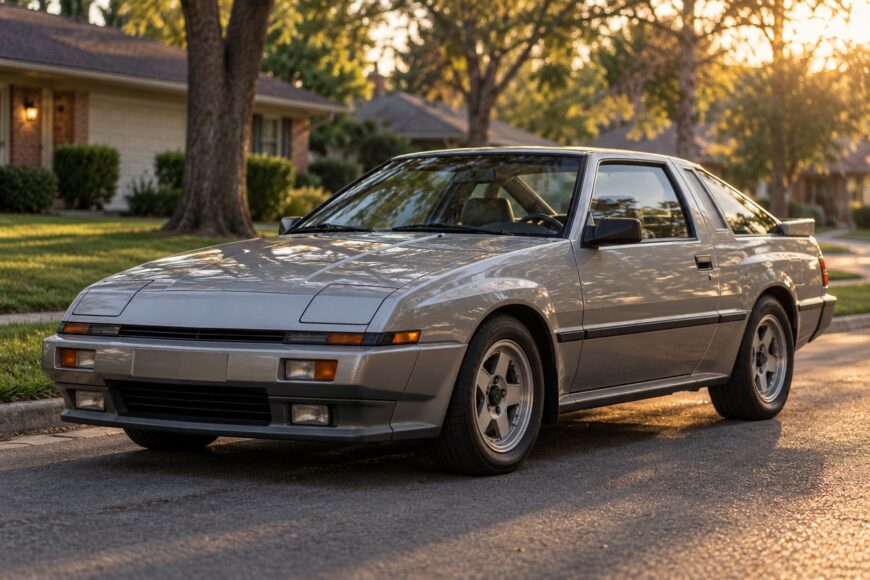
The Mitsubishi Starion remains one of the overlooked turbo coupes of the 1980s. Its appeal comes from a longitudinally mounted inline-four, rear-wheel drive, distinctive wedge-shaped styling, and the direct mechanical character of a period performance car. The two-door 2+2 layout also gives it more usable space than its compact exterior suggests.
That appeal is complicated by the badge. Starions sold under the same name can differ substantially by market, engine, intercooler, cylinder-head specification, body width, and electrical equipment. American cars were also sold as the Chrysler, Dodge, and Plymouth Conquest, creating useful parts-search alternatives while adding another layer of identification work.
This makes the Starion a poor candidate for valuation by advertised horsepower or a generic parts catalog. A sound purchase depends on establishing the exact market and engine, checking the boost and fuel systems, and confirming that body, lighting, ECU, and suspension components can actually be sourced.
- Why the Mitsubishi Starion Still Matters
- Starion Engines, Turbo Systems, and Real-World Output
- Starion Engines and Specifications by Version
- The American Starion: Conquest Names and Compatibility Traps
- Buying a Starion: Inspect the Systems That Usually Decide the Outcome
- Common Starion Myths That Distort Prices and Projects
- Is a Mitsubishi Starion Worth Owning Today?
- Frequently asked questions
- How much horsepower did the Mitsubishi Starion turbo have?
- What is the average price of a 1988 Mitsubishi Starion?
- What is the American version of the Mitsubishi Starion?
Why the Mitsubishi Starion Still Matters
Produced approximately from 1982 to 1989, the Starion occupied the same broad performance space as other front-engine turbo coupes of its era. Its formula was straightforward: a two-door 2+2 body, rear-wheel drive, and an inline-four mounted longitudinally. That layout gives the car a different balance and service profile from the front-wheel-drive turbo coupes that later dominated the market.
The approximately 2,435 mm wheelbase keeps the Starion compact while leaving enough cabin length for occasional rear-seat use. The rear seats are best treated as supplementary space, yet they make the coupe more practical for tools, luggage, or short trips than a strict two-seat sports car.
American buyers encountered the model through several badges. The Mitsubishi Starion was sold in the United States alongside the Chrysler Conquest, Dodge Conquest, and Plymouth Conquest. Those names remain valuable today because workshop records, dismantler listings, and owner archives may use the Chrysler, Dodge, or Plymouth name rather than Mitsubishi.
Regional variation is central to the car’s identity. Engine size, turbo hardware, intercooling, body width, emissions equipment, and interior details changed across markets and years. Two cars described simply as “a Starion” may therefore require different diagnostic procedures and different parts searches.
Starion Engines, Turbo Systems, and Real-World Output
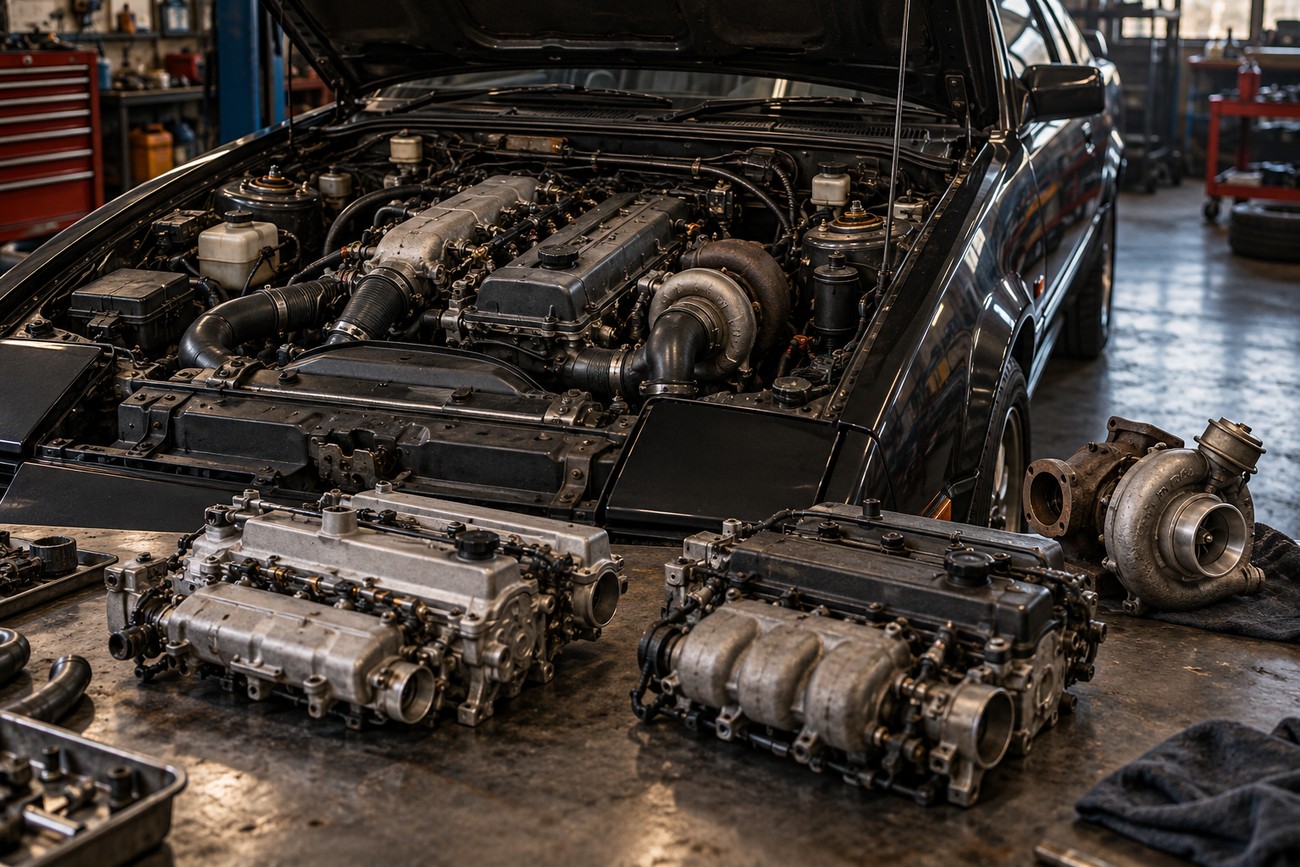
The principal engines were the 2.0-liter G63B and the 2.6-liter G54B. They should be treated as separate configurations rather than interchangeable versions of one engine family. Their fuel systems, wiring, calibration, and available replacement parts can lead to very different restoration costs.
A common American 2.6-liter specification used a 2,555 cc G54B, a Mitsubishi TD05 turbocharger, approximately 7.0:1 compression, and about 145 hp in early versions. That figure describes a particular specification and period. It does not establish the output of every American car, much less every Starion sold worldwide.
Turbocharged output varied approximately from 145 to 200 PS depending on market, year, intercooler, and cylinder-head specification. Some market-specific 2.0-liter versions are reported at 125 kW and 245 Nm. That specification belongs to a different market and engine context from the early American G54B rating, so the figures should not be merged into one universal specification.
The intercooler deserves separate verification. A turbocharger alone does not prove that a particular car has an intercooler, and the presence or condition of intercooler plumbing affects both performance and diagnosis. Split hoses, aged clamps, or leaking connections can make a healthy engine appear weak.
The Starion was not equipped with the 4G63. The common American 2.6-liter version uses the G54B, which limits the usefulness of tuning assumptions taken from Mitsubishi Eclipse and other DSM applications. A project budget based on 4G63 availability can become inaccurate before any mechanical work begins.
Starion Engines and Specifications by Version
The following comparison separates documented engine families from market-dependent output claims. It is a starting point for identification, not a substitute for checking the engine code, vehicle documentation, and installed hardware.
| Configuration | Engine and displacement | Turbo and intercooler context | Reported output | Transmission and caveats |
|---|---|---|---|---|
| 2.0-liter Starion | G63B, 2.0 liters | Turbocharged; exact turbocharger and intercooler equipment depended on market and year | Market-dependent; some versions are reported at 125 kW and 245 Nm | Five-speed manual and four-speed automatic options were available across the model range; confirm the individual car |
| Common American 2.6-liter version | G54B, 2,555 cc | Mitsubishi TD05 turbocharger; intercooler equipment and related specifications must be verified | About 145 hp in early versions | Five-speed manual and four-speed automatic options were available; American equipment is not automatically shared by other markets |
| Other turbocharged versions | G63B or G54B, depending on market | Intercooler, cylinder-head specification, emissions equipment, and turbo hardware varied | Approximately 145–200 PS across documented market and year combinations | Do not apply a single advertised figure to every Starion |
The American Starion: Conquest Names and Compatibility Traps
The Conquest name expands the vocabulary for parts research. Searching Chrysler Conquest, Dodge Conquest, and Plymouth Conquest can reveal American dismantles, technical discussions, and components that are difficult to find under the Mitsubishi name alone.
Finding a donor is only the first step. Compatibility still has to be proven by engine, market, wiring, ECU, body style, catalog number, and dimensions. A component from an American Conquest may be useful for an American Starion while being unsuitable for a European, Japanese, or Australian car.
Body width creates an especially visible trap. Narrow-body and wide-body panels, lamps, trim, and related fittings should be compared by catalog number and physical dimensions before purchase. A part that appears correct in a photograph can still leave gaps, mounting problems, or incorrect body lines.
The same caution applies to electronics. The G54B-based Starion is not a 4G63 DSM platform, and generic Eclipse or DSM catalogs should not form the basis of a restoration budget. They may suggest a component or search term, yet the actual wiring, ECU strategy, sensors, and mounting details require individual confirmation.
Buying a Starion: Inspect the Systems That Usually Decide the Outcome
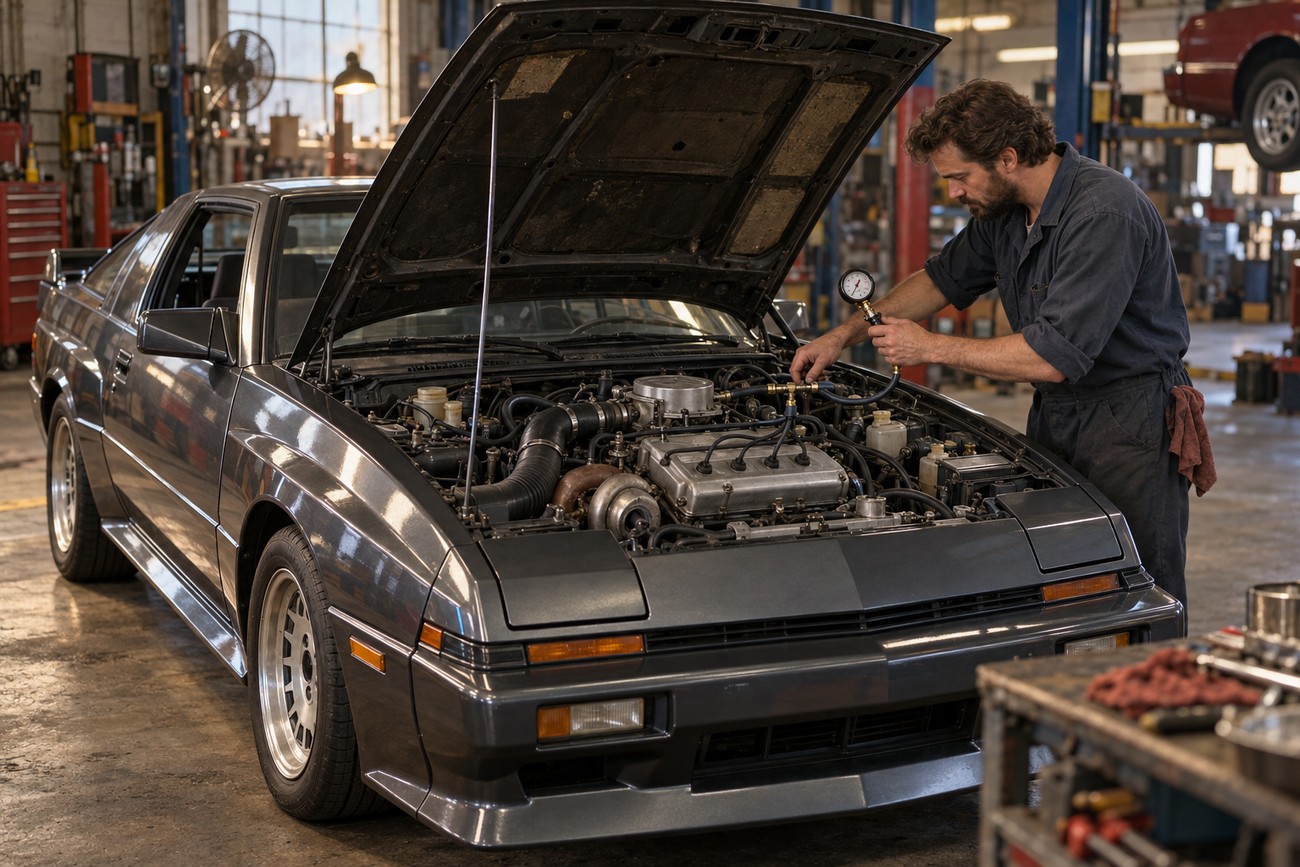
A running engine is useful evidence, but it proves less than many buyers assume. Fuel delivery, ECU condition, ignition control, cooling performance, and boost behavior can all remain problematic while the car starts and moves under its own power.
The fuel system deserves early attention. The single-channel injection arrangement and injector work can be difficult and expensive to repair, especially when a car has spent years unused. Inspect fuel quality, delivery, mixture behavior, and evidence of contamination before treating a clean idle as proof of health.
Boost leaks, fuel pressure, mixture behavior, and ECU condition should be tested before trusting a revived engine. A car that starts after long storage may still have damaged hoses, stale-fuel contamination, or electronic faults that only appear under load.
Age-related vacuum lines, intercooler hoses, and connections are common sources of boost leaks. Symptoms include power loss, unstable running, unusual turbo noise, smoke, oil consumption, or inconsistent boost pressure. Cooling hoses, the radiator system, and electrical connections deserve similar scrutiny after prolonged storage.
Model-specific parts can decide whether a repair remains manageable. Body panels and lighting are scarce, and owners report that rear lamps may require long searches or specialist community sourcing. ECU units and other electronic components may also require searches in the United States or through Conquest dismantlers.
Check the parts supply before paying a premium for a cosmetically attractive project. A complete car with documented wiring, usable lamps, and a traceable ECU can be worth more in practical terms than a cheaper shell with an unknown fuel system and missing trim.
Common Starion Myths That Distort Prices and Projects
“Every Starion is a 2.6-liter producing roughly 185 hp” is an unreliable assumption. The model used both the 2.0-liter G63B and the 2.6-liter G54B, while output changed with market, year, intercooler, and cylinder-head configuration. A claimed 200 hp may describe a particular late or market-specific version rather than the car being inspected.
“The Starion is a 4G63 project” is also incorrect. The common American 2.6-liter version uses the G54B, so Eclipse and DSM tuning recipes cannot be transferred automatically. This affects engine parts, ECU planning, fuel-system work, and the expected cost of performance modifications.
“DSM parts fit without modification” confuses a useful search connection with a confirmed interchange. There is no universal standard that makes those parts directly interchangeable. Any proposed substitute should be checked against dimensions, connectors, mounting points, electrical function, and the exact market specification.
“All Starions have the same equipment” creates similar valuation errors. Body width, intercooler equipment, transmission, electronics, and engine details can vary substantially. Buyers should price the documented car in front of them rather than a better-equipped version described in an advertisement or enthusiast specification sheet.
Is a Mitsubishi Starion Worth Owning Today?
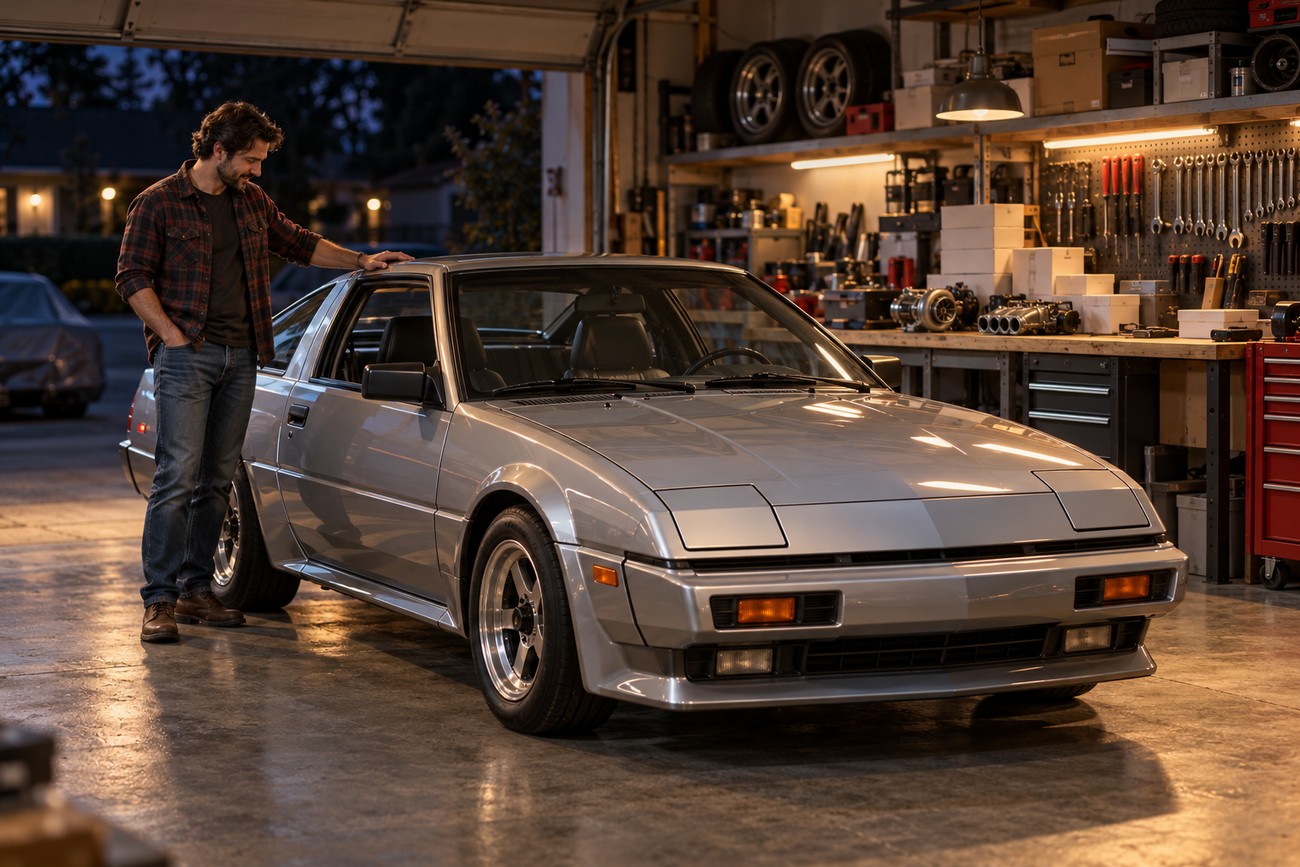
The Starion suits an owner who values unusual styling, rear-wheel-drive turbo-coupe behavior, and the mechanical character of an early performance car. It can also reward careful maintenance: a long-term trouble-free ownership report demonstrates what a properly supported example can achieve, although it cannot replace an inspection of an individual vehicle.
Project buyers face a different calculation. Fuel-system complexity, aging electronics, scarce lighting, and market-specific compatibility can consume more time than the basic engine description suggests. A car that runs may still require substantial work before it becomes dependable.
Real symptoms are more useful than an advertised mileage figure. Check for smoke, turbo noise, oil consumption, actual boost pressure, and mixture behavior, then inspect the cooling and electrical systems. These observations reveal current condition more reliably than a seller’s claim about the engine’s original output.
The practical rule is simple: establish the exact engine code, market, body style, and installed equipment before assigning value or planning modifications. Confirm the supply of model-specific parts at the same time. The Starion can be an engaging ownership proposition, provided its individuality is treated as a technical fact rather than a catalog inconvenience.
Frequently asked questions
How much horsepower did the Mitsubishi Starion turbo have?
There was no single horsepower figure for every Mitsubishi Starion turbo. Turbocharged output varied approximately from 145 to 200 PS according to market, year, intercooler, and cylinder-head specification; a common early American 2.6-liter G54B specification was rated at about 145 hp.
To assign a figure to a specific car, verify the engine code, market, production year, intercooler, cylinder head, emissions equipment, and factory documentation. A reported 200 hp or approximately 185 hp should be treated as a version-specific claim until those details match the inspected vehicle.
What is the average price of a 1988 Mitsubishi Starion?
A dependable average cannot be established from the supplied evidence because Starion values depend heavily on market, body condition, completeness, documentation, running systems, and parts scarcity. A cosmetically presentable car with a missing ECU, unavailable lamps, or an unresolved fuel system may be less useful than a less polished but complete example.
Value the individual car by checking rust and body condition, originality, engine and turbo health, fuel and cooling systems, electrical operation, title or export documentation, and the availability of replacement parts. Exact engine and body specifications should also be recorded before comparing it with other 1988 cars.
What is the American version of the Mitsubishi Starion?
In the United States, the model was sold as the Mitsubishi Starion and also as the Chrysler, Dodge, and Plymouth Conquest. Those names are practical search terms for technical records, used ECUs, body components, lighting, and donor vehicles.
Use the badge name together with the engine, body width, year, and component number when searching. Conquest identification can improve access to American parts, yet it does not prove compatibility with every Starion or with European, Japanese, or Australian versions.







