
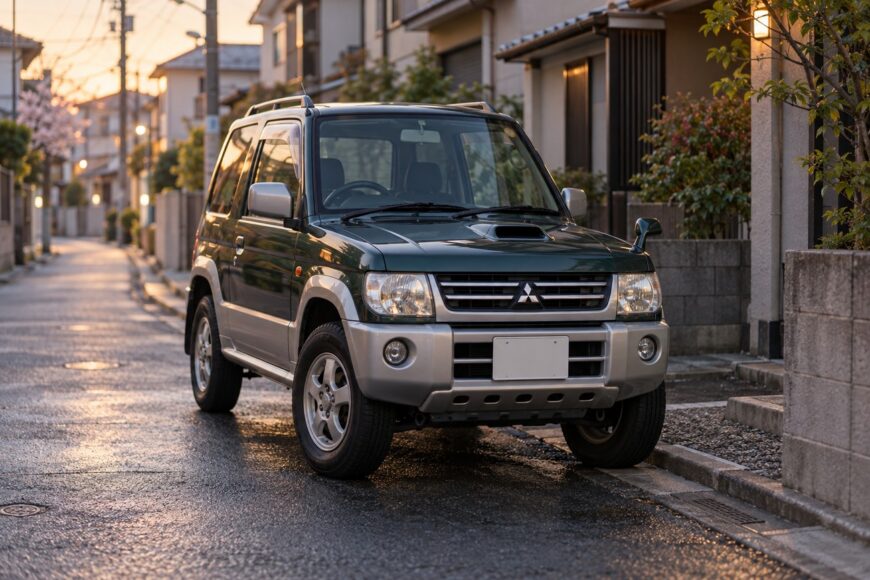
The Mitsubishi Pajero Mini puts SUV styling into a car small enough for tight streets and parking spaces. That appeal comes with limits: its small engine has little power to spare, the cabin suits one or two people better than a full load, and replacement parts may take more effort to find than those for a common local model.
For an importer, the decision rests on the individual car as much as the model. A tidy-looking example can still need age-related work, while a low asking price says little about the cost of getting it registered and keeping it running. Check the version, condition, and destination rules before treating a listing as an affordable way into a Japanese kei SUV.
- What the Pajero Mini actually is
- Pajero Mini generations and specifications at a glance
- How it drives: engine, load, and everyday comfort
- What 4WD can—and cannot—do
- Used-car checks that matter more than the odometer
- Importing one: calculate the car you will actually own
- Frequently asked questions
- What is the price of a 2026 Mitsubishi Pajero Mini?
- What is the price of a used Mitsubishi Pajero Mini?
- How can I confirm a Pajero Mini’s build date for import paperwork?
What the Pajero Mini actually is
The Pajero Mini is a Japanese-market, right-hand-drive kei SUV produced from 1994 to 2012. It uses a 659–660 cc inline-four petrol engine, offered in naturally aspirated and turbocharged forms. Its name and upright shape invite comparison with the full-size Pajero, but they do not give it the same space, power, or working capacity.
Across versions, the body measures approximately 3,295–3,395 mm long and 1,395–1,475 mm wide. Those dimensions make narrow streets and small parking spaces easier to manage. They also leave little room to separate passengers from luggage, particularly when more than two people are aboard.
Kei classification matters most in the model’s home market, where small size brings ownership advantages under Japanese rules. An importer should not assume those advantages transfer abroad. Outside Japan, the useful distinction is simpler: this is a compact, lightweight vehicle with SUV styling, and its modest engine and cabin set the terms of ownership.
Pajero Mini generations and specifications at a glance
Use the chassis code to narrow down an advertised car, then verify its equipment from that car’s records. The ranges below cover the model overall; they are not specifications confirmed for every vehicle in either group.
| Item | Earlier group | Later group |
|---|---|---|
| Chassis codes | H51A/H56A | H53A/H58A |
| Length, model-wide range | Approximately 3,295–3,395 mm | |
| Width, model-wide range | Approximately 1,395–1,475 mm | |
| Height, model-wide range | Approximately 1,630–1,670 mm | |
| Wheelbase, model-wide range | Approximately 2,200–2,280 mm | |
| Weight, model-wide range | Approximately 780–1,000 kg | |
| Engine and typical outputs | 659–660 cc inline-four petrol; typically 52 hp naturally aspirated or 64 hp turbocharged, depending on version | |
Width and wheelbase changed across the model’s life, so a listing that says only “Pajero Mini” is insufficient for selecting parts or judging cabin space. Match the chassis code and exact version to the vehicle before relying on an advertised specification.
How it drives: engine, load, and everyday comfort
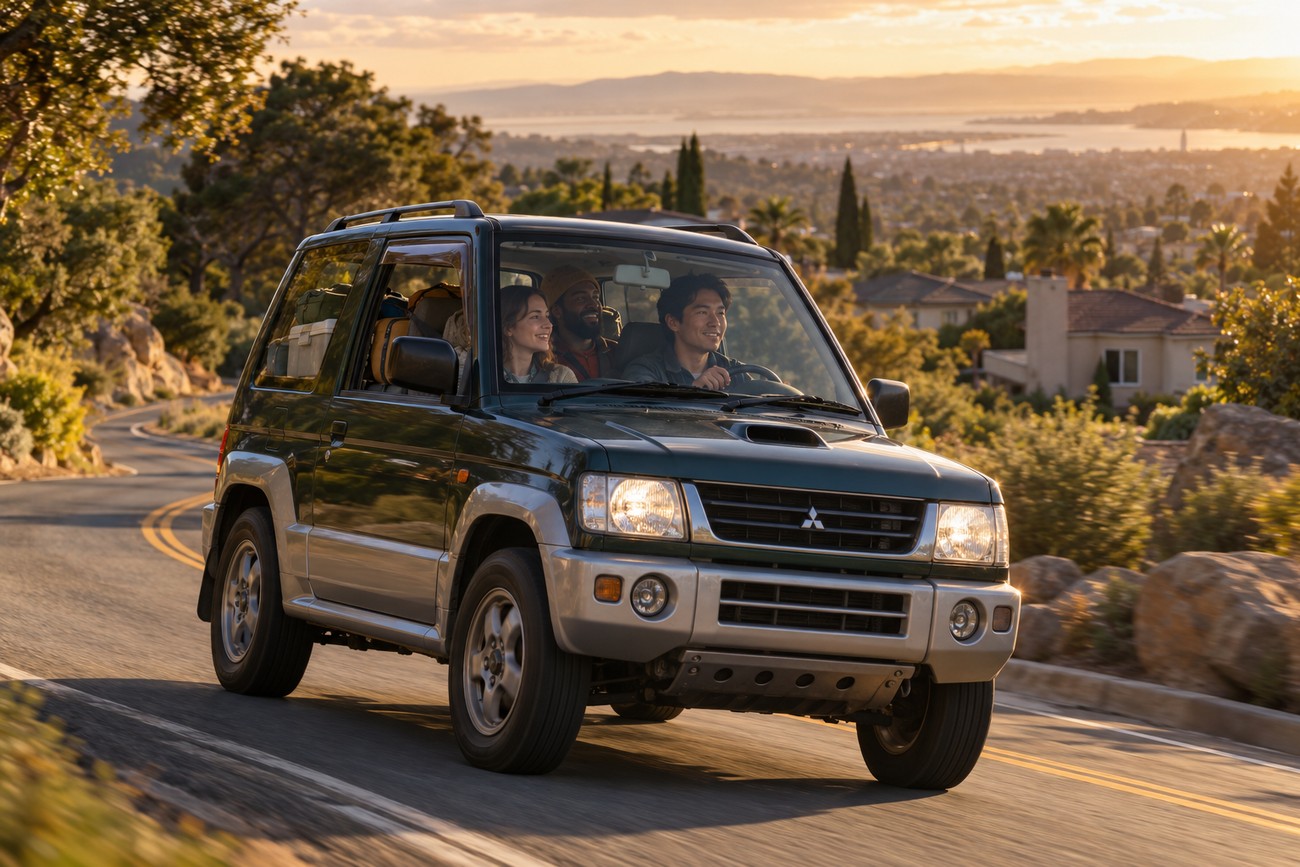
The naturally aspirated version typically makes 52 hp. It can suit short, unhurried trips, but faster roads, hills, passengers, and luggage expose its limited power reserve. The turbocharged version typically makes 64 hp and offers more flexibility under load; it still should not be bought on the assumption that highway travel will feel relaxed.
Weight varies approximately from 780 to 1,000 kg across versions. In a vehicle this small, added occupants and bags have a noticeable effect on acceleration, so an empty test drive may flatter a car you plan to use with passengers. Try the roads and loads that resemble your actual use where a test drive is possible.
Both manual and automatic versions exist. Transmission choice changes the driving experience, but condition matters more than a preference made from a listing: check how the car starts, shifts, and responds once warm. Expect engine and road noise to be more apparent than in a larger vehicle, and assess whether its seating and luggage space work for your usual one- or two-person trips.
Fuel figures quoted around 6–7.5 L/100 km come from reviews or listings, not a verified official figure for every version. Engine type, transmission, load, driving conditions, and mechanical state can all change the result. Budget from the needs of the particular car rather than treating one advertised estimate as a guarantee.
What 4WD can—and cannot—do
Pajero Minis were sold in both 2WD and 4WD versions. Confirm which system the advertised car has before valuing it for winter use or rough roads. Some 4WD versions use part-time four-wheel drive rather than permanent all-wheel drive, so the controls and operating instructions for the exact vehicle matter.
A sound 4WD car may give you useful traction on slippery approaches and modest rough tracks. Tyres, ground conditions, driver judgment, and mechanical condition remain decisive. The short wheelbase and low weight that make the Mini easy to place on a narrow road do not turn it into a vehicle for any depth of mud or any slope.
Power is another limit. A 52 hp car carrying people and gear has less margin when a loose or steep surface demands sustained effort; the turbo version does not remove every traction or clearance constraint. Treat the Pajero name as styling and model identity, then choose 2WD or 4WD according to the routes you will actually drive.
Used-car checks that matter more than the odometer
Production ended in 2012, making maintenance history central even when the recorded mileage looks modest. Start by comparing identifying records with the car and asking for evidence of routine servicing. On inspection, look for coolant leaks or signs of overheating, aged hoses and seals, suspension wear, electrical faults, and visible corrosion or repaired body damage.
Drive the car from cold if possible, then check it again at operating temperature. Uneven running, cooling problems, noises over bumps, or warning lights deserve investigation before purchase. On a turbocharged example, have the turbocharger and intercooler system checked as well; an attractive body and clean cabin cannot establish their condition.
A similar-looking replacement can be the wrong part if it was selected by model name alone. Match the chassis code, drivetrain, and exact version before ordering, especially for suspension, body, and engine-related components.
The earlier H51A/H56A and later H53A/H58A groups are useful starting points for parts searches, not a promise of interchangeability. Ask a supplier to confirm fitment against the individual vehicle. Body, suspension, and version-specific right-hand-drive parts may require extra sourcing, so identify likely repair needs before committing to an import.
Check equipment that may need attention at the destination, including headlamp suitability, mirrors, and any market-specific fittings. Requirements differ by country, and a working Japanese-market item is not necessarily compliant or easy to replace locally. That distinction can change the value of an otherwise well-maintained car.
Importing one: calculate the car you will actually own

A Japanese listing price is only the beginning of the calculation. Add shipping and handling, applicable duties or taxes, registration charges, any required inspection or compliance work, and a reserve for maintenance after arrival. The amounts and procedures depend on the destination, so use current local figures rather than a generic landed-cost estimate.
Confirm import and registration eligibility with the relevant destination authority before paying. The Pajero Mini was a Japanese-market, right-hand-drive vehicle produced from 1994 to 2012; rules may turn on documentation and the date accepted for the individual car. Check lighting and other compliance requirements early enough to obtain parts if changes are needed.
Then price the ownership risk, not only the shipment. A cheaper car with uncertain service history, cooling faults, or a tired turbo may cost more to put right than a sounder example. Verify the chassis code and version, ask local workshops or suppliers about parts support, and keep a maintenance reserve separate from the purchase and import costs.
Frequently asked questions
The answers depend on whether a listing describes an existing used car or makes a claim about a new one. For import paperwork and costs, the individual vehicle and destination rules are more useful than a model-wide assumption.
What is the price of a 2026 Mitsubishi Pajero Mini?
There is no established price for a new 2026 Pajero Mini: production ran from 1994 to 2012. A Pajero Mini offered for sale in 2026 is an older vehicle, even if the listing prominently displays the current year. Check the stated build date and vehicle identity rather than reading the sale date as a model year.
What is the price of a used Mitsubishi Pajero Mini?
There is no reliable universal used price. Compare current listings in the relevant market by condition, chassis code, engine, drivetrain, transmission, and documented maintenance; an asking price for a tidy 4WD turbo car is not automatically comparable with one for a worn 2WD naturally aspirated car. Keep those vehicle comparisons separate from shipping, taxes, registration, and repair costs.
How can I confirm a Pajero Mini’s build date for import paperwork?
Check the vehicle’s identifying records and available Japanese export documentation, noting that a first-registration date does not necessarily establish the build date, and make sure the chassis code and identification details agree across them. Before paying, ask the destination authority which documented date it accepts for eligibility: a listing’s model year, a registration date, and a build date may serve different purposes. Request any missing records while the car is still accessible to the seller or exporter.







