
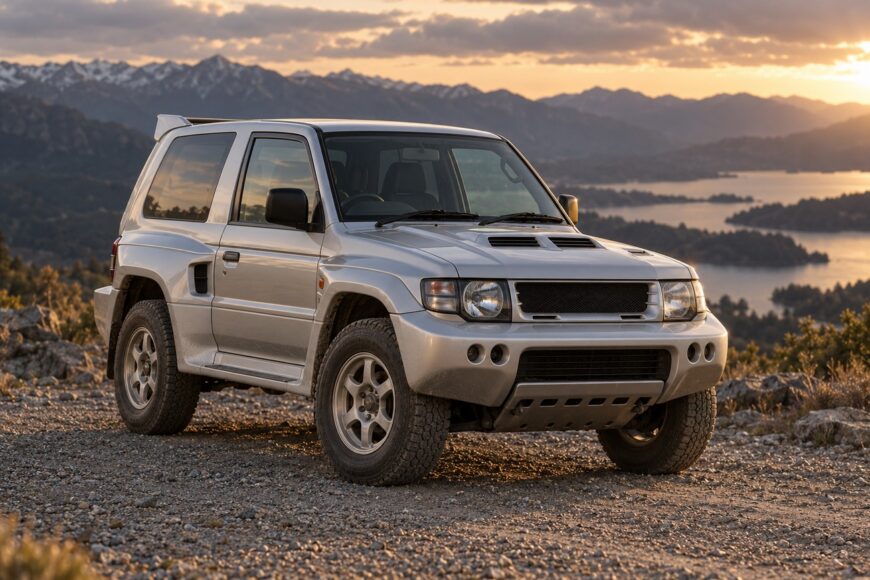
The Mitsubishi Pajero Evolution carries a Dakar-inspired reputation, but buying one means taking on an aging, rare road car. Its wide stance and unusual suspension still give it character. How it drives now, and how carefully it has been maintained, matter more than the legend attached to its name.
A good example can feel settled where rough pavement unsettles an ordinary SUV. A neglected one may bring scarce parts, expensive repairs, and years of questionable modifications. The distinction is visible in its history and apparent on a proper test drive.
- Dakar DNA, but Built for the Road
- Why It Feels Different on Tarmac and Gravel
- The Ownership Costs Hidden by the Legend
- How to Judge an Example Before You Buy
- Frequently asked questions
- Can I import and register a Pajero Evolution where I live?
- How should I care for one that is driven only occasionally?
- What is the best car for a Dakar Rally?
- How rare is the Pajero Evolution?
- What are common problems with the Mitsubishi Pajero?
Dakar DNA, but Built for the Road
Produced from 1997 to 1999, the Pajero Evolution was a Dakar homologation road model, not a Dakar competition car. It used the three-door second-generation Pajero as its starting point, then gained a wider track, pronounced flared bodywork, and distinctive aerodynamic parts. Its shape reflects a competition purpose without making the showroom vehicle a rally machine.
Its naturally aspirated 3.5-liter 24-valve MIVEC V6 is commonly quoted at 280 PS. Treat that as a period specification, not a verified output for every surviving car: measured power depends on the individual engine and the test. A smooth, healthy V6 is more useful to a buyer than a claim about what it might produce.
Estimated production is around 2,500–2,700, so finding a choice of sound, original examples is difficult. That scarcity helps explain the appeal, but it also raises the stakes when a unique panel or piece of trim needs replacing. The road car’s provenance deserves as much attention as its Dakar connection.
Why It Feels Different on Tarmac and Gravel
The wider track and independent front and rear suspension are central to the Evolution’s composure. They help it feel planted on uneven pavement and gravel, where suspension control matters more than an acceleration figure. It remains a tall, heavy vehicle; its confidence should never be mistaken for sports-car responses or competition-car ability.
Super Select 4WD provides selectable operating modes, low range, and locking capability. Check the equipment and operation of the specific car rather than assuming every control works because an indicator lights up. A drive over varied surfaces can reveal vibration or reluctance to engage that a short trip around a block might miss.
Weight asks more of the brakes and tires, while width makes narrow streets and parking spaces less forgiving. Wheel and tire choices also change the way the vehicle feels: oversize wheels or unsuitable fitment can add harshness and strain instead of improving control. A car close to its intended setup is the better reference point for a test drive.
The Ownership Costs Hidden by the Legend
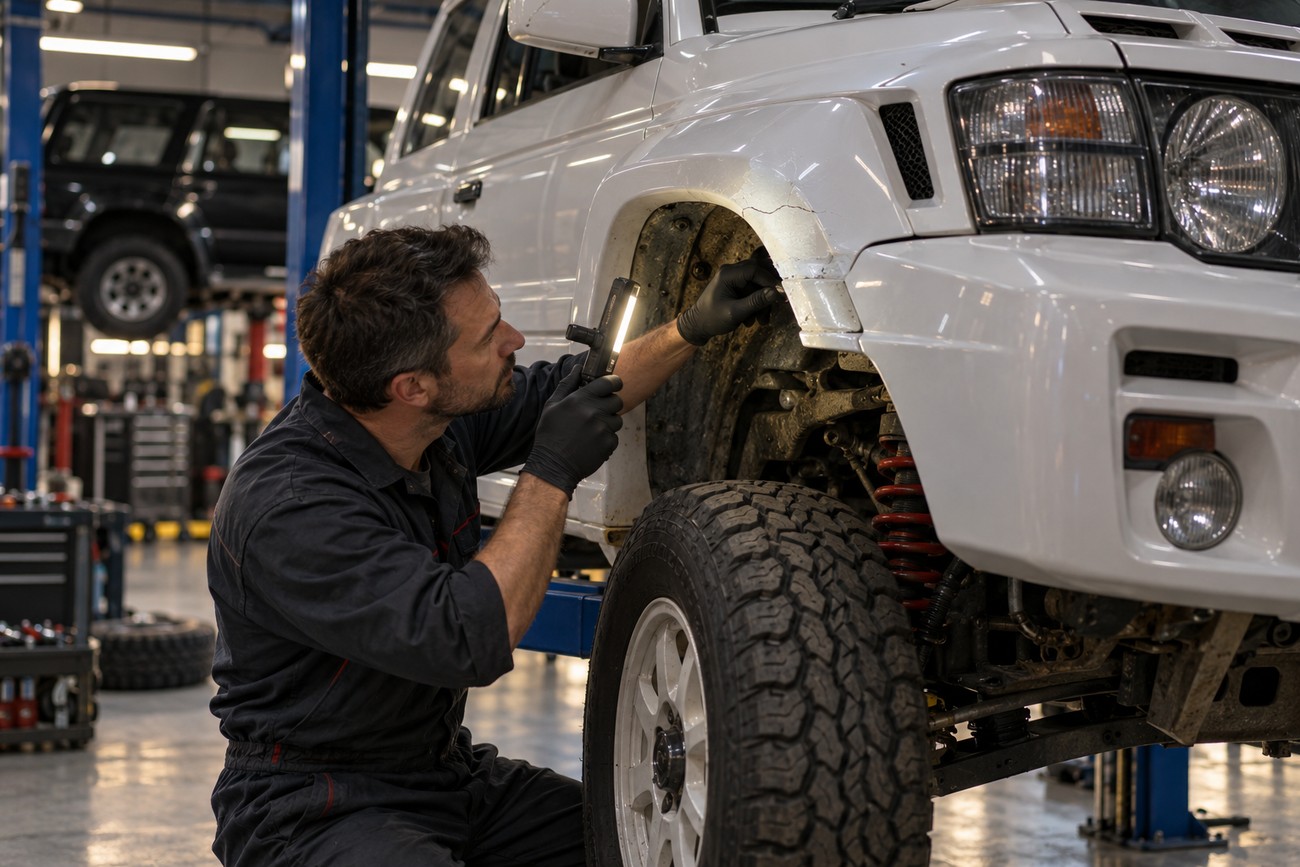
Evolution-specific body, trim, and mechanical parts can be harder and costlier to source than ordinary Pajero parts. A cracked arch extension or poorly repaired aerodynamic piece may take more effort to put right than its modest appearance suggests. Before treating a cosmetic flaw as minor, establish whether the correct replacement is available.
The V6 and 4WD system also need careful maintenance. Inspect for leaks, cooling-system deterioration, electrical faults, brake wear, and drivetrain problems, without assuming every example suffers from all of them. An overheating history or a vague account of 4WD repairs deserves investigation before purchase.
Rarity does not establish reliability. Old seals and components still age, and poor repairs can introduce vibrations, pulling, or unpredictable behavior on asphalt. Service records, sound repair work, and the condition of consumables tell you more about likely ownership costs than a low production estimate does.
How to Judge an Example Before You Buy
Start with the vehicle’s identity, documents, and original equipment; an Evolution badge in a listing is insufficient proof. Most examples are right-hand-drive Japanese-market cars, so check the paperwork for the individual vehicle. Compare its specification with what is fitted, and ask how any missing or replaced parts were sourced.
Next, examine the flares, paint, panel fit, and signs of structural or poorly finished body repairs. Review service records and the cooling system, then drive the car long enough to assess steering, suspension, and brakes. Low mileage offers little reassurance if storage, hard use, or repair history is unclear.
Check that tire sizes match and wheel fitment is appropriate before diagnosing drivetrain binding as a transfer-case fault. Then verify each 4WD mode separately.
Incorrect wheel offset can alter handling and load components, while donor parts may complicate later servicing or resale. Have a specialist inspect the 4WD engagement, underbody, and evidence of previous work before committing. The aim is a clear account of what the car is and what it needs, rather than a promise that its badge makes it safe to buy.
Frequently asked questions
Practical answers depend on the individual car and where it will be kept or used. Check the details before treating a rare-car purchase as a routine import or occasional-use vehicle.
Can I import and register a Pajero Evolution where I live?
Eligibility depends on your jurisdiction. Before paying a deposit, confirm the required export documents and local rules for customs, emissions, and right-hand-drive registration. Ask the relevant authorities or an experienced importer to check the specific car’s paperwork, since its age alone may not settle every requirement.
How should I care for one that is driven only occasionally?
Keep the battery maintained, check tire pressures, and monitor fluid levels and leaks during storage. Follow the vehicle’s maintenance schedule even when mileage stays low. When you do drive it, allow enough time to assess braking, temperature, and 4WD operation rather than assuming that infrequent use prevents deterioration.
What is the best car for a Dakar Rally?
There is no single best choice: a competitive Dakar entry must suit its class, the current regulations, and a team’s support capacity. A road-going Pajero Evolution is a homologation model, not a ready-to-race substitute. Competition preparation is a separate undertaking.
How rare is the Pajero Evolution?
Production is estimated at around 2,500–2,700 vehicles. That figure describes the original run, not how many remain or how many retain their factory equipment. Availability of well-documented examples can be more useful to a buyer than the production estimate alone.
What are common problems with the Mitsubishi Pajero?
There is no single fault that describes every Pajero generation and condition. On an older Evolution, pay particular attention to cooling, leaks, brakes, suspension, and 4WD operation. Inspection findings and service history should guide the decision more than a generic Pajero fault list.







