
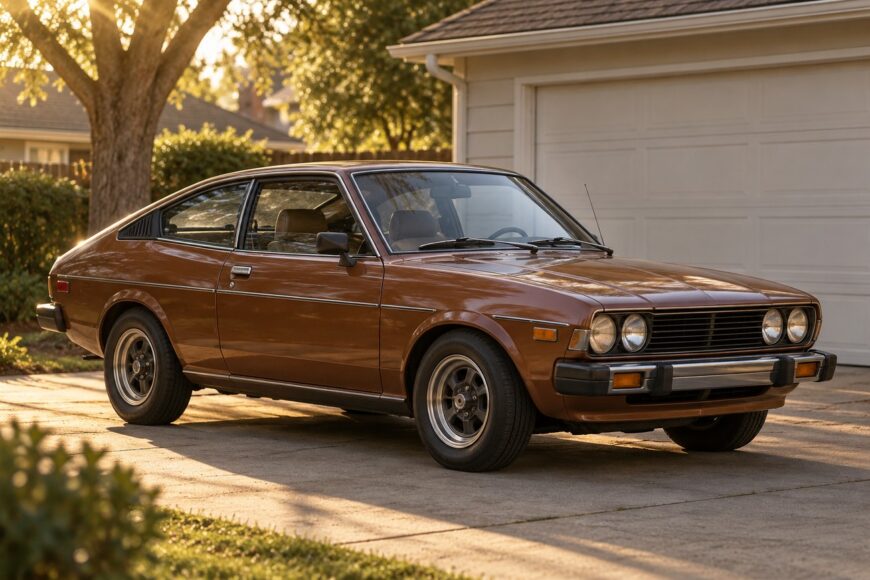
The Mitsubishi Lancer Celeste has the shape of a classic fastback and a name that invites mistaken assumptions. It is a three-door, rear-wheel-drive coupé, not a front-wheel-drive Lancer hatchback. Its appeal lies in that distinct silhouette and compact sporting character, but identifying a promising example takes more than reading the badges.
A 1600 GSR or 2000 GT badge can make an advertisement compelling. For a buyer, the harder questions concern the shell beneath the paint and the condition of parts that may be difficult to replace: glass, seals, panels, and small pieces of trim. A sound, complete Celeste with a modest engine can be a more viable purchase than a more desirable version needing extensive metalwork.
- What the Lancer Celeste actually was
- How its styling and character changed
- Celeste engines and market variants at a glance
- Why Celeste horsepower claims need context
- Where rust can turn a Celeste into a major project
- Parts, tuning, and the cost of getting it right
- How to verify a Celeste before agreeing on a price
- Frequently asked questions
- What paperwork is useful for an imported or donor-built Celeste?
- How can I check whether replacement door seals fit properly?
- What is the Mitsubishi Lancer Celeste?
- What is the most sought-after Mitsubishi Lancer?
- Which Mitsubishi Lancer is the fastest?
What the Lancer Celeste actually was
The Lancer Celeste belonged to Mitsubishi’s A70 family. It used a three-door fastback coupé body and rear-wheel drive, giving it a different layout and purpose from later front-wheel-drive Lancers. The shared Lancer name is useful historical context, but it does not make parts or specifications interchangeable across generations.
Production ran from February 1975 to July 1981. Dates extending Celeste production into 1982 confuse it with the arrival of its successor, the Cordia. For anyone checking an advertised model year, the car’s records and identification details deserve closer attention than a broad model timeline in a listing.
In Mitsubishi’s range, the Celeste followed the Galant FTO in the compact sporting-coupé role. Its fastback body gave buyers a distinct alternative within the Lancer family rather than a conventional Lancer hatchback with different trim. That distinction matters most when tracing the correct body components and period specifications.
The two-door Lancer GSR sold in 1997–2002 is a different model. Similar badges can bring the two cars together in search results and parts listings, so a seller’s use of “Lancer GSR” alone is too imprecise to establish what is for sale.
How its styling and character changed
The Celeste’s long roofline flows into a fastback tail, while its three-door body keeps the proportions of a compact coupé. Rear-wheel drive adds to its period sporting character without implying that every version was built to the same performance specification. Its shape is a good reason to seek one out; its condition determines how readily it can be enjoyed.
A 1978 facelift brought rectangular headlights and larger, more angular bumpers. These visible changes help place a car in context when photographs, paperwork, or a claimed build date are incomplete. They also matter when sourcing replacements, because a similarly named part may belong to the other design.
A restored Celeste may combine pre- and post-facelift components. That mix warrants a closer look at repair records and fit, though it does not automatically prove misrepresentation: parts may have been changed during an earlier repair. The useful question is whether the work and the car’s claimed identity can be reconciled.
The GSR badge needs similar restraint. The road-going 1600 GSR had a twin-carburetor engine, but its name does not automatically make it a factory rally-specification car. Competition associations cannot substitute for evidence of the particular vehicle’s build and history.
Celeste engines and market variants at a glance
Celeste engine choices varied by version and destination market, so quoted outputs should be read as specification claims rather than directly comparable performance figures.
| Variant | Engine | Market or timing | Quoted output note |
|---|---|---|---|
| Base 1.4 | 1.4-litre petrol inline-four | Base-engine offering | Varied by specification; no single figure applies here. |
| Base 1.6 | 1.6-litre petrol inline-four | Base-engine offering | Varied by specification; no single figure applies here. |
| 1600 GSR | 1.6-litre twin-carburetor petrol inline-four | Road-going GSR; specification changed with emissions rules | Roughly 110 hp initially, then roughly 100 hp quoted after tighter emissions rules. |
| Celeste 2000 GT | 2.0-litre Astron petrol inline-four | Introduced June 1979 | Approximately 105 hp quoted. |
| US-market 2.6 | 2.6-litre petrol inline-four | Offered in the US market | Do not apply a US specification to other Celeste markets. |
The 2.6-litre engine is an especially easy detail to overgeneralize from US-market material. Elsewhere, engine availability and equipment could differ. Confirm the destination market before treating a specification sheet as a match for a car.
Likewise, the 1600 GSR’s quoted change in output describes road-car specifications under changing emissions rules. It is not evidence that an individual car still has its original carburetors or emissions equipment; those details need inspection.
Why Celeste horsepower claims need context
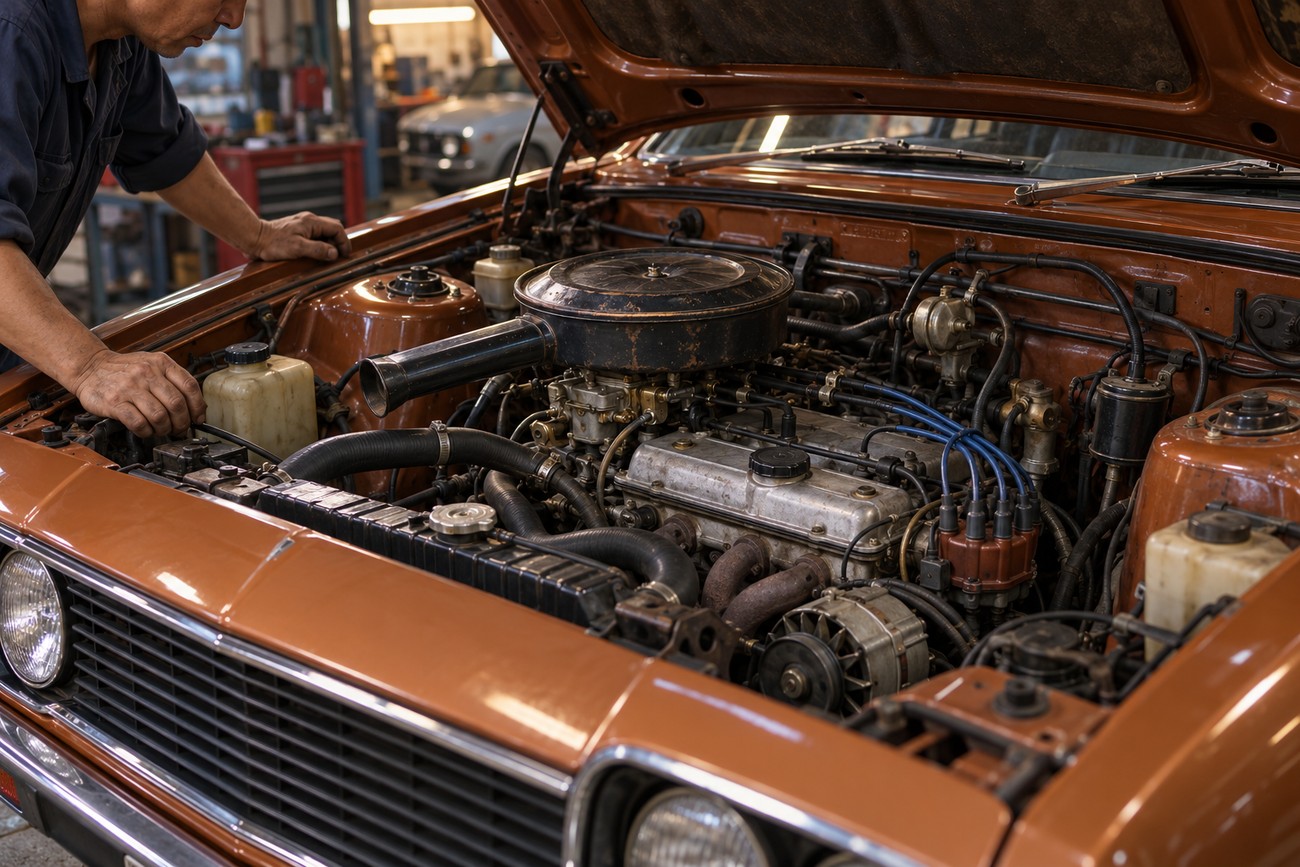
A horsepower number in an advertisement cannot identify a Celeste on its own. Engines, carburetor settings, and emissions equipment differed by market and period. Before comparing figures, establish which specification the claim describes and whether the car still matches it.
Sources give roughly 105–115 hp for some export cars, but neither end of that range is a universal Celeste output. Period figures may use PS, hp, or SAE conventions, and a familiar-looking number can refer to a different measurement basis. A listing that omits the market and measurement convention offers less certainty than its precise number suggests.
The road-going twin-carburetor 1600 GSR illustrates the problem: its quoted output changed from roughly 110 to roughly 100 hp following tighter emissions rules. Treating the earlier figure as proof of every surviving GSR’s specification ignores those changes, as well as alterations made over a car’s life.
Lancer rally associations can make a GSR badge more enticing, but they do not establish competition provenance. For a buying decision, match the engine and equipment to the car’s records first; reserve performance claims for evidence tied to that specific vehicle.
Where rust can turn a Celeste into a major project
Start with the paint and visible rear arches, looking for uneven contours, bubbling, or repairs that deserve closer examination. A glossy finish can make inspection harder by hiding the boundaries of previous work. Check the condition of the underlying metal before allowing the exterior presentation to shape your view of the car.
Move to the sills, floors, and the areas beneath carpets, then inspect the boot and the metal around seals. Moisture can remain out of sight in cavities and at panel edges, so a small visible patch may be only part of the damage. Lift accessible trim carefully, with the owner’s permission, rather than relying on an underside photograph.
Where both sides of an accessible repaired panel can be inspected, compare the visible outer surface with the metal behind it. A smooth finish on one side is weak evidence of a sound repair if the reverse shows corrosion, missing metal, or fiberglass.
Inspect structural members and concealed cavities with a competent body specialist before committing to an extensively repaired car. Thick filler or fiberglass can conceal inadequate metalwork, and the cost and scope of proper repair may only become clear after coatings are removed. The aim is to assess this car’s shell, not assume that every Celeste has the same faults.
A sound body can outweigh a more exciting engine badge because model-specific panels are difficult to replace. Mechanical work may be manageable while an unavailable body section stalls the entire project. Factor the quality of existing repairs and the completeness of the shell into any buying decision.
Parts, tuning, and the cost of getting it right
Many mechanical faults are diagnosable with patient work, but body parts, glass, seals, and original small trim pieces can be difficult to source. A missing piece that seems minor in a photograph may hold up weatherproofing or leave a restoration visibly incomplete. Check what is present on the car before assuming replacement parts can be ordered later.
Ageing carburetors, ignition components, and vacuum lines can produce similar running symptoms. Diagnosis and adjustment are more useful than replacing parts indiscriminately, particularly where earlier owners may have changed settings or routing. A specialist familiar with older carburetor systems can help establish a dependable baseline.
Owners have reported lengthy searches for individual door seals, although such experiences are not a universal lead time. If seals are missing or damaged, establish whether suitable replacements exist or whether a profile must be matched or made. The same care applies to glass and trim that complete the car and keep water out.
A part advertised simply as fitting a “Lancer” is not enough assurance for a Celeste. Check the part number, destination market, and relevant body details before ordering, especially for components affected by the facelift. That modest research step can prevent an unusable purchase and unnecessary alteration to an original fitting.
How to verify a Celeste before agreeing on a price
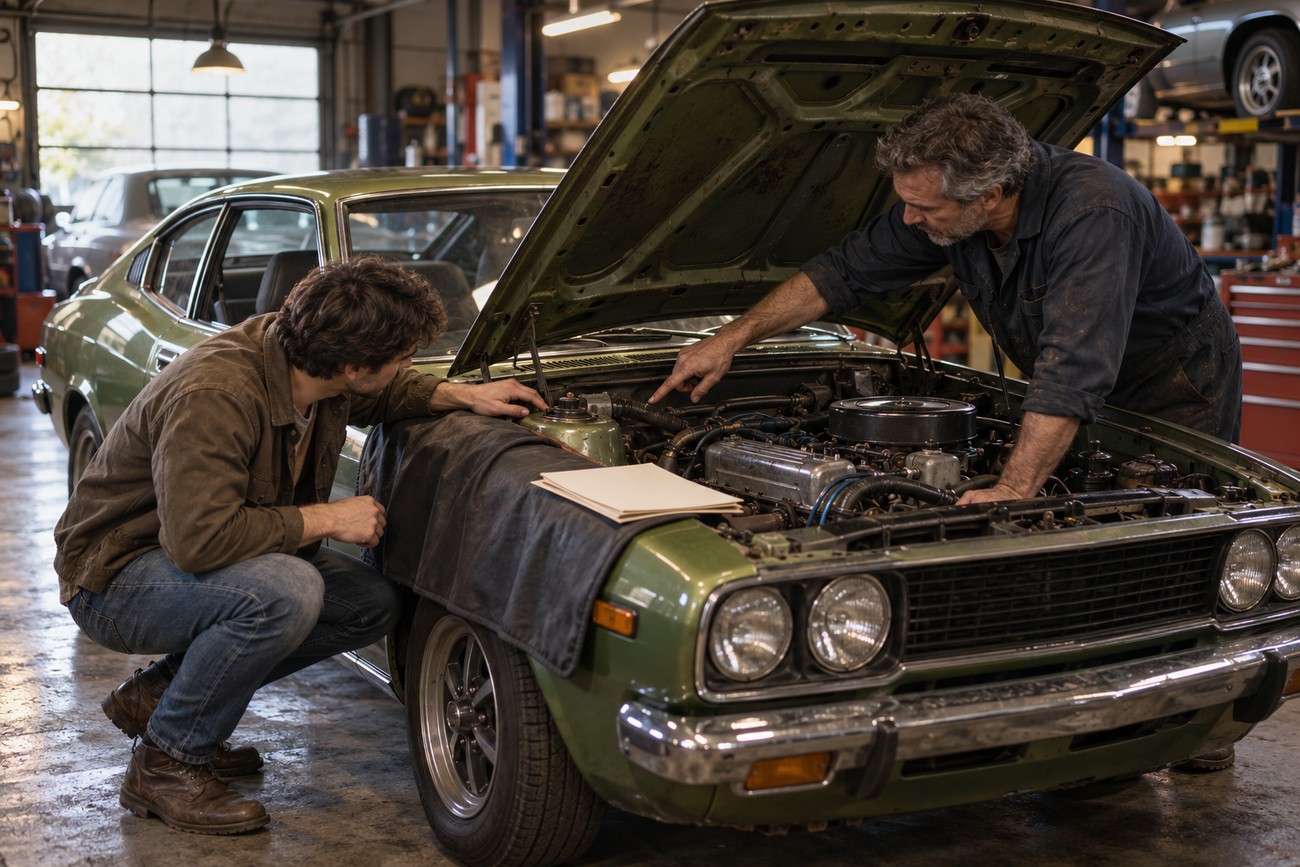
Reconcile the stated year and destination market with the body number, engine, and supporting records. GSR and GT badges are useful clues, but they are easy to change and cannot establish specification by themselves. Make a note of any detail that the seller cannot yet connect to documentation.
Imported, modified, or donor-built Celestes may have histories that are difficult to reconstruct. Registration and import records, photographs of earlier work, and receipts for major components can help explain what remains original and what has been replaced. Gaps do not automatically make a car unsuitable, but they should temper claims of originality.
Use the 1978 facelift as another cross-check: rectangular headlights and larger, more angular bumpers belong to the later design. Mixed early and late components call for an explanation supported by the car’s repair history where possible. Judge the quality of the work separately from the accuracy of the seller’s description.
Finally, assess value as a complete-car decision rather than a contest of engine sizes. A sound shell, usable seals and glass, and identifiable trim can matter more than displacement when scarce parts threaten to stop a restoration. Agree on a price only after the condition and the remaining uncertainties are clear.
Frequently asked questions
The details that settle a Celeste purchase are often less visible than its fastback profile. Paperwork can clarify a complicated history, while a fitted seal needs a physical check before it can be called suitable. Broader Lancer comparisons also need a clearly defined model and purpose.
What paperwork is useful for an imported or donor-built Celeste?
Keep registration and import documents, records showing the body number, and receipts for major repairs and components. For a donor-built car, retain documentation identifying which parts came from the donor and when they were installed. Photographs taken during the work can help a future buyer understand changes that are otherwise hidden.
How can I check whether replacement door seals fit properly?
After fitting, close the door normally and check that it latches without unusual force and that the seal makes even contact around the opening. Look for compressed or displaced sections, then check for water ingress after a controlled water test. A seal that matches the opening in a parts listing still needs these checks on the individual car.
What is the Mitsubishi Lancer Celeste?
The Mitsubishi Lancer Celeste is a three-door, rear-wheel-drive fastback coupé from the A70 family, produced from February 1975 to July 1981. It occupied Mitsubishi’s compact sporting-coupé role after the Galant FTO. Buyers should identify a particular car by its market, body number, and engine rather than the Lancer name alone.
What is the most sought-after Mitsubishi Lancer?
There is no single most sought-after Lancer across every market and type of buyer. Lancer Evolution models generally attract a different collector audience from the Celeste, while an original, well-documented Celeste may appeal strongly to someone seeking a period fastback. Condition and provenance are more useful guides to a particular car than a broad popularity ranking.
Which Mitsubishi Lancer is the fastest?
There is no reliable single answer without defining whether “fastest” means acceleration, top speed, or competition performance, and whether modified cars count. Performance-focused Lancer Evolution models belong to a different era and category from the Celeste. A Celeste’s quoted period horsepower should not be used to rank it against later Lancers without comparable test conditions.







