
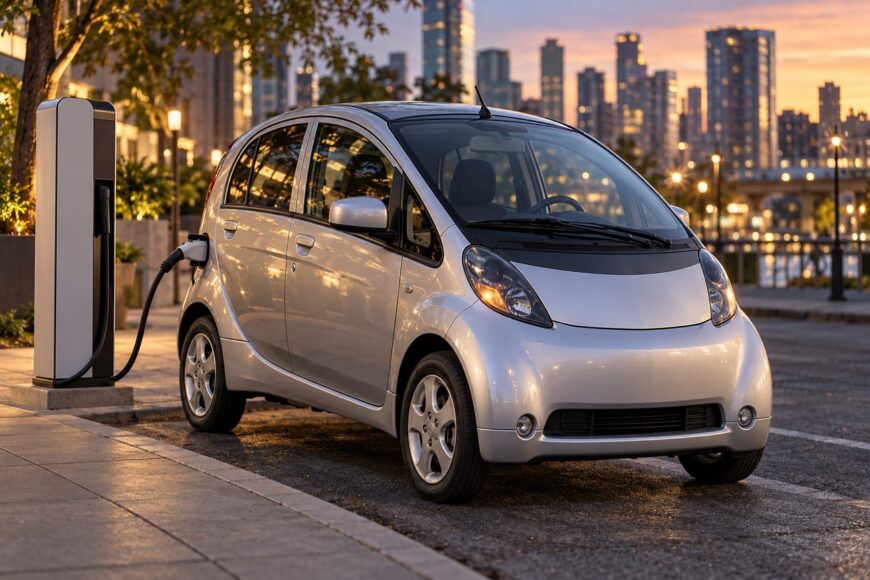
The Mitsubishi i-MiEV is easy to remember: an egg-shaped body, narrow proportions, and a name associated with the first wave of usable electric cars. Buying one today requires a cooler assessment. Short range, aging batteries, limited luggage space, and modest long-distance ability define ownership more than its novelty.
The i-MiEV makes the most sense as a compact urban tool for predictable trips with dependable charging. Its brochure range and motor output matter less than the condition of the individual battery and the journeys you expect to make. A healthy example can still be useful; a tired one can become restrictive very quickly.
- What the Mitsubishi i-MiEV Was Built to Do
- Powertrain, Rear-Wheel Drive, and Performance
- Battery, Range, and CHAdeMO Charging in Real Life
- What Living With an i-MiEV Is Really Like
- Buying a Used Mitsubishi i-MiEV: Battery First
- The i-MiEV’s Main Myths and Its Best Use Case
- Frequently Asked Questions
- Which Mitsubishi i-MiEV years should I avoid?
- Why was the Mitsubishi i-MiEV discontinued?
- How many miles can a Mitsubishi i-MiEV last?
What the Mitsubishi i-MiEV Was Built to Do
Produced from 2009 to 2021, the i-MiEV was one of Mitsubishi’s early mass-produced series electric vehicles. Its compact, egg-shaped body was developed around city travel, easy parking, and low energy use. This purpose explains much of the car’s design: the cabin sits high, the body is narrow, and the mechanical layout leaves the front area relatively free of conventional engine hardware.
Its dimensions are unusually compact by modern car standards, with length figures commonly listed around 3,475–3,680 mm and width around 1,475–1,585 mm, depending on version and market. A wheelbase of about 2,550 mm helps create reasonable interior space for the car’s footprint, while the small exterior remains useful on dense urban streets. The same proportions make it feel more specialized once roads become faster and journeys become longer.
The i-MiEV should therefore be judged as an early mass-produced Mitsubishi EV primarily designed for urban and short-distance use. Modern electric cars usually offer larger batteries, more relaxed highway performance, and greater flexibility between charging stops. Applying those expectations to the i-MiEV leads to disappointment, while viewing it as a second car or a local commuter gives its design a clearer rationale.
That distinction also matters in the used market. A low purchase price can make the car appear attractive as an entry point into electric driving, yet its practical value depends on whether its limited range fits your routine. A predictable commute with home charging is a favorable match; irregular family travel, airport runs, and long highway routes are much harder to accommodate.
Powertrain, Rear-Wheel Drive, and Performance

The i-MiEV uses a rear-mounted electric motor and rear-wheel drive, an unusual arrangement among small hatchbacks. Power reaches the rear wheels through a single-speed reduction gear. There is no conventional multi-speed transmission to shift, so acceleration is smooth and the drivetrain has fewer traditional transmission components to service.
Torque is commonly listed at 180 N·m and is available from low speed or standstill. That gives the car a responsive initial movement in city traffic, where immediate pull matters more than sustained acceleration. The sensation can seem lively around town, although it should not be confused with strong high-speed performance once aerodynamic drag begins to dominate.
Most specifications quote 47 kW, or roughly 64–67 hp, for the motor. Some listings use 49 kW or 67 hp as a maximum-output figure. These differences usually reflect market, version, measurement method, or rounding variations, so a buyer should avoid treating one listing as a universal specification for every i-MiEV.
A commonly stated top speed is 130 km/h. That limit preserves the car’s urban focus and helps control energy use, but it does not turn the i-MiEV into a comfortable motorway vehicle. At higher speeds, wind noise, aerodynamic drag, the small battery, and the compact body all become more noticeable. The car can reach a major road; sustained travel there is a separate matter.
Battery, Range, and CHAdeMO Charging in Real Life
The battery is commonly listed with a 16 kWh nominal capacity, while usable capacity is often stated at approximately 14.5 kWh. Those figures describe different parts of the same pack. The usable amount is the energy available for driving within the battery-management system’s operating limits, so it should not be added to the nominal figure or treated as a second reserve.
Advertised or cycle-based range is around 160 km. That number is useful for comparing official specifications, yet it is not a dependable everyday distance for an older car. Real-world range is substantially lower and highly variable, particularly in winter, at 90–110 km/h, or when the battery has lost capacity with age.
Small batteries make degradation easy to feel. If a relatively small amount of usable capacity disappears, it represents a meaningful part of the energy available for each trip. Cold temperatures also reduce practical range, while heating, defrosting, hills, headwinds, and high-speed driving add further demands. A dashboard estimate can change with recent driving conditions and should not be treated as a battery-health certificate.
Rapid charging uses the CHAdeMO standard, and some specifications cite DC charging at up to 50 kW. This can be helpful during a planned local journey, especially when the car is used between several short trips. Availability is the bigger issue in some markets, where CHAdeMO is less widespread or less convenient than newer charging standards.
Rapid charging does not remove the underlying limits of the i-MiEV. The battery remains small, motorway driving consumes energy quickly, and a charger may be unavailable, occupied, or unsuitable for an aging vehicle. Charging speed is most useful when the route already fits the car’s range; it is a weak substitute for range on a demanding long-distance trip.
What Living With an i-MiEV Is Really Like
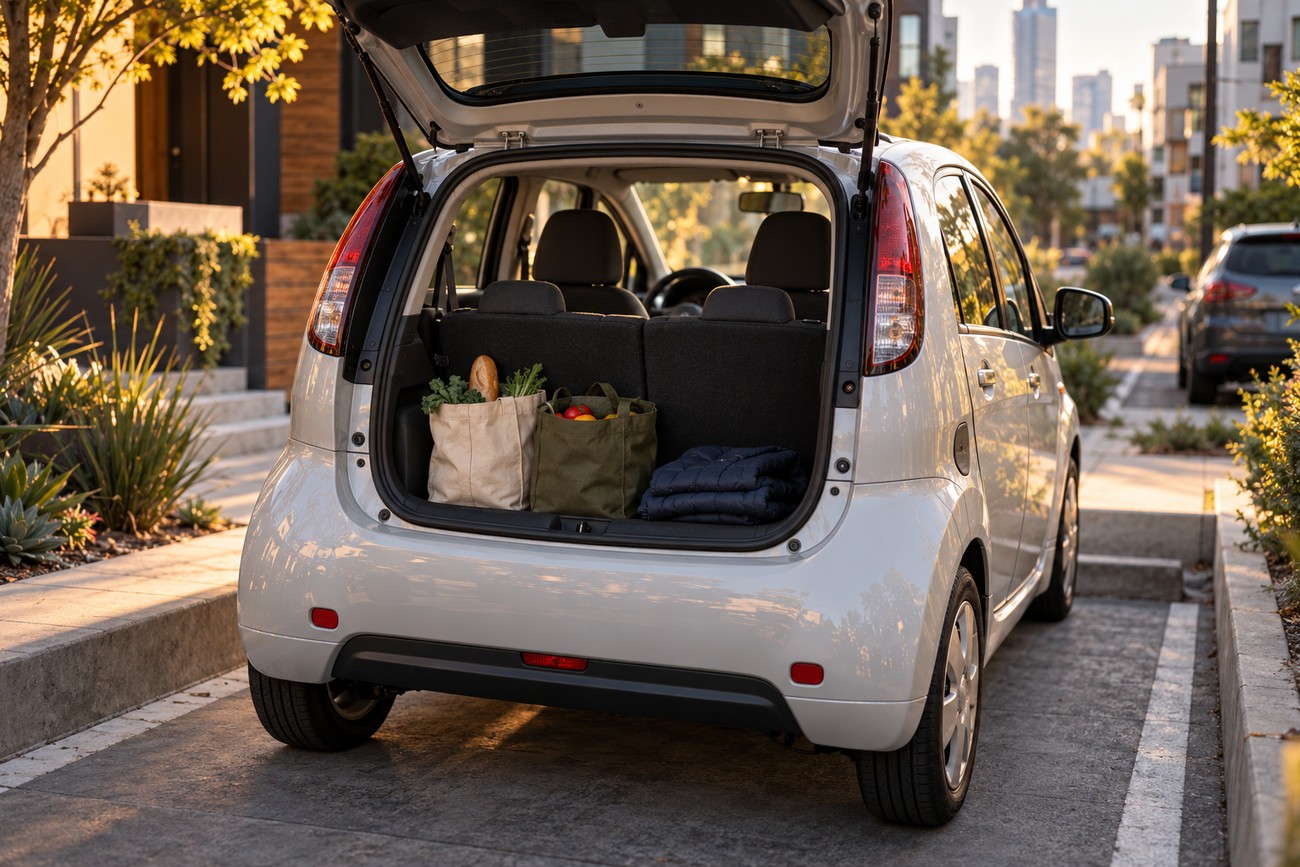
The cabin is tight, and the luggage area is very small. The car can carry the essentials for shopping or a short errand, but it offers limited flexibility for bulky items, family luggage, or several passengers with bags. Rear seating is useful within the car’s compact mission, though it does not create the carrying capacity of a conventional family hatchback.
Urban driving suits the i-MiEV’s dimensions. It is easy to place on narrow streets, simple to park, and responsive when pulling away from intersections. The rear-mounted motor and rear-wheel-drive layout give the car a distinctive technical character, while the high seating position helps visibility in traffic.
High-speed comfort is more restricted. Aerodynamic noise, road noise, the short body, and the city-oriented platform become increasingly apparent as speed rises. A 130 km/h top speed confirms that the car can operate on faster roads; it says little about how relaxed or economical a long motorway journey will feel.
The strongest use case is a predictable urban routine with reliable charging at home or at a regular destination. Choosing the i-MiEV as the only vehicle for a family with varied travel needs creates avoidable compromises. A second vehicle, public transport, or a clear plan for longer journeys may be necessary when the driving pattern extends beyond the city.
Buying a Used Mitsubishi i-MiEV: Battery First
Battery condition should be the first serious inspection point. Ask for evidence of remaining capacity and cell condition, rather than relying on the odometer, model year, or the range shown on the dashboard. Two cars with similar mileage can have very different usable ranges because storage history, charging patterns, climate, and battery aging vary between individual examples.
The nominal 16 kWh figure also needs careful interpretation. Approximately 14.5 kWh is commonly stated as usable capacity when the battery is healthy, and an older pack may provide less. Because the pack is small, reduced capacity affects daily planning quickly. A seller’s statement that the car “still gets good range” has little value without a diagnostic check or a properly documented test.
A proper battery check compares usable capacity and cell balance under load. The displayed range can look reassuring after gentle urban driving, while a weak cell or reduced pack capacity becomes visible only when the battery is working harder.
Check that both normal and rapid charging operate correctly if CHAdeMO access is important to your route. The high-voltage system, charging hardware, warning lights, and service records deserve attention from a technician familiar with electric vehicles. A short test drive should include different speeds and, where possible, a review of battery data before and after driving.
Age is critical because many examples come from early production years. Inspect the condition of the 12-volt system, brakes, tires, suspension, climate-control equipment, and body structure alongside the high-voltage components. These ordinary used-car checks still matter; a sound battery cannot compensate for a neglected chassis or electrical system.
Specialist support also varies by market. Some owners report difficulty sourcing aging components or finding suitable service for CHAdeMO and high-voltage systems. Before buying, identify a workshop that can diagnose the car and confirm how charging faults, battery repairs, and replacement parts would be handled locally.
The i-MiEV’s Main Myths and Its Best Use Case
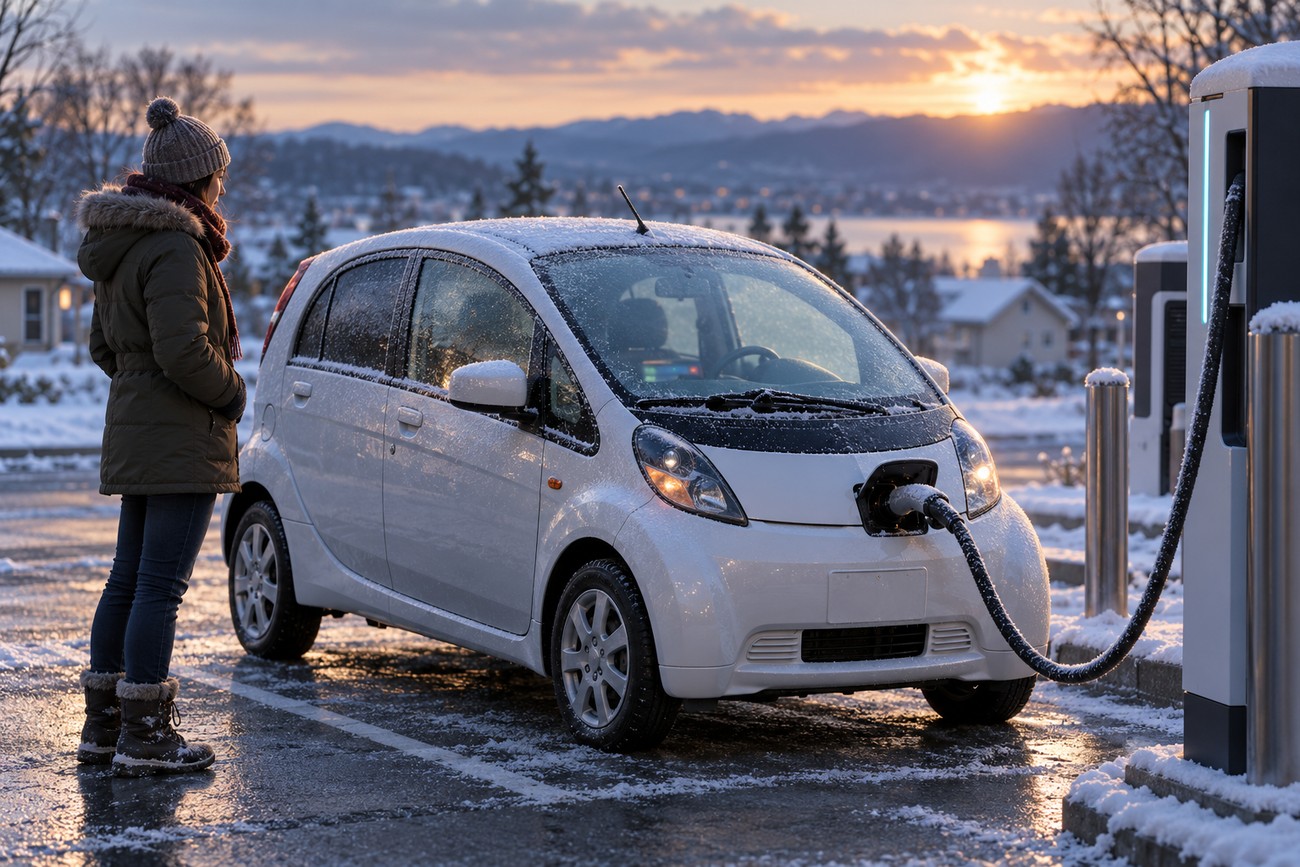
A 160 km range figure is a declared or cycle-based value, not a guaranteed everyday distance. Winter temperatures, motorway speeds around 90–110 km/h, hills, heating use, and battery degradation can reduce the practical result substantially. Buyers should plan around a conservative, verified range for the specific car rather than the number printed in a listing.
The power figure also varies across sources. Most commonly quoted specifications use 47 kW and 64–67 hp, while some listings quote 49 kW or 67 hp. This does not indicate a meaningful choice between different performance versions in every advertisement; it often reflects market or catalog differences. The driving experience remains that of a small urban EV with immediate low-speed torque.
CHAdeMO rapid charging is useful equipment, yet it does not make long trips easy by itself. The small battery requires more frequent stops, high-speed travel consumes energy rapidly, and charger availability depends on the local network. A route that works on paper can become stressful if the next compatible station is unavailable or the battery’s actual capacity is lower than expected.
The best i-MiEV is a healthy example used within its intended boundaries. It can remain a distinctive and simple urban EV for short commutes, local errands, and drivers with dependable charging access. Its value depends on route length, battery evidence, charging support, and realistic expectations far more than on the model’s novelty or headline specifications.
Frequently Asked Questions
The i-MiEV’s age makes individual inspection more important than a simple model-year rule. These answers focus on the decisions that matter most when assessing a used example.
Which Mitsubishi i-MiEV years should I avoid?
There is no universally bad model year that can replace an inspection. An older i-MiEV with documented battery health, working charging equipment, and a clear maintenance history may be a better purchase than a newer example with unknown usable capacity.
Early production age does increase the need for testing because battery and electronic components have had more time to age. Treat the year as a reason to investigate more carefully, rather than as an automatic exclusion rule.
Why was the Mitsubishi i-MiEV discontinued?
The i-MiEV occupied a narrow city-car role, used a small battery, and belonged to an older CHAdeMO-era electric-vehicle design. As buyers and manufacturers moved toward longer-range EVs with more space and broader travel ability, that package became less competitive in the wider market.
This conclusion reflects product life-cycle pressures rather than one single confirmed cause. The model’s original urban purpose remained clear, while market expectations increasingly favored electric cars that could serve as primary vehicles.
How many miles can a Mitsubishi i-MiEV last?
There is no fixed mileage guarantee for either the vehicle or its dependable electric range. Total service life depends on battery health, charging-system condition, maintenance, corrosion, and the quality of previous repairs.
Continued usefulness is best judged by measured battery capacity and the owner’s tolerance for reduced range. A mechanically sound car may remain useful for local travel even when its available range has fallen, provided charging equipment and high-voltage systems remain reliable.







