

The first-generation Mitsubishi GTO entered series production in 1990 as a high-tech performance coupe built around two defining ideas in many configurations: all-wheel drive and speed-sensitive aerodynamic hardware. Active Aero used moving bodywork to manage lift, while the drivetrain gave the car a more secure high-speed character than a simpler rear-drive coupe.
That capability came with a cost. The GTO combined its AWD system with complex electronics, moving actuators, and, on some versions, 4WS and ECS. Market, model year, engine specification, and equipment matter, so a Japanese-market GTO should not be treated as mechanically identical to every export-market 3000GT.
- What the 1990 Mitsubishi GTO Was Built to Do
- How Active Aero Worked on the GTO
- AWD Was the GTO’s Foundation—and Its Compromise
- The Ownership Trap: Active Aero, Electronics, and Service Access
- What to Check Before Buying a 1990–1993 GTO
- Myths, Market Differences, and the 280-hp Question
- Frequently asked questions
- Which Mitsubishi 3000GT versions are AWD?
- Why does the 6G72 timing-belt record matter so much when buying a GTO?
- Can Active Aero be trusted if the spoiler moves when the car is stationary?
What the 1990 Mitsubishi GTO Was Built to Do
The first-generation Mitsubishi GTO entered series production in 1990 during a period when Japanese manufacturers were using advanced chassis and electronic systems to differentiate high-performance coupes. The GTO was engineered as a fast, stable grand-touring machine rather than a lightweight minimalist sports car. Its equipment list reflected that ambition, with AWD and optional or version-dependent systems supporting traction, stability, and driver control.
The 1990–1993 GTO is associated with the 3.0-liter 6G72 V6. Output is cited at approximately 225–280 hp, depending on version and market, so published specifications need to be read alongside the car’s actual market and trim. The 280-hp figure is chiefly associated with Japanese-market twin-turbo versions and the period gentleman’s agreement; it does not describe every 1990–1993 GTO.
Japanese-market GTO specifications and export-market 3000GT specifications should not be assumed identical. Exterior photographs can conceal differences in drivetrain equipment, aerodynamic hardware, suspension systems, and engine calibration. A vehicle described loosely as a “1990 GTO” may therefore represent a substantially different factory configuration from an export-market car.
This distinction matters most during restoration. Parts catalogs, wiring diagrams, control units, and replacement actuators may follow market-specific specifications. Confirming the chassis identity and original equipment before ordering parts can prevent a costly sequence of incorrect substitutions.
How Active Aero Worked on the GTO
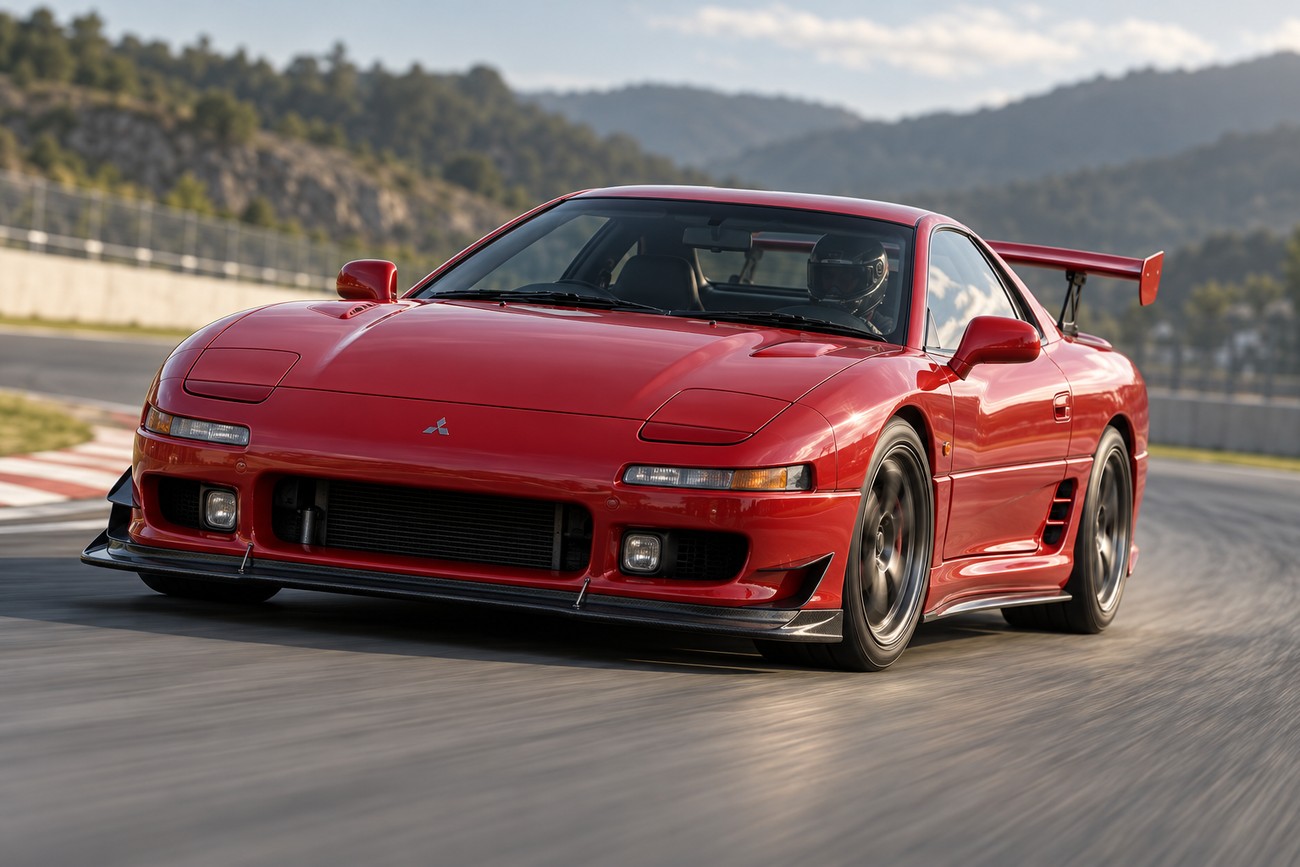
Active Aero combined a retractable front spoiler with a rear wing whose angle of attack changed as speed increased. The front spoiler is commonly described as extending approximately 50 mm, reducing the amount of air passing beneath the nose. At the rear, the adjustable wing helped manage the aerodynamic balance of the car.
Automatic activation is generally described as beginning at approximately 80 km/h. The system was intended to reduce aerodynamic lift and improve high-speed stability, so its useful effect belonged primarily to fast road driving. At urban speeds, the hardware mostly demonstrates that the mechanism is present rather than delivering a meaningful handling benefit.
A manual button can force Active Aero operation independently of road speed. That feature is useful for inspection and demonstration, although a stationary movement test confirms only part of the system. It does not prove that the speed signal, sensors, control logic, wiring, and complete movement sequence work correctly during driving.
The visual movement has made Active Aero a popular sales feature, but treating it as a styling display misses its engineering purpose. A spoiler that looks complete can still have a weak actuator, a sticking linkage, damaged wiring, or an incorrectly substituted control component. The system’s value lies in coordinated operation at speed, not in theatrical movement while parked.
AWD Was the GTO’s Foundation—and Its Compromise
AWD is a central feature of many GTO configurations, especially early Japanese-market versions. It helped the car transmit power and maintain composure during acceleration and high-speed cornering, which suited the GTO’s heavy, long-distance performance character. Traction was part of the car’s basic design philosophy rather than an incidental option on a simple coupe.
The same system adds mass, mechanical complexity, and service cost. More components create more opportunities for wear, leaks, incorrect repairs, and difficult diagnosis. A healthy AWD system can make the car feel secure; a neglected one can turn an apparently attractive purchase into a substantial drivetrain project.
4WS and ECS are additional complex chassis systems often associated with the GTO platform. Their presence depends on version and market, just as drivetrain and aerodynamic equipment do. A seller’s use of “fully equipped” should therefore be checked against the vehicle identification, factory documentation, and physical operation of each system.
AWD alone is weak evidence of vehicle quality. A car can retain its original drivetrain while having defective electronics, nonfunctional Active Aero, poor maintenance history, or improvised wiring. The condition of the complete system matters more than the presence of AWD on an options list.
The Ownership Trap: Active Aero, Electronics, and Service Access

Age-related failures commonly affect Active Aero actuators, control hardware, wiring, and moving mechanisms. Old grease, corrosion, mechanical binding, and tired electrical connections can leave a spoiler stuck in one position or make its operation intermittent. A missing panel or nonworking indicator may be only the visible part of a larger fault.
AWD and electronic chassis systems make diagnosis more difficult because symptoms can overlap. A control-unit fault may resemble a failed sensor, while a mechanically binding actuator may imitate an electronic failure. Parts-swapping without testing can consume scarce components without identifying the original cause.
Verify complete Active Aero movement and examine the wiring and substitute actuators before condemning the control unit. Age-related mechanical binding can imitate an electronic failure.
Owners also report tight under-hood access and higher repair effort than on simpler Japanese coupes. Routine work around the 6G72 can require more labor, while access limitations increase the chance that a previous repair was performed hastily. That labor burden affects both scheduled maintenance and fault-finding.
Usable GTO/3000GT-specific replacement parts can be difficult to source, particularly for rare electronic and mechanical systems. Non-factory repairs may keep a car moving while making future restoration harder, especially when original connectors, actuators, or spoiler mechanisms have been removed.
A functioning-looking car may still hide faults in its rare systems. The sensible approach is to test each function, document the result, and obtain a diagnosis from a service capable of working with the platform. A generic inspection focused only on engine leaks and body condition is insufficient for this model.
What to Check Before Buying a 1990–1993 GTO
Begin with specification verification. Confirm whether the car is a Japanese-market GTO or an export-market 3000GT, then compare its equipment with the claimed version. JDM GTO and export 3000GT equipment can differ more than exterior photographs suggest, so badges and bodywork are not reliable proof of the original configuration.
Test Active Aero through its full operating sequence. Check the motors, sensors, control operation, wiring, and manual button rather than accepting an advertisement’s claim of complete Active Aero. The manual button should force operation independently of road speed, but a stationary demonstration remains only a preliminary check.
Inspect the spoiler movement for hesitation, uneven travel, unusual noise, and signs of non-factory brackets or wiring. Improvised repairs to spoilers, actuators, and wiring may be difficult to reverse. A system that moves once for a seller can still fail under repeated operation or when its speed input is active.
Review the AWD system and its service history with the same caution. Look for evidence of proper maintenance, inspect the drivetrain for leaks or damage, and have unusual noises or vibration investigated before purchase. If the car has 4WS or ECS, those systems also require functional testing rather than an assumption based on trim claims.
A documented 6G72 timing-belt service history is a critical purchase consideration. If that documentation is missing, the buyer’s risk assessment should change, and the inspection should prioritize establishing the engine’s maintenance status before treating cosmetic originality or Active Aero operation as a buying advantage.
Myths, Market Differences, and the 280-hp Question
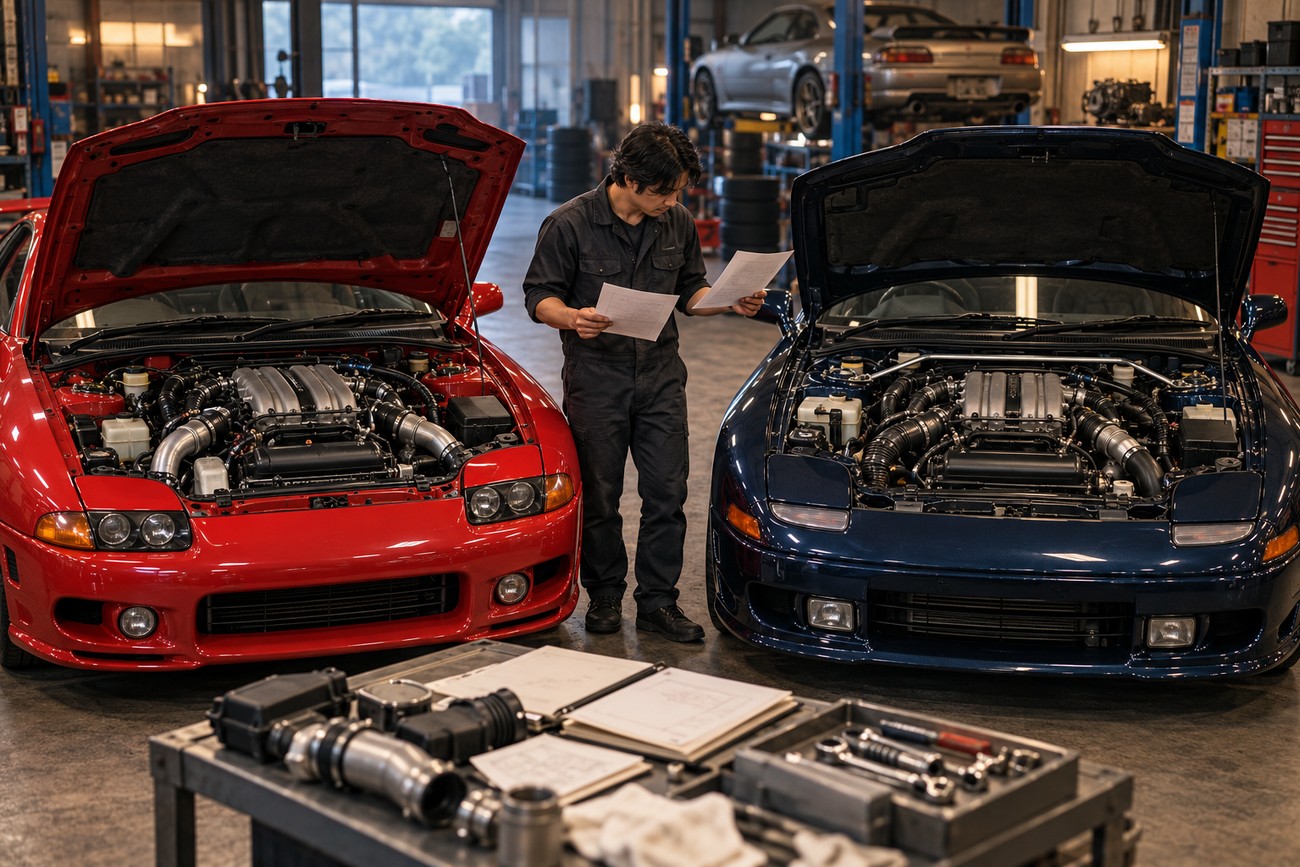
The first myth is that every 1990–1993 GTO was a 280-hp car. Output is cited at approximately 225–280 hp, depending on version and market, while the 280-hp figure is chiefly associated with Japanese-market twin-turbo versions. It reflects the era’s Japanese gentleman’s agreement rather than a universal rating for every GTO.
The second myth is that all GTOs and 3000GTs share one fixed equipment package. Market and model-year mixing can create inflated expectations about AWD, Active Aero, controlled suspension, and other electronic systems. The correct specification must be established from the individual vehicle, not from a photograph or a generic model description.
Active Aero also deserves a more precise description. It was not merely decorative: the retractable front spoiler and variable-angle rear wing were intended to reduce aerodynamic lift and improve stability. Its meaningful contribution was at high speed, while its dramatic movement at a standstill says little about how reliably the system works on the road.
Later cars may have reduced or discontinued technologies such as controlled suspension and Active Aero. This makes year and market verification essential when comparing cars or sourcing parts. A restoration plan based on the most heavily equipped early specification can be wrong for a later or export-market vehicle.
Frequently asked questions
Which Mitsubishi 3000GT versions are AWD?
AWD is strongly associated with the early performance configuration of the Mitsubishi GTO and 3000GT, especially early Japanese-market versions. It still requires verification by market, year, version, and individual vehicle because equipment was not identical across the range.
The model name alone is insufficient for a purchase decision. Check the drivetrain physically and confirm the specification through vehicle records, factory references, and an inspection of the complete transmission and chassis system.
Why does the 6G72 timing-belt record matter so much when buying a GTO?
The 6G72 timing-belt service history matters because missing documentation leaves a critical part of the engine’s maintenance condition unverified. That uncertainty should affect the purchase risk assessment before attention shifts to cosmetic features or working Active Aero.
When records are absent, prioritize a qualified inspection and establish what maintenance is required before regular use. The lack of proof does not automatically condemn the car, but it should be reflected in the inspection scope and ownership budget.
Can Active Aero be trusted if the spoiler moves when the car is stationary?
No. A stationary manual-button demonstration proves limited actuator function, but it cannot confirm speed-triggered operation, sensor input, control logic, wiring integrity, or reliable movement under driving conditions.
Test the complete system, including automatic activation at approximately 80 km/h where safe and legally appropriate, and inspect for sticking mechanisms or substitute parts. A single visible movement is evidence of partial operation, not proof that the factory system is healthy.







