
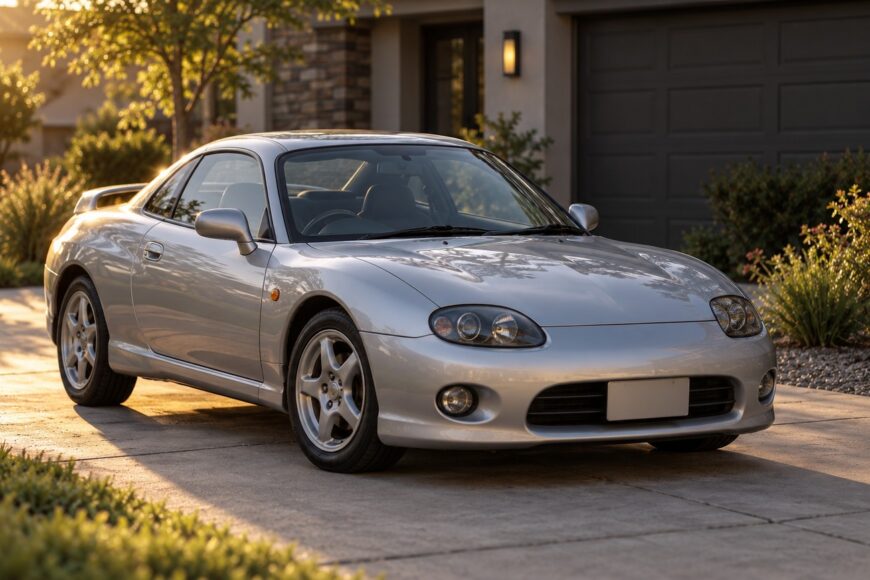
The Mitsubishi FTO is an attractive 1990s Japanese coupe with a compact body, high-revving V6 options, and a character that still feels distinct among front-wheel-drive cars. Built from 1994 to 2000, it combined a low, wide-looking shape with engines ranging from a modest 1.8-liter four-cylinder to a 2.0-liter MIVEC V6.
Its appeal comes with practical complications. Rust, aging transmissions, incomplete import records, and shrinking parts supply can matter more than a GPX badge or a low claimed mileage. A good purchase depends on proving the advertised specification and assessing the individual car’s body, service history, and mechanical condition.
- Mitsubishi FTO at a Glance
- Engines, Trims, and Gearboxes
- What the FTO Feels Like on the Road
- FTO Versions at a Glance
- Buying a Used Mitsubishi FTO: The Inspection That Matters
- Ownership Reality: Maintenance, Parts, and Hidden Costs
- Frequently asked questions
- How much does a Mitsubishi FTO cost?
- What is the rarest Mitsubishi car?
- What is the cheapest JDM?
Mitsubishi FTO at a Glance
The FTO occupied an interesting place in Mitsubishi’s 1990s range. It was a dedicated two-door coupe with a sporty design and several engine choices, yet its engineering was based around a front-engine, front-wheel-drive layout. That made it usable and compact, while also separating it from the rear-drive performance cars that often dominate JDM discussions.
Its main dimensions remain modest by modern standards: a 2500 mm wheelbase, 4365 mm length, 1735 mm width, and 1300 mm height. The proportions give the FTO a planted appearance without making it a large or intimidating car in narrow streets and older parking spaces.
The shape can create the wrong expectations. The FTO is sometimes described as a kind of front-drive “mini-Supra,” but the comparison fails at the drivetrain and engineering level. The engine is mounted at the front, the front wheels provide traction, and the car was designed as a sporty road coupe rather than a race car.
That layout remains part of the appeal. A well-sorted FTO offers a light-feeling, rev-oriented driving experience in a package that is easier to place on the road than many larger performance cars. Its age also means the surviving example matters more than the brochure specification: corrosion, repairs, and maintenance can completely change the ownership experience.
Engines, Trims, and Gearboxes
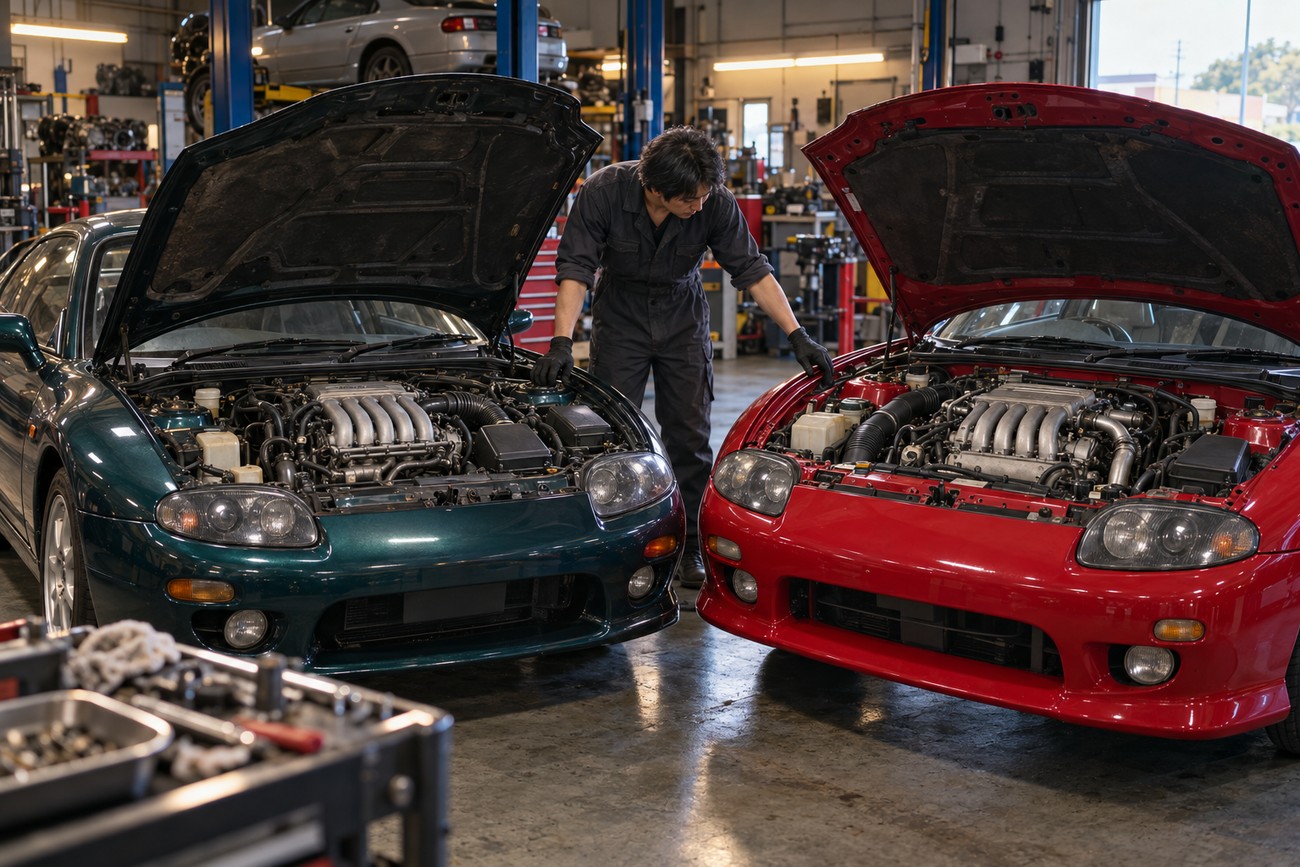
The DE2A is the simpler entry point, using a 1.8-liter 4G93 with about 125 PS. The DE3A identifies the 2.0-liter V6 versions, all based on the 6A12 engine family. The chassis code is therefore useful when ordering parts or checking an import, since a registration year alone may not identify the actual engine and transmission combination.
The GR used a naturally aspirated 6A12 without MIVEC. Early cars were rated at about 170 PS, while later versions were rated at about 180 PS. This engine has a different character from the GPX, even though both versions share the same basic 2.0-liter V6 family and can look similar in photographs.
The GPX received a DOHC 6A12 MIVEC rated at 200 PS at 7500 rpm. The high peak speed is important: the engine’s headline output describes an engine that rewards revs and driver involvement rather than one that produces its strongest impression at low engine speed.
Transmission choice changes the car substantially. The range included a five-speed manual, early four-speed INVECS-II automatics, and later five-speed automatics. An automatic GPX can be appealing in daily use, although its gearing, shift behavior, and mechanical condition mean it should not be assumed to feel like a manual GPX.
Many listings quote the GPX as producing 197 hp. Japanese specifications commonly state 200 PS, and those figures use different measurement units. They should be presented as a unit difference rather than treated as evidence that one of the figures is automatically false.
What the FTO Feels Like on the Road
The FTO’s front-wheel-drive layout gives it a clear road personality. Steering, throttle application, and tire condition all influence how confidently the front axle can put power down. A worn suspension, poor alignment, or oversize aftermarket wheels can make the car feel less precise than its specification suggests.
The GPX’s MIVEC engine is most convincing when allowed to work at higher revs, with its stated 200 PS arriving at 7500 rpm. That character suits a manual gearbox, where the driver can hold a gear and keep the engine in its stronger range. The automatic version can still be enjoyable, though transmission response and condition become a larger part of the experience.
A healthy GR may not feel dramatically weaker at low revs. Its naturally aspirated 6A12 lacks the GPX’s MIVEC hardware and peak output, yet ordinary traffic rarely keeps the engine at the top of the rev range. The difference becomes clearer when the driver is using the full rev band, especially during sustained acceleration.
Expect a lively road coupe rather than a disguised racing car. The FTO’s interest lies in its compact dimensions, V6 sound, responsive engine character, and unusual specification. A manual car in good condition can feel substantially more involving than a neglected high-specification automatic, which is why condition should remain central to any comparison.
FTO Versions at a Glance
The core differences are easier to verify through the chassis code, engine code, and actual transmission than through badges alone. The GPX power figure is shown in PS, with the commonly seen hp listing explained separately.
| Version | Chassis and engine | MIVEC status | Stated output | Transmission context |
|---|---|---|---|---|
| DE2A | 1.8-liter 4G93 | Four-cylinder specification | About 125 PS | Five-speed manual or automatic, depending on the car |
| DE3A GR | 2.0-liter 6A12 V6 | Naturally aspirated 6A12 without MIVEC | About 170 PS early; about 180 PS later | Five-speed manual or automatic, depending on the year and car |
| DE3A GPX | 2.0-liter DOHC 6A12 V6 | MIVEC | 200 PS at 7500 rpm; some listings state 197 hp | Five-speed manual, early four-speed INVECS-II automatic, or later five-speed automatic |
Buying a Used Mitsubishi FTO: The Inspection That Matters
Rust deserves the first inspection slot. Look beyond visible doors and fenders to the underside, sills, suspension towers, floor areas, mounting points, and hidden cavities. Cars used in humid climates or on salted roads can carry corrosion in places that photographs do not reveal.
Confirm the VIN and chassis code before accepting the seller’s description. DE2A identifies the 1.8-liter version, while DE3A identifies the 2.0-liter V6 versions. Check the engine code, transmission type, and physical configuration against the advert, because imported cars can have unclear repair records, engine swaps, or changes made before export.
Test an automatic from a cold start and again after a full warm-up. Check the delay when selecting D and R, the quality of each shift, any flare or slipping under load, impacts during engagement, and the operation of the Tiptronic function where fitted. A scan for electronic faults helps, yet it cannot replace judging fluid condition and real driving behavior.
Ask for evidence of timing-belt, roller, and water-pump work rather than relying on a verbal assurance. Inspect cooling-system condition, V6 leaks, hoses, and signs of previous overheating. A clean set of photographs can support a sale, but it cannot establish the condition of the underside or prove that the car is the advertised GPX.
Use mileage as one data point, not as a verdict. On a discontinued car, documented history, structural condition, and realistic parts support carry more weight than a trim badge or an attractive odometer reading. A cheaper car with hidden corrosion or an uncertain gearbox can quickly become the more expensive choice.
Ownership Reality: Maintenance, Parts, and Hidden Costs
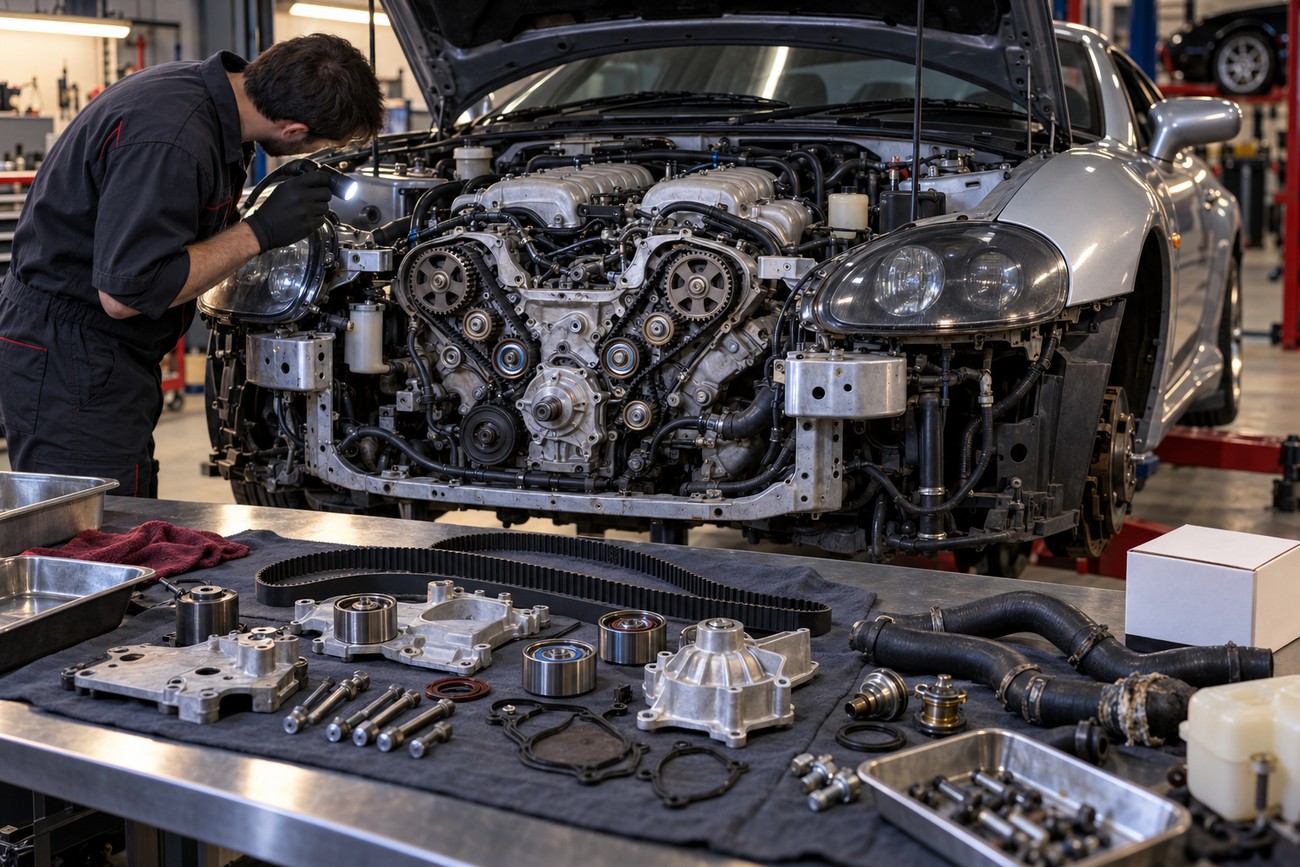
The V6 engines require planned maintenance, especially where the timing-belt drive is concerned. If the belt, rollers, and water pump cannot be verified, budget for the service instead of deferring it. The same inspection should include oil leaks, cooling-system condition, and evidence that the engine has been maintained at appropriate intervals.
Age can make peripheral components the real source of trouble. Hoses, seals, suspension bushes, and other rubber parts may be brittle or worn even when the engine starts easily and sounds healthy. Replacing these items is less glamorous than fitting performance parts, yet it has a greater effect on reliability, steering accuracy, and the car’s ability to pass a careful inspection.
Automatic-transmission maintenance also deserves a realistic budget. Neglected fluid and poor warm shifting can lead to expensive repair work, while the correct ATF specification and service history should be checked against reliable Mitsubishi documentation. The complete factory service intervals and fluid details should be verified against an original Mitsubishi manual rather than accepted from a single secondary copy.
Parts availability is declining. Some components may require searches through dismantlers or orders from Japan, and the waiting period can be more inconvenient than the purchase cost. This matters especially for a daily driver: rarity can increase downtime as well as interest from collectors.
Modified wheels and suspension need careful evaluation. Changes that look suitable for a sporty coupe can reduce front-drive traction or increase loads on old hubs, CV joints, and steering components. Before approving a modified car, inspect tire clearance, alignment, bush condition, and the quality of the installation; a standard-looking example with sound geometry may be the safer buy.
Frequently asked questions
How much does a Mitsubishi FTO cost?
There is no responsible single price for an FTO without accounting for rust, transmission condition, service history, specification, and parts support. A well-documented manual GPX and a tired automatic car with similar advertising language can have very different real values.
Calculate the likely first service, corrosion repairs, timing-drive work, and cost of sourcing difficult parts. The purchase price is only the starting point, especially when the car has been imported with incomplete records.
What is the rarest Mitsubishi car?
The FTO should not automatically be called Mitsubishi’s rarest model. Rarity depends on the market being considered, the number of surviving cars, the specification, and the condition of individual examples.
A particular GPX, manual car, or well-preserved original example may be uncommon in a local market. That does not establish a universal ranking across every Mitsubishi model and region.
What is the cheapest JDM?
The cheapest JDM car to buy is not necessarily the cheapest to own. On an aging FTO, rust repair, automatic-transmission work, unavailable parts, and long periods waiting for components can outweigh a low purchase price.
Compare complete ownership risk instead: inspect the body, verify the engine and gearbox, confirm the service history, and identify a realistic parts source before committing. A sound, slightly more expensive car can reduce both downtime and total spending.







