
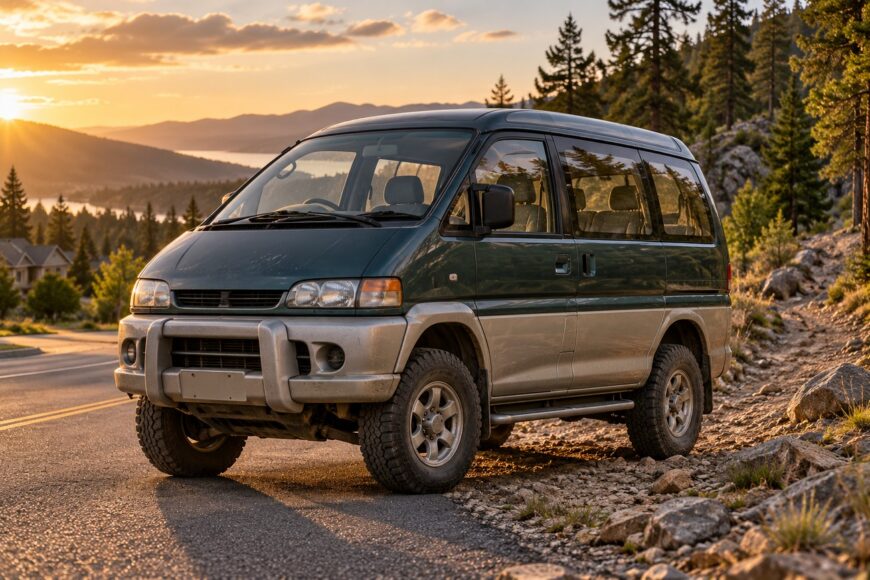
The Mitsubishi Delica carries people like a van, yet its older four-wheel-drive hardware follows the logic of an SUV. That contradiction explains its appeal: a tall, practical cabin combines with a transfer case, low range, and Pajero-related chassis components. It can reach places where an ordinary family crossover has already run out of ground clearance, traction, or underbody protection.
The trade-off is substantial. Fuel use, diesel noise, body roll, difficult servicing, limited specialist support, and corrosion can matter more than the badge or adventure equipment. The central buying decision is whether genuine off-road ability justifies owning an old, high-bodied vehicle that demands a careful inspection and a realistic maintenance budget.
- What Makes the Delica More Than a Tall Minivan?
- The 4WD Hardware: Where the SUV Comparison Holds Up
- Delica Generations and Engines: Choose the Right Compromise
- The Everyday Price of Going Off-Road
- The Used-Delica Traps Sellers Do Not Advertise
- How to Use and Modify a Delica Without Ruining It
- Frequently asked questions
- How much does a Delica cost?
- What is the smallest Delica with 4WD?
What Makes the Delica More Than a Tall Minivan?
The Delica IV and Star Wagon period ran from 1994 to 2007. Formally, these vehicles are minivans, and their main job is carrying passengers in a tall, flexible cabin. Owners often describe them as minivans with Pajero-style off-road hardware because the older 4WD platform uses a frame and Pajero-related drivetrain and suspension components.
That construction gives the older Delica a different mechanical identity from a typical front-wheel-drive people carrier. The platform combines independent front suspension with a rear axle, while many 4WD versions use a transfer case and low range. The result is a van that can serve as family transport yet still has the basic hardware needed for slow, controlled travel over rough ground.
Its proportions also explain the SUV comparisons. Typical Delica IV dimensions are approximately 1,695–1,795 mm wide and 1,875–2,090 mm high, with a 2,240–2,850 mm wheelbase. The high floor helps cabin space, while short overhangs on some versions and the upright body help the approach geometry, although the height and long-wheelbase versions make parking less convenient.
Generation matters before any comparison is made. The older frame-based Delica formula should not be transferred to the D:5, D:2, or Delica Mini. Those models occupy different parts of the market and use different construction and drivetrain choices, so “Delica” alone is too broad a description for a buying decision.
The 4WD Hardware: Where the SUV Comparison Holds Up
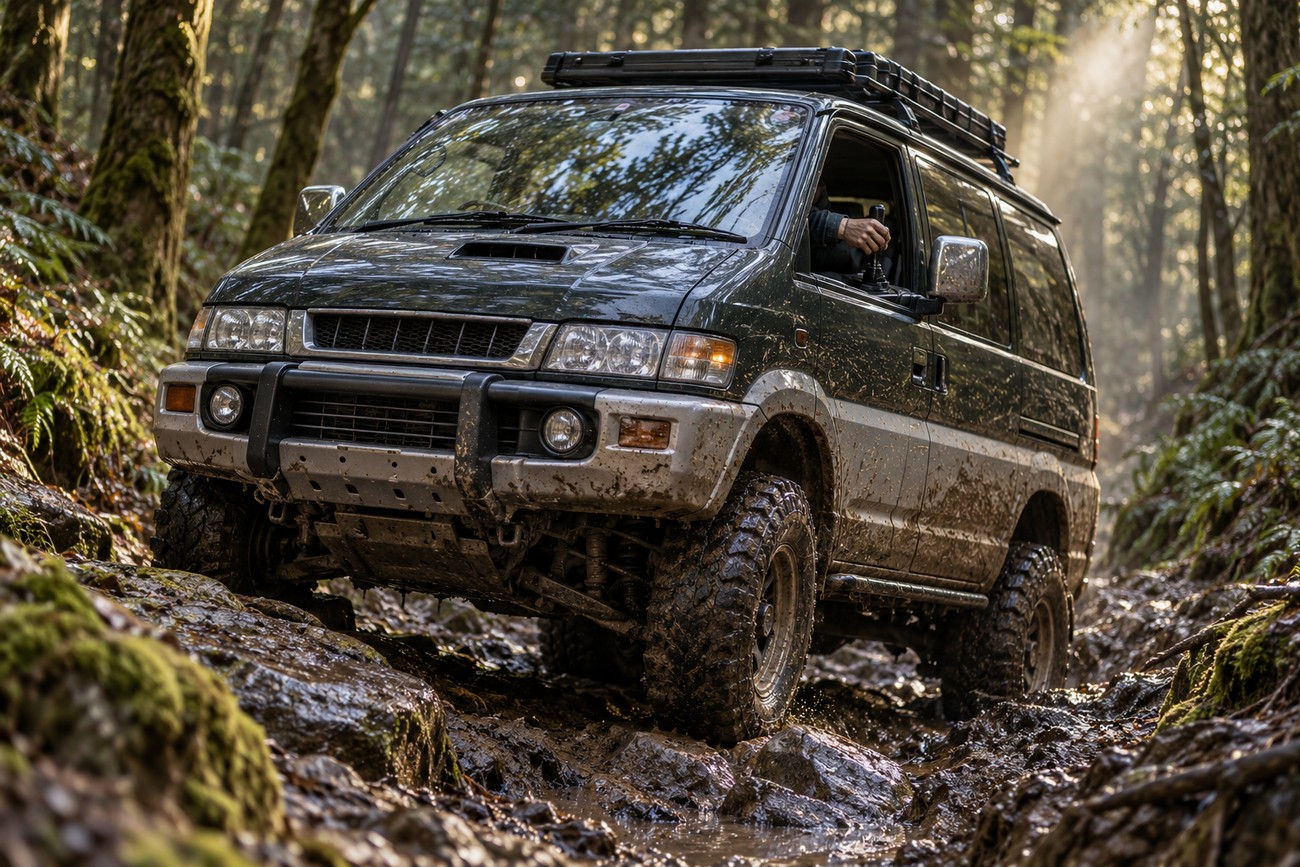
Many Delica IV 4WD versions use classic part-time 4WD with a transfer case and low range. That feature separates them from ordinary tall minivans: low range allows the engine and transmission to move the vehicle slowly with more control, while the rear axle and suitable tyres can maintain progress on loose or uneven surfaces.
Independent front suspension gives the Delica usable road manners without abandoning off-road function. Short overhangs, a high floor, and appropriate tyres can provide genuine capability on tracks, mud, snow, and rocky approaches. Some owners also fit locking upgrades, although the quality and legality of the modification depend on the specific vehicle and installation.
Part-time 4WD requires discipline. It should not be used continuously on dry asphalt, because the driveline can wind up and suffer accelerated wear or damage when the front and rear axles cannot rotate at different speeds. The correct operating procedure depends on the transfer-case design, so the selector markings and vehicle documentation deserve more attention than generic advice from an online listing.
Delica systems vary by generation, including part-time and full-time implementations. The older system also lacks the refinement and electronic traction management of a modern crossover. Its strength is mechanical control and useful geometry, while its limitations appear in steering effort, ride comfort, noise, and the driver’s need to select the correct mode.
Delica Generations and Engines: Choose the Right Compromise
The Delica IV 3.0 petrol 4WD uses an automatic transmission and produces approximately 185 hp. Reference consumption is approximately 14 L/100 km in city driving and 12.4 L/100 km combined, with a 66-litre fuel tank. Those figures explain why owners often say the petrol version consumes fuel like a Pajero rather than like an economical family van.
Older Star Wagon diesels include a 2.5-litre turbo-diesel rated at approximately 85 hp with a 4-speed automatic. The diesel can suit a slower touring vehicle and may feel more appropriate for carrying equipment, yet its age, modest output, and fuel-system sensitivity matter. Poor-quality fuel can increase the risk of expensive fuel-pump and injector problems.
The current Delica D:5 follows a different engineering path. It uses a unibody rather than the older frame-based layout, full-time 4WD, a 2.3–2.4-litre diesel of approximately 145 hp, and an 8-speed automatic. Ground clearance is approximately 185–190 mm, so the D:5 is more modern and easier to use as a family vehicle, while its unibody construction means it should not be treated as a newer version of the same frame-based expedition van.
Compact Delica names create another source of confusion. The Delica D:2 and Delica Mini offer 4WD in city-oriented minivans or kei cars, with approximately 160 mm of clearance. They may be sensible urban choices, but their format and off-road role are far removed from the tall, older Delica IV and Star Wagon.
The Everyday Price of Going Off-Road
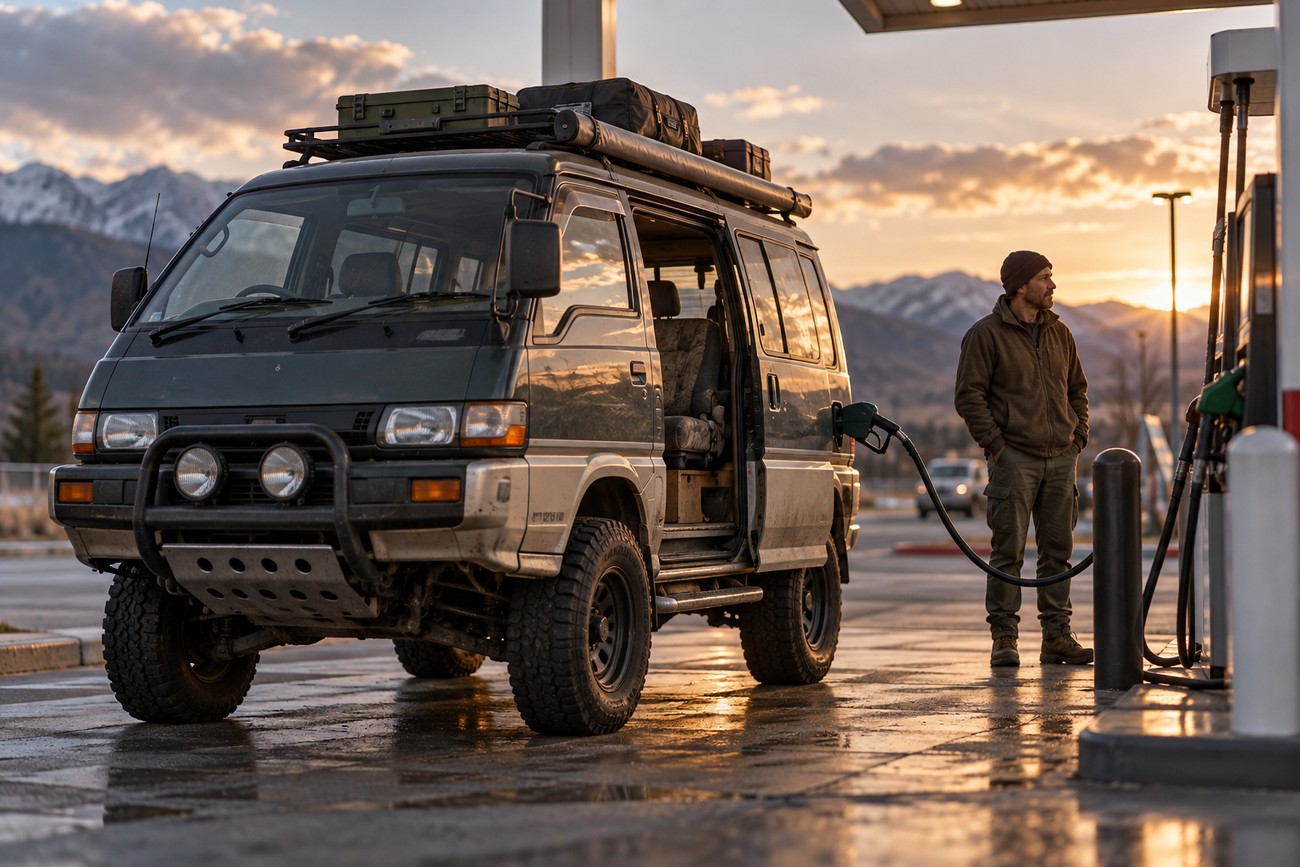
The older Delica’s biggest daily cost is often fuel. The 3.0 petrol reference figures of approximately 14 L/100 km in city driving and 12.4 L/100 km combined are clear enough, but real use can rise with winter driving, large tyres, roof equipment, low-range work, or a heavy camper interior. Older diesels can reduce fuel demand in some conditions, yet they are not automatically economical by modern family-vehicle standards.
Noise and vibration are part of the ownership character. Older diesel and petrol versions are noticeably louder than current family vans, especially on the highway and during urban acceleration. A long trip with a tired engine mount, worn exhaust supports, or oversize tyres can make the vehicle feel more like commercial transport than a relaxed people carrier.
The suspension can feel firm, while the tall body brings noticeable roll in corners. Passengers who expect modern SUV comfort may find the ride busy over patched roads and speed humps. The high center of gravity also demands calmer cornering, particularly after a roof rack, spare wheel, water tank, or camper furniture has been added.
Height creates practical restrictions that are easy to miss in photographs. Some versions reach approximately 2,090 mm, which can exclude garages, automated wash bays, and older parking structures. Long-wheelbase examples may also have a worse turning circle and more difficult urban maneuverability than a similarly sized SUV.
The Used-Delica Traps Sellers Do Not Advertise
Structural inspection comes before paint, upholstery, or adventure accessories. Corrosion can affect the frame, chassis rails, floor, underbody, and suspension mounting points, with vehicles from maritime or coastal auction environments deserving especially careful examination. Surface rust is one issue; weakened mounting areas and chassis sections can change the vehicle’s safety, repair cost, and eligibility for road use.
A clean cabin proves very little. Import history, auction images, inspection records, and evidence of previous repairs can reveal rolled-back mileage, cosmetic restoration, or damage from hard off-road use. Check the underside with the vehicle safely raised, inspect welds and mounting points, and look for distorted brackets, fresh underseal, leaking dampers, and uneven tyre wear.
Lift kits, oversize wheels, heavy protection equipment, and poorly chosen tyres can overload the suspension, axles, and drivetrain. A high-riding Delica may look ready for an expedition while carrying the consequences of altered geometry, increased steering loads, and brake stress. A camper conversion creates another risk: people, water, batteries, drawers, and recovery equipment can overload the rear axle and raise the center of gravity.
Parts and support vary sharply by region. Original components may be limited, and many markets rely on contract used parts or general workshops willing to learn the platform. Older diesels require particular care with fuel quality, while a specialist who understands the exact transfer case, axle, and suspension arrangement can save time and prevent incorrect repairs.
How to Use and Modify a Delica Without Ruining It
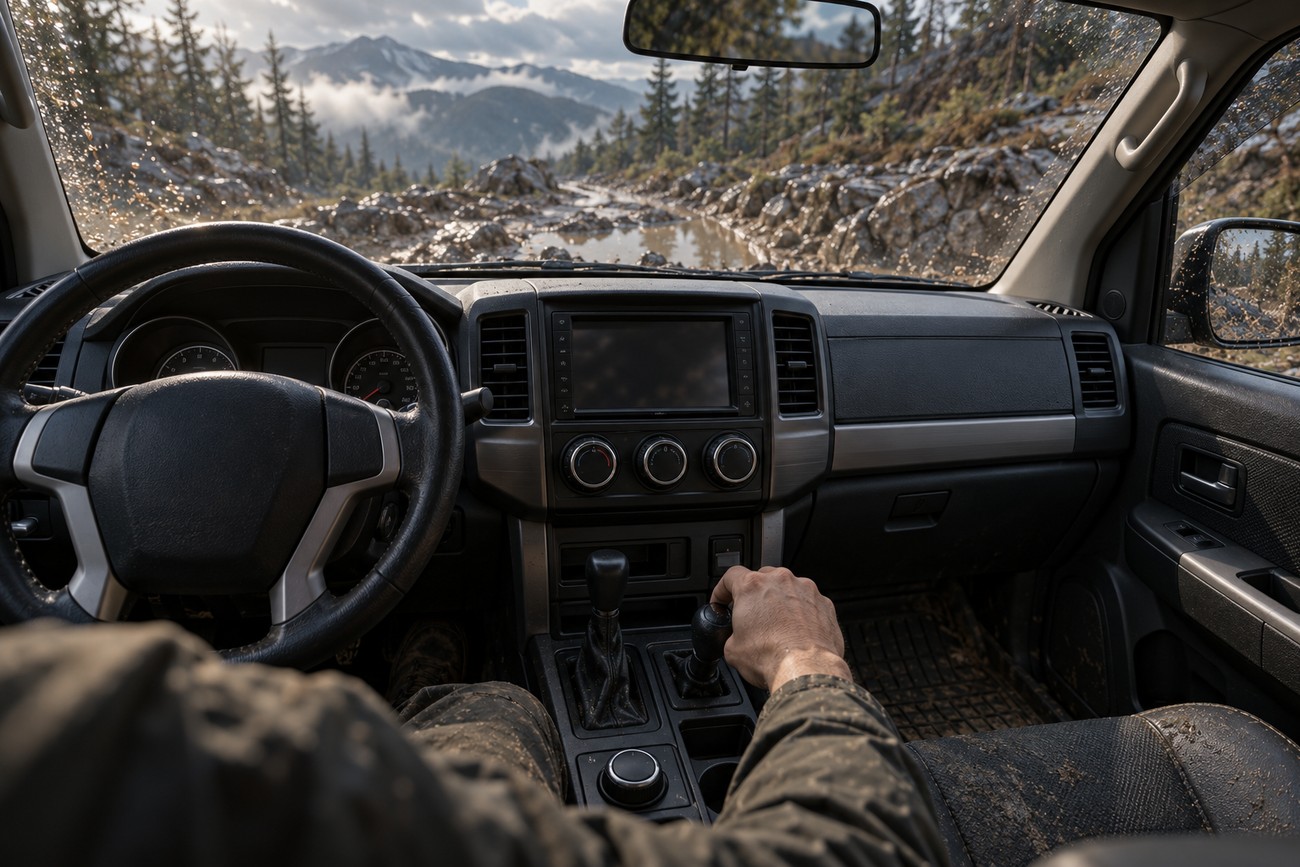
Use part-time 4WD according to the surface and the manufacturer’s instructions. Loose ground, snow, mud, and uneven tracks allow some wheel-speed difference through tyre slip; dry asphalt generally does not. Continuous use of part-time 4WD on a dry road can create driveline stress and damage, so a driver should know whether the vehicle has part-time, full-time, or a Super Select-like arrangement before touching the lever.
Tyre choice changes the Delica more effectively than dramatic suspension work. A suitable all-terrain pattern and sensible size can improve traction and ground clearance while preserving steering, gearing, braking, and wheel-arch clearance. Excessively large wheels add weight and rolling resistance, increase fuel consumption, and can make the vehicle less predictable on pavement.
A moderate touring build is easier to inspect and repair than an extreme conversion. Keep heavy items low and close to the vehicle’s centre, confirm axle loads, and account for passengers, water, fuel, recovery tools, and spare parts. Improvised camper interiors can affect braking, insurance, stability, and legal compliance even when the van still looks tidy.
The used market is often divided between vehicles used for touring and those subjected to hard off-road driving. The former may show practical wear but retain a straighter chassis and less stressed running gear; the latter may carry lifts, body damage, welded repairs, and drivetrain fatigue. Rotating seats, sleeping conversions, and a flexible cabin explain the Delica’s camper appeal, but equipment should support the vehicle rather than become its main mechanical burden.
Frequently asked questions
The Delica name covers several generations and layouts, so the answer depends on the exact vehicle rather than the badge alone. These two checks are especially useful when comparing imported examples with compact domestic models.
How much does a Delica cost?
There is no reliable single price without specifying the market and currency. Age, corrosion, import history, drivetrain specification, mileage credibility, and modifications create a wider spread than the model name suggests.
Build a buying budget in stages: purchase price, independent structural inspection, transport or import costs, immediate servicing, tyres, corrosion treatment, and a reserve for age-related repairs. A cheaper Delica with a questionable frame, hard off-road history, or unsupported conversion can cost more than a better-documented example. Compare the condition of the chassis and drivetrain before comparing equipment lists.
What is the smallest Delica with 4WD?
The Delica D:2 and Delica Mini are the compact Delica options with 4WD. They are city-oriented minivans or kei cars with approximately 160 mm of ground clearance, rather than compact versions of the tall, frame-based Delica IV.
They suit urban transport and occasional poor-weather roads more closely than expedition travel. Buyers who need low range, a rear axle, and the older Delica’s heavy-duty off-road format must verify the generation and transfer-case equipment instead of assuming that every 4WD Delica has the same mechanical hardware.







